The Post-Soaking Transition: Handling and Drying Safely
After you have soaked your postage stamps to remove them from envelope paper, they must transition safely from the soaking bowl to a dry state. Wet stamp paper is incredibly fragile and highly susceptible to tearing or thinning. To protect your stamps, never use stamp tongs while the paper is wet or damp. Instead, allow the stamps to float free naturally in lukewarm water, rinse the backs gently to remove residual gum, and place them face down between clean paper towels.
Placing a heavy book on top of the paper towels helps prevent curling as they dry overnight. Only when the stamps are completely dry should you begin handling them with smooth-surfaced stamp tongs. This conservative handling method prevents skin oils from causing long-term damage to the dry paper fibers.
Evaluating Stamp Condition and Identifying Damage
Once your stamps are fully dry, the evaluation process begins. Carefully inspect each stamp under a magnifying glass with 5x to 10x magnification to check for physical faults. Look closely for tears, thins, creases, or heavily damaged perforations along the edges.
As a general rule, you should remove badly damaged stamps from your primary collection. However, there is an exception for highly valuable or classic stamps that are difficult to replace. For example, early issues like the 1840 Penny Black from Great Britain or the 1847 United States classics depicting Benjamin Franklin and George Washington are historically significant. Even in damaged condition, these early classics may be worth keeping in your album until you can find a sound replacement.
Selecting the Best Copy from Your Duplicates
If you have soaked multiple copies of the same stamp, you do not need to mount all of them in your main album. Sorting through duplicates is a rewarding process where you select the single best copy for your collection.
Use your magnifying glass to compare the centering of the design within the perforated margins. A well-centered stamp, where the margins are balanced on all four sides, is highly desirable. Additionally, examine the cancellation marks. A lightly canceled stamp that does not obscure the central portrait or design is preferable to one with a heavy, dark cancel. Once you select the best copy, you can use StampSnap to create a likely identification and start a digital record of your chosen stamp.
Organizing and Storing Duplicates for Future Use
What should you do with the duplicate stamps you decide not to keep? These extra copies are highly useful for trading with other collectors or saving for future specialty studies.
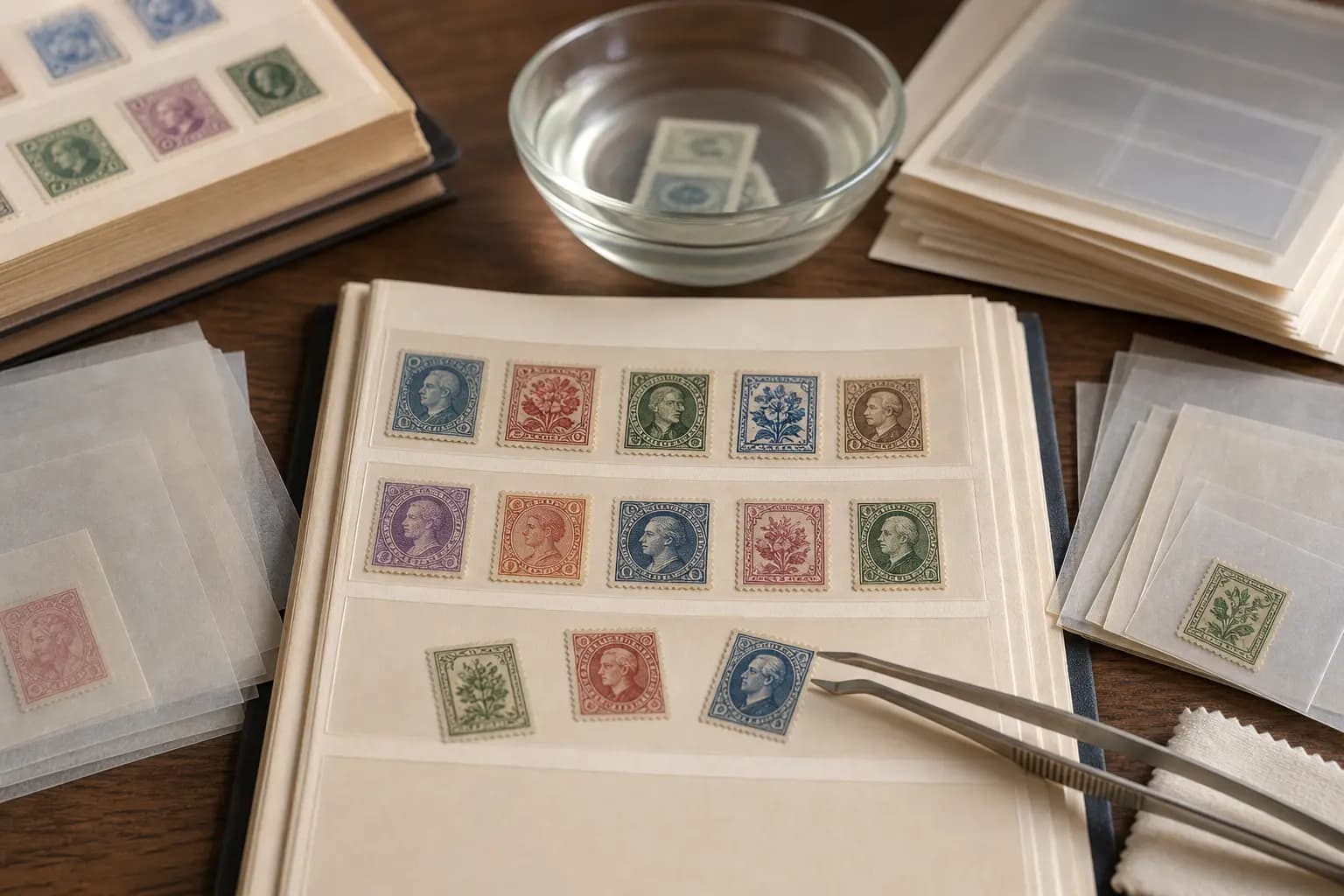
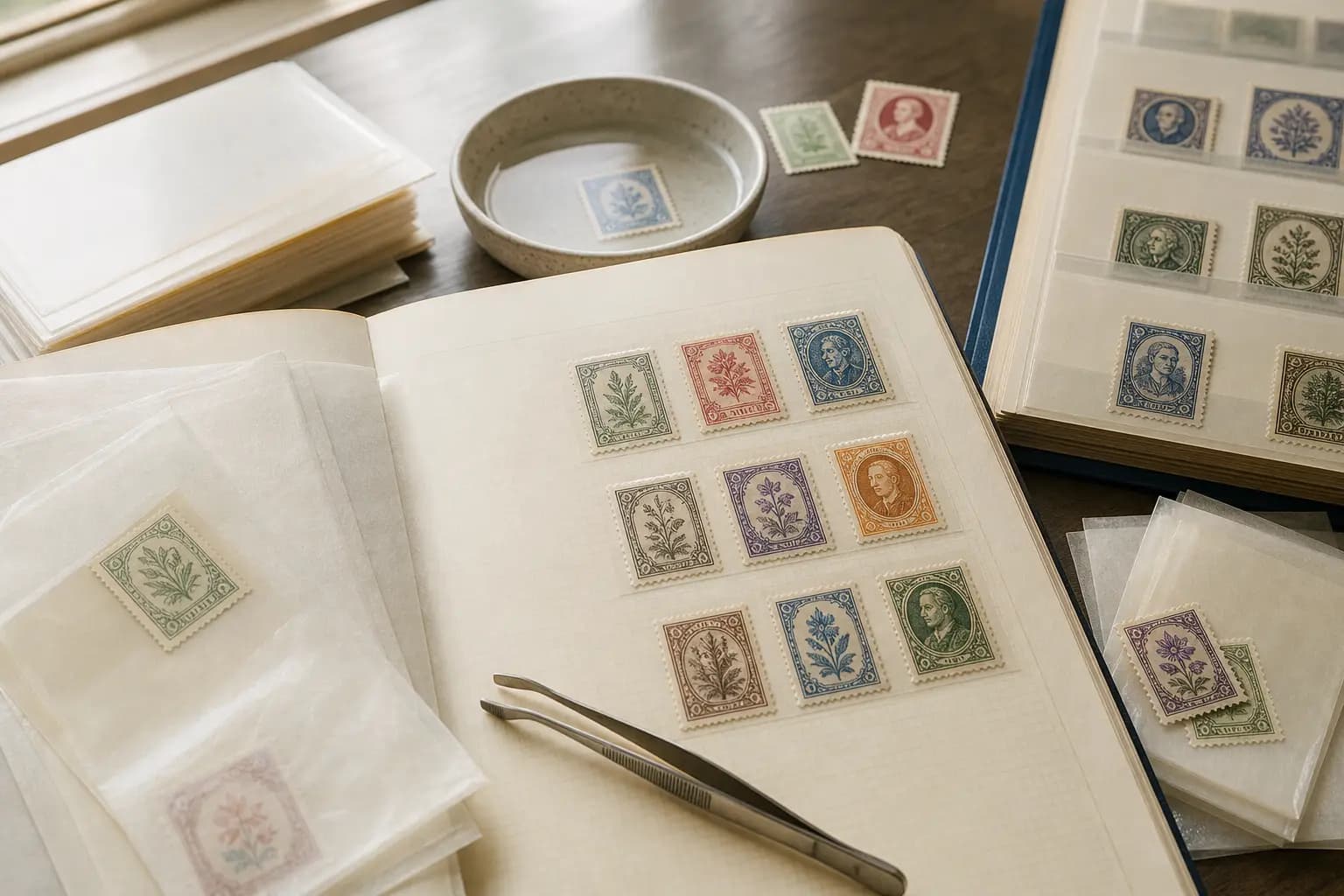
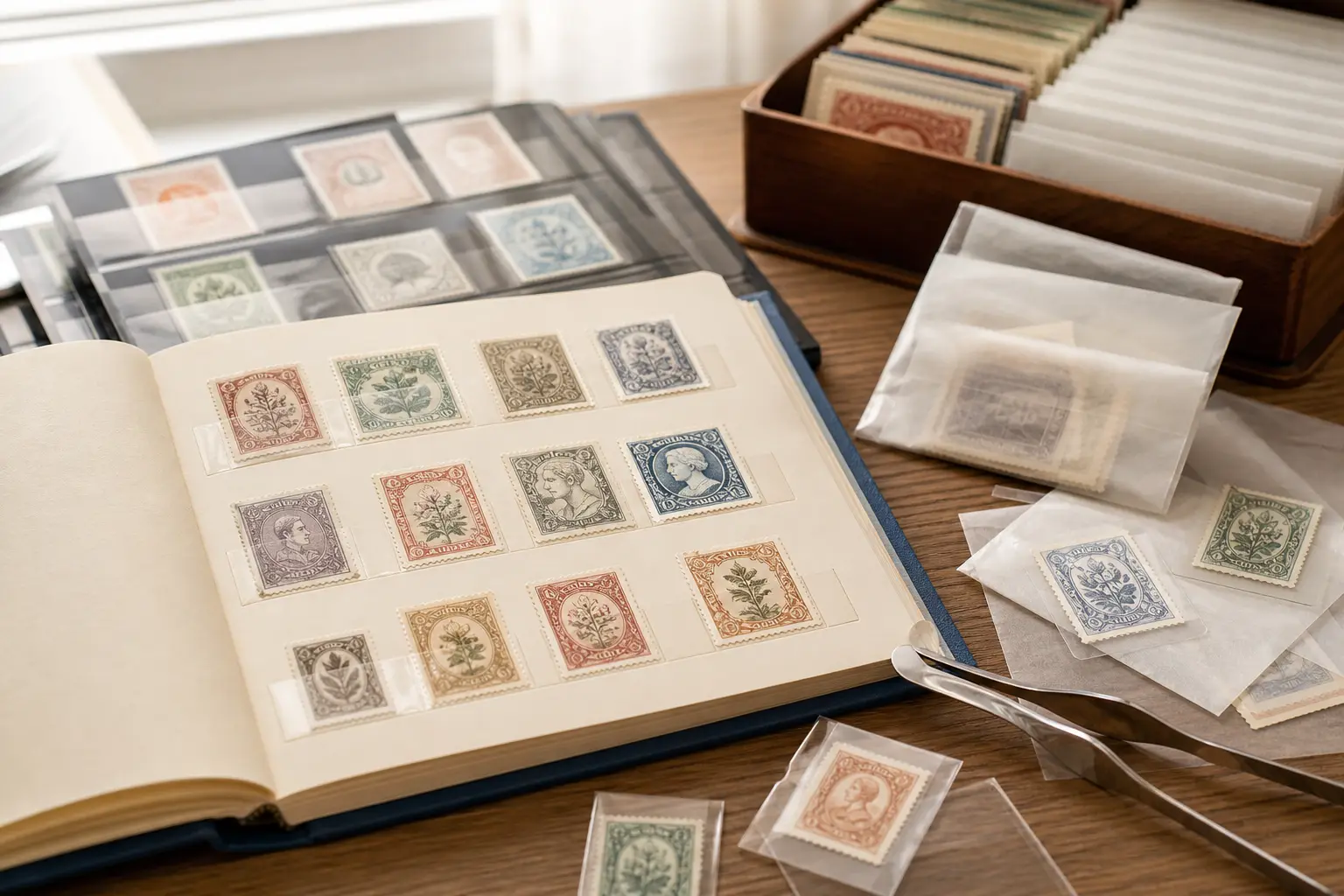
To keep them safe and organized, store your duplicates in glassine envelopes. Glassine is a translucent, protective paper that shields stamps from dust and environmental wear. Avoid storing loose stamps in standard envelopes or containers where they can easily slide around and suffer bent corners or damaged perforations. Keeping your duplicates sorted by country or topic in labeled glassine envelopes ensures they remain in excellent condition for future trades.
Categorizing Your Sorted Stamps by Service or Country
Before mounting your selected stamps into an album or stock book, you must organize them into a logical system. Depending on your collecting goals, you can sort your stamps by country of origin or by a specific topic.
Another highly practical method is sorting by the specific service the stamp was designed to perform. This includes separating standard postage stamps from airmail stamps, special delivery stamps, postage due, parcel post, or revenue stamps. If you encounter a stamp without a country name, remember that Great Britain is the only nation permitted to omit its name, using an image of the ruling monarch instead. For other unfamiliar inscriptions, a stamp catalog or online identifier can help you determine the country of origin.
Preparing for Long-Term Album Mounting
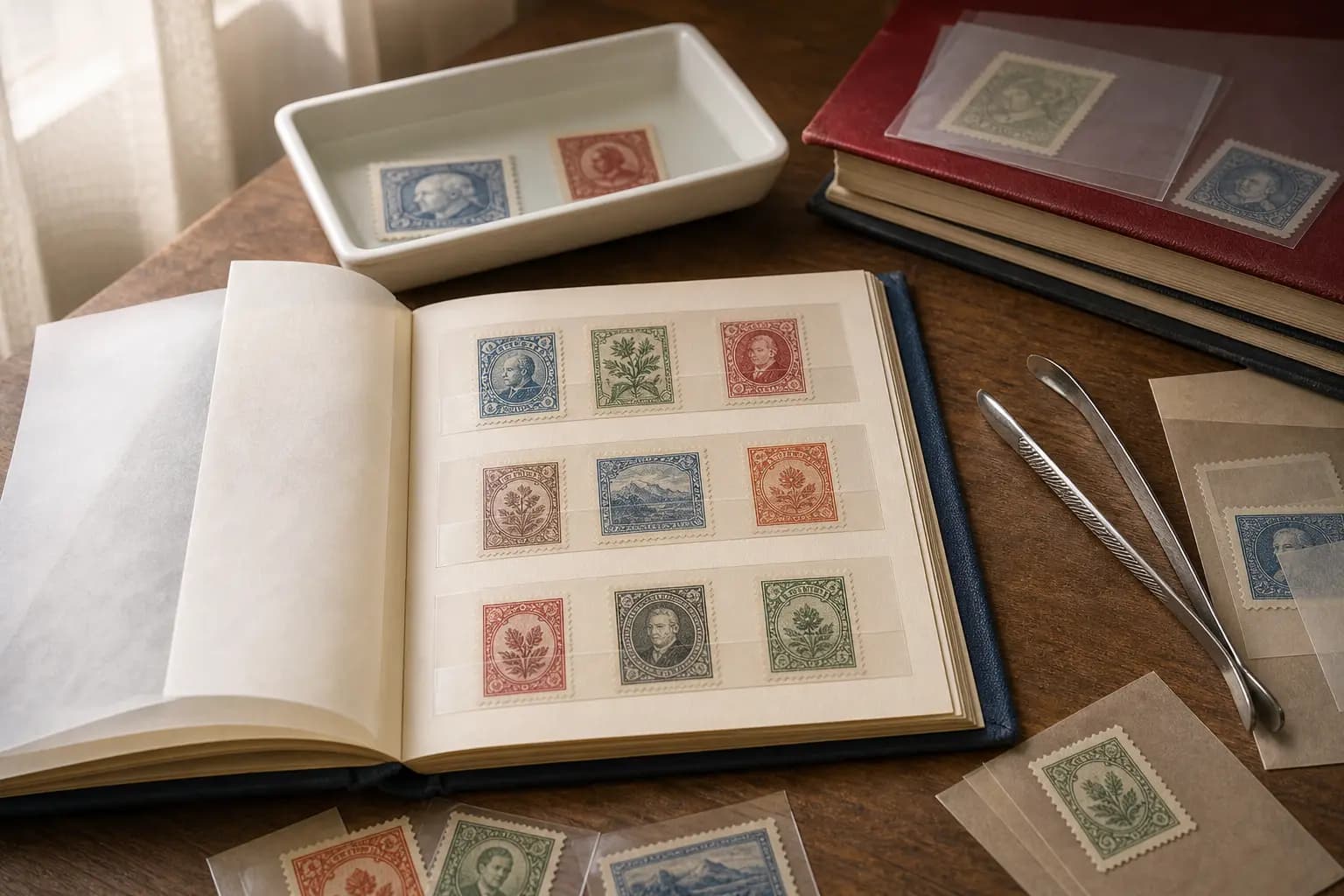
With your stamps evaluated, selected, and categorized, you are ready to transition them to permanent storage. You can choose to store your stamps in a stock book with built-in plastic or paper pockets, or mount them into a dedicated stamp album.
To attach stamps to album pages safely, use peelable hinges or clear plastic mounts. Never use household tape or glue, as these adhesives will permanently damage the paper and drastically decrease the stamp's value. If you are unsure of a stamp's exact variety before mounting, scanning it with StampSnap can help you establish a likely identification to ensure you place it on the correct album page.
Frequently asked questions
Can I use stamp tongs to handle wet stamps?
No. Wet stamp paper is extremely fragile and easily damaged. You should never use tongs on wet or damp stamps. Instead, let them dry completely overnight before handling them with smooth-surfaced stamp tongs.
What should I do with duplicate stamps after sorting?
You should select the best-centered copy with the lightest cancellation for your main collection. Save the remaining duplicates in protective glassine envelopes, which are excellent for trading with other collectors.
How do I identify a stamp that does not have a country name?
Great Britain is the only country permitted to issue postage stamps without its name. These stamps can be identified by the image of the ruling monarch, typically located in the upper right corner. For other unlabeled stamps, a stamp catalog or online identifier can help.
Should I keep a damaged stamp in my collection?
Generally, badly damaged stamps should be removed from your collection. However, if the stamp is a rare or early classic, such as an 1840 Penny Black or an 1847 U.S. issue, you may want to keep it as a placeholder until you can acquire a better copy.