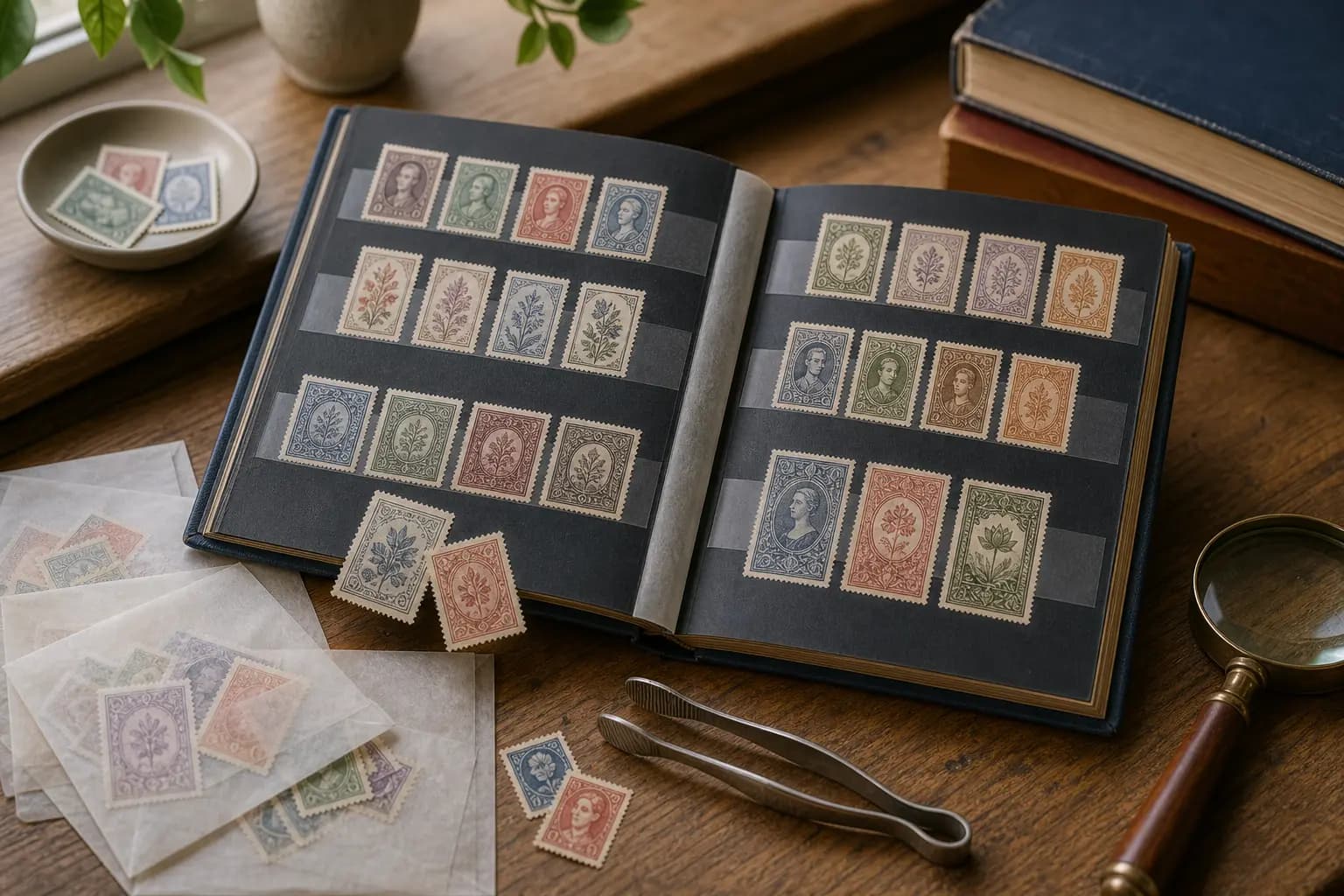
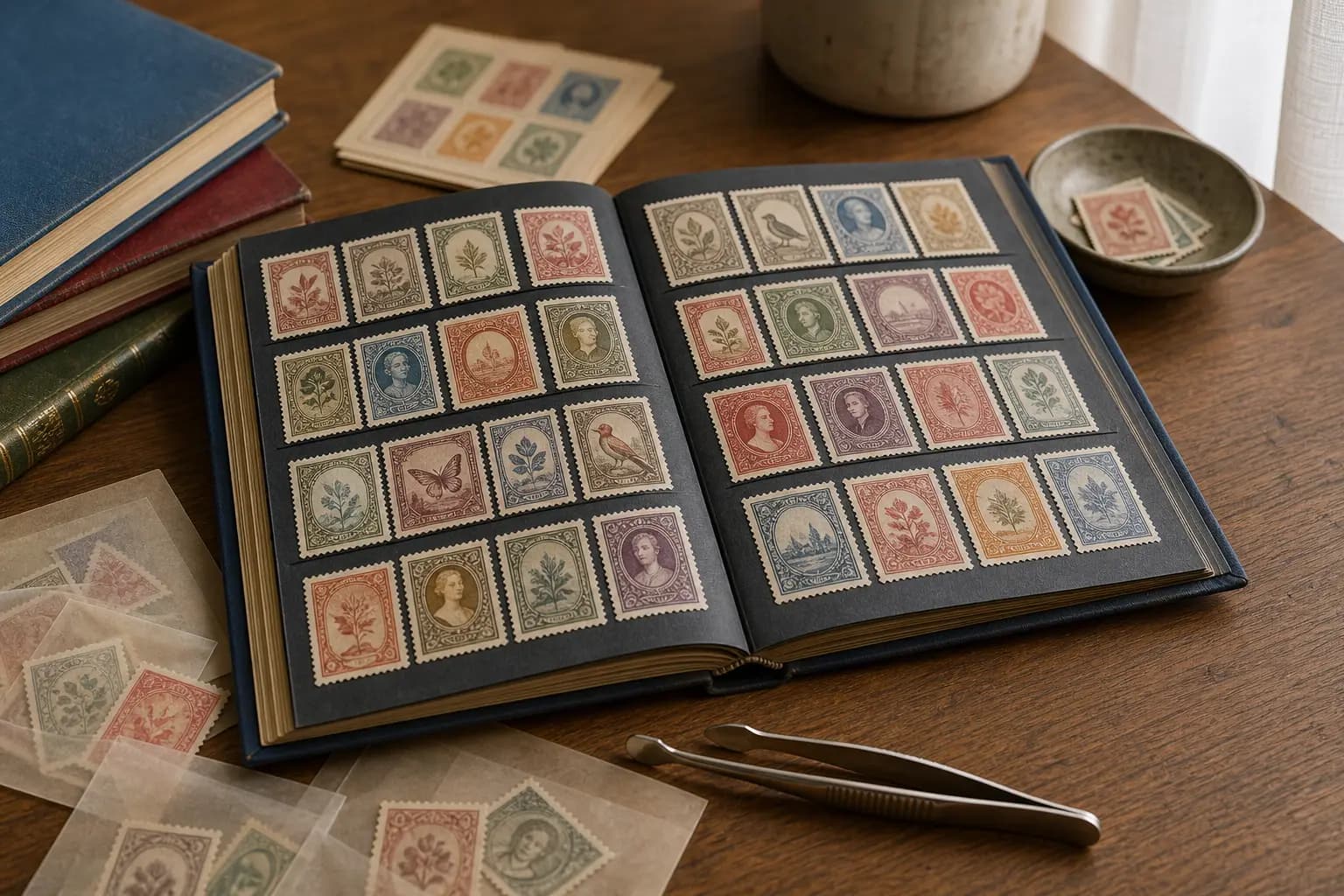
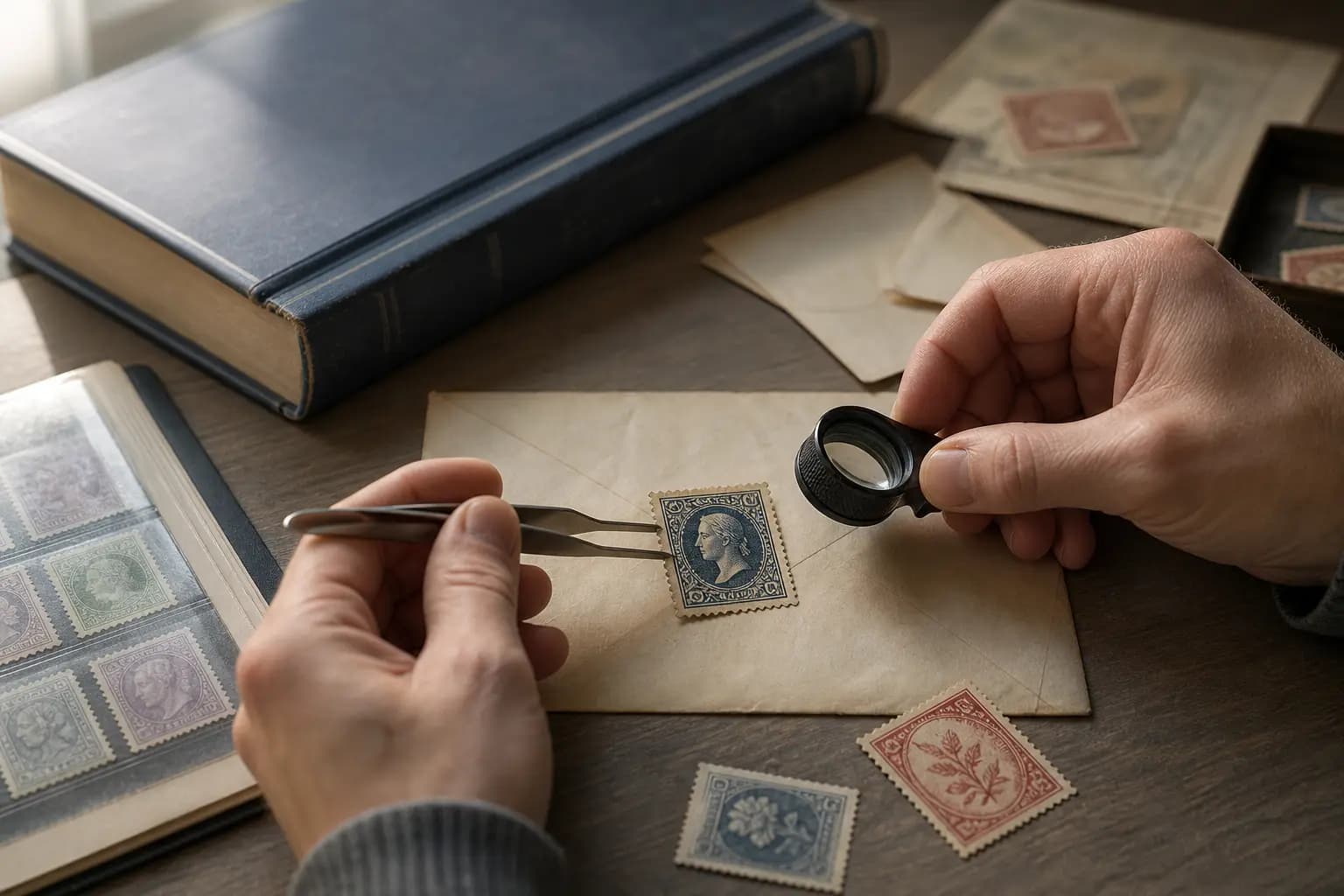
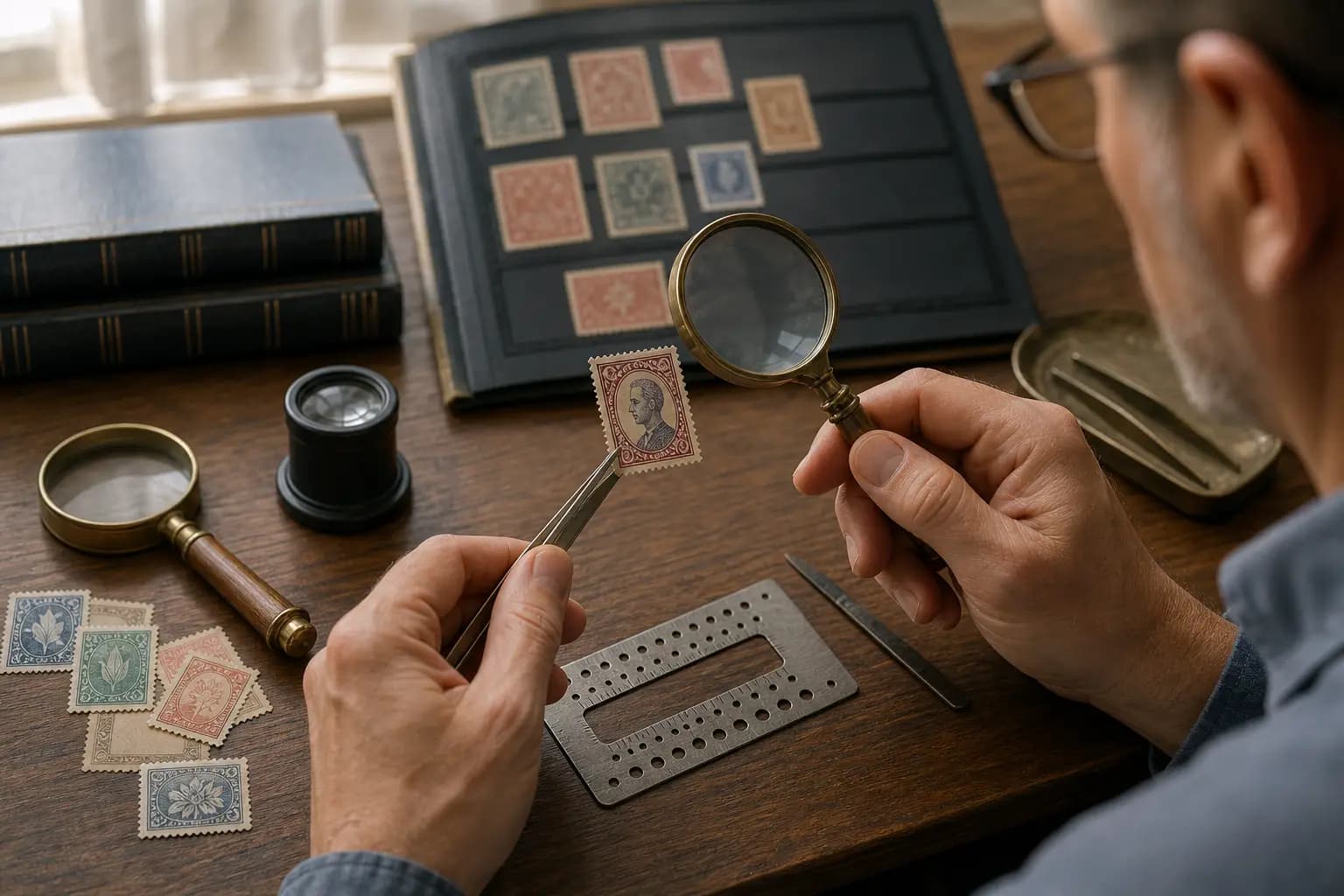
You can start stamp collecting with a pair of tongs, an album, and a reference book. Choose a collecting direction that suits your time and interest, then compare what you see with reliable references before making conclusions.
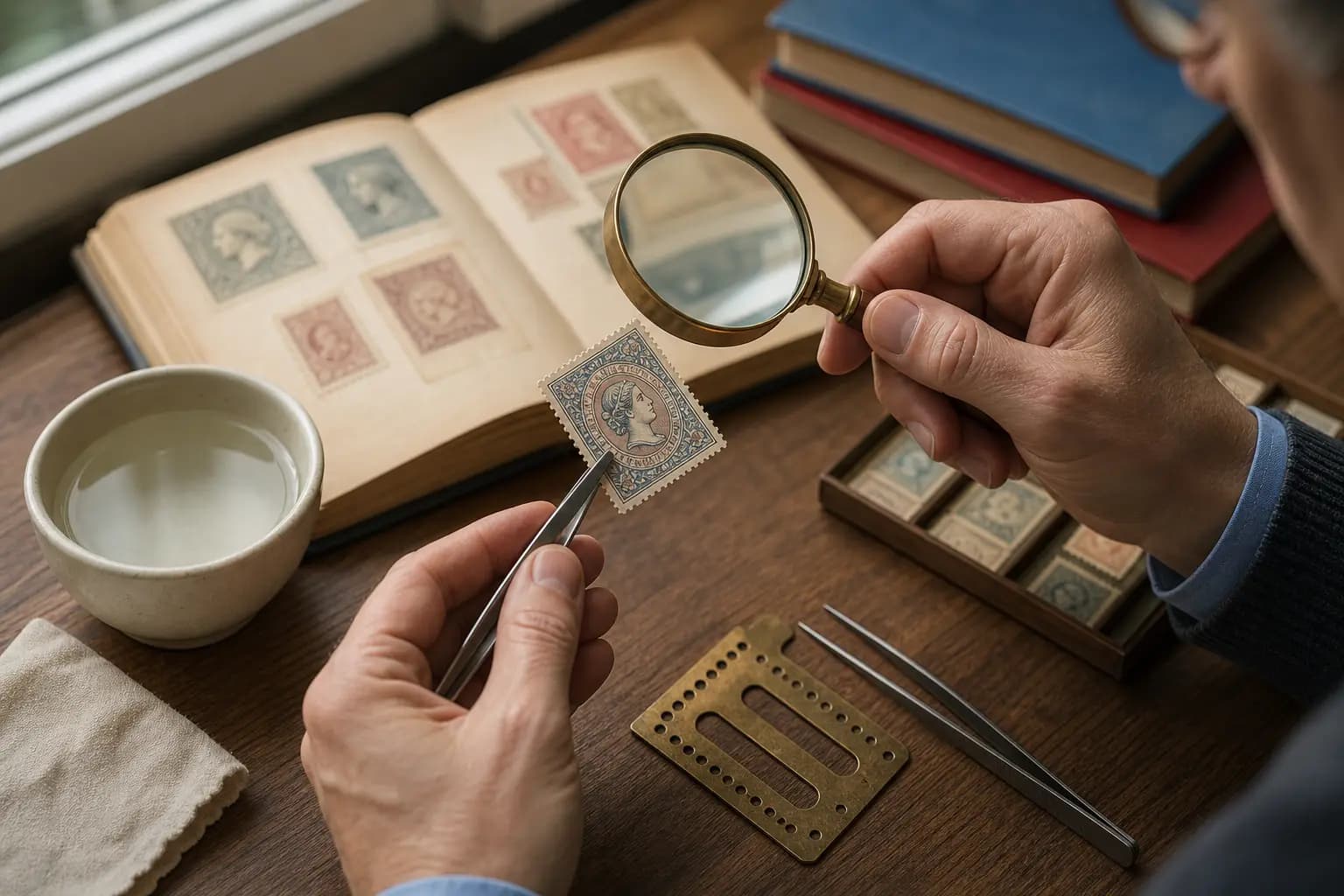
Yes, watermarks can affect a stamp’s value because they may be the only difference between a common issue and a separate, much scarcer one. Check them carefully and safely, since visual clues alone are not always conclusive.
The safest first test is to look for how the stamp is attached and whether it was designed to separate in water. Recent U.S. self-adhesives often have an oil-based backing and may not soak off normally, so identification should be careful and methodical.
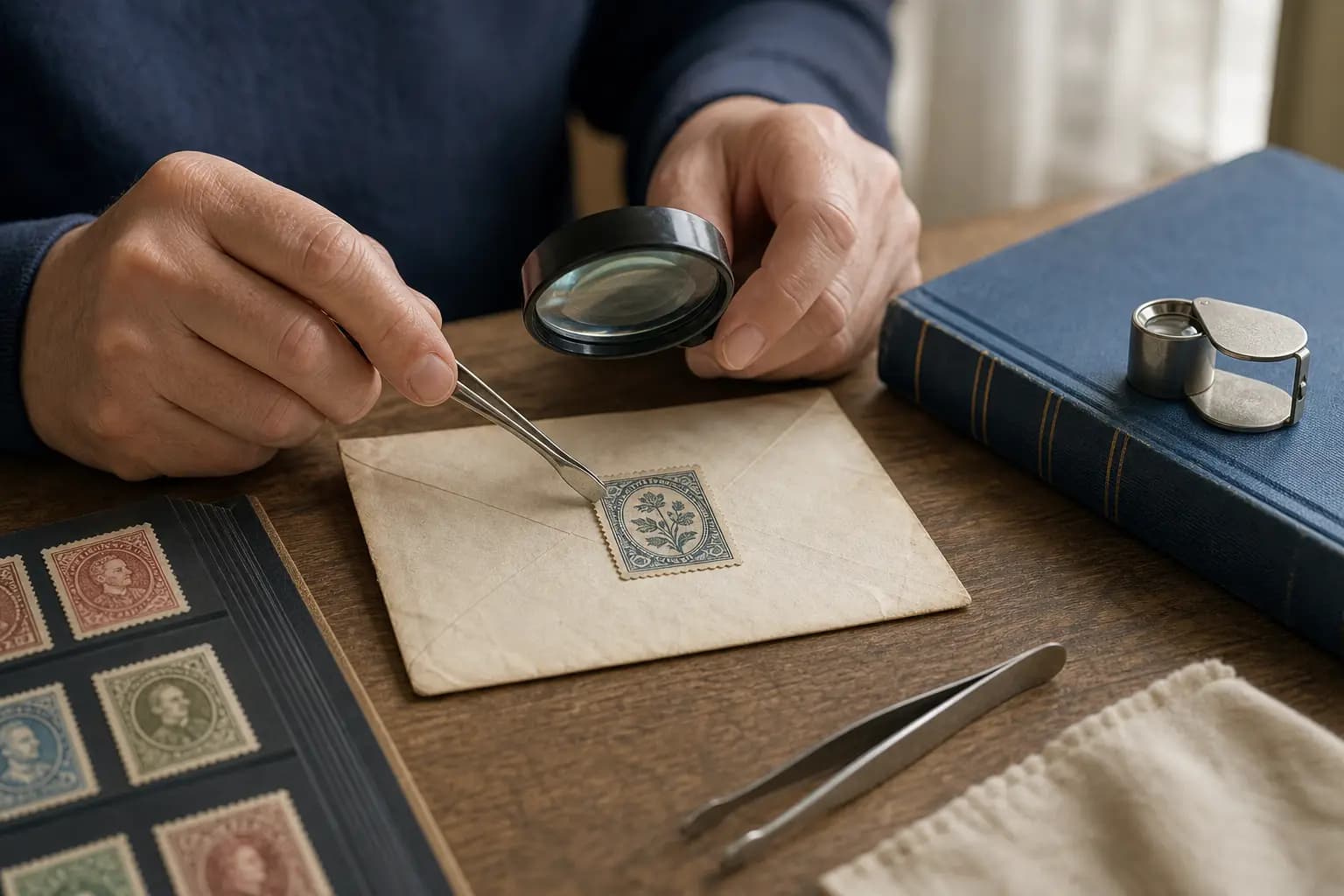
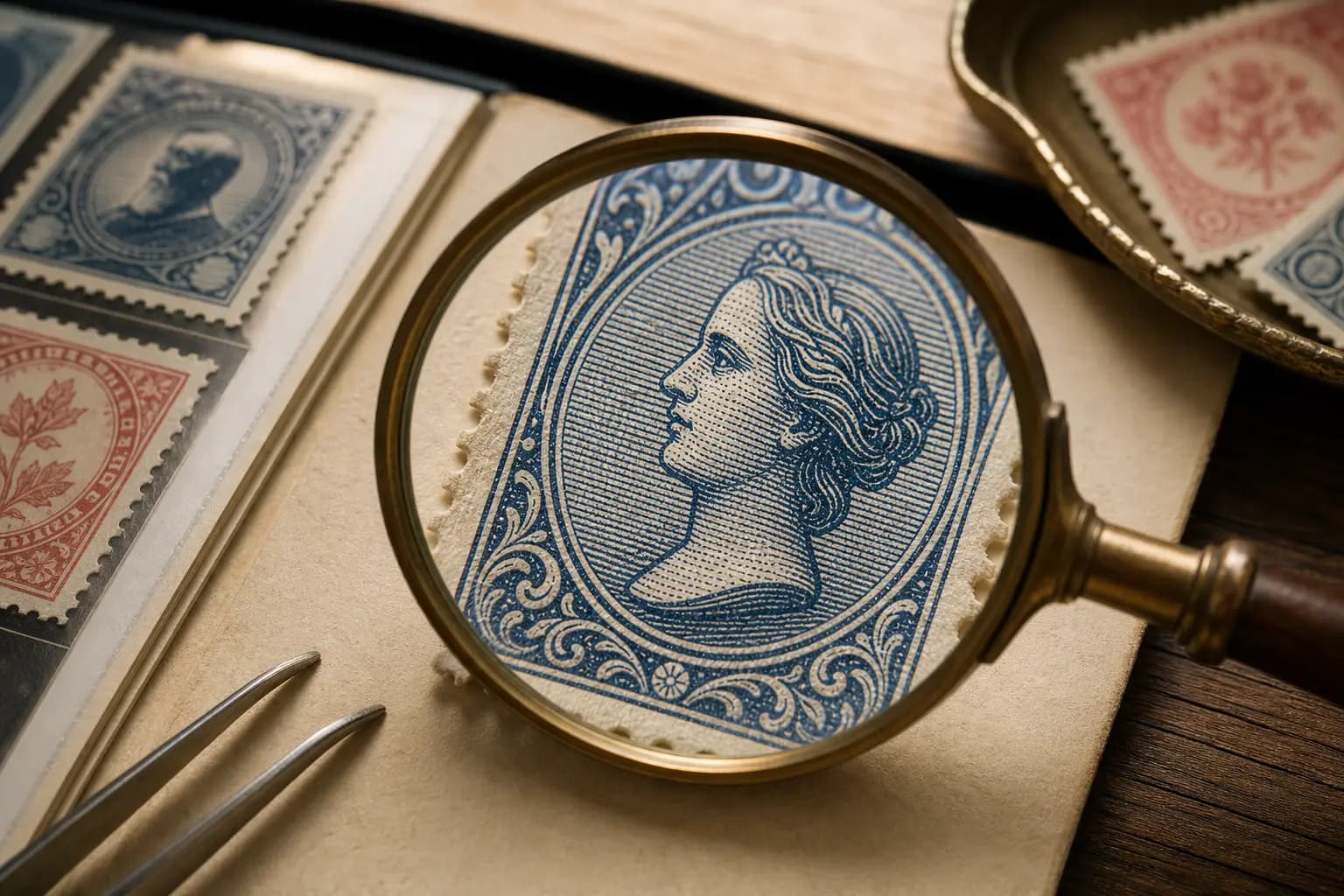
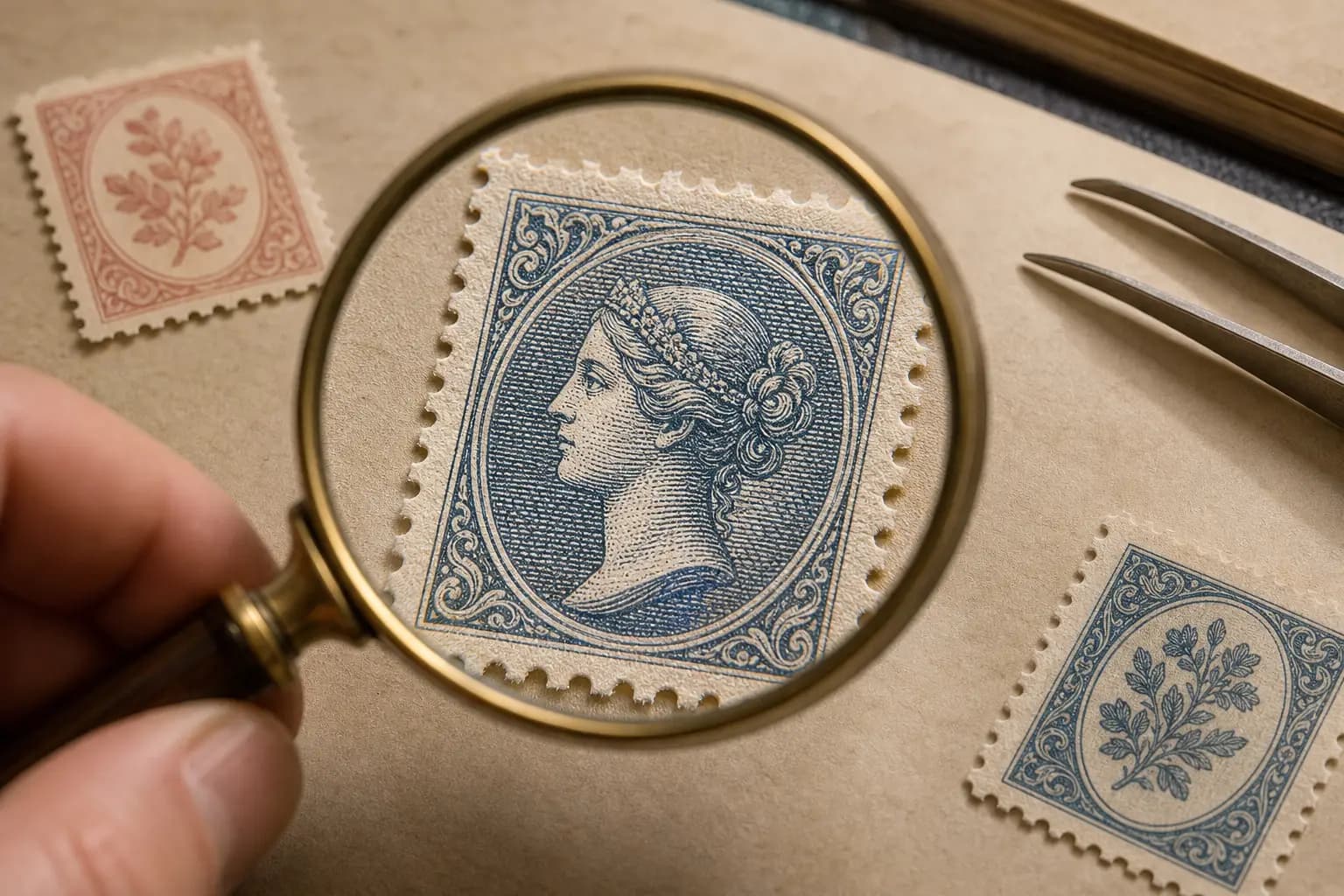
You can often identify a stamp’s printing process by combining paper, ink, texture, and production records. Use non-contact magnification and diffuse or oblique light, and treat every visible feature as a clue rather than a final answer.
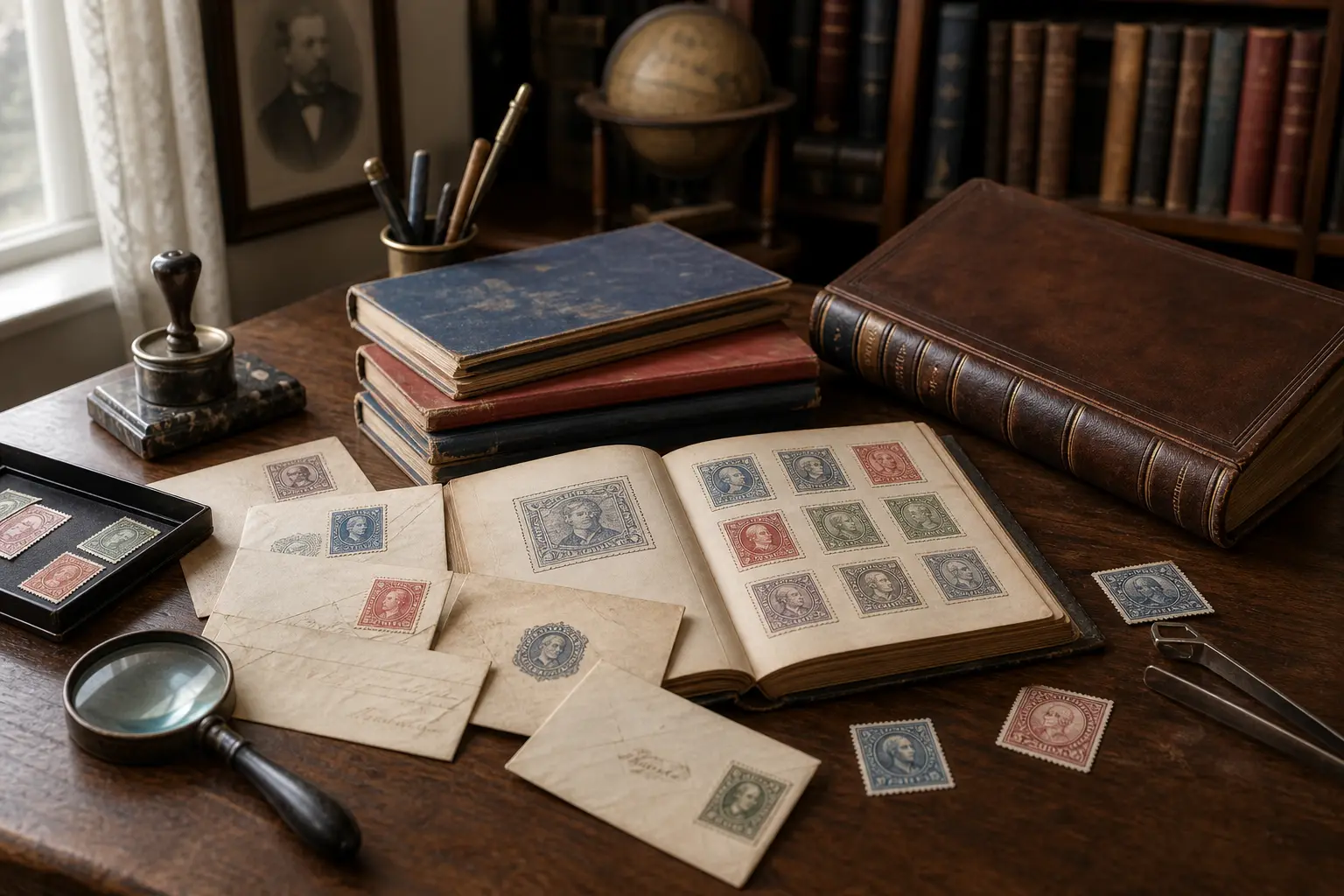
Stamp clubs published journals and built libraries to share knowledge, preserve research, and help collectors compare material. The American Philatelic Society’s early history shows how member services, journals, and library support became practical tools for learning philately.
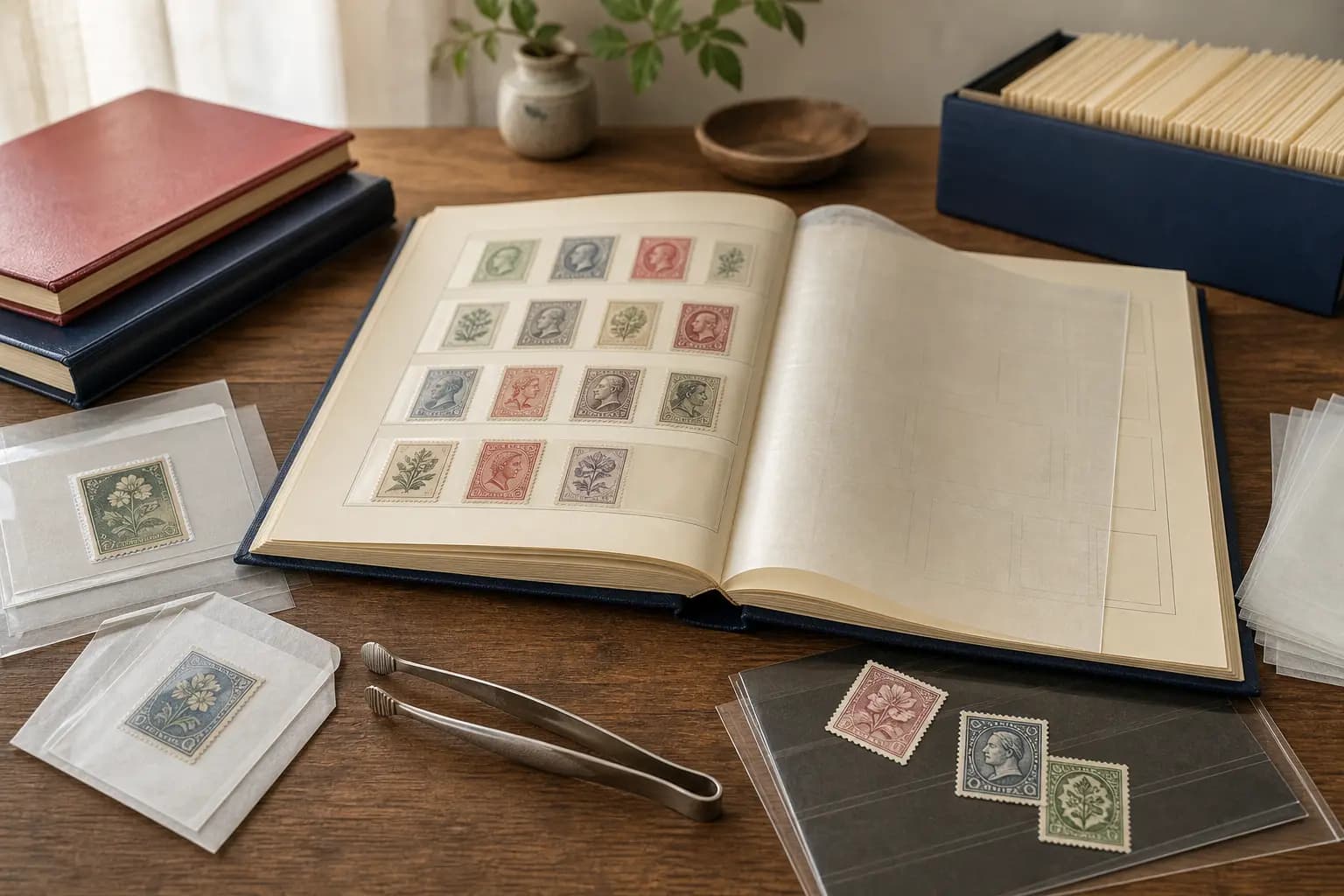
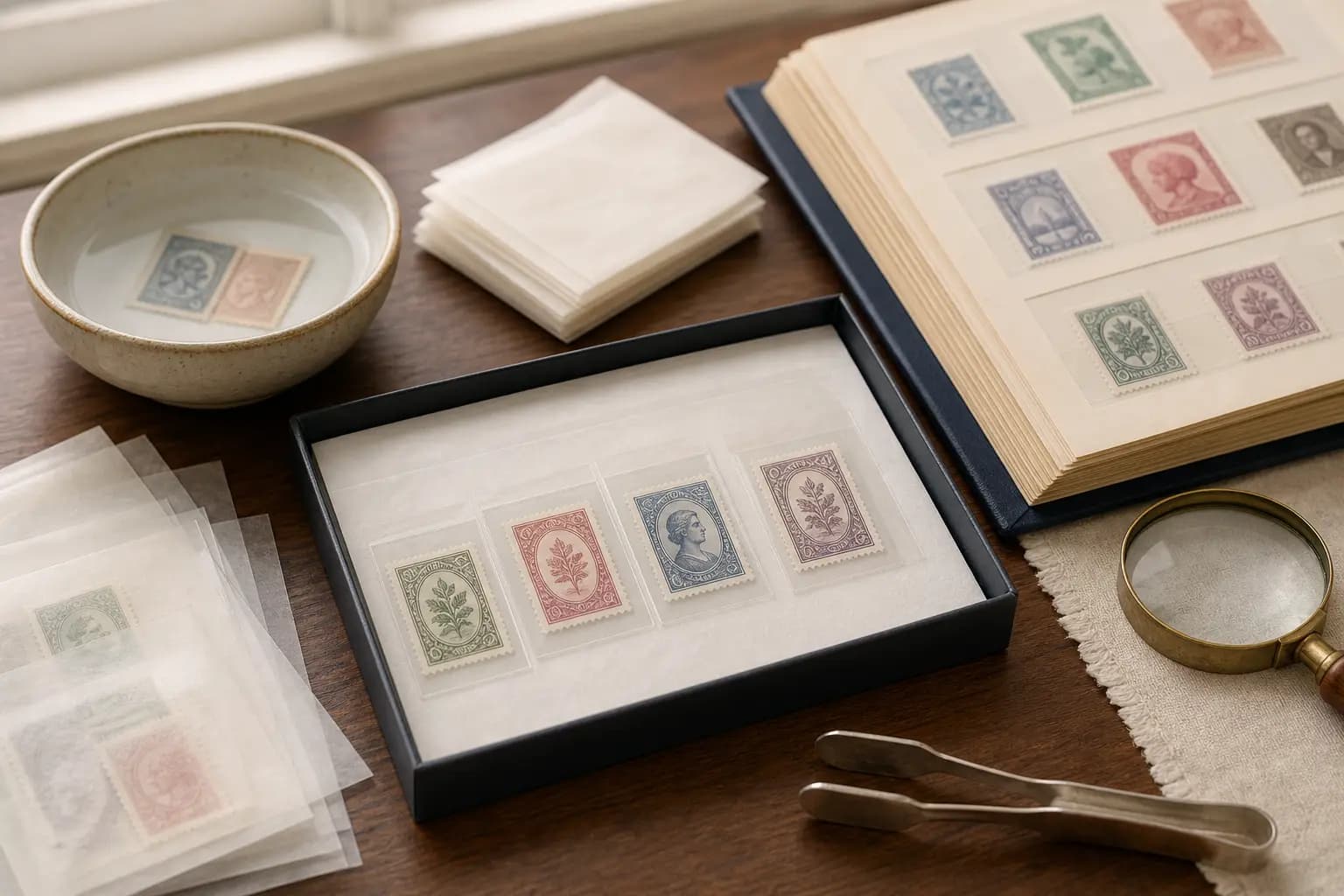
Store dry stamps by sorting them first, then keep them in glassine envelopes, albums, or stock books until you are ready to mount them. Use tongs for dry stamps, never tape or glue, and choose hinges or mounts only when the stamp is fully dry and ready for album placement.
Choose a collecting focus that matches your interests, budget, and available time. You can collect worldwide, by country, topic, type, or personal traits, and there is no single correct way to begin.
Yes, a watermark can make a stamp more valuable when it changes the catalog listing or separates common paper from scarcer paper. Check it safely from the back with proper fluid or a detector, and treat uncertainty carefully if only part of the watermark shows.
Start with the portrait rule: Great Britain is the only country permitted to issue postage stamps without its name. Then use safe, methodical clues like catalog illustrations, perforations, and watermarks to narrow uncertain matches without damaging the stamp.
You can often narrow a stamp’s printing process by combining non-contact magnification, diffuse or oblique light, and production records. Treat lines, raised ink, screened tone, and watermark evidence as clues, not single tests.
Stamp clubs helped turn stamp collecting from private enthusiasm into organized philately. They supported exchange, study, libraries, journals, and exhibits, while early societies also responded to counterfeits and helped collectors share specialist knowledge.
The safest approach is to let damp stamps dry flat, handle them gently, and store them only after they are fully dry. If a cover has important cancellations or images, preserve the entire envelope instead of forcing removal.