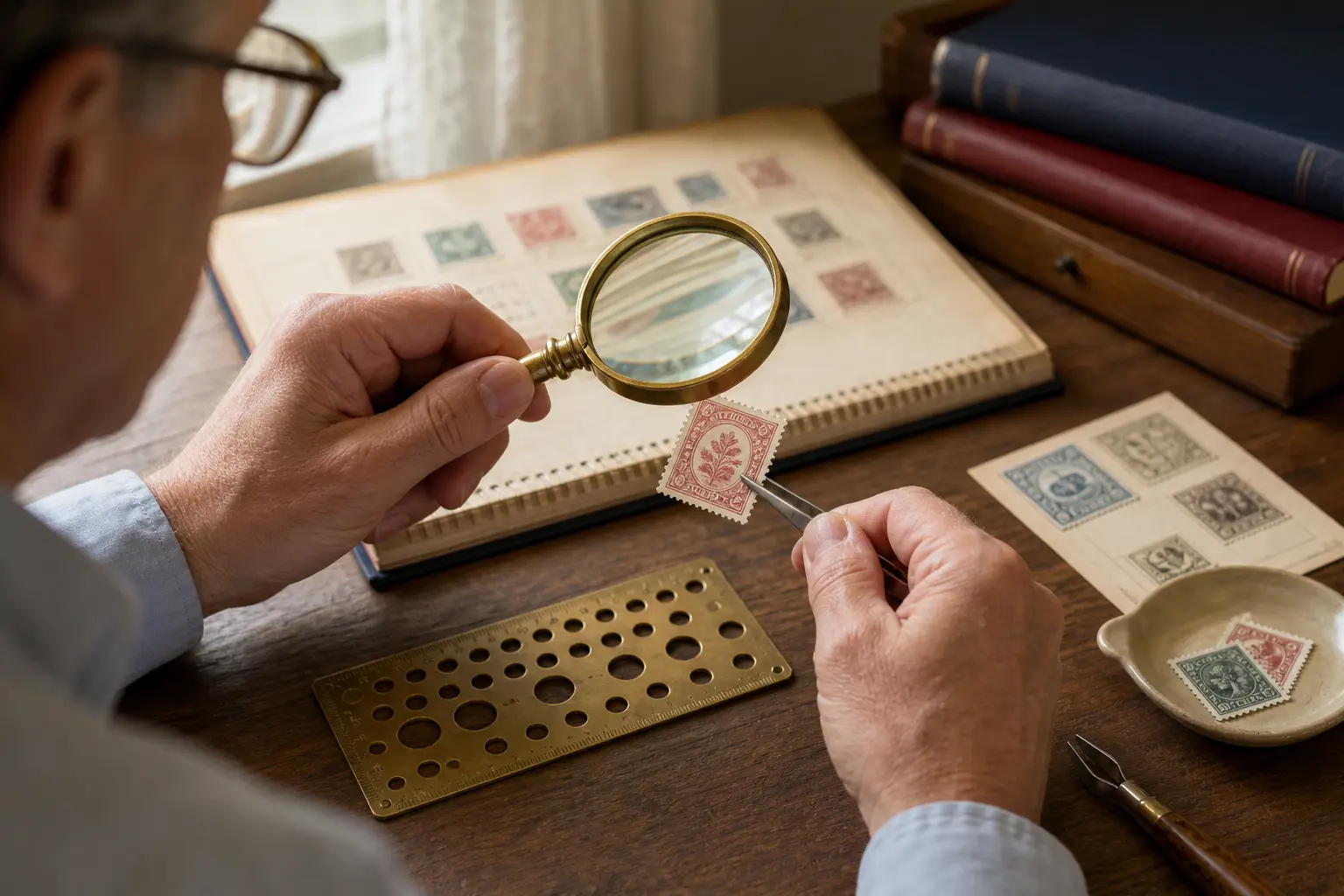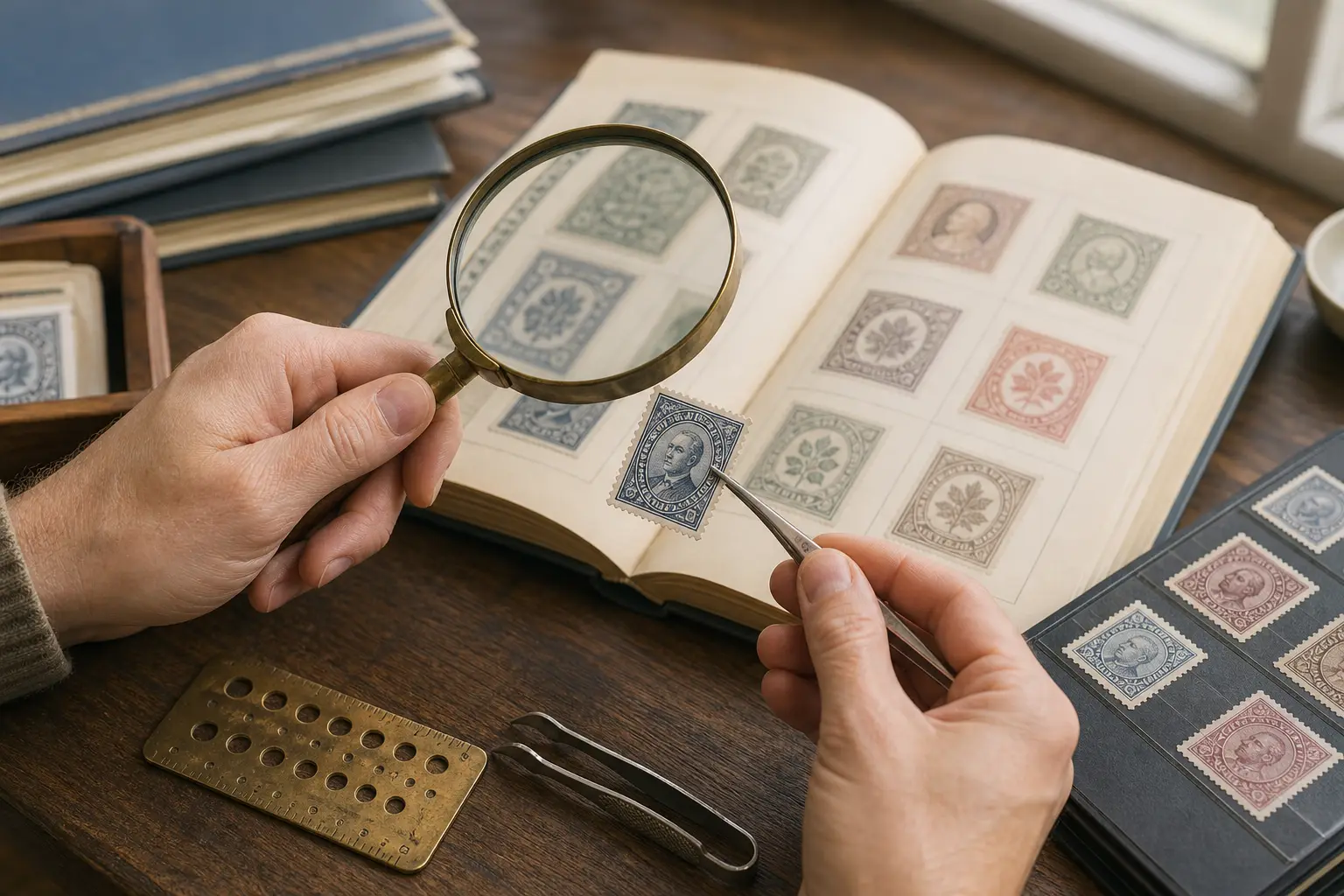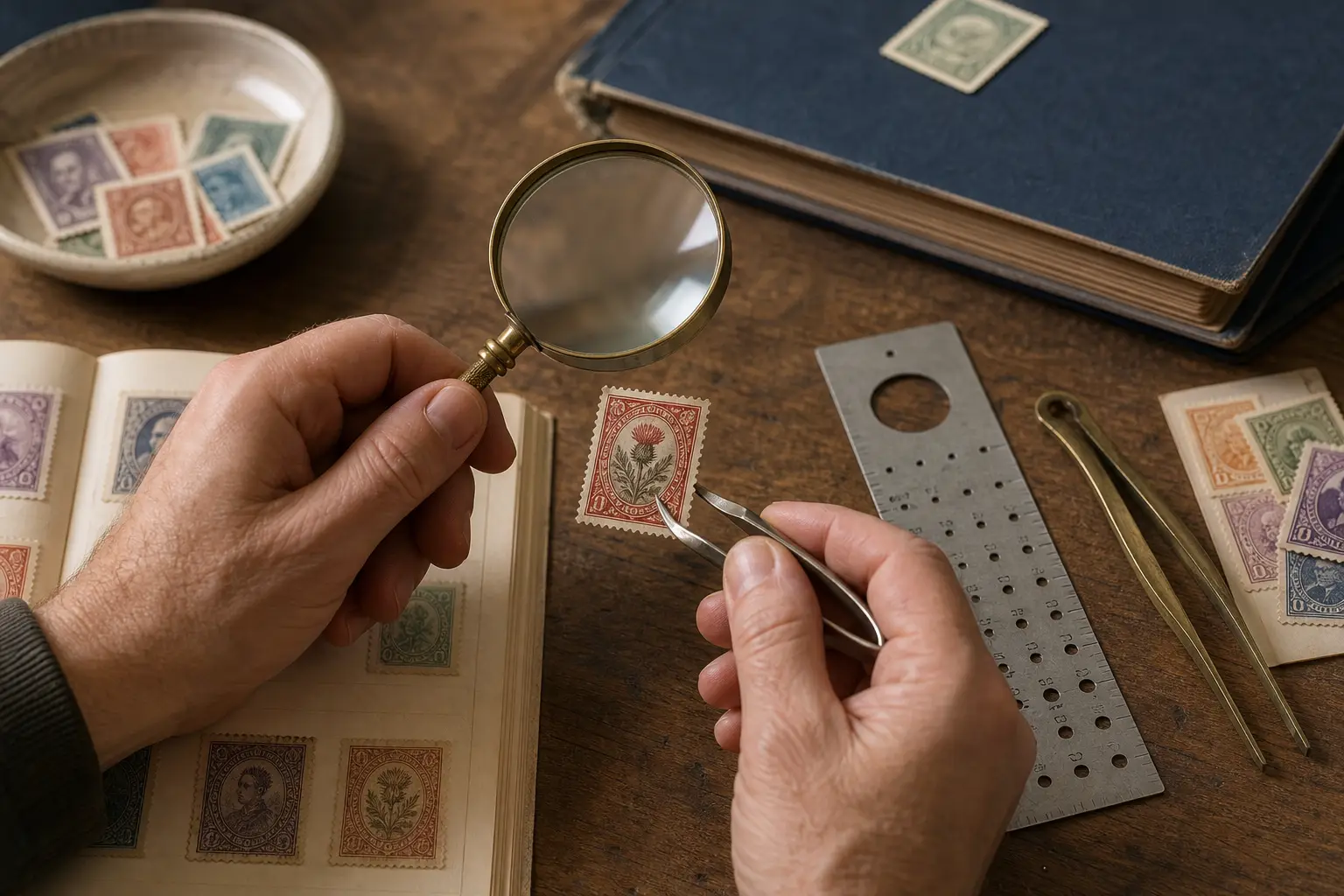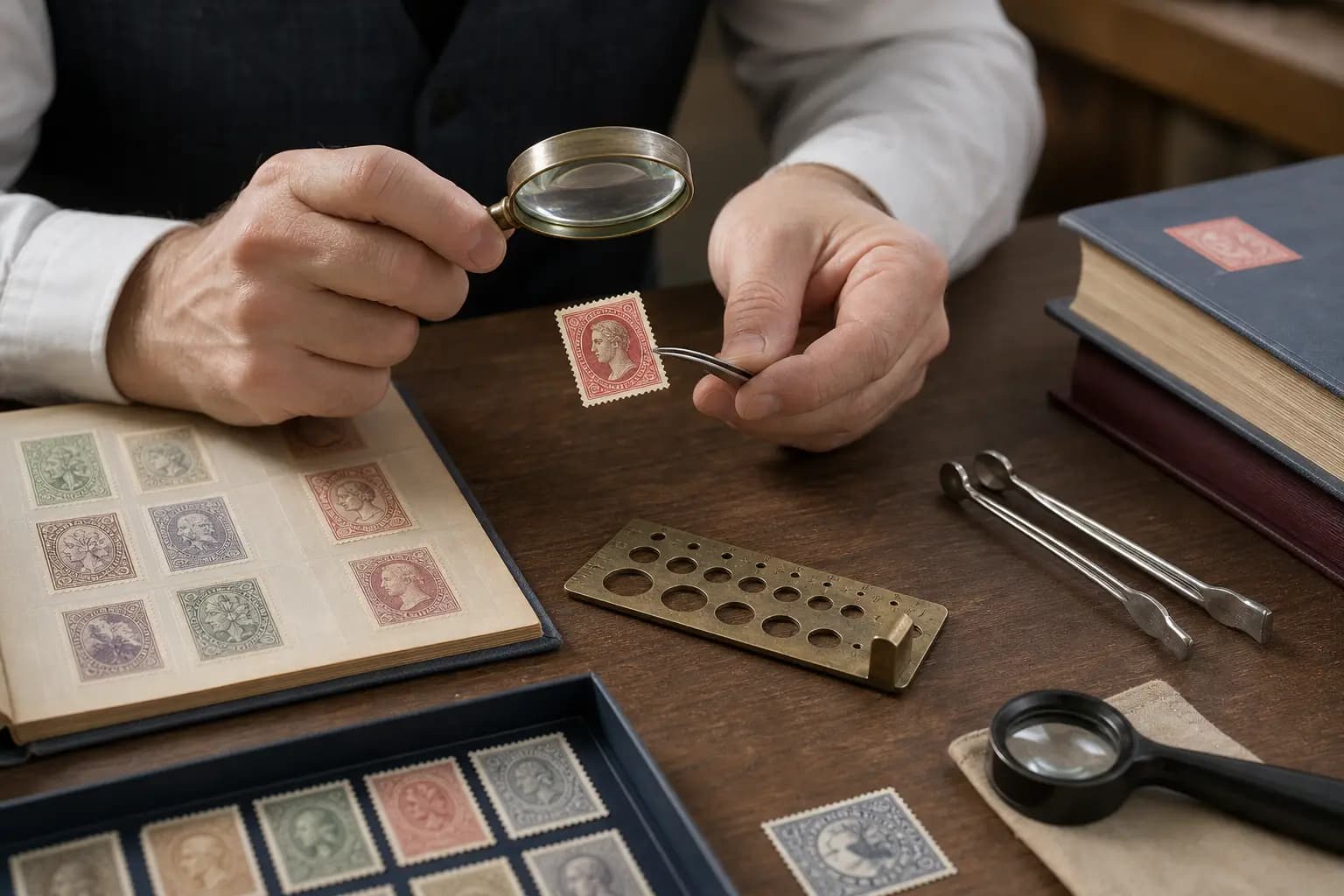
1. Record every visible inscription and symbol
Look for a country name, denomination, currency, date, monarch, emblem, postal inscription, or overprint. Some classic stamps omit a country name, so also note the portrait, coat of arms, language, and design conventions. Write down what is visible before searching; this prevents a promising search result from changing what you think you saw.
2. Describe the physical format
Measure the stamp, note its orientation and color, and inspect the full perforation pattern. Determine whether it is mint or used, attached to a cover, overprinted, surcharged, or imperforate. Do not trim, soak, or detach an item simply to make identification easier.
3. Compare the printing and paper clues
Under magnification, engraved lines, letterpress impressions, lithographic dots, and photogravure patterns can look different. Watermark and paper may separate catalog listings that share the same face design. Use the correct philatelic tools and safe fluids only when you understand the handling risk.
4. Build a shortlist, then verify the variety
Use a catalog, a specialist reference, or a photo identifier to narrow the candidate issue. Compare every decisive feature rather than stopping at the first matching image. If the stamp could be valuable or altered, expertizing is the appropriate next step.