The short answer: watermarks can change value a great deal
A watermark can change a stamp’s value because it may be the only difference between two stamps that look almost identical. The American Philatelic Society notes that stamps with the same design may differ only by the presence, absence, or design of a watermark, and those differences often receive separate catalog numbers. In practical collecting terms, that means a stamp that appears ordinary at first glance may belong to a much different listing once the paper is examined.
The APS also explains that watermarks were used as a security measure in stamp paper to deter counterfeiting. They were formed from dies attached to the frame used to make paper from pulp, creating thin places in the paper. Because the watermark is part of the paper itself, it is not something you can judge reliably from the front of the stamp alone. A careful check from the back, with the right method, is often necessary before any value judgment is made.
Why collectors cannot rely on the design alone
Many stamp designs were reused with only minor changes over time, and the APS describes this as a common source of confusion in worldwide catalog work. The same design may appear across multiple years, with the useful difference hidden in a watermark, a small inscription, or another detail that is easy to miss. This is why valuation begins with identification, not with a quick estimate based only on appearance.
The APS example of Liechtenstein shows how easily similar stamps can be confused. One stamp in the series was a definitive, while a similar later issue commemorated an anniversary by changing the upper corner designs to year-dates. The catalog note had to call attention to that subtle difference. Watermarks work the same way for value: if the key difference is on the paper and not obvious in the design, careful checking is essential.
How to check a watermark safely
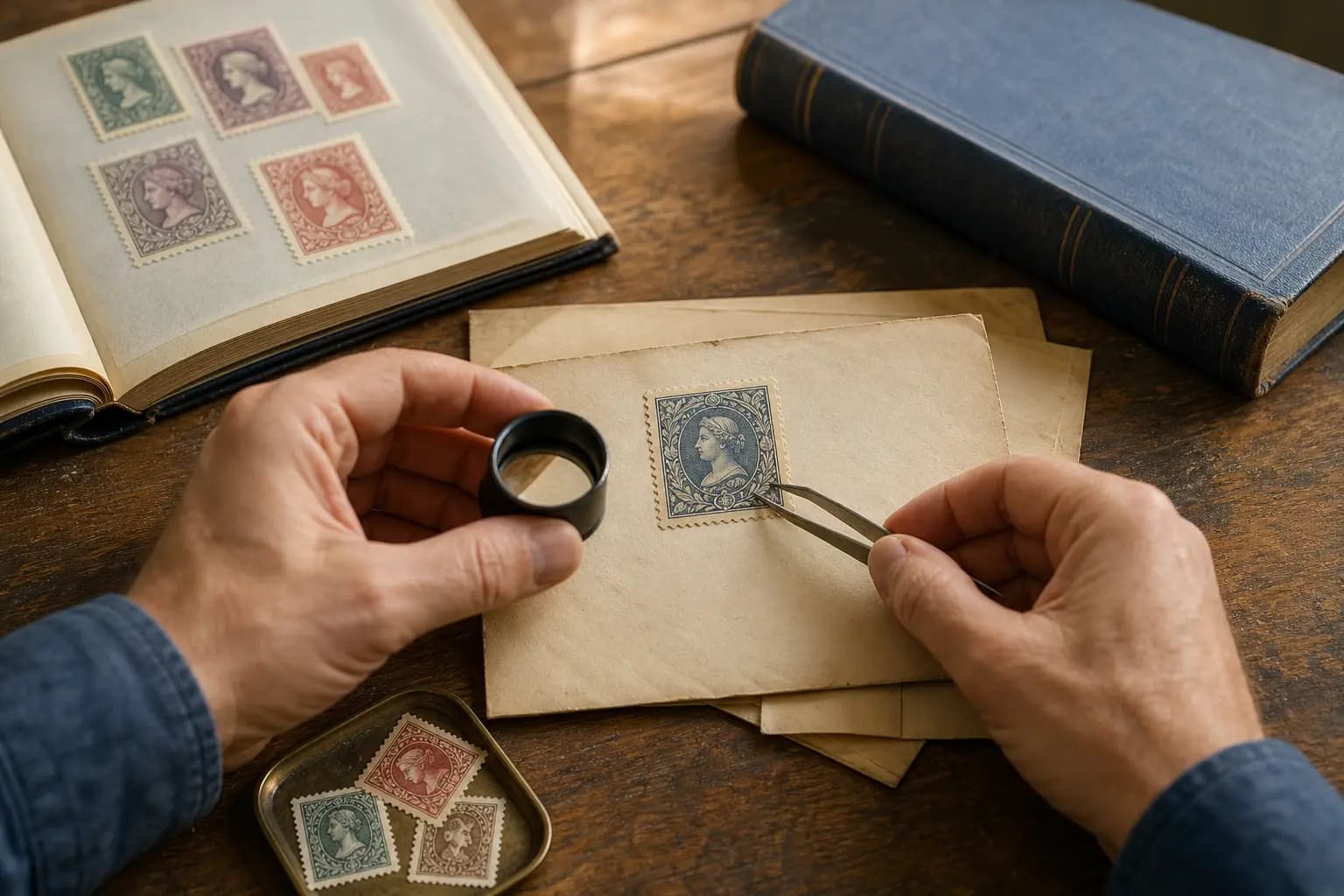
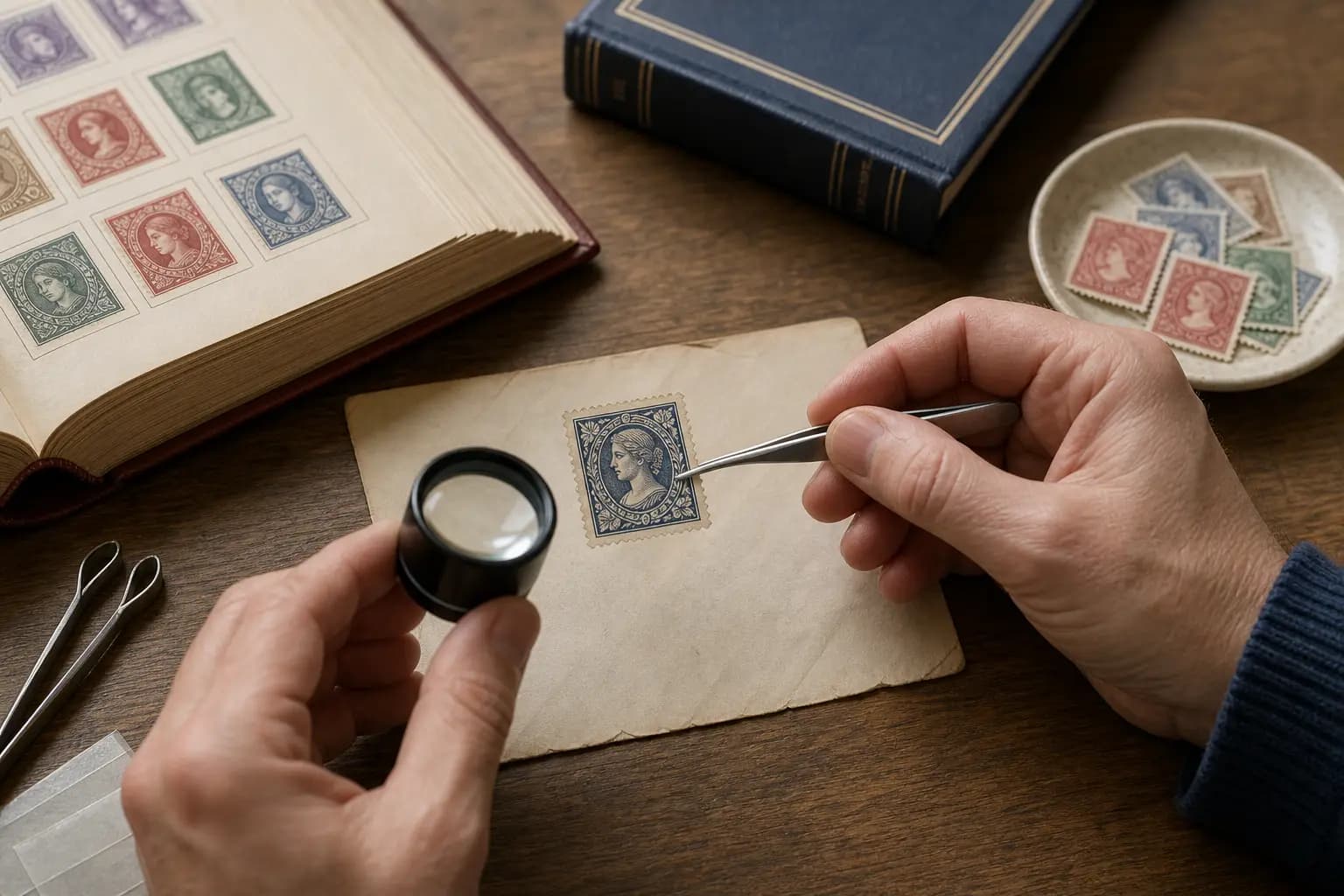
The APS recommends a simple, low-risk method: place the stamp face down in a dark tray and moisten it with watermark fluid so the watermark appears as dark lines against a lighter background. The organization says commercial watermark fluid is preferred, and it specifically notes that watermark fluid evaporates quickly and should not affect the gum on an unused stamp. This approach is meant to help reveal the paper pattern without forcing the stamp or guessing from memory.
The same source also mentions alternative tools such as the Safe Signoscope and Morley Bright Watermark Detector. Those tools can assist in watermark identification, but the key point is that the stamp should be examined in a controlled way, not handled roughly. If the watermark is faint, partial, or only shows a fragment of a letter, that does not mean it is absent. It may simply mean you have not yet captured the right part of the paper pattern.
What to do when the watermark is hard to see
Not every watermark is equally easy to read. The APS says some countries have watermarks that can often be seen without special tools, while many stamps require more sophisticated study. It also notes that many stamps show only part of a watermark, sometimes only a small section of one letter. That means an uncertain result is still a useful result, because it tells you where more careful comparison is needed.
For a valuation question, the safest response to an unclear watermark is to record what you can confirm and avoid assuming the best or worst case. If you are cataloging your collection, make a note of the suspected country, design, color, and any visible watermark fragment. StampSnap can be used to create a likely identification or collection record from those observations, but it should still be treated as a working record, not a final expert determination.
Why watermark differences can separate common from scarce
The APS states plainly that watermarks may be the sole difference between a very common stamp and one valued much more highly in catalog terms. That is why two examples that look nearly identical can belong to very different listings. In valuation work, this is one of the most important reasons to check the back of the stamp before drawing conclusions.
This is also why collectors should not assume that a visible similarity means equal worth. A stamp may share its design with a more ordinary issue, yet still be the scarcer version because of the paper used underneath. The value question is therefore not just “What does it look like?” but “What is the exact issue, including the watermark, if any?”
A practical valuation workflow for collectors
Start with the most basic facts you can see safely: country, design, color, and whether the stamp appears unused or used. Then check the watermark in a controlled way, because the APS says watermark, perforations, and color are among the basic details that help narrow identification. If the stamp has a confusingly similar design, compare it against catalog information rather than relying on a single visual clue.
If the watermark is confirmed, your valuation work becomes more specific because the stamp may belong to a separate catalog listing. If it is not confirmed, label the result as uncertain and continue only with the evidence you have. Conservative records are more useful than confident guesses, especially when the difference may lie in a small fragment of a watermark or in a paper characteristic that is hard to see at first.
When to stop and seek more help
If the stamp seems significant, fragile, or difficult to interpret, stop at the point where the evidence becomes unclear. The APS FAQ invites collectors to submit questions or call for assistance, and that is a sensible next step when a watermark or related identification issue is still unresolved. Careful identification is part of value assessment, and not every stamp can be fully resolved from a single look.
The most reliable habit is to document what you observed, what method you used, and what remains uncertain. That protects the stamp, keeps your notes honest, and makes future comparison easier. Whether you are building a reference file or a broader collection record, a methodical approach is better than rushing to a value conclusion based on an incomplete reading.
Frequently asked questions
Can a watermark really be the main reason two similar stamps have different values?
Yes. The APS says watermarks may be the sole difference between a very common stamp and one that may be far more significant in catalog terms.
What is the safest way to check a stamp watermark?
The APS recommends placing the stamp face down in a dark tray and using commercial watermark fluid so the watermark appears as dark lines against a lighter background.
Should I assume a watermark is missing if I cannot see it clearly?
No. The APS notes that many watermarks are only partly visible, and some stamps require more detailed study before the watermark can be confirmed.
Can StampSnap tell me the official value of a stamp?
No. StampSnap can help create a likely identification or collection record, but value remains informational and depends on correct identification and condition.
Why do some stamps need special tools to identify the watermark?
Because the APS says many watermarks are hard to see by eye and may require more sophisticated study or a detector to reveal the paper pattern clearly.