The Pre-Stamp Era and Refused Mail Systems
Before the invention of the postage stamp, the postal system operated on a completely different model. The recipient of a letter, rather than the sender, was responsible for paying the delivery fees upon receipt. Because postage rates could be quite high, a large portion of the mail was ultimately refused by the addressees who could not or did not want to pay.
To bypass these high costs, some correspondents devised clever codes written directly on the outside of the letter. When the postman presented the letter, the recipient could inspect the exterior, read the coded message, and then refuse to accept the delivery. This allowed the message to be successfully received without anyone paying the postage fee.
Sir Rowland Hill and the Prepayment Revolution
This widespread evasion and the high rate of refused mail led to significant reforms. Sir Rowland Hill is generally credited with the revolutionary idea of requiring prepayment of postage and introducing the use of postage stamps to indicate this payment. Hill advocated for lowering the overall postal rates but making payment in advance mandatory.
This shift solved the issue of unpaid, refused mail and streamlined the entire postal delivery system. His efforts culminated in Great Britain issuing the first official postage stamps in 1840, which completely transformed global communication.
Identifying the First Postage Stamps of Great Britain and the United States
The very first postage stamp issued was Great Britain's famous Penny Black in 1840. This stamp cost one pence and featured a portrait of Queen Victoria. Because Great Britain was the first nation to issue postage stamps, it is the only country permitted to issue them without including the country name on the design, using only the image of the ruling monarch instead. Although these are the world's first stamps, they are not tremendously rare or valuable because millions of them were printed and used.
Following this model, the United States issued its first two stamps on July 1, 1847. Printed by Rawdon, Wright, Hatch and Edson, the five-cent red-brown stamp depicted Benjamin Franklin, the first U.S. postmaster general, while the ten-cent black stamp depicted George Washington. Unlike modern releases, these early U.S. stamps were not issued in a specific city on their first day of release.
Essential Tools for Inspecting Early Postal Material
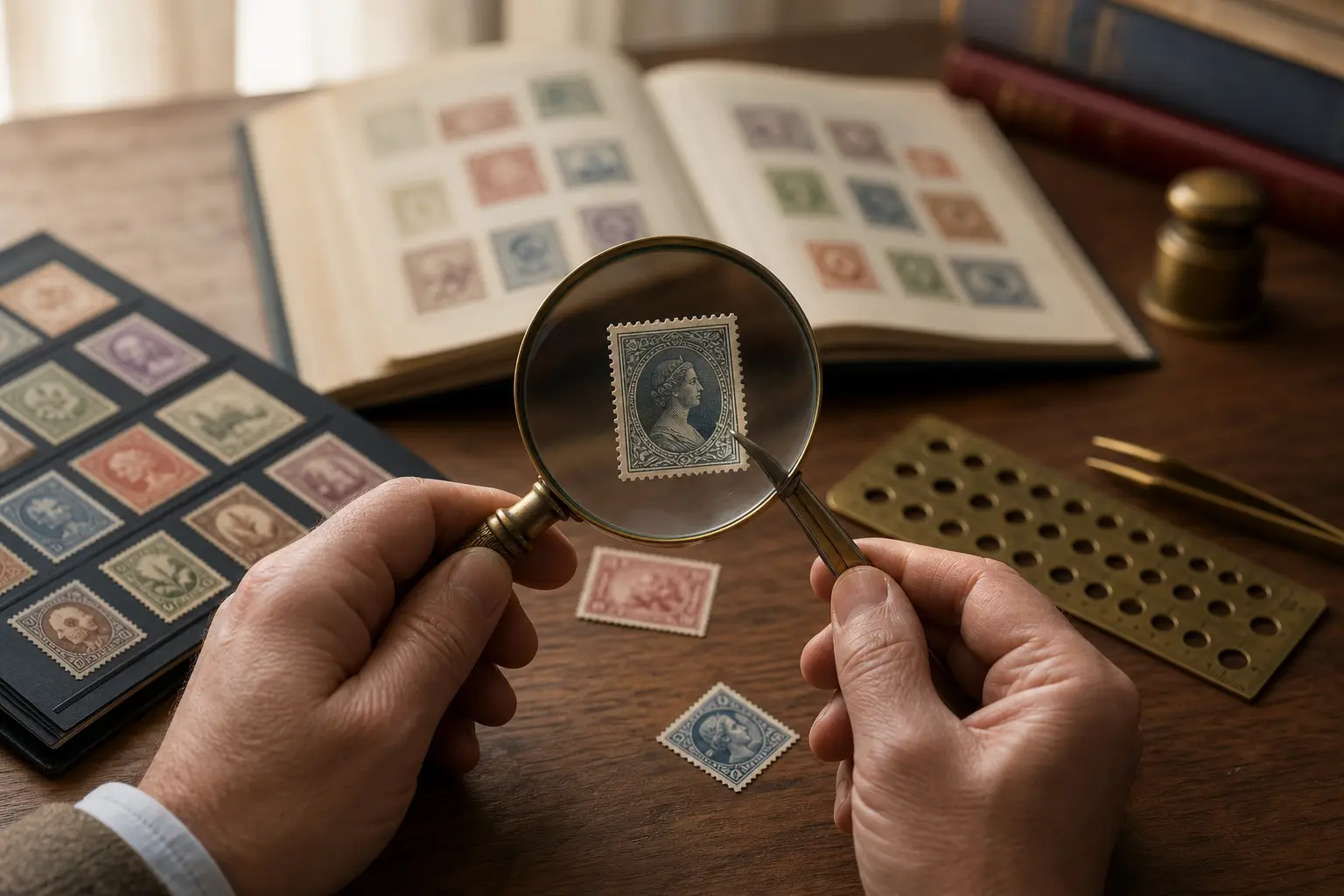
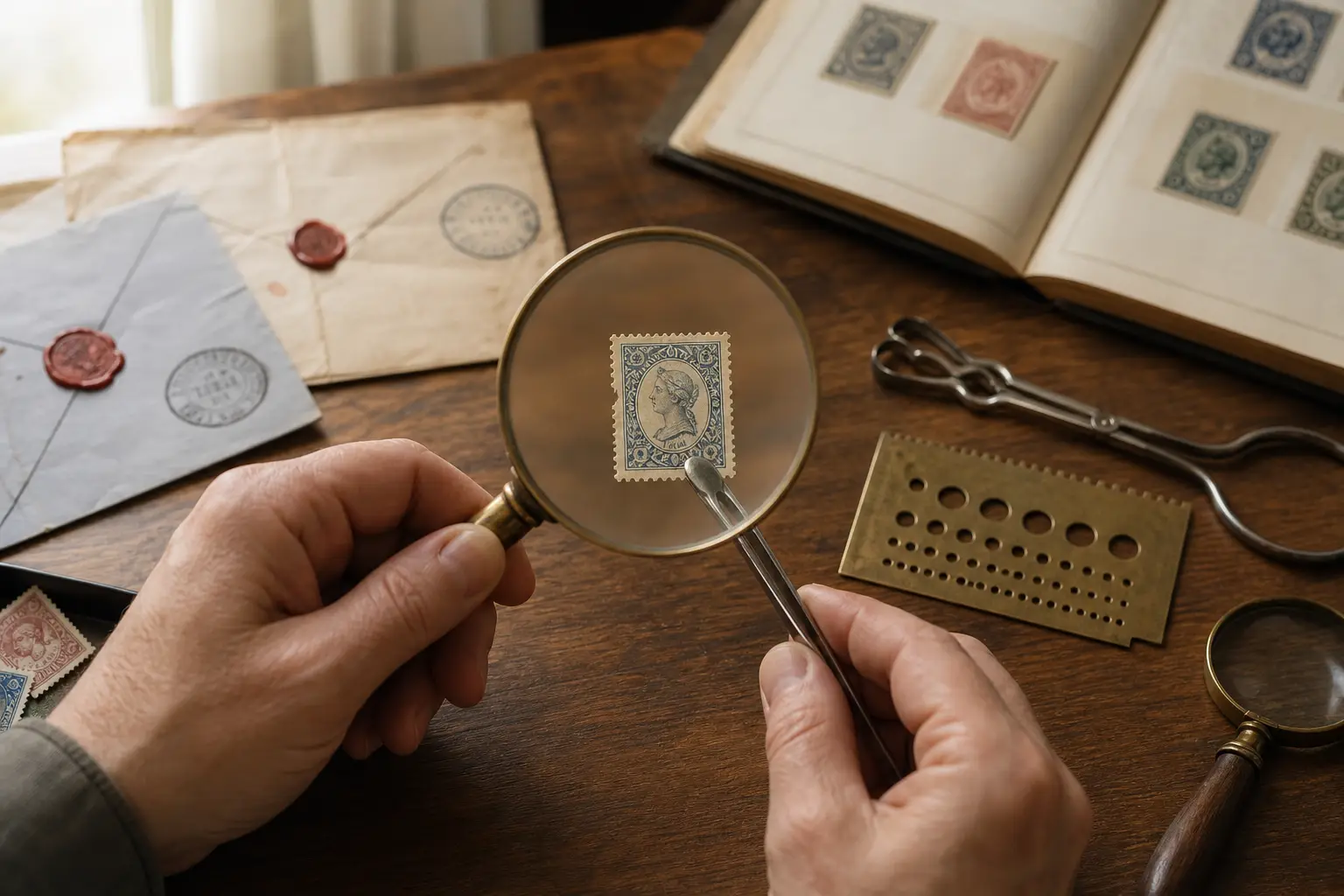
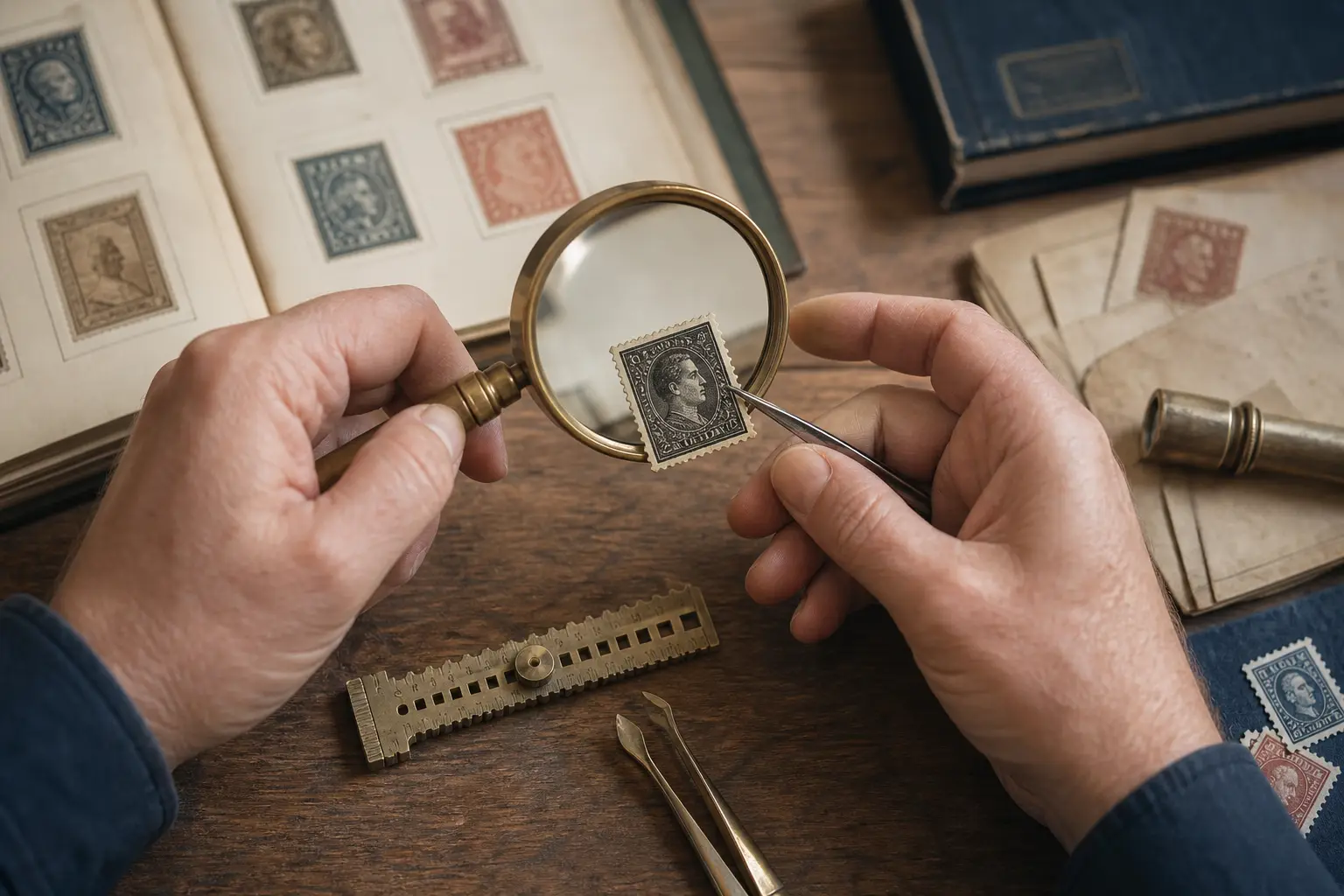
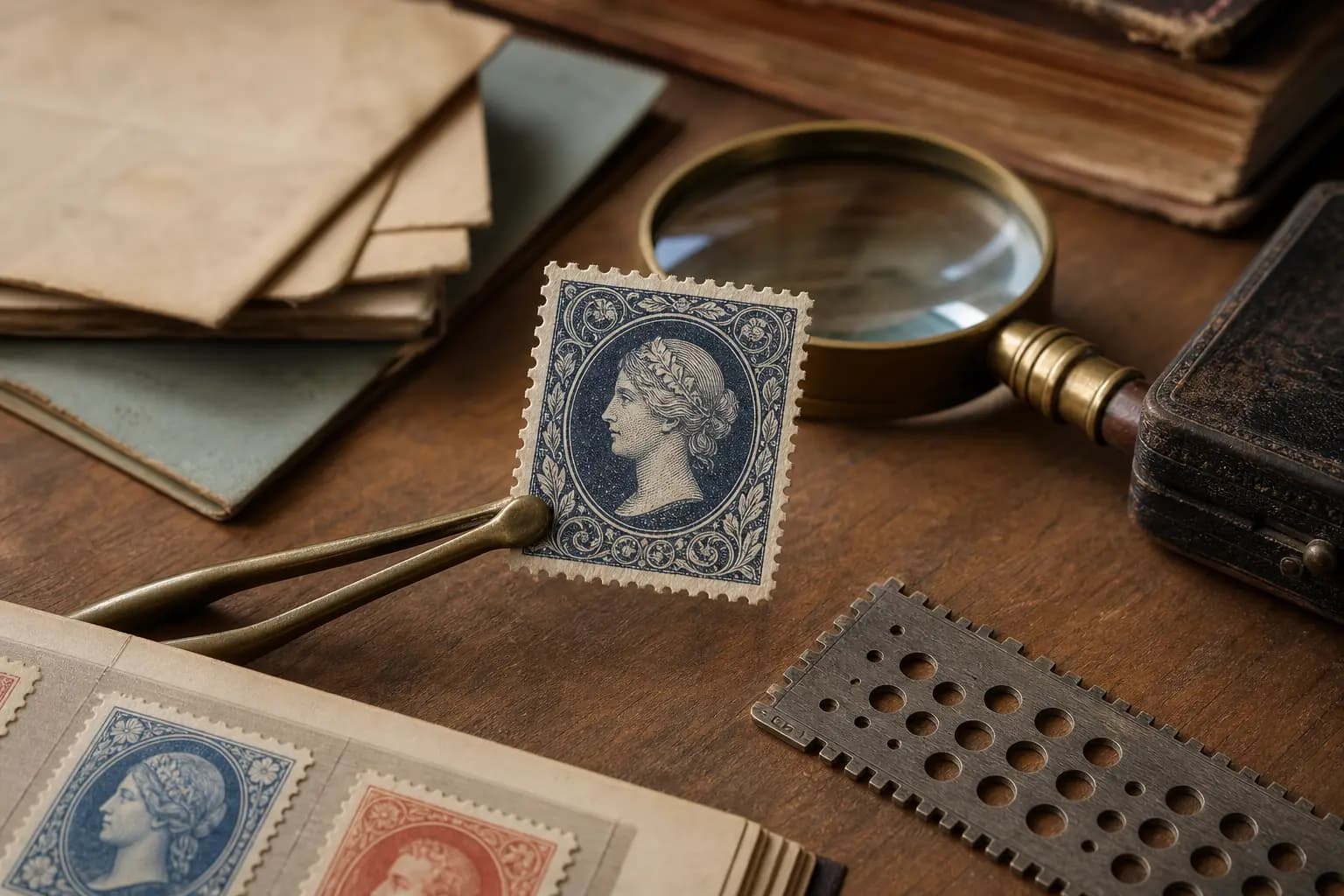
When identifying and studying these early classics, having the right tools is highly beneficial for protecting the fragile paper. You should always use stamp tongs to handle dry stamps. No matter how thoroughly you wash your hands, natural oils from your skin will transfer to and damage the paper over time. Tongs resemble tweezers but feature a smooth gripping surface designed specifically to handle stamps safely without leaving marks.
Additionally, a magnifying glass with at least 5 times to 10 times magnification is an excellent tool for inspecting the fine details of early designs. When choosing a magnifier, select one that magnifies clearly without distortion, preferably one that folds into a protective case to prevent scratches on the lens.
Safe Handling and Storage of Early Philatelic Material
Preserving early stamps and covers requires careful storage and mounting practices. You should never use household tape or glue to secure stamps, as these adhesives will severely damage the paper and decrease the stamp's value. Instead, use professional hinges, which are small, thin, folded pieces of translucent paper or plastic with special gum on one side, or clear plastic sleeves known as mounts.
For storage, you can use specialized stamp albums, stock books with plastic or paper pockets, or even a photo album with acid-free paper. However, you must never use photo albums with sticky pages, as these pages will permanently damage your stamps. If you discover an early stamp still attached to an entire envelope or cover, do not attempt to remove it, as preserving the complete cover is vital for maintaining its historical context. You can use StampSnap to help create a likely identification of your early postal history items without risking physical damage.
Utilizing Reference Catalogs and Digital Records
To deepen your understanding of early postal history, a stamp catalog is an invaluable reference book. Catalogs are filled with illustrations and detailed descriptions that help you identify your items. They provide essential information such as the exact date a stamp was issued, why it was created, how it was printed, and its estimated value in both used and unused conditions. Many local libraries carry these catalogs for public use.
Using StampSnap to log a digital collection record helps you keep track of your historical items alongside your physical albums, making it easy to cross-reference your collection with standard catalog listings.
Frequently asked questions
Who is credited with inventing the postage stamp?
Sir Rowland Hill is generally credited with the idea of requiring prepayment of postage and using postage stamps to show this payment.
Why did early postal systems experience a high rate of refused mail?
Before postage stamps, the recipient of a letter had to pay for delivery. Because of the high cost, many people refused to accept the mail, sometimes even using secret codes on the outside of the envelope to read messages without paying.
What were the first two postage stamps issued by the United States?
The first two U.S. stamps were issued on July 1, 1847. They were printed by Rawdon, Wright, Hatch and Edson. The five-cent red-brown stamp pictured Benjamin Franklin, and the ten-cent black stamp depicted George Washington.
Why do some early stamps not have a country name printed on them?
Great Britain is the only country permitted to issue postage stamps without its name because it was the first country to issue them in 1840. Instead of a country name, these stamps feature an image of the ruling monarch.