
The Four Major Printing Families in Philately
To accurately identify and organize a stamp collection, collectors must understand the printing methods used during production. The American Philatelic Society identifies four major families used for postage stamps: line-engraved intaglio, gravure, letterpress, and lithography. Because many classic and modern stamps share identical designs but were produced using different printing technologies, distinguishing these families is a fundamental skill. When combined with watermark detection, analyzing these printing methods allows collectors to differentiate common varieties from highly valued issues.
Identifying these variations requires patience and the right tools. Rather than guessing based on color or general appearance, collectors should adopt a systematic process that relies on physical evidence. By studying the paper and the ink application, you can uncover the technical history of each stamp in your collection.
Analyzing Line-Engraved Intaglio and Gravure
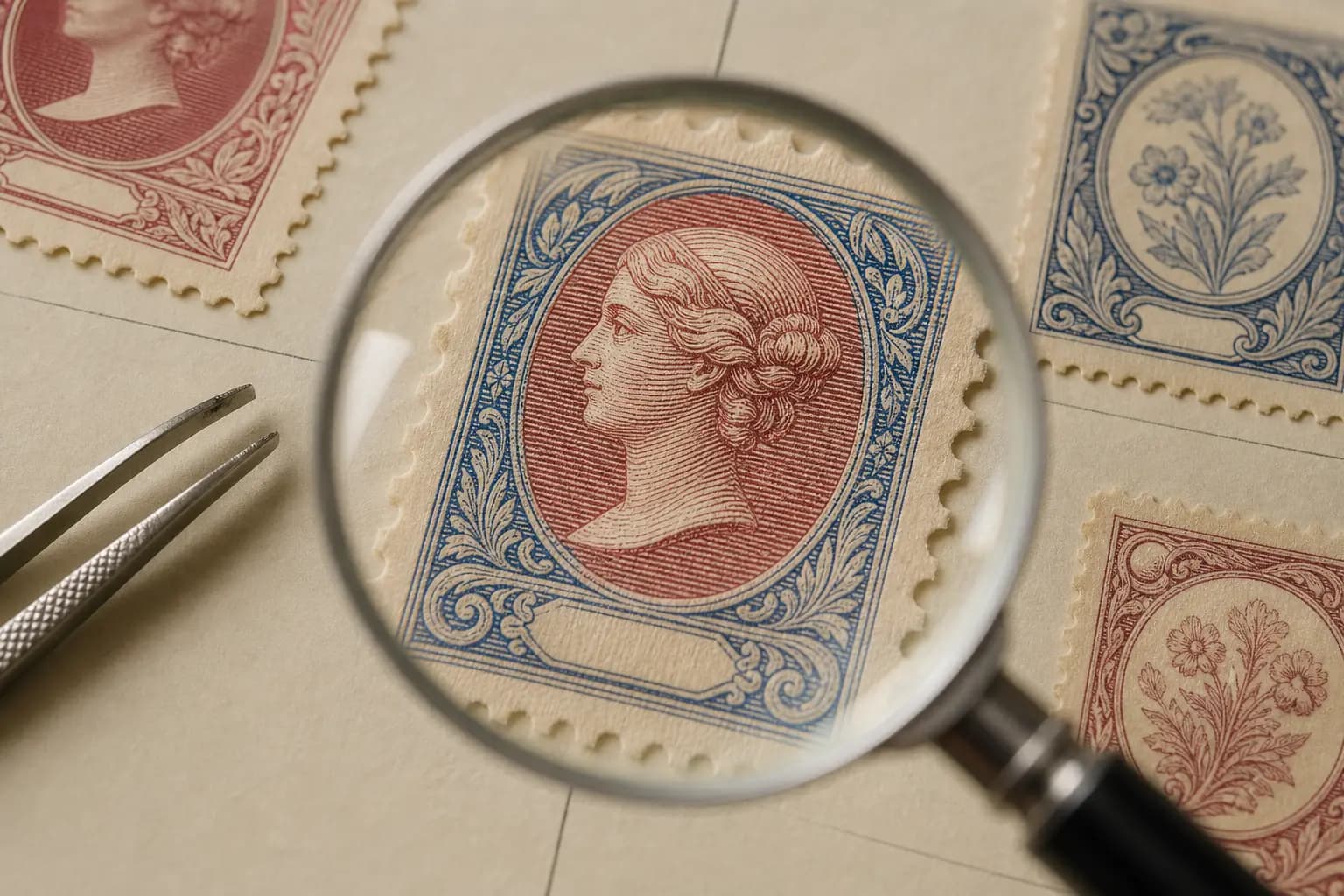
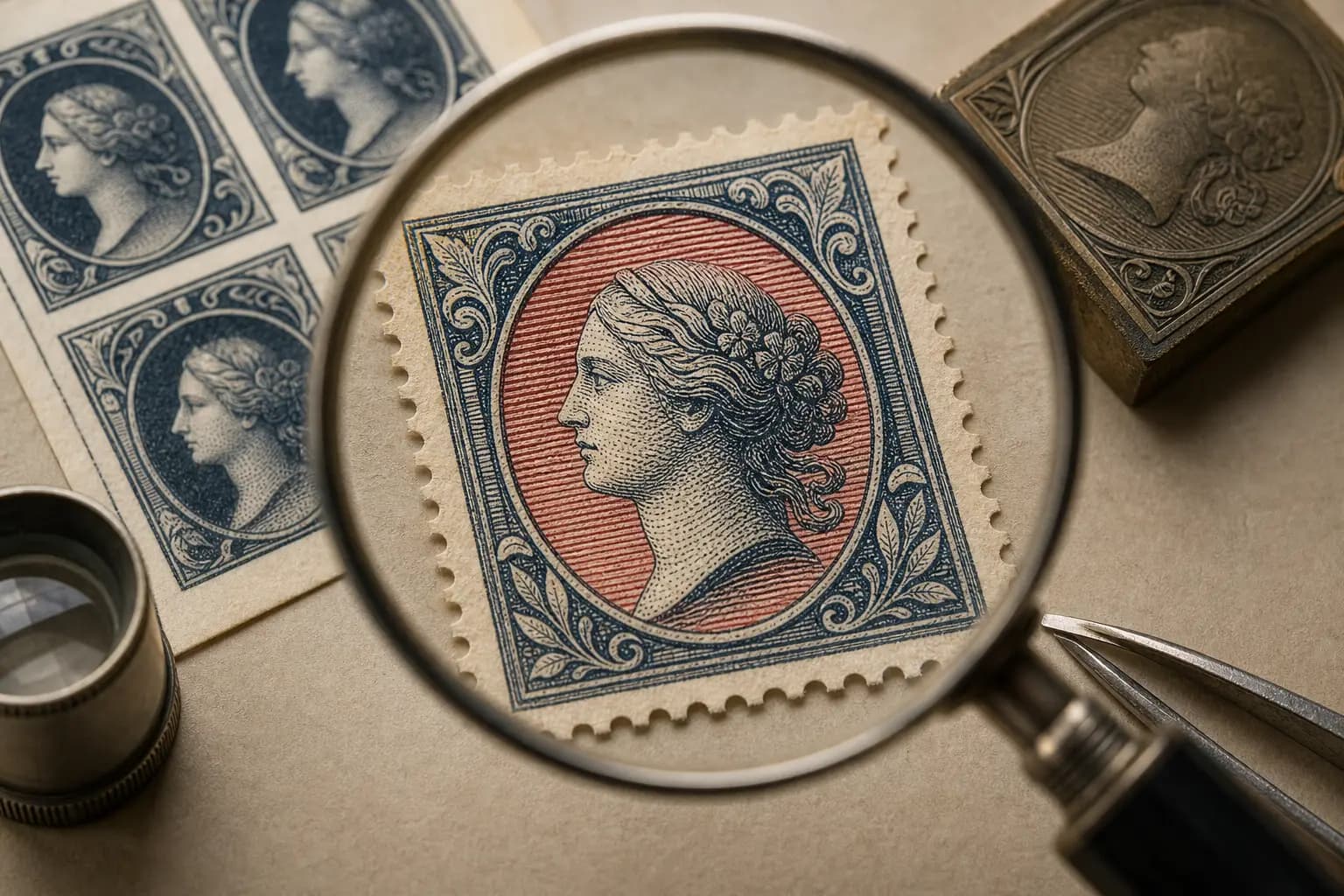
Line-engraved intaglio is a recess printing process that transfers ink to paper from deliberately incised lines on a metal plate. Under non-contact magnification and oblique light, a collector can normally see that the design is constructed from lines, hatching, cross-hatching, and stippling. The intense pressure of the press may also leave debossing on the reverse side of the stamp, and raised ink can sometimes be observed on the surface. These physical traits serve as supporting features rather than definitive single tests.
In contrast, gravure is another recess process, but it forms tone from screened cells rather than hand-engraved lines. Because screened or raised effects can occasionally appear in other processes, collectors should never rely on a single visual test. Instead, combine these observations with official production records to confirm the printing method.
Identifying Lithography and Letterpress
Lithography, particularly offset lithography, is a planographic process where the image is formed on a completely smooth surface rather than being cut, etched, or raised on a plate. In this method, oil-based ink adheres to the designated image area, and a rubber blanket transfers, or offsets, that image directly to the stamp paper. Modern stamp lithography commonly combines separate process-color layers made from very fine dots.
While early lithographic prints sometimes had soft or blurred edges, modern lithography can be incredibly sharp, meaning edge softness is not a dependable identifying rule. Furthermore, because gravure and other processes can also show screened structures under magnification, a dot pattern must always be interpreted alongside other cumulative clues. Letterpress, the fourth major family, is a relief process where ink is transferred from raised surfaces, which often leaves a distinct impression or ink squeeze around the edges.
The Role of Watermarks in Stamp Identification
Watermarks are security measures incorporated directly into stamp paper during manufacturing to deter counterfeiting. These watermarks, which may consist of words, letters, or symbols, are formed from dies attached to the frame used to make paper from pulp. The pressure of these dies results in thin places in the paper. Because some postage stamps exist on both unwatermarked and watermarked paper, or even on paper with entirely different watermarks, identifying these hidden patterns is critical.
Stamps with the same design that differ only by the absence or existence of a watermark, or by the specific watermark design, generally receive separate catalog numbers. Consequently, a watermark can be the sole difference between a highly common stamp and a scarce variety. This makes watermark detection an essential step when cataloging your collection.
Safe Watermark Detection Techniques
To safely detect watermarks without damaging fragile paper or gum, collectors should use a methodical, non-destructive process. The best method of detecting watermarks is to lay the stamp face down in a dark tray and moisten the stamp with commercial watermark fluid. This fluid brings up the watermark in dark lines against a lighter background. While some collectors use lighter fluid, the American Philatelic Society recommends commercial watermark fluid, such as Clarity, which is safer for your stamps and your health.
Watermark fluid evaporates quickly and should not impact the gum on an unused stamp. Additionally, dipping a stamp in watermark fluid is an excellent way to inspect the paper for hidden faults, such as thins, creases, and repairs. Never use water or household solvents, as these can permanently damage the stamp, dissolve water-soluble inks, or ruin the original gum.
Interpreting Complex Watermarks and Printing Clues
Watermarks used on United States philatelic material include the letters USPS on postage stamps, USPOD, USA, and various monograms and numbers on postal stationery, and USIR on revenue stamps. For example, a double-line USPS watermark was used on U.S. postage stamps from 1895 to 1910, while a single-line USPS watermark was used from 1910 to 1916. Many stamps include only a portion of the watermark, sometimes only a small part of a single letter, making identification challenging.
By combining non-contact magnification under oblique light to study the printing family with watermark fluid analysis, you can build a highly accurate profile of your stamp. Utilizing tools like StampSnap can help you organize these findings and create a likely identification or a permanent collection record.
Frequently asked questions
What are the four major printing families used for postage stamps?
The four major families are line-engraved intaglio, gravure, letterpress, and lithography. More than one of these processes may sometimes appear on a single modern stamp.
How does offset lithography transfer an image to stamp paper?
Offset lithography is a planographic process where the image is formed on a smooth surface. Oil-based ink adheres to the image area, and a rubber blanket transfers, or offsets, that image to the paper.
Why are watermarks used on postage stamps?
Watermarks are security measures incorporated into stamp paper to deter counterfeiting. They are formed from dies attached to the paper-making frame, creating thin places in the paper pulp.
What is the safest way to detect a watermark on a stamp?
The safest and most effective method is to place the stamp face down in a dark watermark tray and moisten it with commercial watermark fluid, which evaporates quickly and does not damage the gum of unused stamps.
Can I identify a stamp's printing process solely by looking for dots?
No. Screened structures and dot patterns can appear in multiple processes, including gravure and lithography. Collectors must treat visual features as cumulative clues and consult production records.