
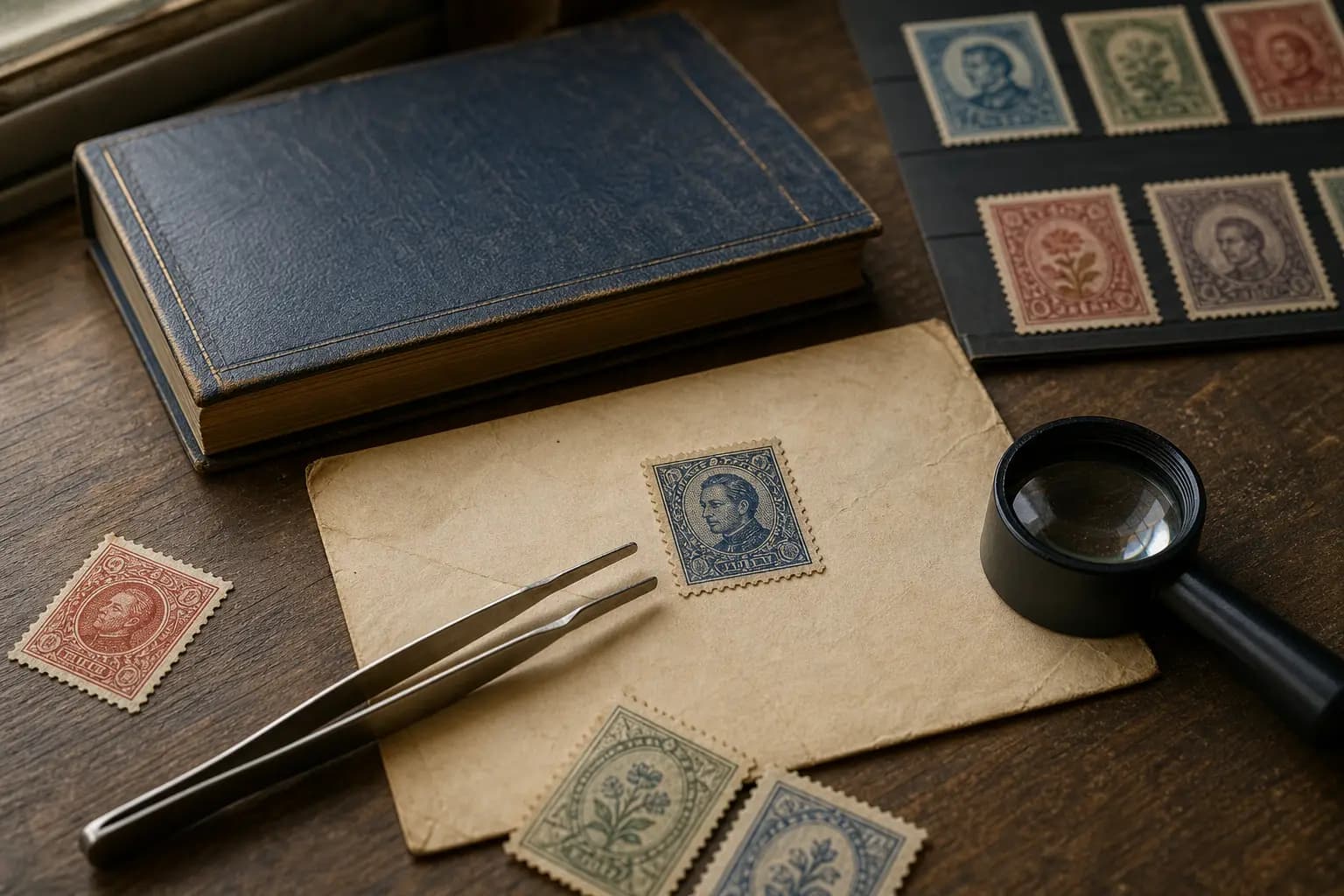
The Challenge of Early Liechtenstein Issues
Early postage stamps of Liechtenstein issued under Austrian administration between 1912 and 1918 present an exciting challenge for collectors. Many of these early issues feature the profile portrait of Prince Johann II, but minor design variations and paper differences can make them difficult to distinguish. To value these stamps accurately, collectors must look closely at the upper corners of the design and analyze the paper structure for watermarks or hidden faults.
Because visual similarities can easily lead to misidentification, a methodical examination is the safest path to determining a stamp's true catalog status. Relying solely on a quick glance can result in mislabeling a common definitive as a scarcer commemorative, or vice versa. By developing a systematic workflow, you can confidently identify these classic European issues.
The Profile of Prince Johann II
Between 1912 and 1918, eleven stamps showing the profile of Prince Johann II were released under Austrian administration. These stamps served as the standard definitives for the region during a period of significant historical transition. Because they were printed over several years, they can exhibit subtle differences in color, paper, and printing quality.
Identifying these basic definitives requires a strong attention to detail, as they form the baseline design for other, more specialized issues that followed. Understanding the standard profile design is the first step before attempting to spot the minor modifications that define the scarcer varieties.
Spotting the 1918 Accession Anniversary Dates
The key to distinguishing a common definitive from a scarcer commemorative lies in the upper corners of the stamp design. For example, the 1917 to 1918 20-heller dark green stamp was a standard definitive. However, on November 12, 1918, a highly similar stamp was released to commemorate the 60th anniversary of the accession of Prince Johann II.
This commemorative version replaced the original upper corner designs with the specific year-dates of his reign. Because these dates are remarkably small and difficult to see with the naked eye, standard catalogs include boldface notes such as 'Dates in Upper Corners' to guide collectors. Using a magnifying glass under good lighting is highly recommended to verify these tiny inscriptions safely.
Analyzing Paper and Watermarks for Valuation
Beyond the printed design, the physical paper of early European issues often holds the key to their identity and value. Watermarks are security measures incorporated into stamp paper during manufacturing to deter counterfeiting. These marks, which can be symbols, letters, or words, are created by dies attached to the paper-making frame, resulting in intentional thin places in the pulp.
Because some stamps of identical design were printed on both watermarked and unwatermarked paper, identifying the presence of a watermark is a critical step in the valuation process. A stamp with a specific watermark design can receive a completely different catalog number and carry a vastly different value than its unwatermarked counterpart.
Safe Watermark and Fault Detection Techniques
To safely identify watermarks without damaging fragile paper or original gum, collectors should use professional methods. The safest approach is to place the stamp face down in a dark tray and moisten it with a specialized, commercial watermark fluid. This fluid temporarily brings up the watermark as dark lines against a lighter background before evaporating quickly without affecting the gum of an unused stamp.
Additionally, dipping the stamp in fluid allows collectors to inspect the paper for hidden faults like thins, creases, or tears, all of which heavily influence the final valuation of the specimen. Avoid using harsh household solvents or handling the wet stamp with bare fingers, as this can cause permanent damage to the paper fibers.
Documenting and Organizing Your Liechtenstein Collection
Once you have analyzed the design details and paper characteristics, keeping an organized record of your findings is essential. Collectors can use digital tools like the StampSnap app to scan their stamps and create a convenient digital inventory record of their likely identification and catalog details. This helps track duplicates and monitor the overall state of your collection.
However, because subtle varieties and paper conditions require physical inspection, digital tools should be used as an organizational aid rather than a final expertizing service. For highly valuable or rare varieties, submitting the physical stamp to a professional expertizing service remains the standard for absolute verification.
Frequently asked questions
How do I tell the difference between the early Liechtenstein Prince Johann II definitives and the 1918 commemorative issues?
Look closely at the upper corners of the stamp design. The standard definitives issued between 1912 and 1918 feature decorative corner designs, while the commemorative stamp issued on November 12, 1918, replaces those corner designs with the year-dates of the Prince's reign.
Why do catalogs have a boldface note for the 1918 Liechtenstein commemorative stamp?
The accession year-dates printed in the upper corners of the 1918 commemorative stamp are very small and difficult to see. Catalogs include boldface notes like 'Dates in Upper Corners' to alert collectors to this critical design difference.
How can I safely check my early Liechtenstein stamps for watermarks and paper faults?
Place the stamp face down in a dark tray and apply a few drops of commercial watermark fluid. This fluid will temporarily reveal the watermark and highlight paper faults like thins or creases without damaging the stamp's original gum.