Introduction: The Importance of Safe Stamp Mounting
Mounting your postage stamps is one of the most rewarding parts of stamp collecting, but it must be done with preservation in mind. Properly displaying your collection protects the stamps from physical wear while keeping them organized. However, improper mounting can ruin a stamp's physical integrity and drastically reduce its collectibility.
Before you begin mounting your stamps, you can use StampSnap to create a likely identification and keep a digital record of your items. This ensures you have a clear inventory of your collection before securing the physical stamps onto album pages. It is vital to use only approved philatelic materials, as household tape or glue will decrease a stamp's value and cause permanent damage when attempting removal.
Understanding Stamp Hinges: Pros, Cons, and Mechanics
Stamp hinges are a traditional and highly popular method for securing stamps to album pages. Hinges are small, thin, folded pieces of translucent paper or plastic with special gum on one side. They are designed to be peelable, meaning they can be removed from both the stamp and the album page with minimal risk of damage if handled correctly.
While hinges are highly effective and economical, they do require a small amount of moisture to activate the gum, which will affect the original gum on the back of unused stamps. For this reason, many collectors prefer to use hinges primarily for used stamps, leaving mint stamps for other preservation methods.
Understanding Stamp Mounts: Maximum Protection for Valuable Issues
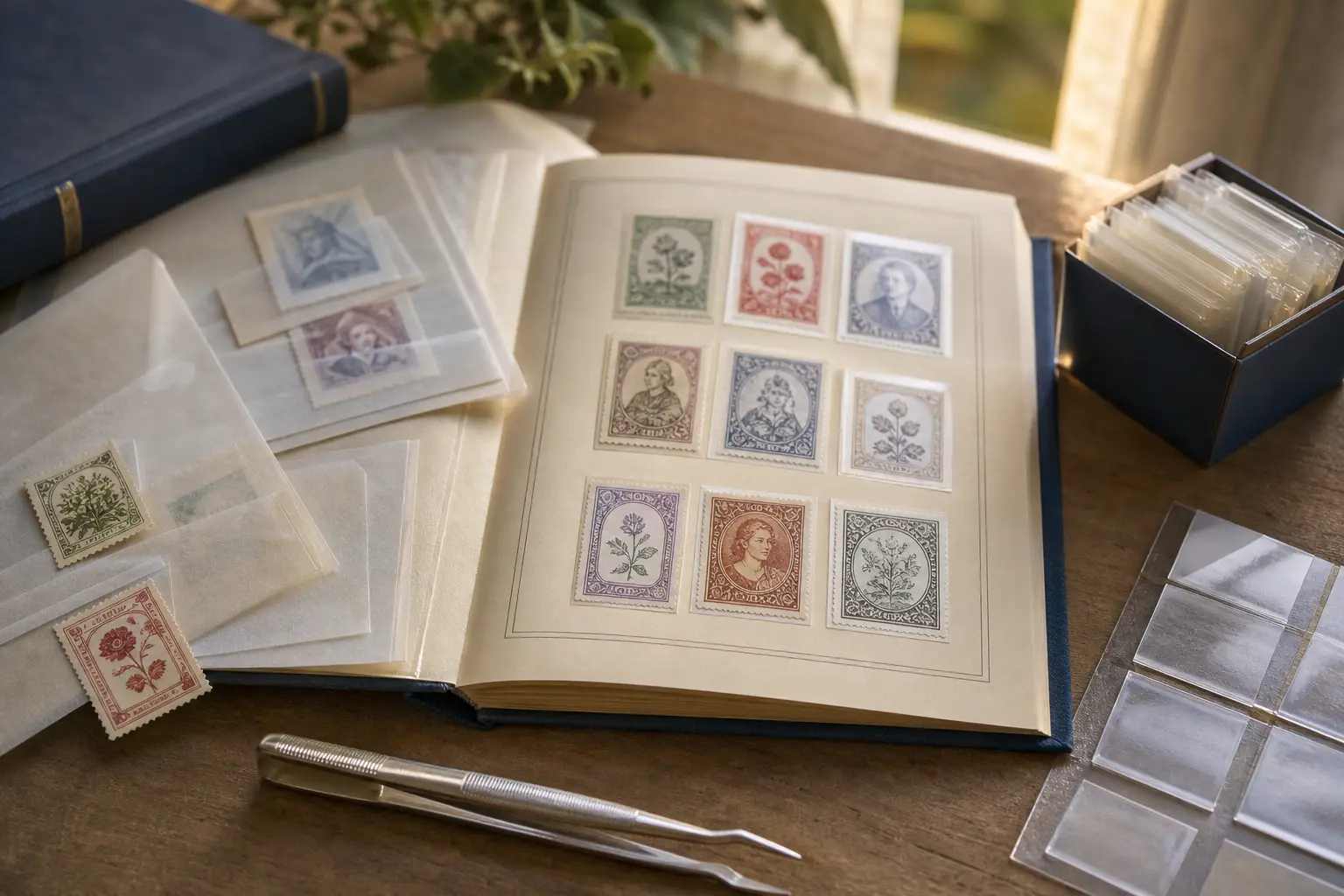
For valuable stamps or unused stamps with pristine original gum, clear plastic mounts offer an excellent alternative to hinges. Mounts are clear plastic sleeves that hold the stamp securely without requiring any adhesive to touch the stamp itself. Instead, the moisture is applied only to the back of the plastic sleeve to secure it to the album page.
This keeps the stamp completely dry and preserves its original condition. While mounts are generally more expensive than hinges, they provide maximum protection against environmental factors and physical handling, making them the preferred choice for mint condition items.
The Golden Rule: Ensure Stamps are Completely Dry
A fundamental rule of philatelic preservation is to distinguish clearly between loose, dry stamps and wet or softened material. If you have recently soaked stamps to remove them from paper, they must be completely dry before you attempt to sort, handle, or mount them. Wet stamps are highly vulnerable to tearing and creasing.
While stamp tongs are the recommended tool for handling dry stamps to prevent skin oils from causing damage, you should never use tongs on a wet stamp. The pressure from the gripping surface of tongs can easily puncture or tear wet paper. Instead, let your soaked stamps dry completely overnight between paper towels under a heavy book to prevent curling before you handle them.
Step-by-Step Guide to Applying Stamp Hinges Safely
To apply a stamp hinge safely, start by placing your completely dry stamp face down on a clean, flat surface. Use your stamp tongs to hold the stamp steady. Lightly moisten the short end of the folded hinge. Be careful not to over-wet the hinge, as excess moisture can seep around the edges and damage the stamp paper.
Press the moistened short end to the back of the stamp, placing the fold about one-eighth of an inch from the very top of the stamp. Next, lightly moisten the larger portion of the hinge and carefully attach it to your album page, pressing down gently to secure the stamp in place.
Step-by-Step Guide to Using Stamp Mounts
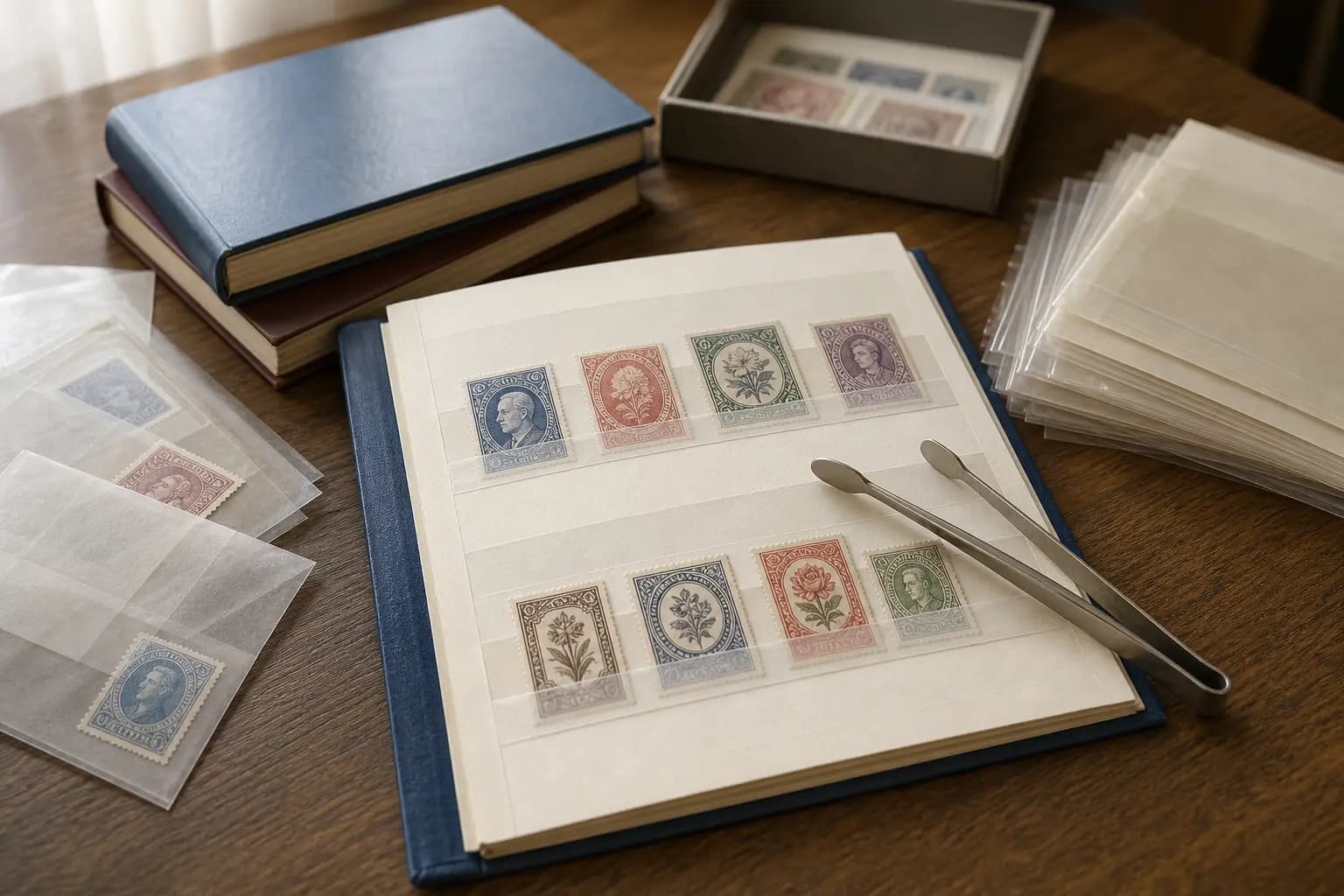
Using stamp mounts requires a slightly different workflow but is equally straightforward. First, select a clear plastic mount that matches the exact dimensions of your stamp. Using your stamp tongs, carefully slide the dry stamp into the plastic sleeve.
Once the stamp is safely inside, lightly moisten the adhesive strip on the back of the mount. Ensure that no moisture comes into contact with the stamp itself. Press the mount firmly onto the designated spot on your album page. This method ensures the stamp remains in its original state, completely free of hinge marks or moisture damage.
Organizing Your Album Pages Methodically
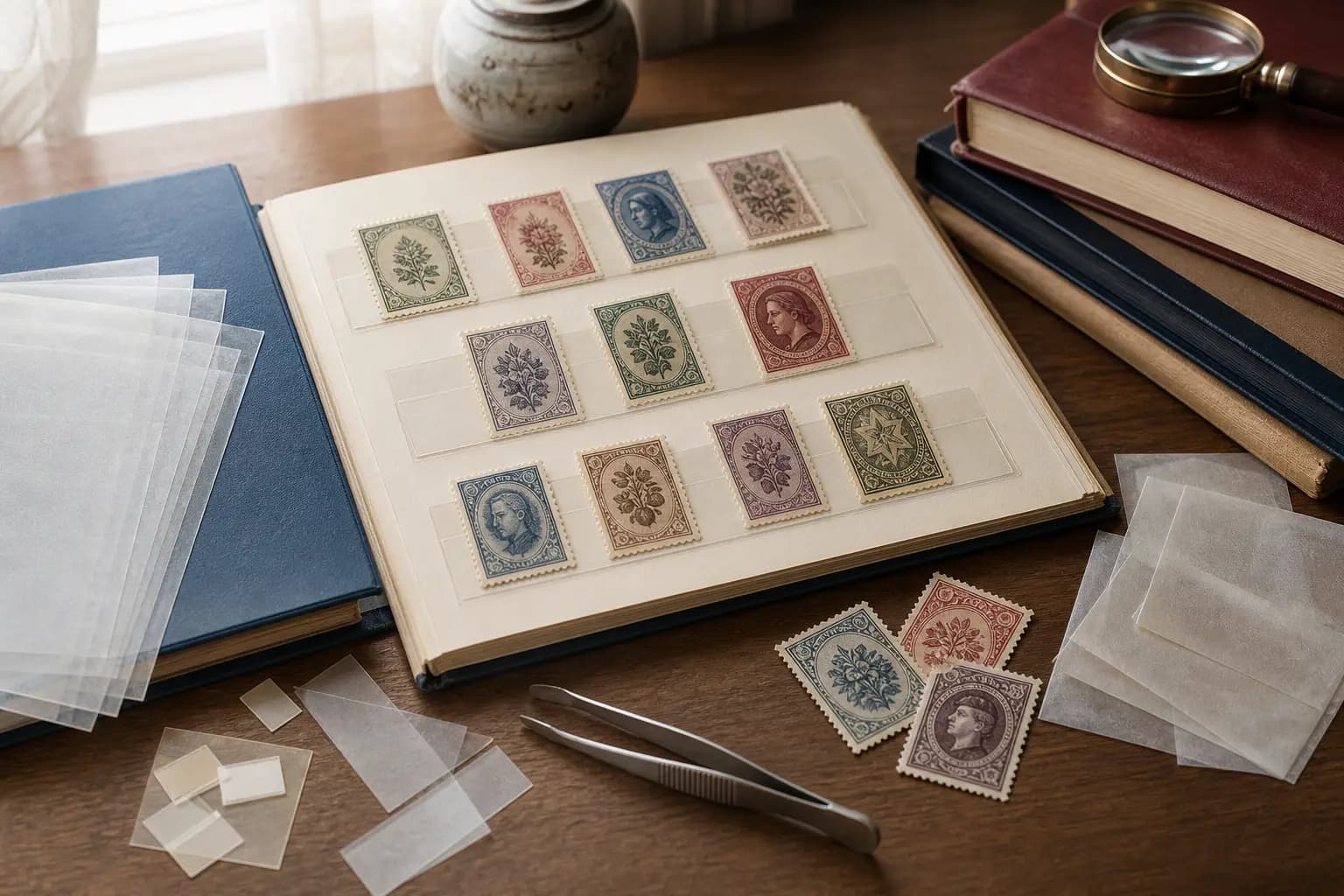
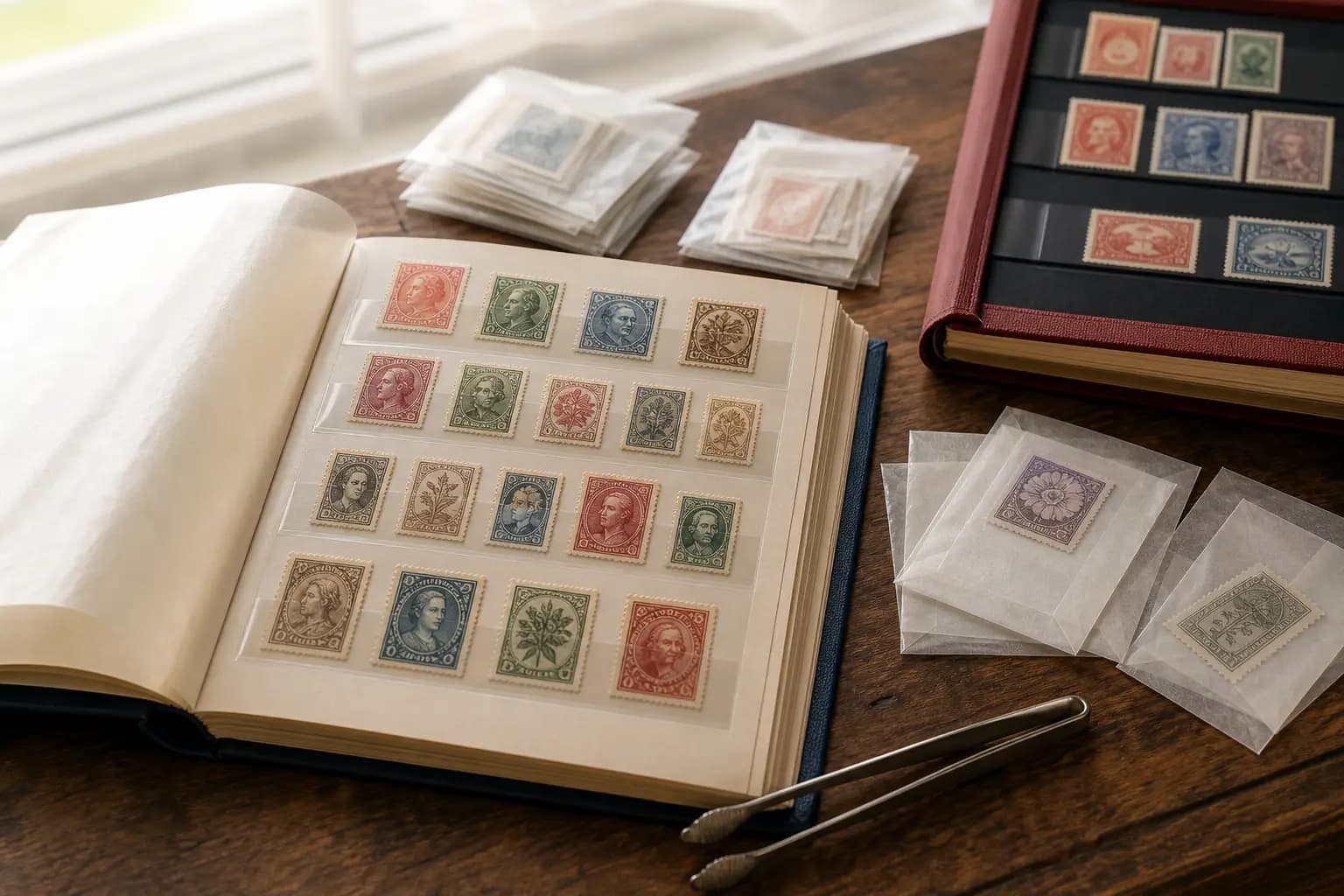
When organizing your collection, you have several options for display. You can purchase specialized stamp albums that feature printed pictures of specific stamps, or you can create your own pages using acid-free paper. Another excellent option is a stock book, which is a type of album with built-in plastic or paper pockets on each page that do not require hinges or mounts.
Before mounting, it is highly beneficial to sort your stamps by country, topic, or service type, such as airmail, special delivery, postage due, or revenue stamps. Using StampSnap to log your collection before mounting helps you maintain an organized digital inventory alongside your physical album, making it easier to track your collecting journey.
Frequently asked questions
Can I use regular household tape or glue to mount stamps?
No, you should never use household tape or glue to mount stamps. Doing so will decrease the stamp's value and will likely cause permanent damage to both the stamp and the album page when you try to remove them.
What is the main difference between a stamp hinge and a stamp mount?
A stamp hinge is a small, thin, folded piece of translucent paper or plastic with gum on one side that attaches directly to the back of the stamp. A stamp mount is a clear plastic sleeve that holds the stamp securely without any adhesive touching the stamp itself, protecting its original condition.
Is it safe to use stamp tongs on wet stamps?
No, you should never use stamp tongs on wet or damp stamps. Wet paper is highly fragile and easily damaged. Allow your stamps to dry completely overnight before handling them with tongs.
How can I prevent my soaked stamps from curling as they dry?
To prevent curling, place your wet stamps face down between two clean paper towels and place a heavy book on top of them. Leave them to dry overnight before attempting to handle or mount them.