The Evolution of Self-Adhesive Postage
Self-adhesive stamps brought immense convenience to postal customers, but they introduced a preservation puzzle for stamp collectors. Unlike traditional water-activated gum, which dissolves easily in water, self-adhesive backings are made of complex chemical compounds. To safely separate these stamps from envelope paper without causing tears or thinning, collectors must understand the specific adhesive technology used during the stamp's production.
Attempting to peel a self-adhesive stamp off its backing dry will almost always result in a ruined specimen. Because the bond between the adhesive and the envelope paper is incredibly strong, a methodical preservation approach is required to release the adhesive layer without compromising the integrity of the stamp paper itself.
Water-Soluble vs. Oil-Based Backings
The history of self-adhesive stamps is divided by a major shift in manufacturing specifications. Until approximately 2007, almost all United States self-adhesive stamps were manufactured with water-soluble adhesives. These stamps can generally be removed from paper backings by soaking them in water for extended periods, typically around 20 minutes.
However, many U.S. self-adhesives issued in 2004 or later—and most current U.S. issues—utilize an oil-based backing. These modern stamps will not simply soak off in water, as the water cannot penetrate or dissolve the oil-based adhesive layer. For these modern issues, alternative preservation methods and specialized solvents are required to prevent permanent paper damage.
Soaking Older Water-Soluble Self-Adhesives
For self-adhesive stamps issued before the mid-2000s, water soaking remains a highly effective separation method. Begin by carefully cutting the stamp from the envelope corner, leaving a safe margin of paper around the perforations to avoid accidental scissor cuts.
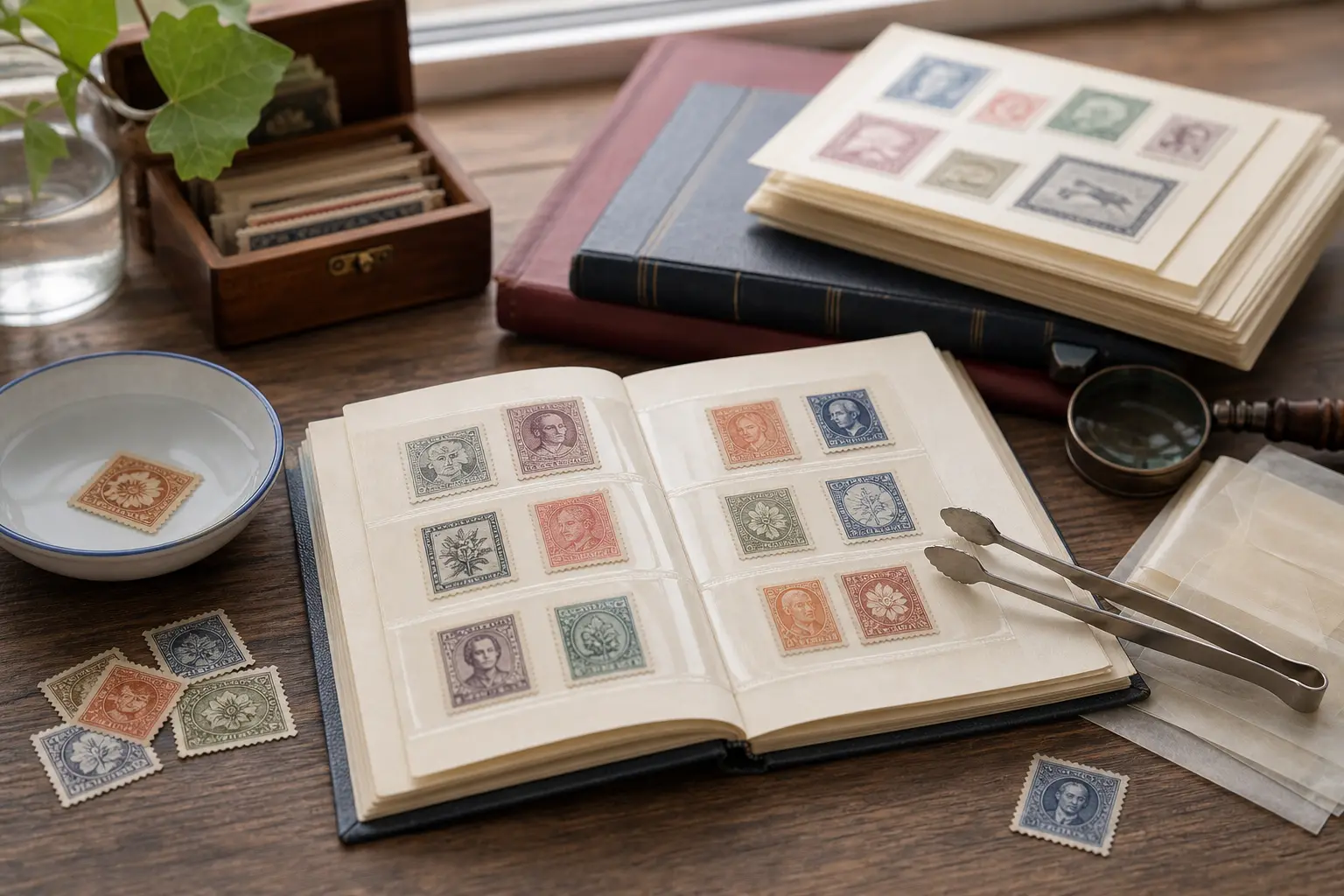
Sort your clippings first, setting aside brightly colored envelopes (such as red or green) to soak separately, as their dyes may bleed in water and permanently stain the stamp paper. Place the clippings stamp-side up in a shallow bowl filled with lukewarm water. Ensure the water is not hot, as high temperatures can damage the stamp paper and inks. Allow the stamps to float freely for up to 20 minutes. As the water-soluble adhesive dissolves, the stamps will begin to float free from the paper.
Handling and Separating Modern Oil-Based Stamps
Because modern U.S. self-adhesives issued after 2007 feature oil-based backings, soaking them in water will only saturate the paper without releasing the adhesive. To separate these modern issues, collectors must use a specialized oil solvent designed for philatelic preservation.
This solvent breaks down the oil-based adhesive layer, allowing the stamp to slide gently off the envelope paper. When working with solvents, always work in a well-ventilated space and apply the liquid sparingly to the back of the envelope paper rather than directly to the face of the stamp. Be patient and do not try to pull the stamp free from the paper before the adhesive has fully released, as you may end up tearing it.
Drying and Flattening Your Separated Stamps
Once a stamp has successfully separated from its paper backing, it must be dried and flattened to prevent curling. Gently rinse the back of water-soaked stamps in clean, fresh water to ensure all residual gum is removed.
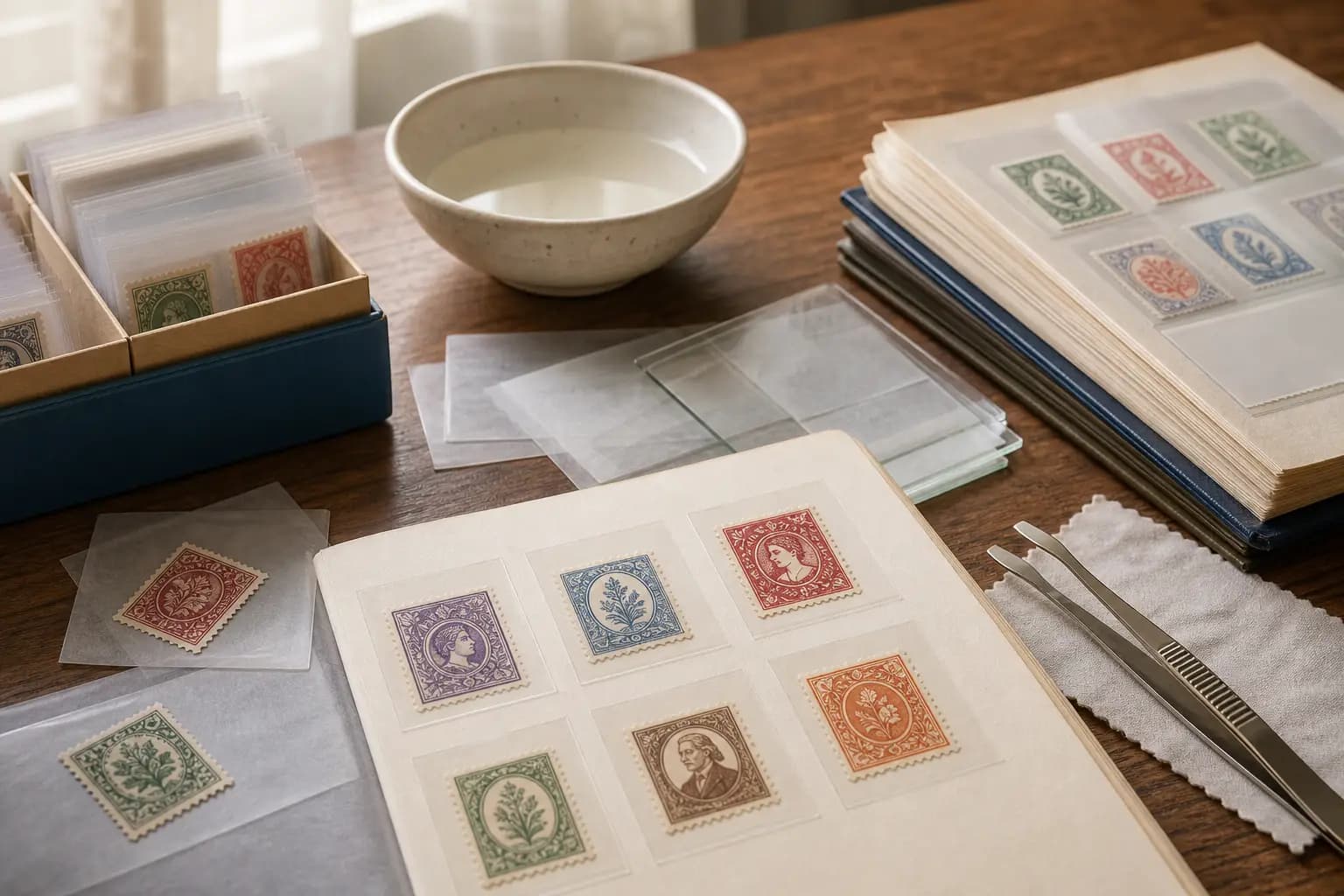
To dry the stamps, place them face down between two clean paper towels and place a heavy book on top of them. Leave the stamps to dry overnight. Avoid handling wet stamps with metal tongs, as wet paper is exceptionally fragile and highly susceptible to tearing or puncturing under pressure. Keep your tongs reserved for dry stamps, where their smooth gripping surfaces safely protect the paper from skin oils.
Storing and Organizing Your Preserved Collection
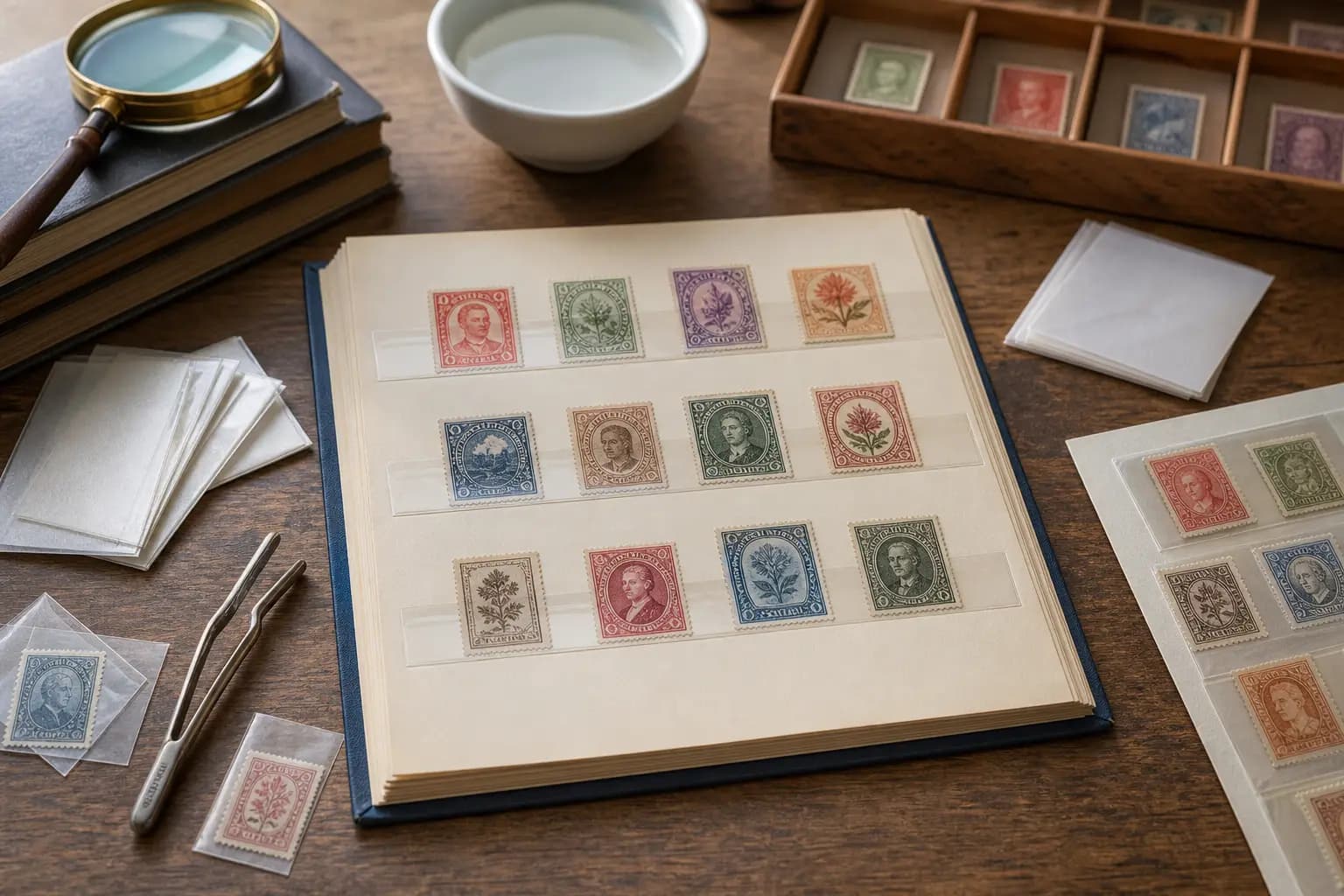
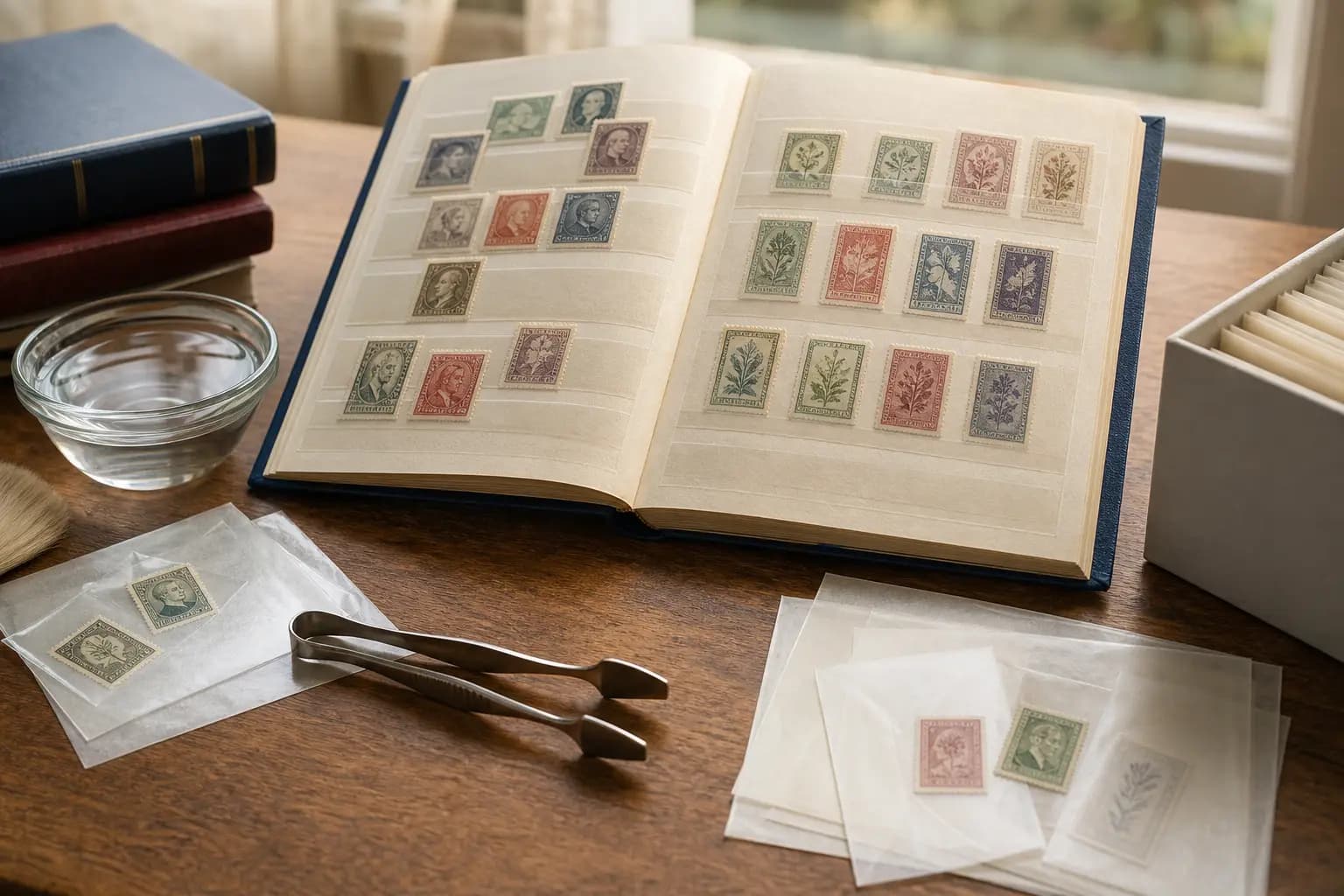
After your stamps are completely dry, they are ready for long-term storage. Store your loose stamps in protective glassine envelopes until you are ready to organize them. For permanent display, you can transfer them into a stock book featuring plastic or paper pockets, which allows you to arrange your collection without the use of hinges or mounts.
To build a digital inventory of your newly preserved items, you can use StampSnap to snap a photo and create a clean, organized digital record of your collection. This helps you track your varieties and keep your physical specimens safely filed away from environmental hazards.
Frequently asked questions
Can all self-adhesive stamps be soaked off in water?
No. While most U.S. self-adhesive stamps issued before 2007 can be soaked off in water, many issues from 2004 onward, and almost all modern issues, use an oil-based backing that requires an oil solvent to separate from paper.
How long should I soak water-soluble self-adhesive stamps?
Water-soluble self-adhesive stamps generally require about 20 minutes of soaking in lukewarm water to dissolve the adhesive backing and float free from the paper.
Should I use stamp tongs to handle wet stamps?
No, it is best to avoid using tongs on wet stamps. Wet stamp paper is highly fragile and easily damaged. Tongs should be reserved for handling dry stamps to protect them from skin oils.
What should I do if a stamp does not easily slide off the paper during soaking?
Be patient and do not force or pull the stamp. Forcing a stamp before the adhesive has fully dissolved can cause tears. If it does not release after 20 minutes, it may have an oil-based backing that requires a solvent instead of water.