
The Role of Watermarks in Stamp Valuation
For many stamp collectors, two stamps can look completely identical from the front, yet carry vastly different values in a standard catalog. This discrepancy is often due to a hidden security feature: the watermark. Watermarks are subtle designs incorporated directly into the paper during manufacturing, and they can be the sole difference between a highly common stamp and one that is valued significantly higher. Understanding how to identify these hidden features is a fundamental skill for any collector looking to accurately value their collection and avoid misidentifying rare varieties.
Why Watermarks Exist on Postage Stamps
Watermarks were originally introduced as a security measure to deter counterfeiting. They are formed from dies attached to the frame used to make paper from pulp, which results in thin places in the paper. These thin areas can take the form of words, letters, or symbols. Because they are embedded within the paper fibers, they cannot be easily replicated by counterfeiters, making them an excellent tool for postal administrations to protect the integrity of their stamp issues. Over time, different postal authorities adopted unique designs to mark their official paper supplies.
How Watermarks Impact Catalog Classification
In philatelic catalogs, stamps that share the same design but differ based on the absence or existence of a watermark—or the specific watermark design itself—generally receive separate catalog numbers. This means that a visual match of the stamp's face is only the first step in the identification process. To determine the true catalog designation and understand its relative scarcity, a collector must examine the back of the stamp to verify the paper type. You can use StampSnap to log your findings and create a likely identification record, which serves as a helpful starting point before performing physical watermark tests on your stamps.
Safe Methods for Detecting Watermarks
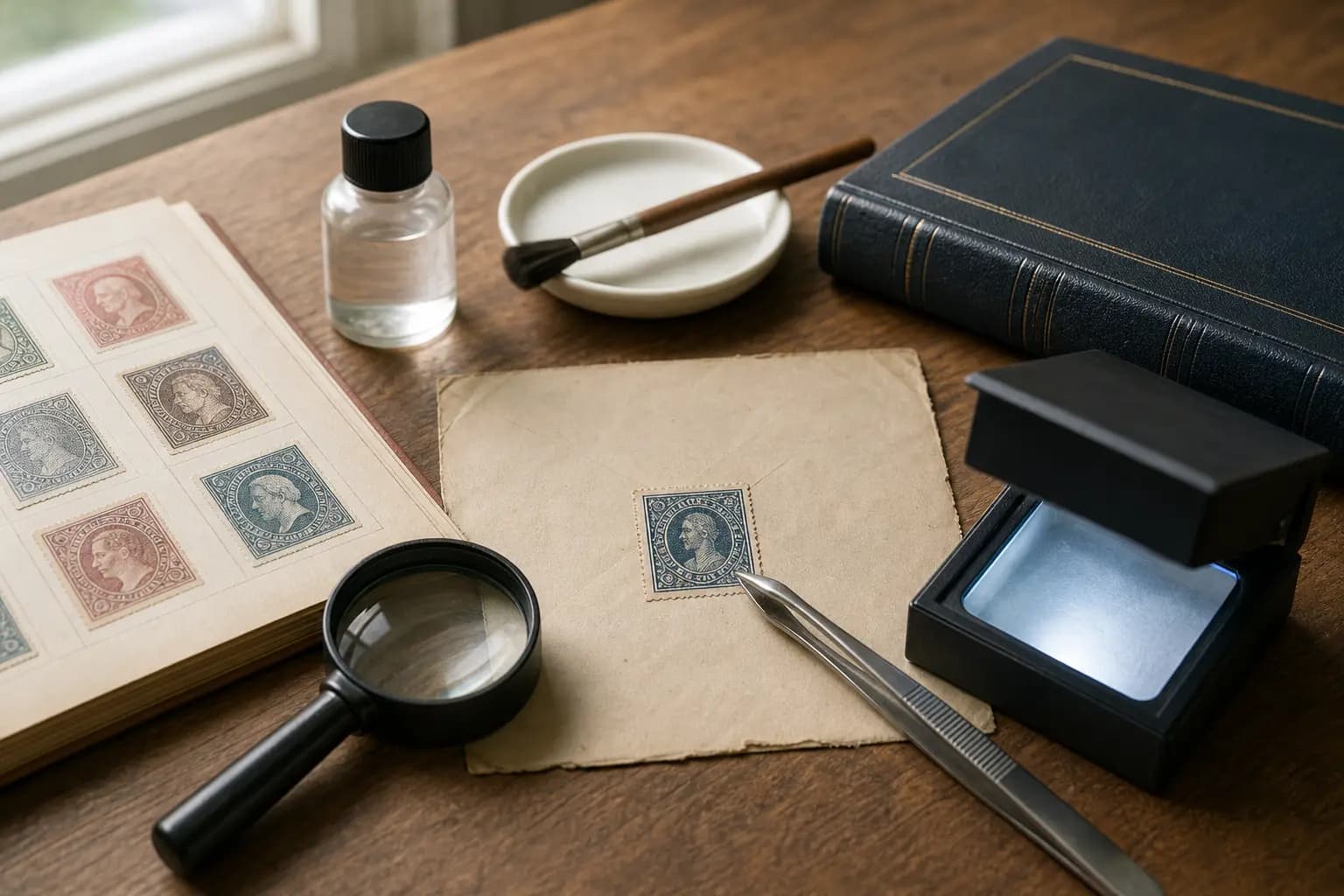
While some countries, such as Ireland and Italy, produced stamps with watermarks that can often be easily seen without special tools, many stamps require a more methodical approach. The safest and most traditional method to detect watermarks is to lay the stamp face down in a dark tray and moisten it with watermark fluid. This process brings up the watermark in dark lines against a lighter background. While some collectors historically used lighter fluid, philatelic organizations recommend using commercial watermark fluid, such as Clarity. This specialized fluid evaporates quickly and is designed not to impact the gum on an unused stamp, making it safer for both your stamps and your health than other chemical options.
Identifying Specific Watermark Designs
When inspecting stamps, you may encounter various watermark designs depending on the country of origin. For example, United States philatelic material features several distinct watermarks, such as the letters "USPS" on postage stamps, "USPOD," "USA," and various monograms or numbers on postal stationery, as well as "USIR" on revenue stamps. Specifically, a double-line "USPS" watermark was used on U.S. postage stamps from 1895 to 1910, while a single-line "USPS" watermark was used from 1910 to 1916. Identifying these requires patience, as many stamps may only show a small portion of a single letter, making careful examination essential.
Detecting Hidden Faults and Documenting Findings
In addition to revealing watermarks, dipping a stamp in watermark fluid is an excellent way to inspect the physical condition of the paper. The fluid can help you look for hidden faults such as thins, creases, and other paper damage that might not be visible under normal light. Once you have safely identified the watermark and inspected the paper, you can record these details in your inventory. Utilizing StampSnap to maintain a digital log of your identified varieties ensures that your collection remains organized and that you can easily reference your findings during future evaluations without handling the fragile paper repeatedly.
The Importance of Attention to Detail
Succeeding in watermark identification requires a sharp eye and relentless curiosity. Much like identifying subtle design changes on look-alike stamps, finding a watermark is about paying close attention to the smallest details. Even if a watermark is difficult to see, taking the time to verify its presence ensures that you do not overlook a scarce variety. By combining careful physical inspection with standard catalog listings, you can build a highly accurate and well-documented collection that reflects the true historical and philatelic value of each issue.
Frequently asked questions
Why do some identical-looking stamps have different catalog numbers?
Stamps with the same design that differ based on the presence, absence, or specific design of a watermark generally receive separate catalog numbers, as these paper differences can signify entirely different stamp issues.
What is the safest way to detect a watermark on a postage stamp?
The safest method is to place the stamp face down in a dark tray and moisten it with a commercial watermark fluid, which brings up the watermark as dark lines against a lighter background.
Can watermark fluid damage the gum on an unused stamp?
Commercial watermark fluids are designed to evaporate quickly and should not impact the gum on an unused stamp, making them safer to use than alternative solvents.
What are some common watermarks found on United States stamps?
Common U.S. watermarks include a double-line "USPS" used from 1895 to 1910, a single-line "USPS" used from 1910 to 1916, and "USIR" on revenue stamps.