
The Challenge of Screened Structures in Stamp Printing
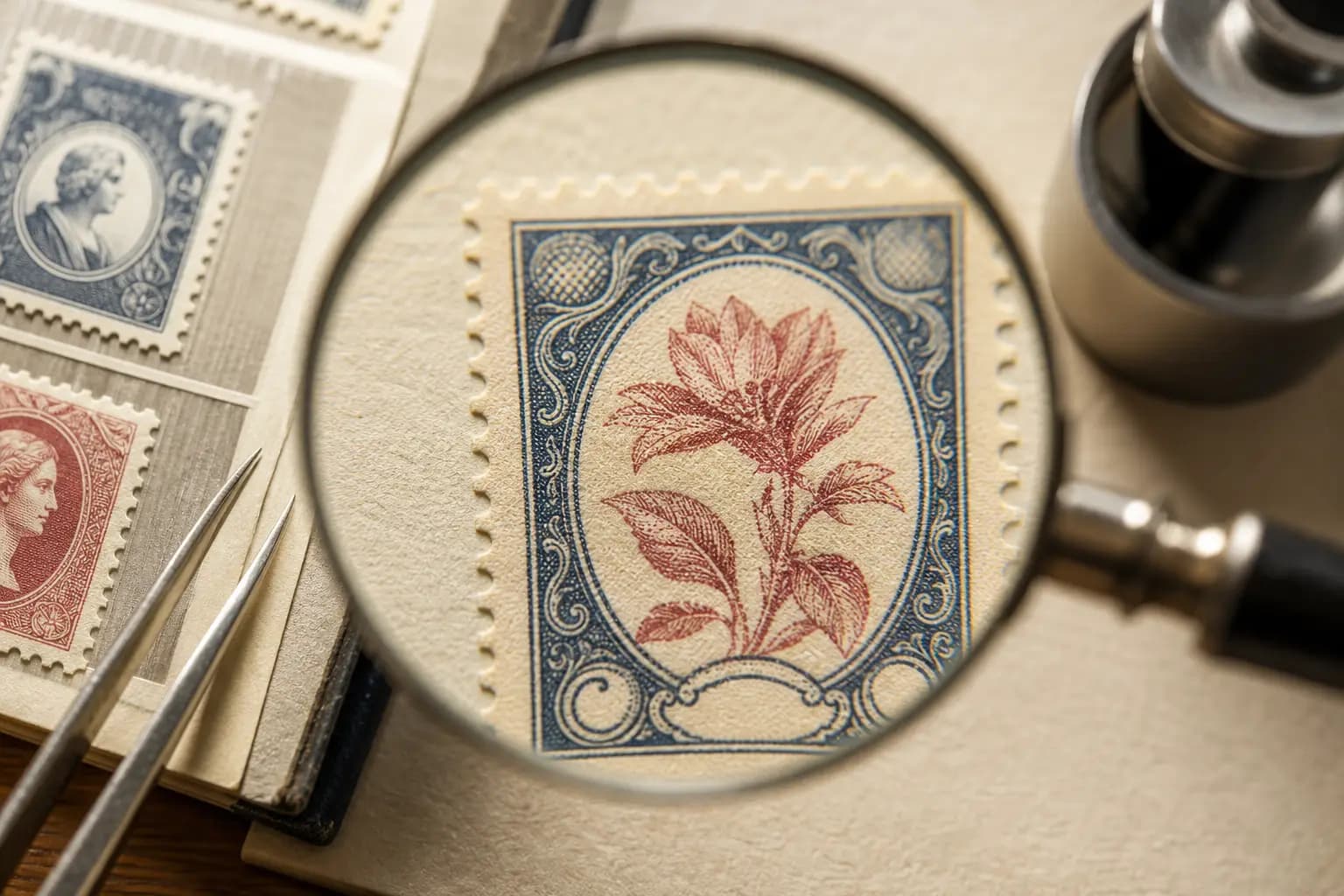
Identifying the printing method of a postage stamp is one of the most rewarding aspects of philately, but it can also be one of the most challenging. Many modern stamps feature complex designs that utilize screened structures, which are patterns of tiny dots or cells visible only under magnification. Because multiple printing processes can produce similar-looking dot patterns, collectors often struggle to distinguish between gravure and offset lithography.
To make an accurate determination, you must avoid relying on a single visual test. Instead, treat your observations as cumulative clues that must be verified against official production records. Using an app like StampSnap can help you log your findings and establish a likely identification of the stamp's printing family before you begin detailed physical analysis. This initial step ensures you have a structured record of your specimen as you proceed with more advanced, non-contact examination techniques.
Understanding Gravure as a Recess Process
The American Philatelic Society identifies four major families used for postage stamps: line-engraved intaglio, gravure, letterpress, and lithography. Gravure is a member of the recess printing family, meaning the image is printed from design elements that sit below the surface of the printing plate. Specifically, gravure forms tone from thousands of tiny, screened cells etched into the plate.
When ink is applied, it fills these cells, and the excess is wiped away before the paper is pressed against the plate to transfer the image. Because of this recess mechanism, gravure stamps can sometimes display raised ink effects or distinct screened structures under magnification. However, because screened or raised effects can also appear in other printing processes, collectors should never rely on these features as a single, definitive test.
Understanding Offset Lithography as a Planographic Process
In contrast to gravure, offset lithography is a planographic process, meaning the image is formed on a completely smooth surface rather than being cut, etched, or incised into a plate. According to the Smithsonian National Postal Museum, the process relies on the chemical principle that oil and water do not mix. Oil-based ink adheres to the designated image area on the plate, and a rubber blanket transfers, or offsets, that inked image directly to the paper.
Modern stamp lithography commonly combines separate process-color layers made from very fine dots to build up the final multicolored image. Because these dots are incredibly small and precisely placed, they can easily be confused with the screened cells of a gravure print if you rely solely on a quick visual inspection.
Why Soft Edges and Dots Can Be Deceptive
A common misconception among philatelists is that offset lithography can always be identified by soft or blurred edges. However, the Smithsonian National Postal Museum notes that modern lithography can be remarkably sharp, meaning that soft or blurred edges are not a dependable identifying rule.
Furthermore, because gravure and other processes can also show screened structures under magnification, a dot pattern alone must always be interpreted in conjunction with other physical evidence and production records. You must look at the overall construction of the design, combining multiple visual clues to build a reliable conclusion.
A Methodical Process for Analyzing Screened Stamps
To safely analyze a stamp's printing method, you should always use a methodical, non-contact approach. Begin by placing the stamp on a clean, flat surface and examining it under non-contact magnification using oblique or diffuse light. Oblique light, which strikes the stamp at an angle, is highly effective for revealing subtle surface textures without risking physical damage to the paper. Look closely at the ink distribution: are the dots sharp and uniform, or do they show the characteristic cell-like structure of a recess process?
Next, cross-reference your visual observations with documented production records from stamp catalogs or philatelic databases. If the records indicate that a stamp was printed using offset lithography, but you observe raised ink lines or debossing on the reverse—which are supporting features of line-engraved intaglio—you may be looking at a different variety or a multi-process issue. Once you have combined your visual observations with official production records, you can record your final classification in your StampSnap digital collection record.
The Role of Watermarks and Paper in Identification
Finally, remember that paper characteristics, such as watermarks, often serve as critical secondary clues when classifying look-alike stamps. Watermarks are security measures incorporated into stamp paper during manufacturing to deter counterfeiting. Some postage stamps exist both on unwatermarked and watermarked paper, and even on paper with different watermarks, which can help you narrow down the exact printing run and method used.
To detect watermarks safely without damaging the stamp or its gum, lay the stamp face down in a dark tray and moisten it with a safe, commercial watermark fluid like Clarity. This fluid will temporarily bring up the watermark in dark lines against a lighter background before evaporating quickly. Combining watermark detection with printing analysis provides a complete, non-destructive profile of your specimen.
Frequently asked questions
Can I identify offset lithography simply by looking for soft or blurred edges?
No. While older lithographic prints sometimes had softer edges, modern offset lithography can be extremely sharp. Soft or blurred edges are not a dependable identifying rule, and visual features must be treated as cumulative clues alongside official production records.
What is the main difference in how gravure and offset lithography apply ink?
Gravure is a recess process that transfers ink from tiny screened cells etched below the surface of the plate. Offset lithography is a planographic process where oil-based ink is applied to a flat surface and transferred to the paper using a rubber blanket.
Why do both gravure and offset lithography show dot patterns under magnification?
Both processes use screened structures to build up tones and colors. Modern offset lithography combines separate process-color layers made of very fine dots, while gravure forms tones using tiny etched cells. Because both display dot patterns, you must combine visual observations with official production records to distinguish them.
How should I light a stamp to inspect its printing texture?
You should use non-contact magnification combined with oblique or diffuse light. Oblique light strikes the stamp at an angle, which helps highlight surface textures, raised ink, or debossing without touching or damaging the fragile paper.