
Introduction to the Four Major Printing Families
Postage stamps are produced using four major printing families: line-engraved intaglio, gravure, letterpress, and lithography. While classic issues often rely on a single method, modern stamps frequently combine multiple processes on a single issue. To classify these stamps accurately, collectors must understand the physical characteristics of each family.
Among these, lithography—specifically offset lithography—stands out as a planographic process. Unlike recess or relief methods, planographic printing does not rely on raised or recessed areas on the printing plate to transfer ink. Understanding this distinction is the first step in identifying how a stamp was manufactured.
Understanding the Planographic Process of Offset Lithography
The Smithsonian National Postal Museum describes offset lithography as a planographic process where the image is formed on a completely smooth surface. Rather than cutting or etching the design into a plate, the process relies on the chemical mutual repulsion of oil and water.
During production, an oil-based ink adheres strictly to the designated image area on the plate. A rubber blanket then transfers, or offsets, that inked image from the plate onto the stamp paper. Because the rubber blanket is smooth and flexible, it applies the ink evenly without leaving physical indentations or raised ink ridges on the paper surface.
The Myth of the Soft Edge in Modern Lithography
In early philatelic literature, collectors were often told that lithographed stamps could be identified by soft or blurred design edges. However, modern printing technology has made this rule obsolete. The Smithsonian National Postal Museum notes that modern lithography can be exceptionally sharp, meaning soft or blurred edges are not a dependable identifying rule.
Instead of relying on edge sharpness alone, collectors must look for other visual clues. Modern stamp lithography commonly combines separate process-color layers made from very fine dots. When viewed under non-contact magnification, these tiny dots of cyan, magenta, yellow, and black overlap to create the full range of tones seen on the stamp.
Why Dot Patterns Require Cumulative Evidence
Seeing a dot pattern under magnification is a helpful clue, but it is never enough to diagnose a printing process on its own. The Smithsonian National Postal Museum cautions that a dot pattern must always be interpreted alongside other evidence. This is because gravure—which is a recess process—and other printing methods can also show screened structures under magnification.
Gravure forms its tones from screened cells etched into a plate, which can mimic the dot patterns of offset lithography. To avoid misidentification, collectors must treat visual features as cumulative clues. You should never declare a stamp to be lithographed based solely on the presence of dots or screened structures.
Comparing Lithography with Recess and Relief Families
To confirm a planographic print, you must rule out the characteristics of the other major families. For instance, line-engraved intaglio transfers ink from deliberately incised lines, constructing its design from lines, hatching, cross-hatching, and stippling. Under non-contact magnification and oblique light, intaglio stamps often reveal raised ink, and the heavy printing pressure may leave debossing on the reverse.
Letterpress, a relief process, may show a slight squeeze of ink at the borders of the design elements. If you observe raised ink, debossing, or ink squeeze, you are likely looking at a recess or relief print rather than planographic offset lithography. However, the American Philatelic Society notes that raised or screened effects can sometimes appear in other processes, making a multi-tool inspection essential.
Combining Visual Clues with Production Records
Because visual features can overlap, the safest path to identification is to combine your physical observations with official production records. Philatelic catalogs and printer records document which printing methods were authorized for specific stamp issues. If a catalog states a stamp was printed via gravure, a dot pattern you observe is likely a screened cell structure rather than lithographic process-color dots.
When you have gathered your visual observations and cross-referenced them with production records, you can use StampSnap to log your findings. Using StampSnap to organize your collection records helps you keep track of these technical details over time.
Safe Examination Practices for Collectors
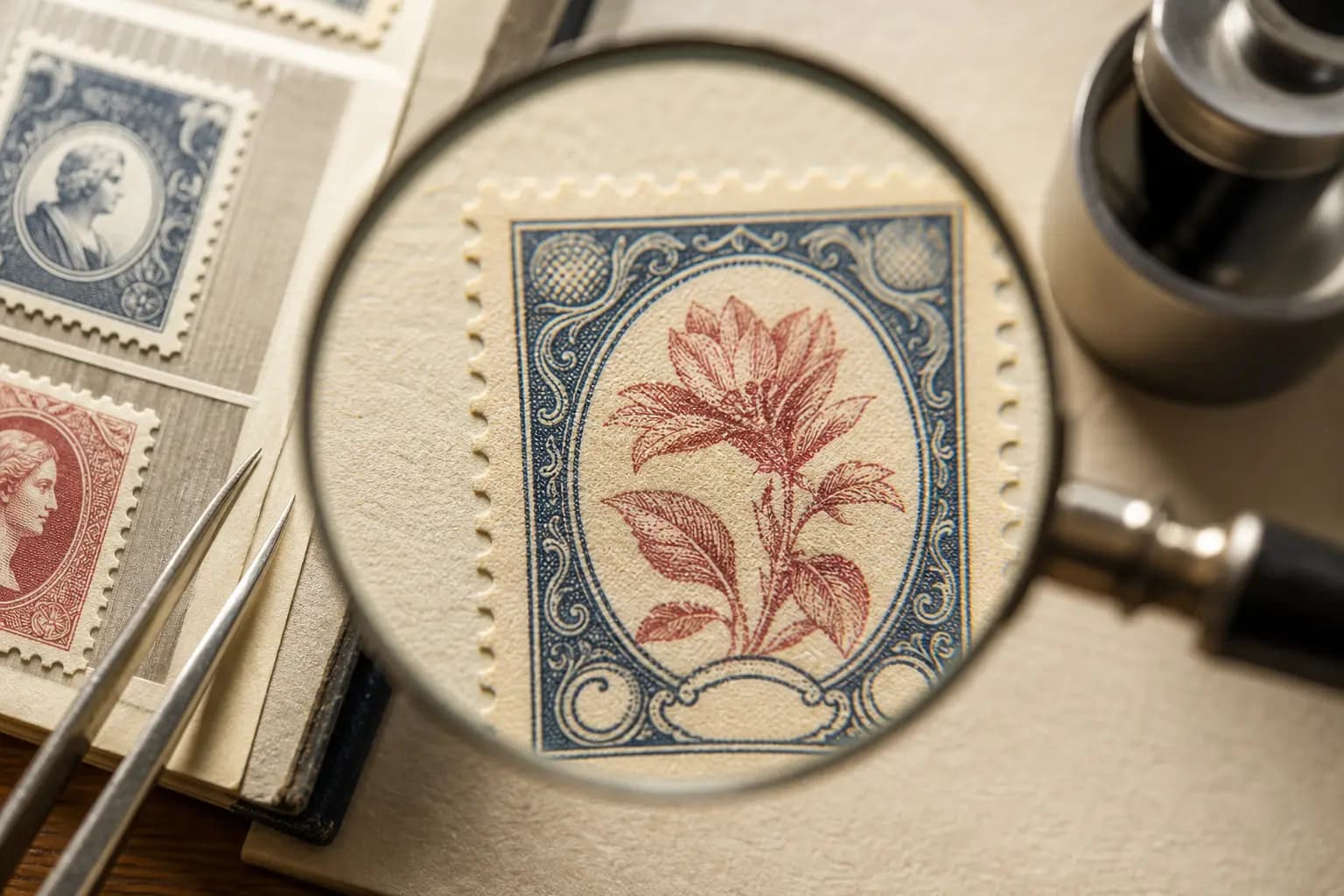
To examine these fine details safely, always use non-contact magnification, such as a digital microscope or a magnifying loupe held slightly above the stamp surface. Avoid touching the stamp with your fingers, and use professional stamp tongs if you must move the specimen.
If you are also checking for security features like watermarks to help differentiate similar issues, place the stamp face down in a dark tray and moisten it with a safe commercial watermark fluid, such as Clarity. This fluid evaporates quickly without impacting the gum on an unused stamp, allowing you to safely inspect the paper structure alongside your printing analysis.
Frequently asked questions
What is planographic printing?
Planographic printing, such as offset lithography, is a method where the image is formed on a completely smooth surface rather than being cut, etched, or raised on a plate. It relies on the chemical properties of oil-based ink and water to transfer the design.
Can I identify offset lithography solely by looking for soft edges?
No. While older lithographic stamps sometimes had softer edges, modern offset lithography can be extremely sharp. Soft or blurred edges are not a dependable identifying rule on their own.
Why do both gravure and offset lithography show dot patterns under magnification?
Offset lithography uses process-color layers made of very fine dots to build tones, while gravure is a recess process that forms tones using tiny screened cells. Because both create screened structures, you must combine visual observations with official production records to tell them apart.
How can I safely check for raised ink on a stamp?
Use non-contact magnification combined with oblique (low-angle) light to look for shadows cast by raised ink. Avoid touching the surface of the stamp with your fingers or tools to prevent damage.