Identifying Stamps Requires Proper Handling and Basic Visual Tools
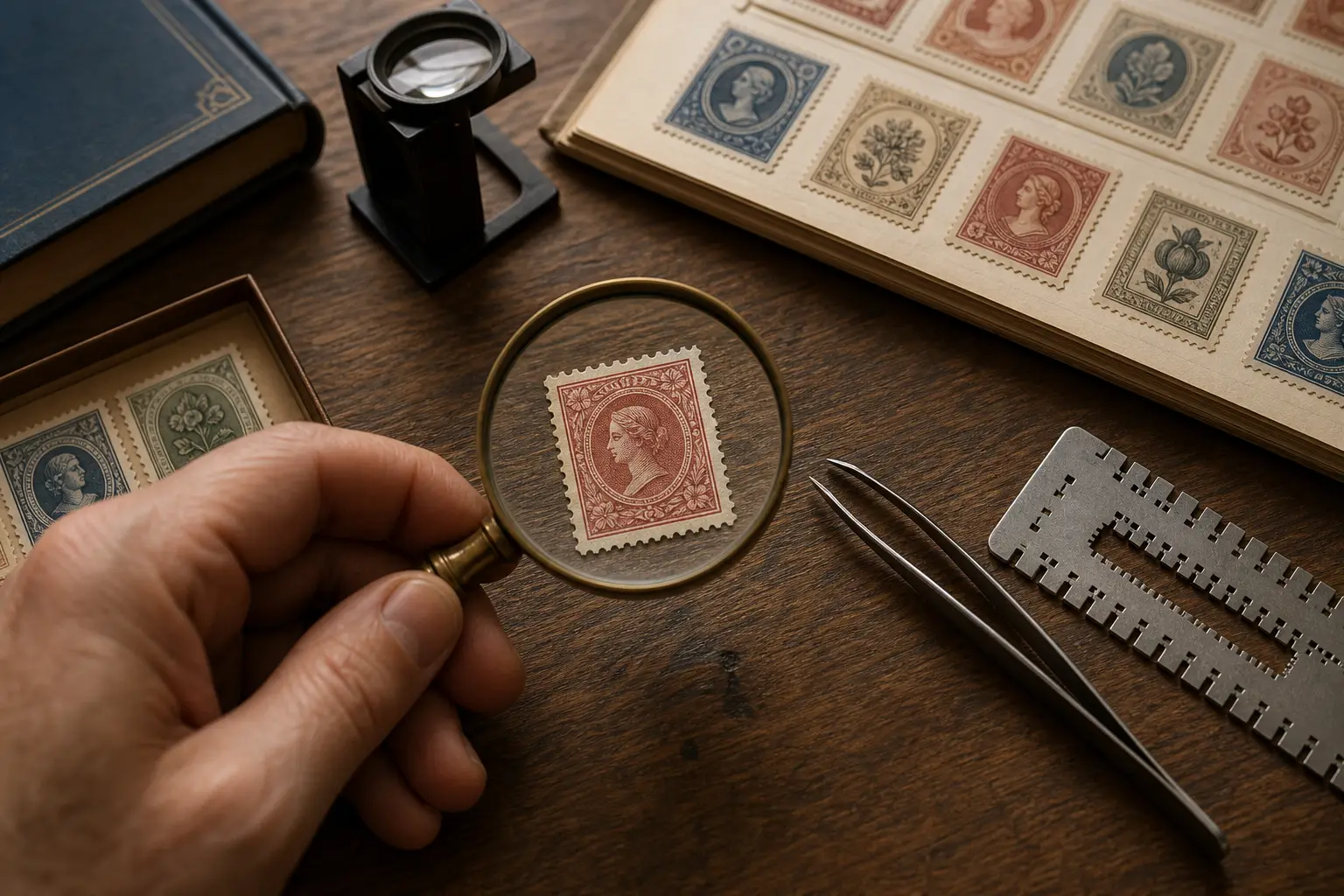
Identifying postage stamps accurately requires a safe, methodical approach using specialized equipment rather than bare hands or standard household items. While stamps serve as miniature historical items, handling them carelessly can lead to physical tears, creasing, or surface contamination. Establishing a consistent setup allows collectors to examine tiny design differences, perforation counts, and paper features without risking structural damage to fragile specimens.
Whether you are sorting through loose used stamps, covers, or vintage issues, having the right physical reference tools creates a reliable environment for philatelic study. When you observe subtle differences in printing, paper texture, or edge measurements, these physical tools provide clear evidence to compare against published catalog references.
Using Stamp Tongs to Prevent Paper Damage and Skin Oils
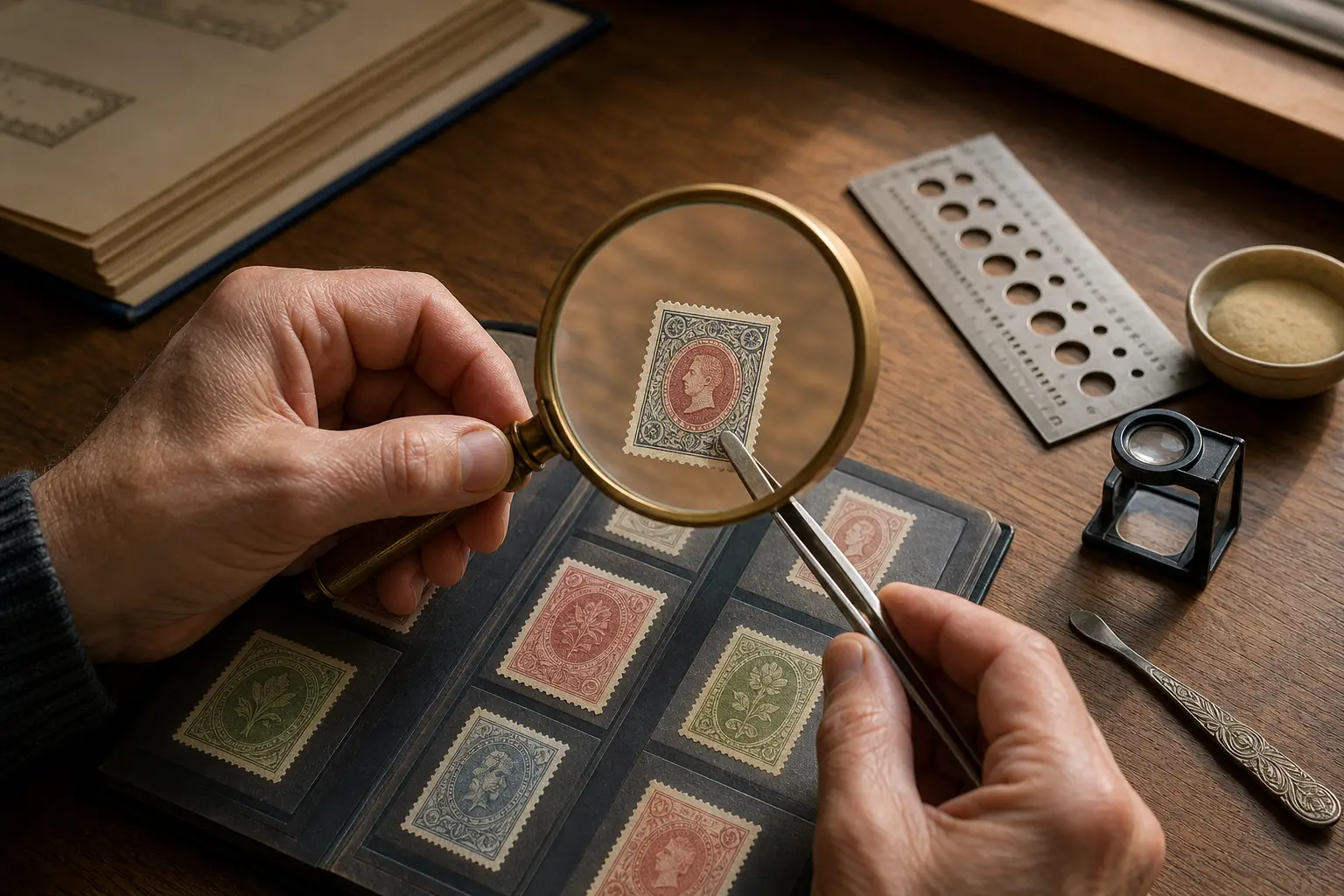
The most critical tool for handling stamps safely is a set of dedicated stamp tongs. Although tongs resemble everyday household tweezers, they are engineered specifically for philatelic material with smooth gripping surfaces. Standard medical or household tweezers often have rough or serrated tips that can easily crimp, tear, or thin delicate paper fibers when pressure is applied.
Human skin naturally releases oils and moisture, regardless of how thoroughly you wash your hands before a examination session. Over time, skin oils transferred directly onto dry stamps can leave subtle marks, damage delicate paper, or alter unused gum. Using smooth stamp tongs keeps your fingers off the stamp paper entirely, preserving the physical condition of dry stamps during inspection, sorting, and storage.
Choosing a Magnifying Glass to Inspect Fine Stamp Details
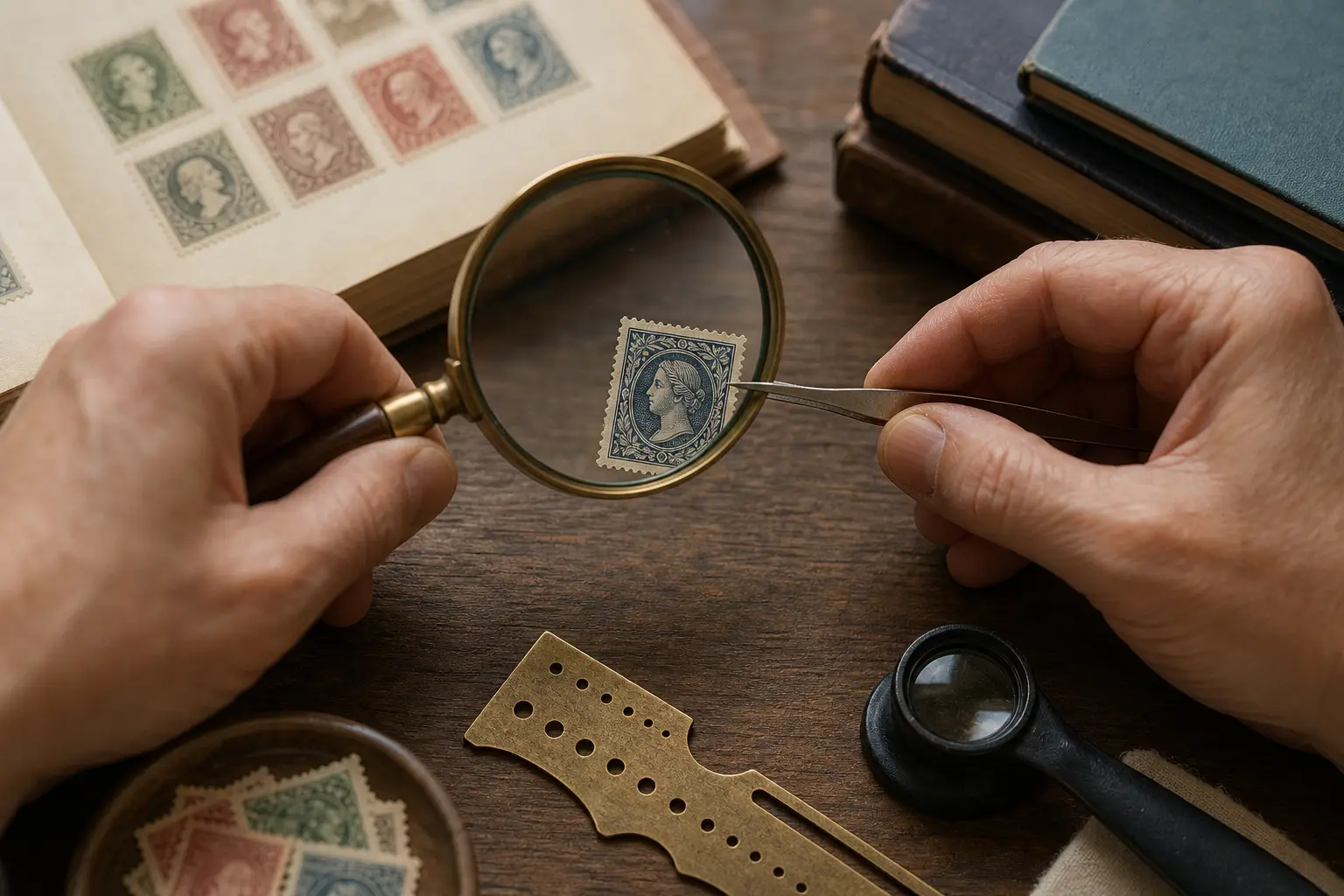
Many postage stamps feature nearly identical designs, portraits, or frame lines that can only be differentiated upon close inspection. A clear magnifying glass allows collectors to examine fine engraving lines, minor plate variations, or small text details that distinguish distinct stamp issues. When selecting a magnifying glass, choose a lens that provides clear magnification without optical distortion across the viewing field.
Magnification levels between 5x and 10x are generally ideal for standard philatelic work. Higher clarity helps reveal hidden plate details, small line differences, or subtle printing characteristics. Selecting a magnifying glass that folds into a protective case is also practical, as it prevents dust and accidental scratches on the lens when stored between identification sessions.
Using a Perforation Gauge to Measure Edge Count
Stamps that look identical at first glance may have been produced with different edge perforations—the row of punched holes designed to help separate individual stamps from a sheet. Counting these small holes manually along a stamp edge can be tedious and prone to error. A dedicated perforation gauge simplifies this step by providing pre-measured alignment scales printed on durable cardboard, plastic, or metal.
Perforation gauges measure how many perforation teeth or holes occur within a standard length of 20 millimeters. By laying the edge of your stamp directly against the gauge's printed scales, you can slide the stamp until the perforations align perfectly with a specific scale. Finding the exact perforation measurement helps distinguish look-alike issues without needing to count individual teeth by hand.
Referencing Stamp Catalogs and Stock Books for Verification
Once physical characteristics like perforations and printing details are noted, reference books become essential for completing an identification. A comprehensive stamp catalog serves as an illustrated reference work detailing issue dates, historical reasons for issuance, printing methods, and descriptions of both used and unused states. Catalogs allow collectors to match physical clues against established postal records.
During the examination process, temporary storage tools like stock books help keep items organized and protected. Stock books feature rows of clear plastic or paper pockets across acid-free pages, allowing collectors to group items by country or preliminary identification status before permanent mounting. Avoid using household adhesive tapes or sticky photo album pages, as standard adhesives can cause permanent damage and ruin stamp paper.
Identifying Watermarks and Paper Variations Safely
Beyond surface printing and edge perforations, internal paper characteristics like watermarks often serve as key identifying markers. Watermarks are faint designs or initials pressed into the paper during manufacture, which may only become visible under specific inspection conditions or with dedicated watermark detection tools.
If a stamp's country of origin is not explicitly printed in words, visual details can offer guidance. For instance, Great Britain is the only country permitted to omit its country name on postage stamps, relying instead on an image of the ruling monarch. Where visual identification remains inconclusive due to heavy cancellations or faded details, collectors should document all observable physical clues before recording a tentative result.
How StampSnap Helps Organize Your Likely Identification Findings
Combining traditional physical tools with digital reference aids creates a seamless collection workflow. After using your tongs, magnifying glass, and perforation gauge to inspect a stamp's physical traits, digital tools can streamline record-keeping. Using StampSnap allows you to capture clean image records of your stamps alongside observed perforation measurements and printing clues to establish a likely identification.
Storing your catalog notes and physical observations digitally in StampSnap helps maintain an organized log of your collection without unnecessary physical handling. This practical, safe approach ensures your physical stamps remain protected in stock books or acid-free album pages while your identification records stay structured and accessible.
Frequently asked questions
Why should I use stamp tongs instead of regular tweezers?
Regular household tweezers often feature rough or serrated jaws that can tear paper fibers, crimp edges, or thin paper. Stamp tongs have smooth gripping surfaces designed specifically to hold delicate stamp paper safely without transferring natural skin oils.
What magnification power is best for examining stamp details?
A magnifying glass with 5x to 10x magnification is ideal for philatelic identification. It provides sufficient detail to inspect fine engraving lines and minor variations without introducing visual distortion across the lens.
How does a perforation gauge measure stamp edges?
A perforation gauge measures how many perforation holes occur within a standard 20-millimeter length. By matching the stamp edge against the gauge's pre-printed scales, you can find the precise perforation count without counting individual teeth by hand.
What should I do if a stamp does not show a country name?
Check if the stamp displays an image of the ruling monarch, as Great Britain is the only country permitted to issue postage stamps without its name printed on them. If the origin remains uncertain, record all physical clues before making a tentative classification.