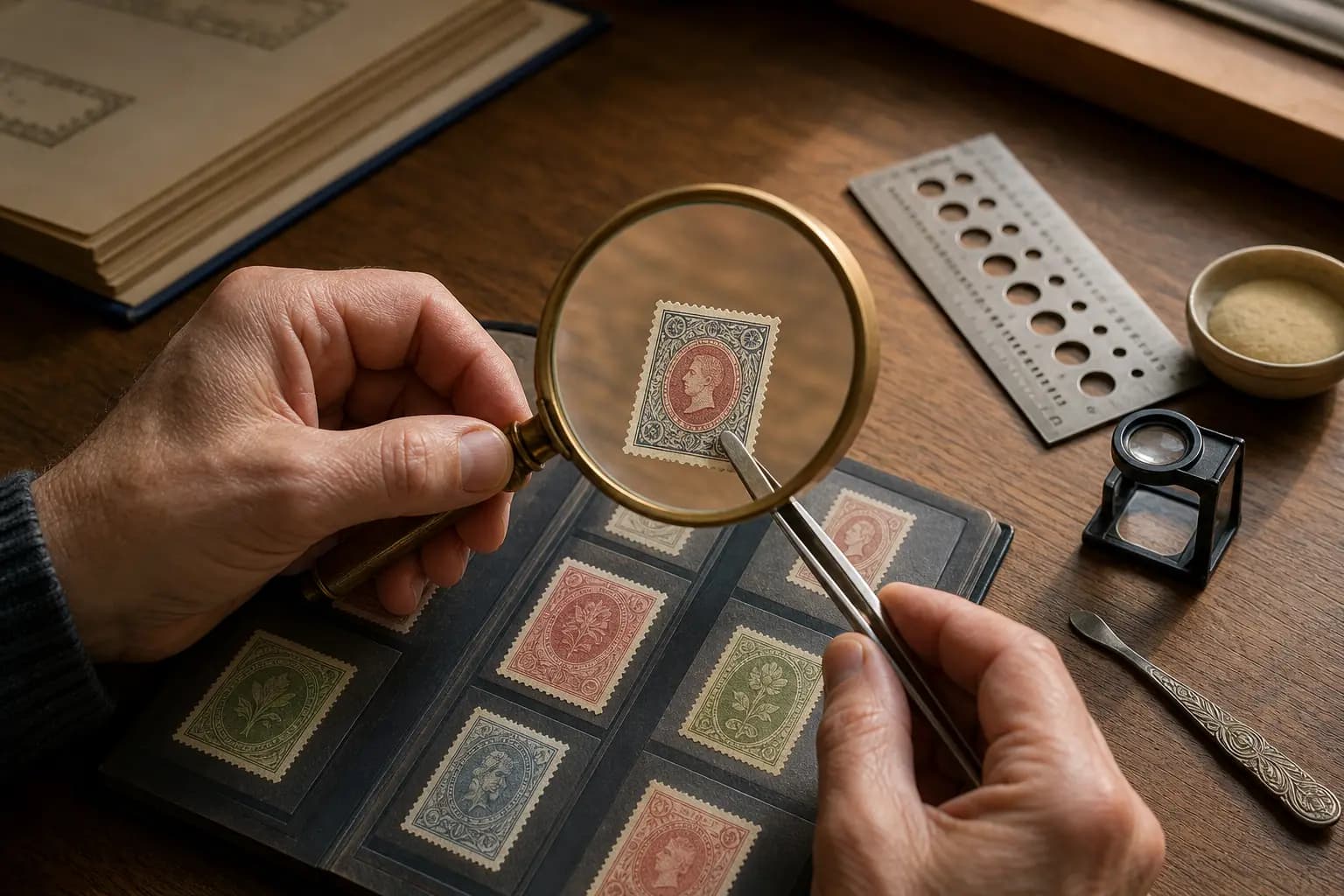
Start with the safest identification workflow
If you want to identify a stamp without damaging it, begin with the simplest answer: look closely, compare carefully, and handle it as little as possible. The American Philatelic Society says no special tools are required to be a stamp collector, but a few tools are useful for organizing, identifying, and handling stamps safely. That makes identification a methodical process, not a test of force or guesswork.
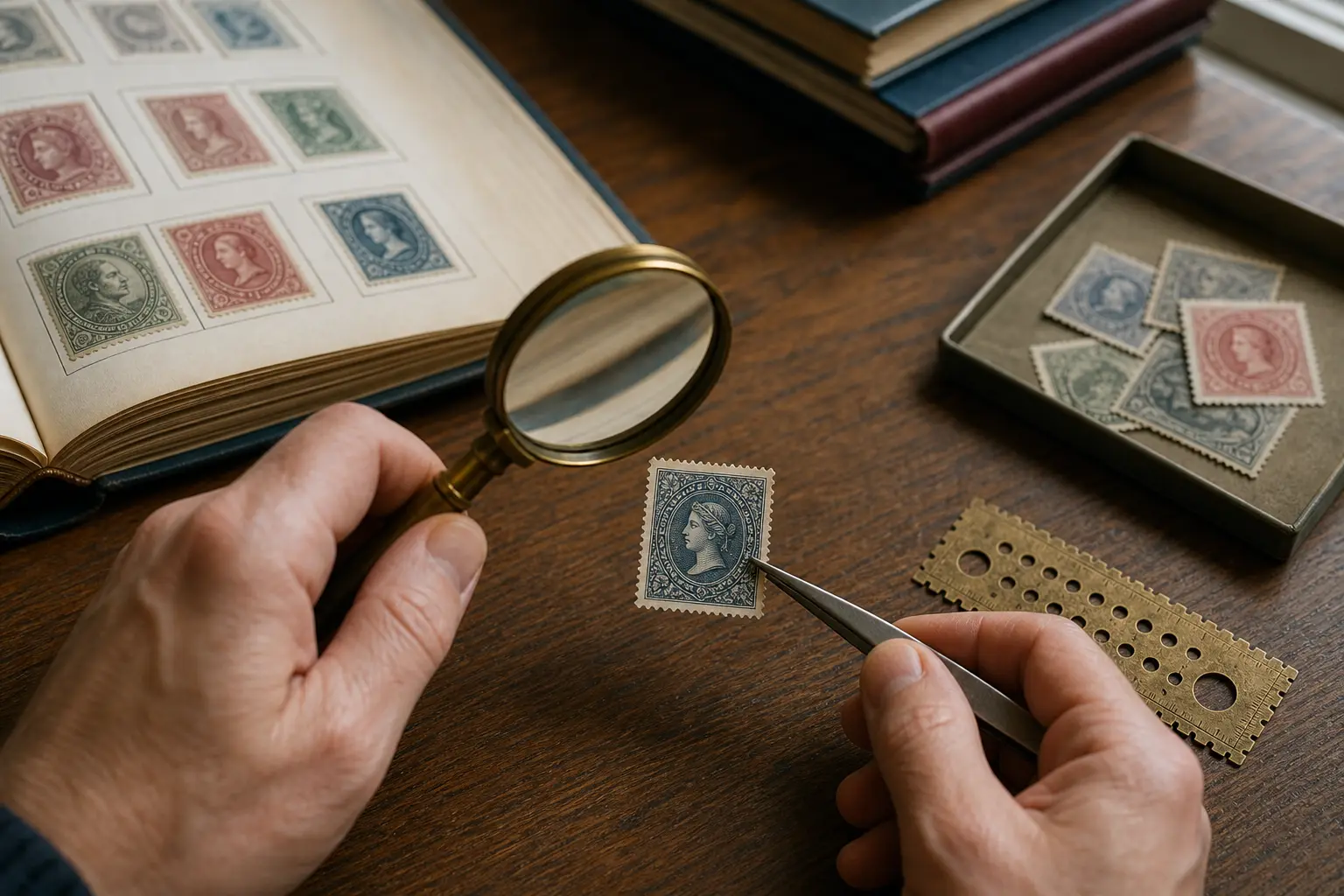
A practical first pass is to compare the stamp against a reference source, then use a magnifier to check details that are too small to judge by eye. If the stamp is loose and dry, use tongs rather than fingers so skin oils do not transfer to the paper. If you are building a long-term record of what you find, StampSnap can help you save a likely identification and keep notes together, but it should still be treated as a collector aid rather than an authority.
Use tongs first, not bare fingers
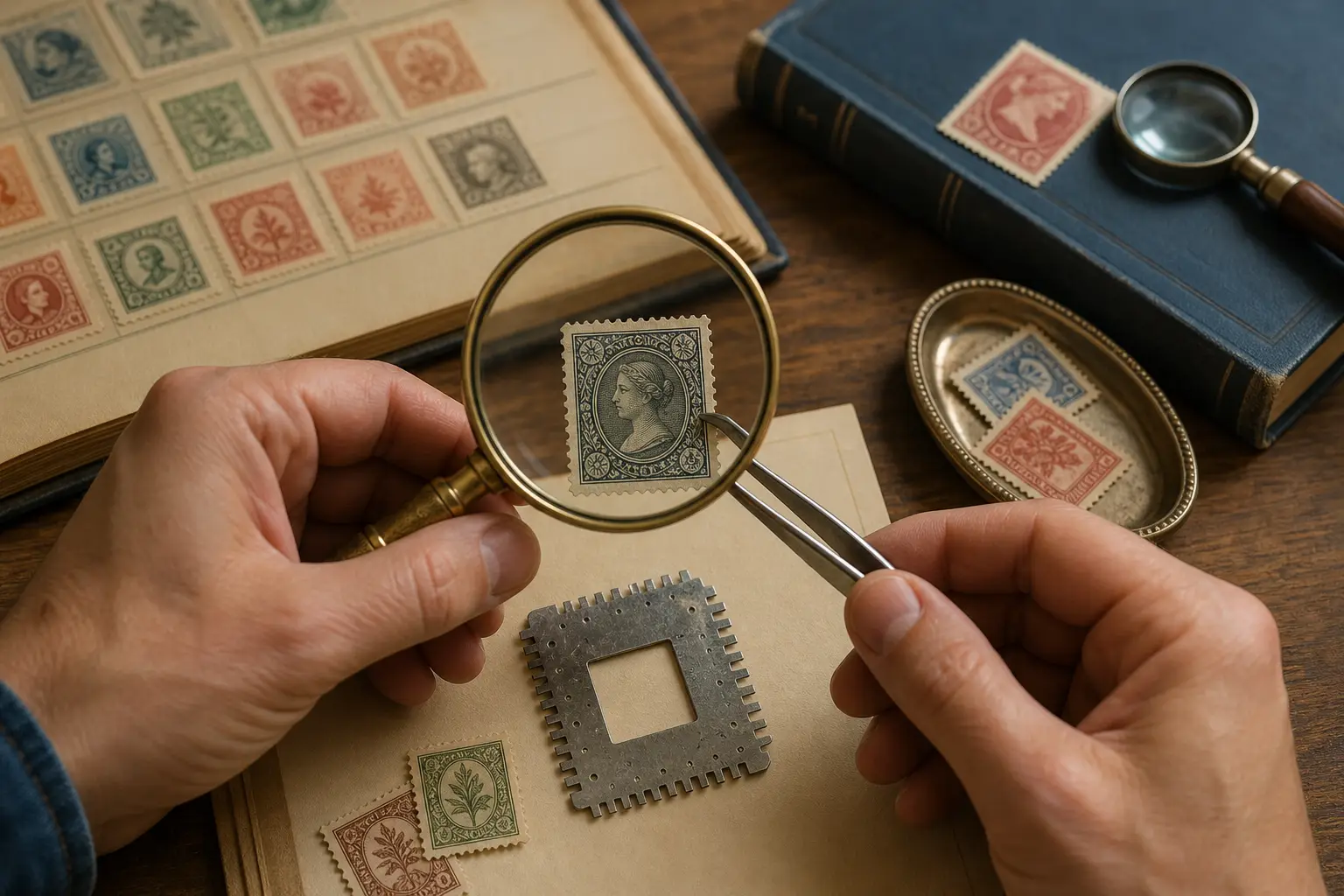
The APS recommends stamp tongs for dry stamps because, even after washing, oil from your skin can damage them. Tongs look like tweezers, but they have a smooth gripping surface designed for stamps. That design matters because a good grip should protect the stamp, not crease it or scuff the surface.
The safest habit is to move the stamp only when you need to see a detail or place it beside a reference. Keep handling brief and deliberate. If a stamp is damp, fragile, or already stuck to another item, do not force it free just to get a better look. The identification question can wait until the material is stable enough to examine safely.
Use magnification to compare details that look alike
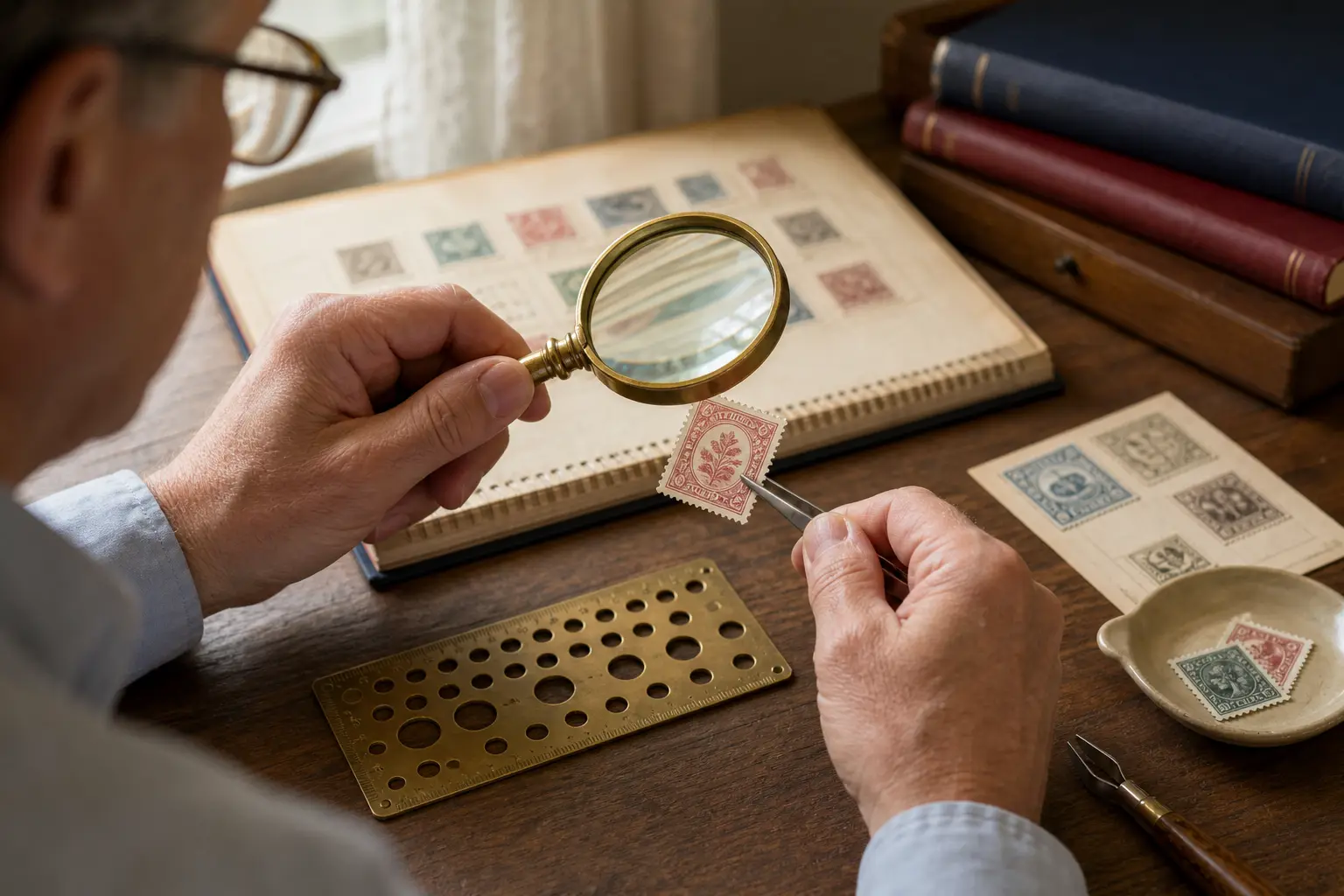
Many stamps appear similar until you inspect them closely, and the APS specifically notes that a magnifying glass can reveal small differences that help identify a rare stamp. For that reason, a magnifier is one of the most useful tools for the identification category. A clear view can help you compare lettering, spacing, fine design features, and other visible distinctions without touching the stamp more than necessary.
When choosing a magnifying glass, the APS recommends one that magnifies clearly without distortion and suggests about 5x to 10x magnification. A lens that folds into a case is also useful because it helps prevent scratches. The goal is not extreme enlargement; it is a clean, reliable view that lets you compare what you see with a trustworthy reference.
Check the catalog before you decide on an identity
A stamp catalog is more than a price list. According to the APS, catalogs provide illustrations and helpful information such as the date a stamp was issued, a description of the stamp, why it was issued, how it was printed, and values in used and unused condition. For identification work, that means a catalog can help you narrow down whether a stamp matches one issue or another before you make a final note.
Use the catalog as a comparison tool, not as a shortcut. Match the design, then verify the details you can actually see on your stamp. If you are unsure, record the stamp as a possible match rather than forcing certainty. A careful note in a collection record is better than a confident mistake, especially when similar-looking stamps can be easy to confuse.
Measure perforations instead of guessing
Perforations are one of the most useful clues when two stamps share the same design. The APS explains that some stamps have the same design but different numbers of perforations, meaning the holes between stamps can separate one issue from another. You could count the perforations yourself along a row 20 millimeters long, but the process is difficult enough that a perforation gauge is a much better tool.
A perforation gauge is usually made of cardboard, plastic, or metal and includes scales for different perforation sizes. You place the stamp against the scales until the perforations match exactly. This is safer and more reliable than rough guessing, and it helps you avoid repeated handling while trying to count tiny holes by eye.
Look for watermark clues only with the right tool
Watermarks are another identification clue mentioned by the APS among the tools used to recognize stamps. Because watermarks are not always easy to see under normal light, a watermark detector can help you check whether a stamp has one and whether it matches the kind of issue you are studying. That matters because a detail you cannot see casually may still be part of the identification.
Do not use unsafe shortcuts to force a watermark to appear. Keep the stamp flat, use the proper detector, and compare the result with a reference source. If you are not certain, note the uncertainty instead of making a hard claim. A cautious record is especially useful when the stamp otherwise looks ordinary and only a hidden feature may distinguish it.
Store and record what you learn so you can review it later
Once you have made an identification or narrowed the possibilities, store the stamp in an album or stock book rather than leaving it loose. The APS recommends albums and stock books as a way to help protect stamps, and it advises against sticky photo album pages because they can damage stamps. The same source also warns not to use tape or glue, since both can lower value and may damage the stamp when removal is attempted.
A clean record helps you revisit uncertain items later without rehandling them unnecessarily. Write down the tool results, the catalog comparison, and any uncertainty you still have. If you maintain a digital checklist, StampSnap can be used as a simple way to organise those observations, but the final identification should still rest on what you can verify from the stamp and the reference material.
Frequently asked questions
What is the safest first tool to use when identifying a stamp?
The safest first tools are stamp tongs and a clear magnifying glass. Tongs reduce skin-oil contact, and a magnifier helps you compare small details without excessive handling.
How much magnification is useful for stamp identification?
The APS recommends a magnifying lens with about 5x to 10x magnification, as long as it gives a clear image without distortion.
Can a stamp catalog help identify more than the issue name?
Yes. The APS says a catalog can show the issue date, description, reason for issue, how it was printed, and values in used and unused condition.
Why use a perforation gauge instead of counting holes by hand?
Because some stamps look the same but differ in perforation count. A gauge makes the measurement easier and more reliable than counting tiny holes along a short measured line.
Should I force a watermark or backing to appear if I cannot see it clearly?
No. Use the proper tool for the clue you are checking and avoid forcing the stamp or using unsafe shortcuts. If you are uncertain, record it as uncertain until you can verify it safely.