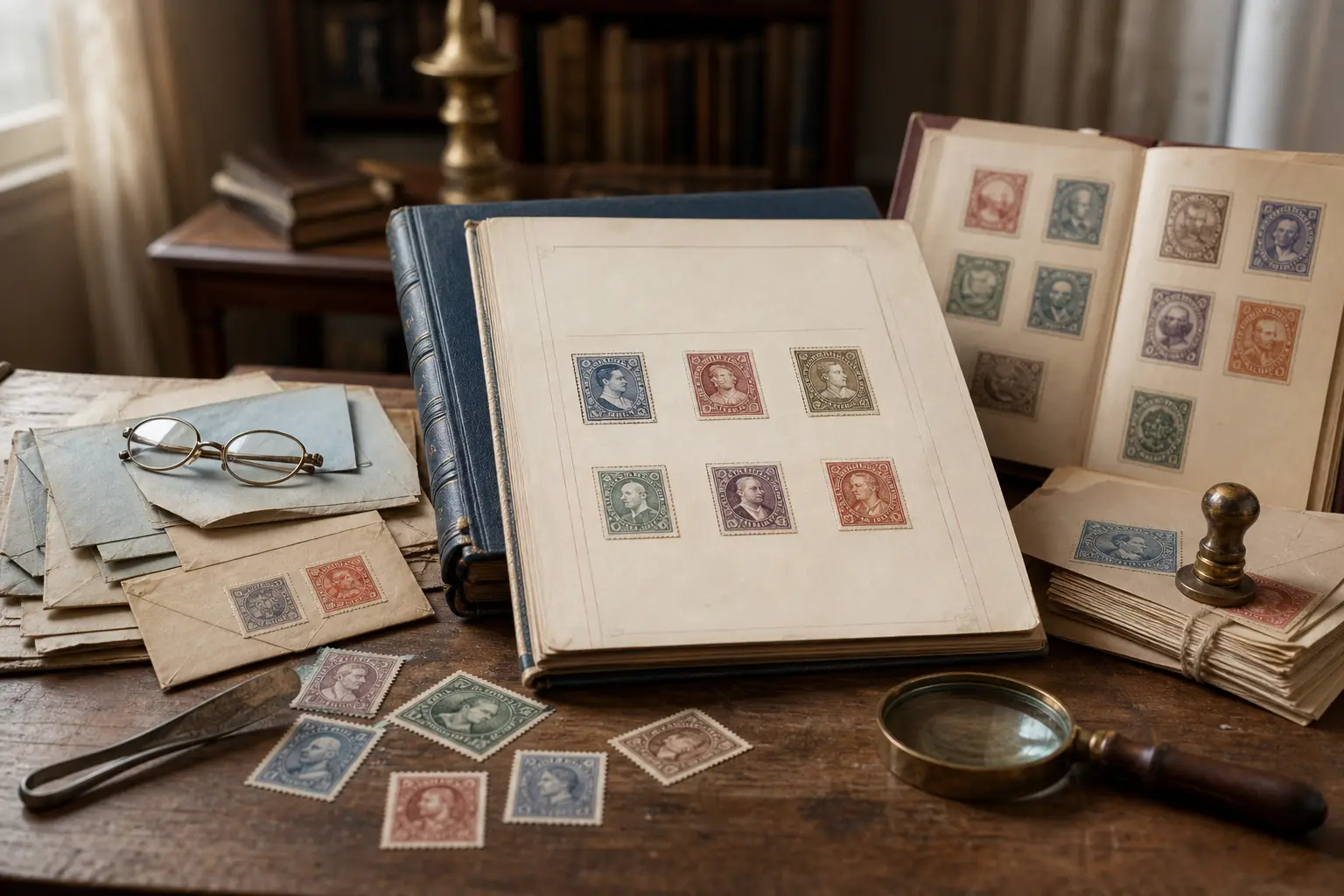
The Roots of Organized Philately
The hobby of collecting postage stamps began with a few dedicated enthusiasts in the 1850s and grew steadily over the next three decades. According to historical records, by the 1880s, there were an estimated 25,000 stamp collectors in the United States alone. The Smithsonian National Postal Museum traces the origins of organized philately to these early collectors gathering informally to compare, discuss, and exchange stamps. As these informal gatherings grew more frequent, collectors realized that a more structured approach was necessary to study, document, and preserve their collections.
This realization laid the groundwork for the formal clubs and national societies that would soon define the hobby. By transitioning from casual meetups to structured organizations, early philatelists established the systems of study and preservation that modern collectors rely on today.
How Local Clubs and Specialist Societies Formed
As the number of collectors expanded, shared interests naturally encouraged the formation of local clubs and societies. According to the Smithsonian National Postal Museum, these early organizations were often devoted to particular countries, historical periods, or specific philatelic subjects. Rather than operating purely as social groups, these societies quickly became vital institutions for exchange, education, research, and exhibiting.
They provided a structured environment where members could share specialist knowledge, trade duplicates safely, and collaborate on identifying difficult varieties. This collaborative spirit helped transform stamp collecting from an isolated pastime into a highly organized, intellectual pursuit.
The Birth of National Organizations in 1886
By the mid-1880s, prominent collectors recognized the need for a unified national body to standardize the hobby. In April of 1886, S.B. Bradt, O.S. Hellwig, and R.R. Shuman formed The Committee on National Organization and printed an announcement proposing a national society. Approximately 400 collectors expressed their willingness to assist, and 219 sent in their proxies, paying twenty-five cents each for the privilege of voting.
On September 13, 1886, a committee met in New York City and officially adopted the name American Philatelic Association (APA). The following day, John K. Tiffany, a prominent attorney and philatelist, was elected as the association's first president, a role he held until 1896. The APA established annual dues of $2, offering members structured benefits like a purchasing department, an exchange department, and a dedicated counterfeit detector, E. A. Holton, who served without a fee to protect members from fraudulent material.
The Evolution of Philatelic Exhibitions
Exhibitions played a crucial role in the growth of organized philately. The Smithsonian National Postal Museum notes that exhibitions gave participants a structured way to present their collections, learn from other displays, and compete for formal recognition. For the American Philatelic Association, this tradition began immediately with their first annual convention on September 13, 1886.
These annual conventions, known today as StampShow, have been held continuously since that inaugural meeting. Exhibitions allowed collectors to showcase their research, receive feedback from peers, and establish standards for displaying and organizing philatelic material, which helped elevate the educational value of the hobby.
Establishing Research Standards and Publications
To facilitate communication and document research, early societies prioritized publishing reference materials. The APA launched its official journal, The American Philatelist, on January 10, 1887, in Altoona, Pennsylvania, under the editorship of W. R. Fraser. Although a mail vote in June of 1887 temporarily selected The Western Philatelist as the official publication, the drive to produce dedicated literature remained strong.
According to the Smithsonian National Postal Museum, publishing research and creating reference material were core functions of early societies, helping collectors share specialist knowledge across great distances. These early journals documented plating studies, printing varieties, and postal history, creating a permanent record that modern collectors still consult today.
Connecting Historical Research to Modern Collecting
Today, the legacy of these early societies lives on in modern clubs and digital tools. While early philatelists relied entirely on printed journals and physical meetings, modern collectors can combine historical literature with mobile technology. For instance, when evaluating an unidentified classic stamp, a collector can use the StampSnap app to create a likely identification or establish a digital collection record.
This initial step allows the collector to safely catalog their find before cross-referencing it with the deep archives of organizations like the American Philatelic Research Library. By blending traditional research with modern tools, collectors continue the work started by the pioneers of the 1880s.
Frequently asked questions
How did early stamp collectors vote to establish the first national organization in the United States?
In 1886, the Committee on National Organization published an announcement regarding a national society. To establish the organization, 219 collectors sent in proxies, paying twenty-five cents each to vote. This led to the creation of the American Philatelic Association on September 13, 1886.
What was the purpose of early philatelic exhibitions?
According to the Smithsonian National Postal Museum, exhibitions provided collectors with a structured way to present their collections, learn from other displays, and compete for recognition. The American Philatelic Association initiated this tradition with its first annual convention on September 13, 1886.
How can modern technology help me identify stamps mentioned in early philatelic literature?
You can use modern tools like the StampSnap app to create a likely identification or a digital collection record of your stamp. Once identified, you can cross-reference the stamp with historical research, journals, and reference materials published by early philatelic societies.