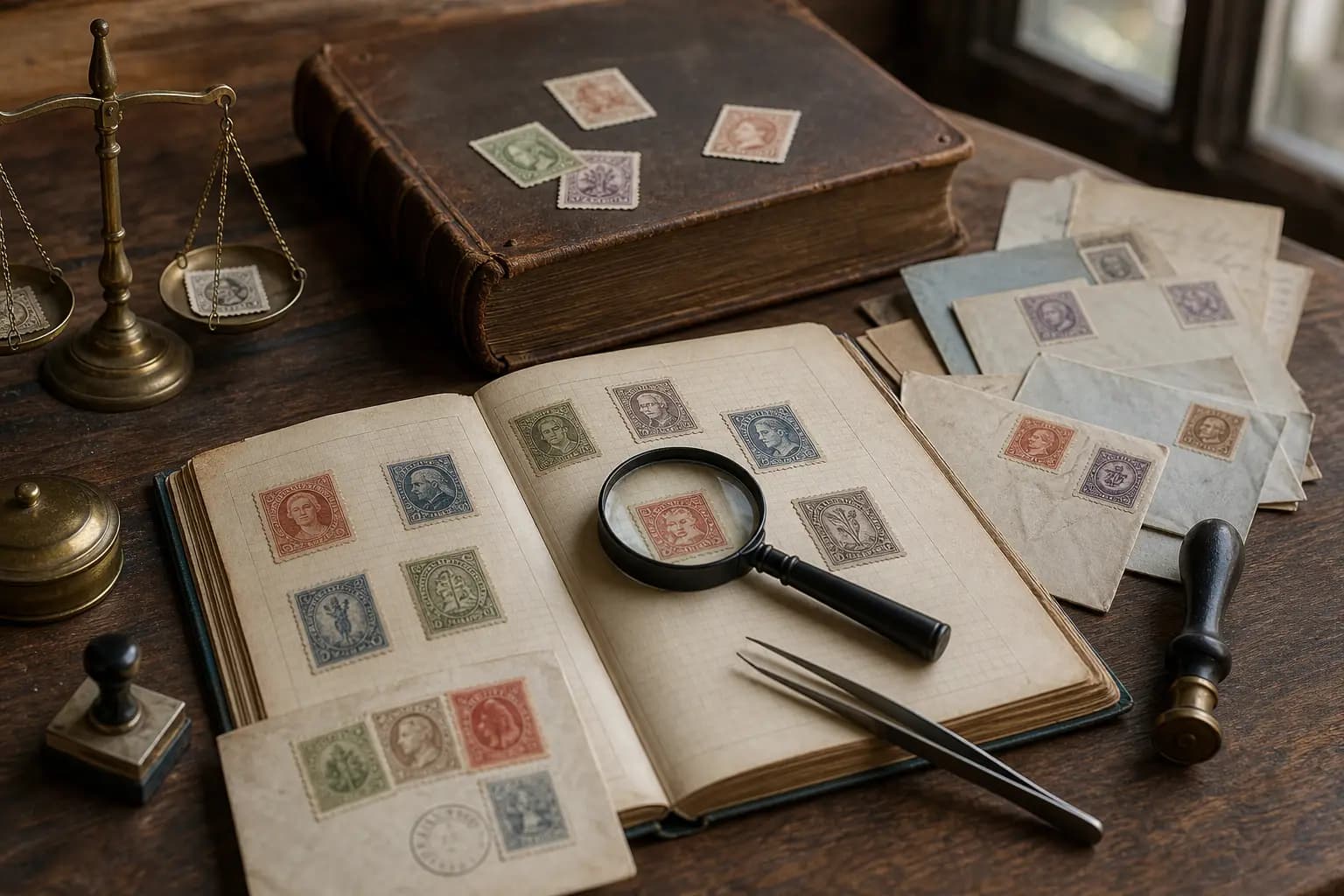
The Rise of Organized Philately in the Nineteenth Century
In the mid-nineteenth century, the hobby of collecting postage stamps began to transition from a casual pursuit into an organized discipline. Starting with a few dedicated enthusiasts in the 1850s, philately grew steadily over the next three decades. By the 1880s, there were an estimated 25,000 stamp collectors active in the United States. This rapid expansion created a pressing need for structured systems to help collectors identify, exchange, and verify their specimens.
Today, modern collectors can use digital tools like StampSnap to easily catalog and organize their holdings, but early philatelists had to rely entirely on physical networks and newly formed societies to manage their collections. The Smithsonian National Postal Museum traces organized philately to these early collectors gathering to compare, discuss, and exchange stamps. These shared interests naturally encouraged the formation of local clubs and societies focused on specific countries, periods, or subjects.
The Founding of the American Philatelic Association in 1886
To address the needs of this growing community, several prominent collectors began discussing a national organization in 1886. By April of 1886, S.B. Bradt, O.S. Hellwig, and R.R. Shuman formed The Committee on National Organization and distributed an announcement. Some 400 collectors expressed interest, with 219 sending in proxies and paying a small fee for the privilege of voting by proxy.
On September 13, 1886, a committee met in New York City and adopted the name American Philatelic Association (APA). The following day, September 14, 1886, John K. Tiffany, a prominent attorney from St. Louis, was elected as the association's first president, a role he would hold until 1896. The APA established a clear constitutional preamble, stating its objects were to assist members in acquiring philatelic knowledge, cultivate friendship, and enable affiliation with foreign societies.
The Exchange Department and Duplicate Management
One of the most practical services established by the APA was the Exchange Department, which is known today as the Sales Division. The primary objective of this department was to facilitate the exchange of duplicate stamps, entire envelopes, and postal cards among the association's members. To achieve this, the department utilized specialized exchange books and boxes that were circulated among participants.
This structured system allowed collectors to safely trade duplicates without needing to meet in person. While local clubs provided social meetings and published research, national organizations like the APA formalized these exchanges on a much larger scale, helping collectors systematically fill gaps in their albums.
The Purchasing Department and Collective Buying
In addition to exchanging duplicates, early APA members sought a reliable way to acquire new stamp issues. To solve this, the association created the Purchasing Department. Members who utilized this service paid a dedicated purchasing agent to procure new issues or obsolete stamps at or near face value.
This collective buying power benefited everyone involved. As more members participated in the program, the purchasing agent could secure better prices for the group, making new issues more accessible to average collectors and establishing a reliable supply chain for active philatelists.
Combating Fraud: The First Counterfeit Detector
As the hobby grew, the regular appearance of fraudulent and counterfeit stamps became a severe plague for early collectors. To protect its members, the APA took prompt action by establishing a dedicated counterfeit detector position. The association elected E. A. Holton, a prominent stamp dealer from Boston, to fill this role.
Serving as a direct forerunner to modern expertizing agencies, Holton examined submitted stamps to verify their authenticity. Remarkably, Holton performed this vital service without charging a fee to the members, establishing a precedent for consumer protection within the organized philatelic community.
Early Philatelic Literature and Official Journals
To keep members informed and facilitate ongoing education, the APA prioritized philatelic literature. On January 10, 1887, the association commenced publication of its official journal, The American Philatelist, in Altoona, Pennsylvania, under editor W. R. Fraser. Although a mail vote in June of 1887 temporarily shifted the official organ designation to The Western Philatelist, the early journal established a precedent for scholarly communication.
Concurrently, the Library Department began collecting donations to build a reference archive. Although the library was not immediately ready for member use, the early leadership recognized that access to reference material was essential for verifying stamp varieties and identifying counterfeits.
Local Club Resources and Educational Materials
While national organizations managed large-scale services, local clubs remained the heartbeat of the hobby. Over the decades, organizations published various guides to help local clubs succeed. Resources such as the 1996 APS handbook, Building Better Stamp Clubs, provided practical advice on recruitment, finances, and running shows. Other guides, like Elaine Durbin Boughner's Linn's Stamp Club Handbook (1983) and the 1966 guide, How to Make Stamp Club Meetings More Interesting, offered specific program ideas and trivia quizzes to keep meetings engaging.
Today, collectors can prepare for these local club meetings by using StampSnap to create a likely identification of their stamps, ensuring they have organized records to share with fellow enthusiasts during discussions and exchanges.
Frequently asked questions
Who was the first president of the American Philatelic Association, and when was he elected?
John K. Tiffany, a prominent St. Louis attorney and philatelist, was elected president on September 14, 1886. He held this position until 1896.
What was the purpose of the APA Exchange Department established in 1886?
The Exchange Department was created to facilitate the exchange of duplicate stamps, entire envelopes, and postal cards among members using specialized exchange books and boxes.
Who served as the first counterfeit detector for the American Philatelic Association?
E. A. Holton, a stamp dealer from Boston, was elected as the counterfeit detector. He served in this role without charging a fee to help members identify fraudulent stamps.
When and where was the first official journal of the APA published?
The first five issues of the journal, titled The American Philatelist, were published in Altoona, Pennsylvania, beginning on January 10, 1887, with W. R. Fraser serving as editor.