Introduction to Affordable Philately
Stamp collecting is celebrated worldwide as a highly flexible hobby suitable for nearly all ages, from young children to lifelong enthusiasts. One of its greatest appeals is that it does not require any special skills or great wealth to begin. While some individuals collect as an investment, the vast majority of philatelists participate for relaxation, personal enjoyment, and the vast amount of knowledge gained from studying these miniature works of art.
By adopting a methodical, budget-conscious approach, you can build a highly satisfying and educational collection without a significant financial commitment. Understanding how to select affordable specialties and utilize basic tools safely is the key to enjoying this hobby economically.
Choosing Cost-Effective Specializations
When starting out, the sheer volume of available stamps can feel overwhelming. The countries of the world issue a total of about 10,000 postage stamps each year, making a complete worldwide collection unrealistic for most budgets, spaces, and time constraints.
Instead, specializing in a single country—such as your home country, a favorite vacation destination, or one whose designs interest you—is a classic, cost-effective alternative. For many countries, obtaining a comprehensive collection is entirely possible without spending a fortune, especially if you narrow your focus to a specific era, such as stamps issued after your birth year.
Embracing Topical and Thematic Collecting
Topical collecting is another highly popular, customizable, and inexpensive way to build a unique collection. This approach allows you to gather stamps from various countries based on a shared theme, such as animals, birds, flowers, ships, space, scouts, Disney, or sports.
Because topical stamps are widely available and generally inexpensive, you can easily control your spending while exploring diverse designs. To add depth and variety to your topical collection without high costs, you can also look for special postmarks, first day covers, and postal stationery that relate directly to your chosen topic.
Mint vs. Used Stamps: The Economical Choice
Choosing between mint and used stamps is a major decision that directly impacts your budget. Used stamps, which have served their intended purpose of carrying the mail, are generally much less expensive than mint stamps, though some rare exceptions exist.
They also offer practical preservation benefits: because you do not have to worry about preserving the delicate gum on the back of used stamps, you can safely mount them on album pages using inexpensive stamp hinges. This eliminates the need for costly specialized protective mounts, making used stamps the ideal choice for budget-conscious collectors.
Essential Low-Cost Tools for Safe Handling
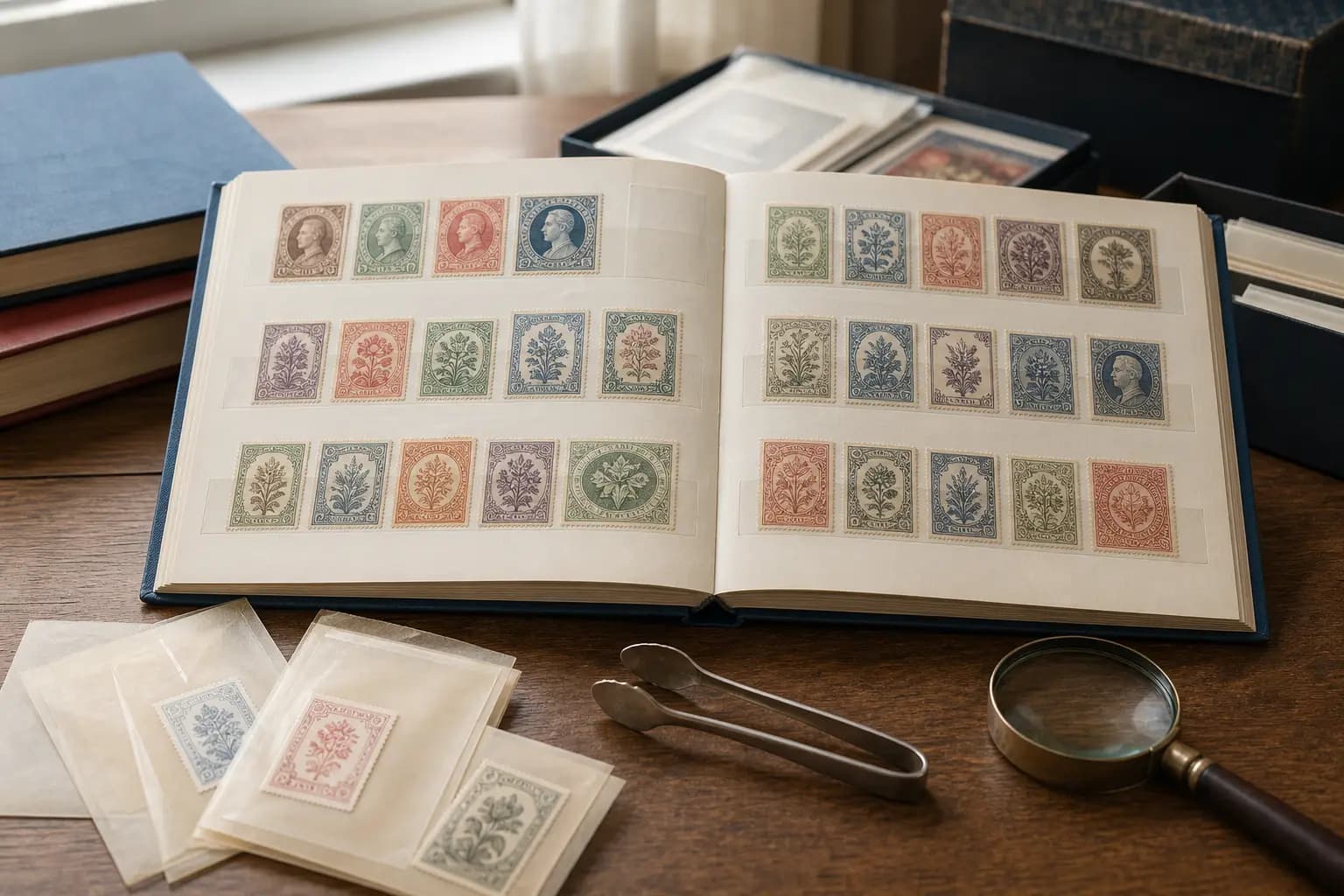
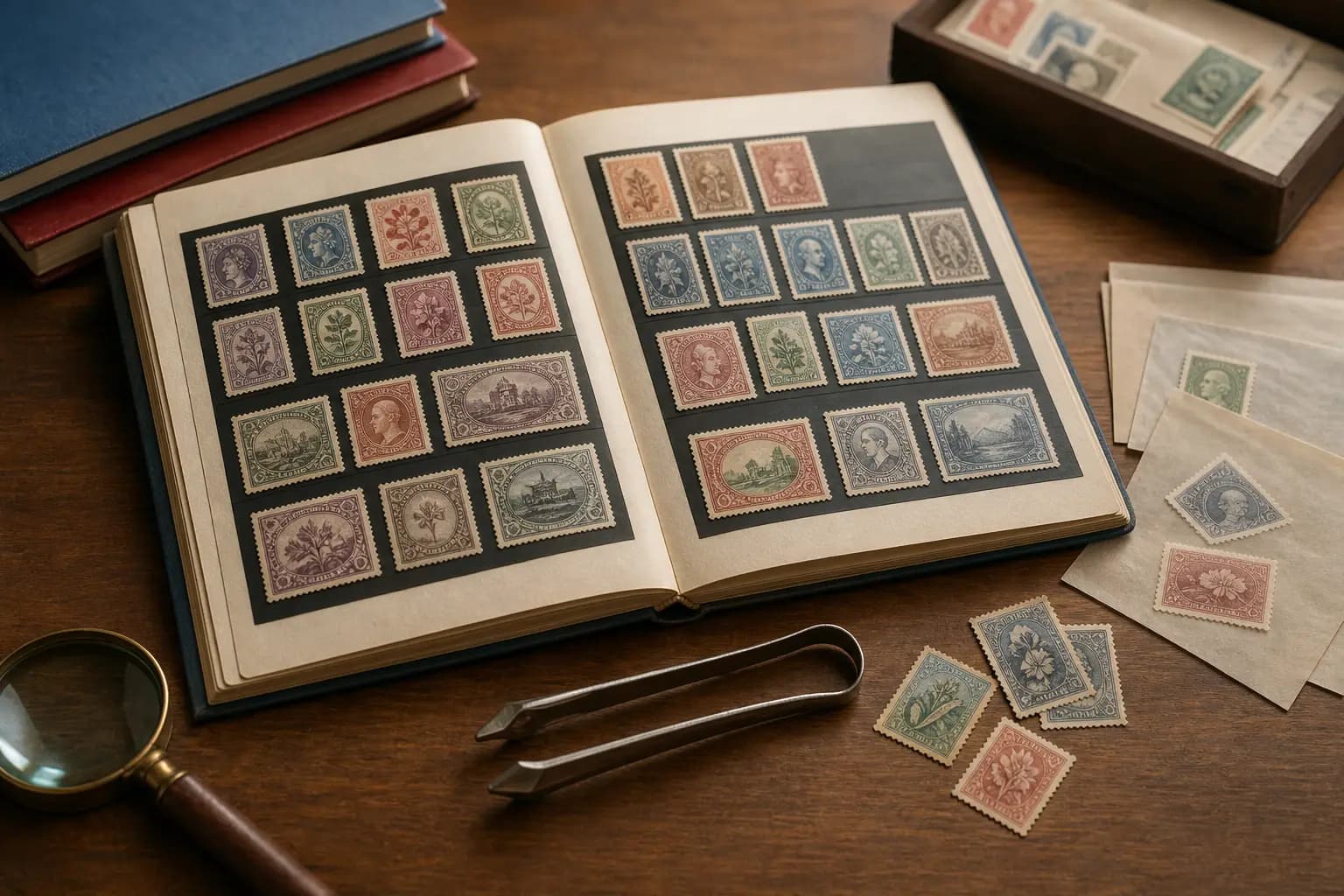
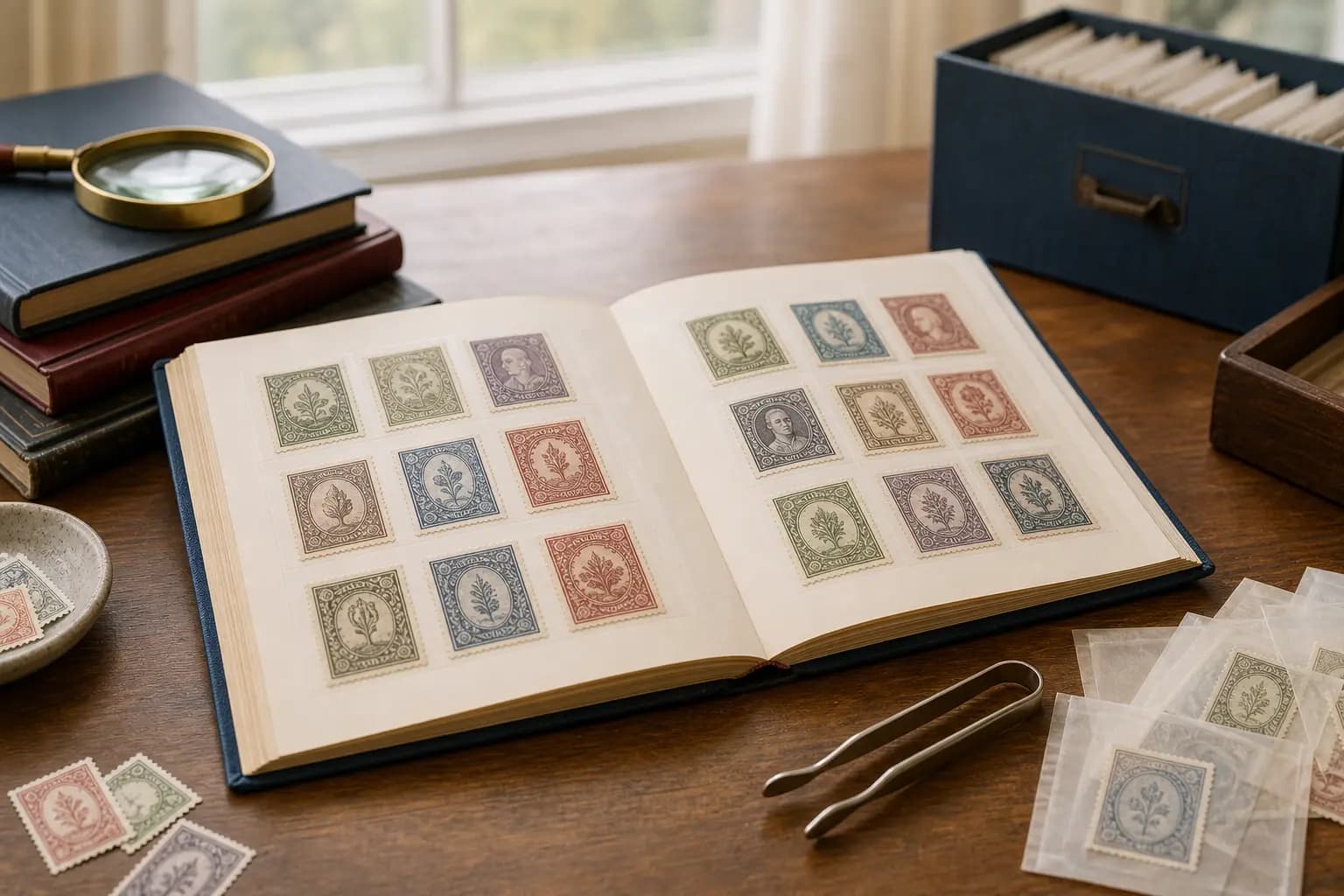
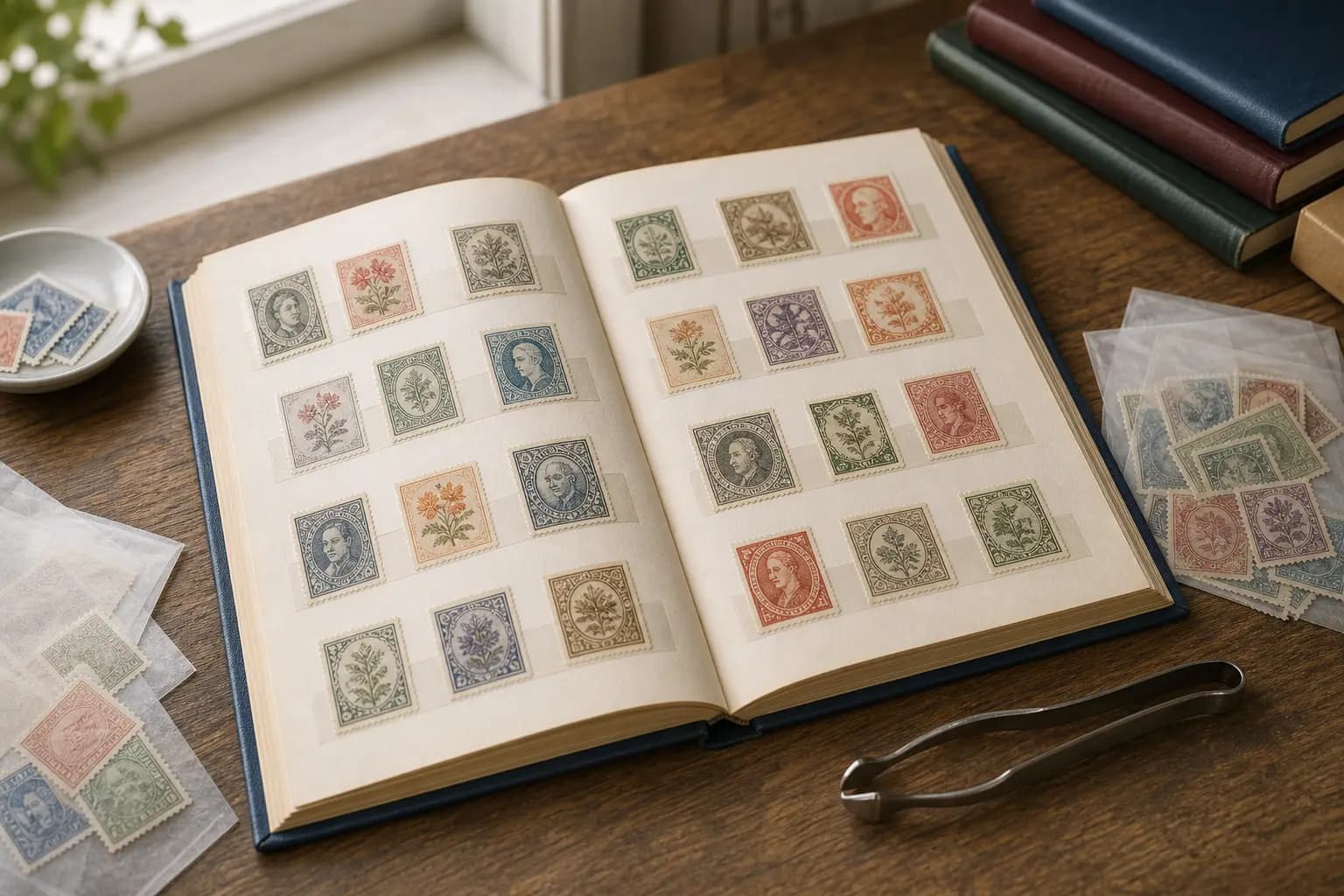
Safe preservation does not require an array of expensive, specialized gear. The Smithsonian National Postal Museum identifies a simple pair of stamp tongs, an album, and a general reference book as sufficient starting tools for any new collector.
Tongs with smooth ends are absolutely essential for picking up loose stamps without direct finger contact, protecting them from harmful skin oils and physical creasing. To expand your analytical capabilities safely, you can add a basic magnifying glass to reveal small design details and a perforation gauge to measure perforations and distinguish look-alike issues.
Leveraging Reference Catalogs and Digital Tools
To ensure you organize your collection accurately without overspending, always rely on systematic research. While physical observations of your stamps are important, they should always be compared with reliable reference materials rather than treated as conclusive on their own.
General reference catalogs record essential details such as issue dates and printing methods. To streamline this process, you can use StampSnap to generate a likely identification and maintain a digital collection record, allowing you to cross-reference your physical stamps with standard philatelic databases safely and efficiently.
Finding Affordable Stamps
Acquiring stamps affordably is highly achievable if you know where to look. Many collectors begin by saving stamps from their own daily mail or asking friends and family to save envelopes for them.
You can also collect non-traditional philatelic materials such as Christmas Seals, revenue stamps, and other ephemera, which are often highly affordable and add unique historical context to your albums. Engaging with local clubs and collector networks can also yield duplicate stamps that other philatelists are happy to trade or sell for very low costs.
Frequently asked questions
What basic tools do I need to start stamp collecting on a budget?
According to the Smithsonian National Postal Museum, you only need a simple pair of stamp tongs, an album, and a general reference book to start. Tongs with smooth ends protect stamps from skin oils, while a basic magnifying glass and perforation gauge help analyze design details and perforations safely.
Is it cheaper to collect mint or used stamps?
Generally, used stamps cost less than mint stamps. They also offer the advantage of not requiring gum preservation, which means you can safely mount them using inexpensive stamp hinges rather than costly specialized protective mounts.
How can I narrow down my collection to keep it affordable?
Instead of trying to collect every worldwide stamp, you can specialize in a single country, limit your collection to stamps issued after your birth year, or focus on a specific topical theme like animals, space, or sports.