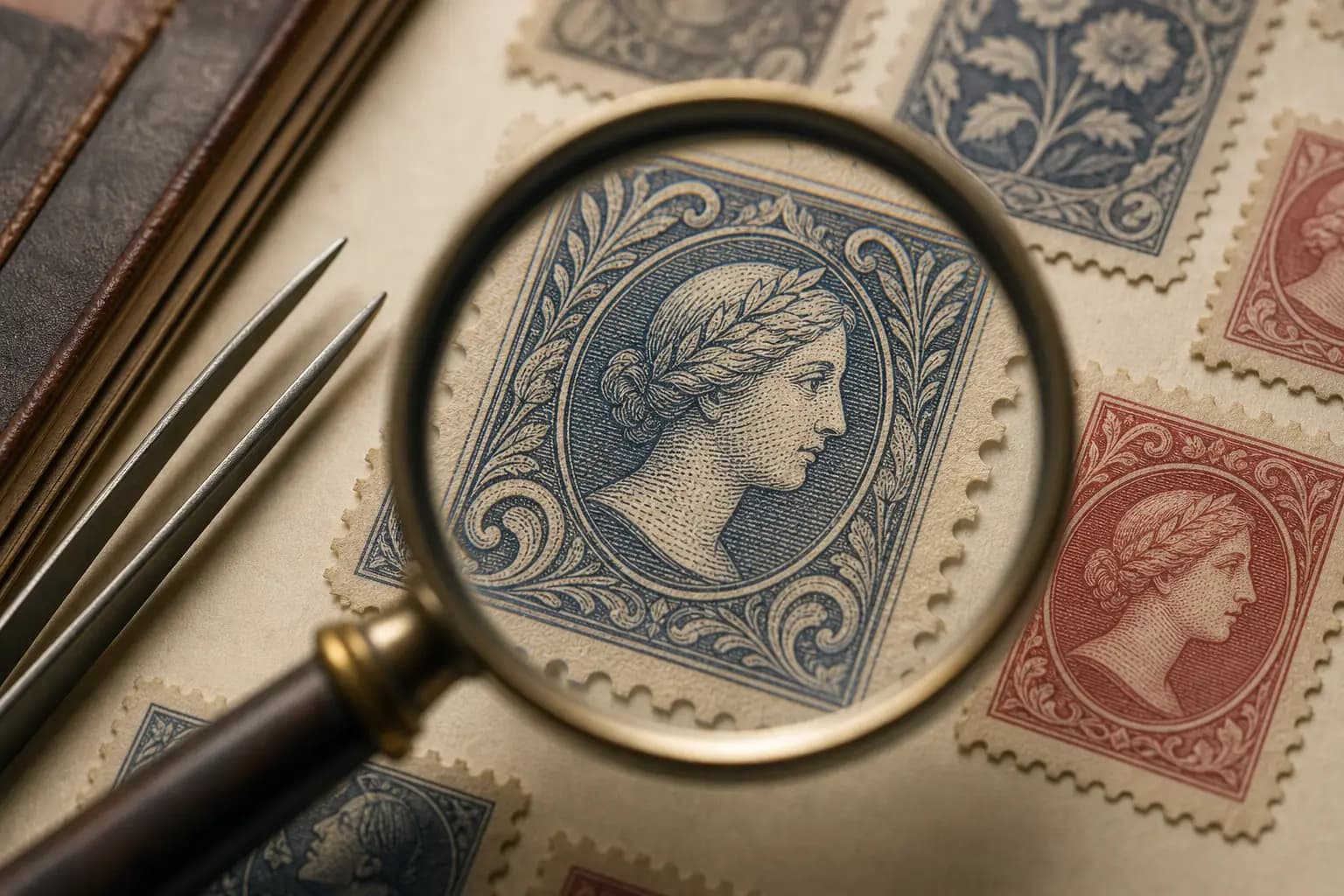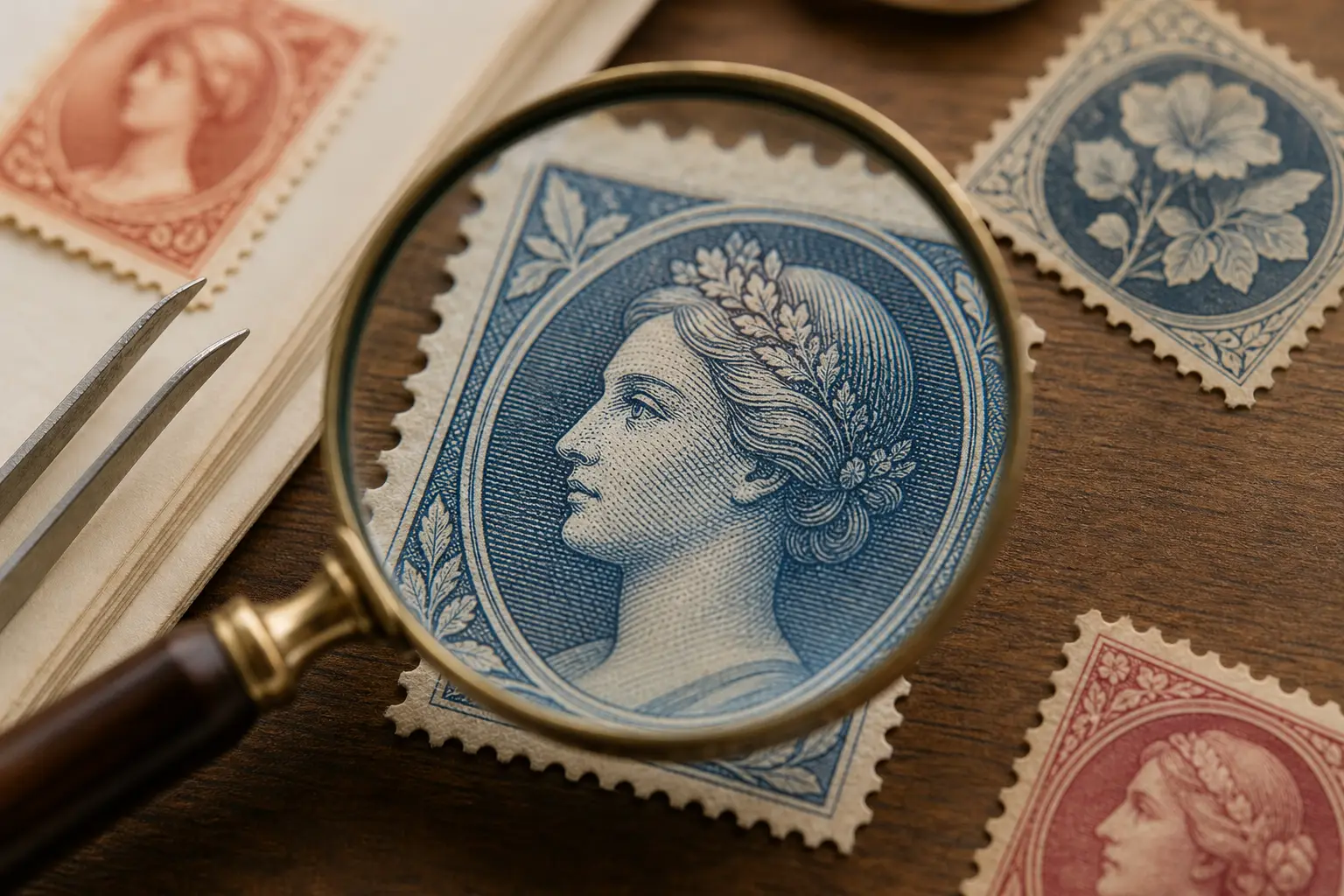
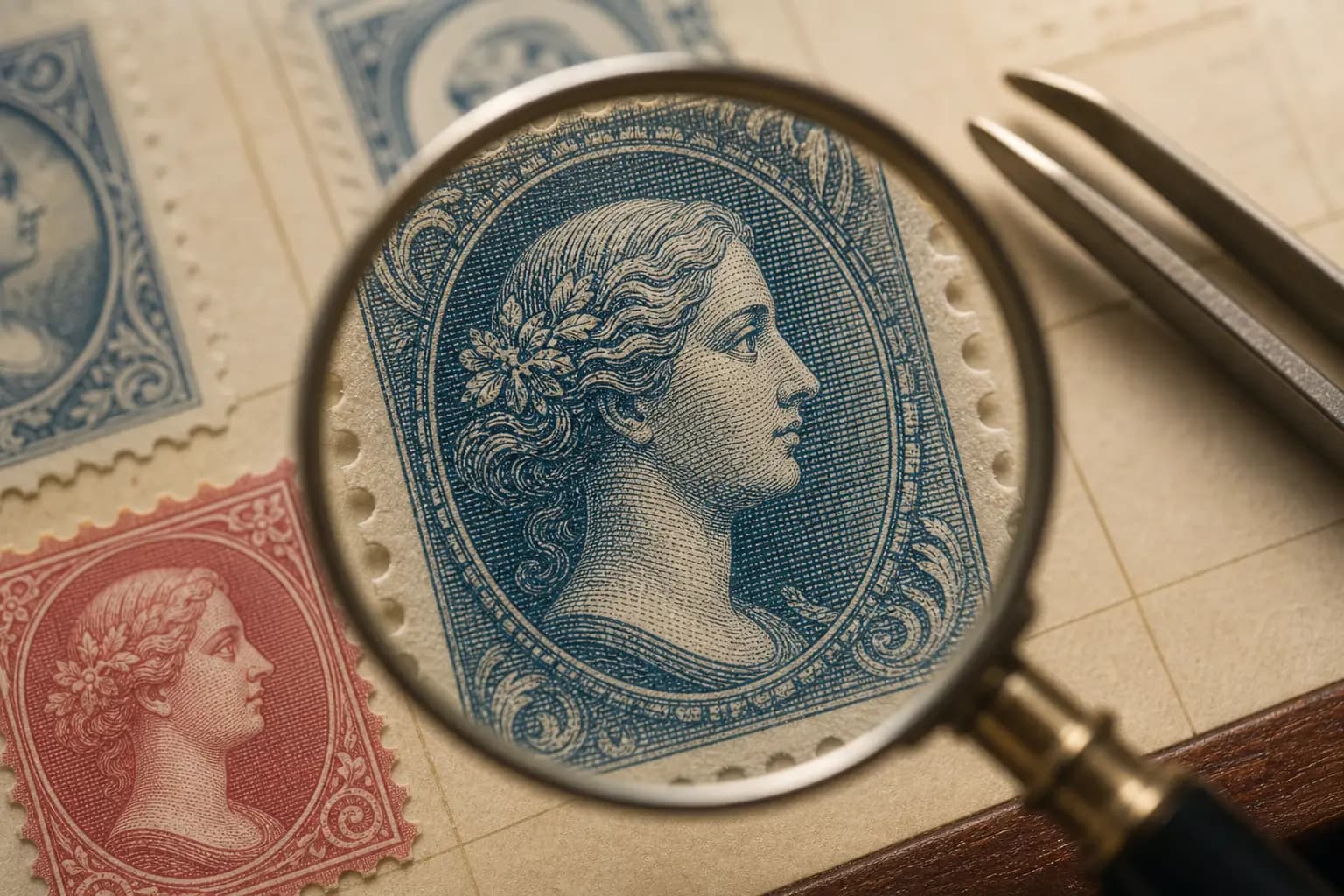
Start with the safest answer: use several clues, not one
The safest way to distinguish stamp printing methods is to treat every visual clue as part of a group, not as a final test. A stamp can show more than one process, especially modern issues, so one feature by itself is rarely enough to identify the printing method with confidence.
Begin with non-contact magnification and diffuse or oblique light only. Look for how the image sits on the paper, how the edges behave, and whether any surface relief appears. If a stamp is scarce, fragile, or on cover, avoid aggressive handling and record what you see before you move it again. StampSnap can be used to keep a note of your observations and compare similar examples later.
Know the four major printing families collectors are likely to meet
The American Philatelic Society identifies four major families used for postage stamps: line-engraved intaglio, gravure, letterpress, and lithography. That framework is useful because each family leaves different kinds of visual evidence, but none should be diagnosed from a single cue in isolation.
Line-engraved intaglio transfers ink from deliberately incised lines. Its design is normally built from lines, hatching, cross-hatching, and stippling. Gravure is also a recess process, but it forms tone from screened cells. Letterpress and lithography are different again, so the job is to match the whole group of clues to the process rather than forcing one detail to explain everything.
What line-engraved intaglio usually looks like
Line-engraved intaglio often shows a design constructed from fine engraved lines rather than broad filled areas. Under magnification, you may sometimes see raised ink, and under oblique light the surface can reveal the effect more clearly. Pressure from the printing process may also leave debossing on the reverse, but that is a supporting feature, not a stand-alone proof.
Do not assume every heavy or crisp-looking stamp is intaglio. Some other processes can appear sharp, and some intaglio stamps can look less dramatic than expected because of wear, paper, or ink conditions. The practical approach is to combine the line structure, ink behavior, and any reverse impression before deciding. If the clues do not agree, record the stamp as uncertain rather than forcing a conclusion.
How gravure differs from lithography and why dots can mislead
Gravure is another recess process, but unlike line-engraved intaglio it forms tone from screened cells. That means a dot or screen pattern may be present, yet screening alone does not prove gravure because other processes can also show screened structures under magnification.
Offset lithography is a planographic process, so the image is formed on a smooth surface rather than cut or etched into a plate. Oil-based ink adheres to the image area, and a rubber blanket transfers that image to paper. Modern lithography often uses separate process-color layers made from very fine dots, but dot pattern must be read with other evidence because gravure and other processes can also show similar structures.
Why softness, blur, or sharpness should not be your only rule
A common mistake is to decide a printing method from whether the edges look soft, blurred, or unusually sharp. The Smithsonian National Postal Museum notes that modern lithography can be sharp, so softness is not a dependable identifying rule. The opposite is also true: a sharp-looking stamp is not automatically lithography or intaglio.
Treat edge quality as one clue among several. Look at the print structure, the way the colour sits across the design, any visible screening, and whether the reverse shows pressure effects. If the stamp has multiple colours or appears to combine processes, take that possibility seriously and avoid quick labels based on one attractive clue.
Use records when the stamp itself does not give a complete answer
Production records matter because some stamps use more than one process, and some visual features overlap between families. The American Philatelic Society recommends combining observations and consulting production records, which is especially important when the stamp is modern or when the printed result is ambiguous.
This is the point where careful collecting habits pay off. Save clear notes on what you observed under light and magnification, then compare with reliable documentation when available. If you are building a study set, the same method helps you separate similar-looking stamps without damaging them or making assumptions you cannot support.
A safe method you can repeat every time
Use a simple sequence. First, examine the stamp at normal view and note colour, design structure, and any obvious surface texture. Second, use non-contact magnification with diffuse or oblique light to inspect line work, screening, and possible relief. Third, check the reverse only as a visual clue, not by rubbing or pressing. Fourth, compare your notes with production information if the issue is still unclear.
If the stamp is on fragile paper, has uncertain gum, or may be valuable to you as a collector, stop when you have enough information. Safe identification is about reducing risk while improving confidence, not about proving every example beyond doubt. A careful record in StampSnap or a paper note can be more useful than a rushed conclusion.
Frequently asked questions
Can I identify a stamp’s printing method from dots alone?
No. Dot patterns can appear in modern lithography, but gravure and other processes can also show screened structures. Dots should be used only as one clue among several.
Is a soft or blurred edge proof of lithography?
No. The Smithsonian National Postal Museum notes that modern lithography can be sharp, so softness is not a dependable rule. Use several clues together.
What are the main printing families collectors should know?
The American Philatelic Society identifies four major families for postage stamps: line-engraved intaglio, gravure, letterpress, and lithography.
How can I tell line-engraved intaglio from gravure safely?
Look for the overall design structure, not just one feature. Intaglio is built from engraved lines, hatching, cross-hatching, and stippling, while gravure forms tone from screened cells. Use magnification and oblique light, and compare with records.
What should I do if the clues conflict?
Record the stamp as uncertain and compare it with production records or trusted references. Many stamps combine processes, so conflicting clues are a normal part of identification.