Start with the safest answer: use clues, not a single test
The safest way to identify a stamp’s printing method is to treat every visible feature as a clue, not a verdict. The American Philatelic Society identifies four major families used for postage stamps: line-engraved intaglio, gravure, letterpress, and lithography. Modern stamps may even combine more than one process, so a single observation is rarely enough to settle the question.
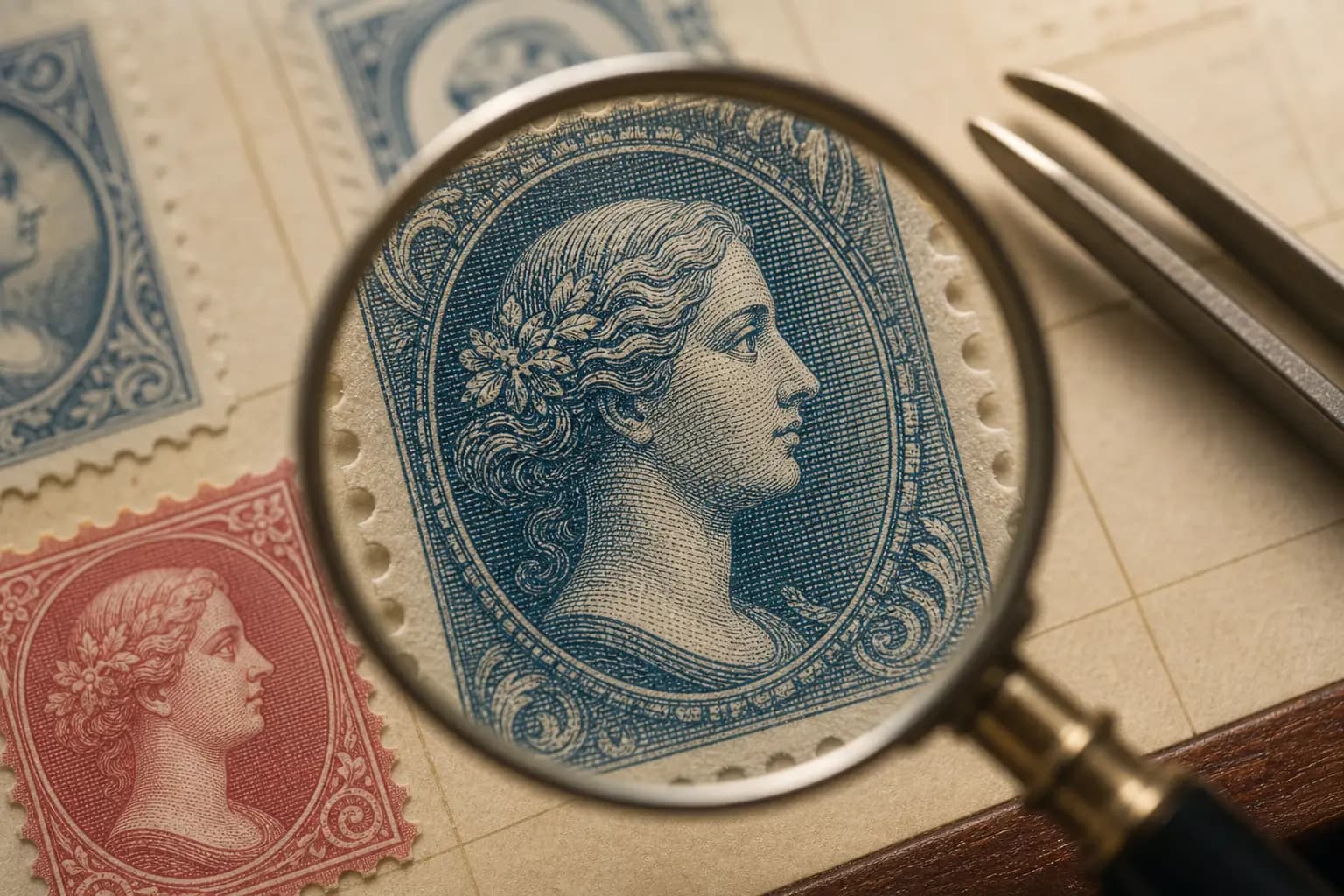
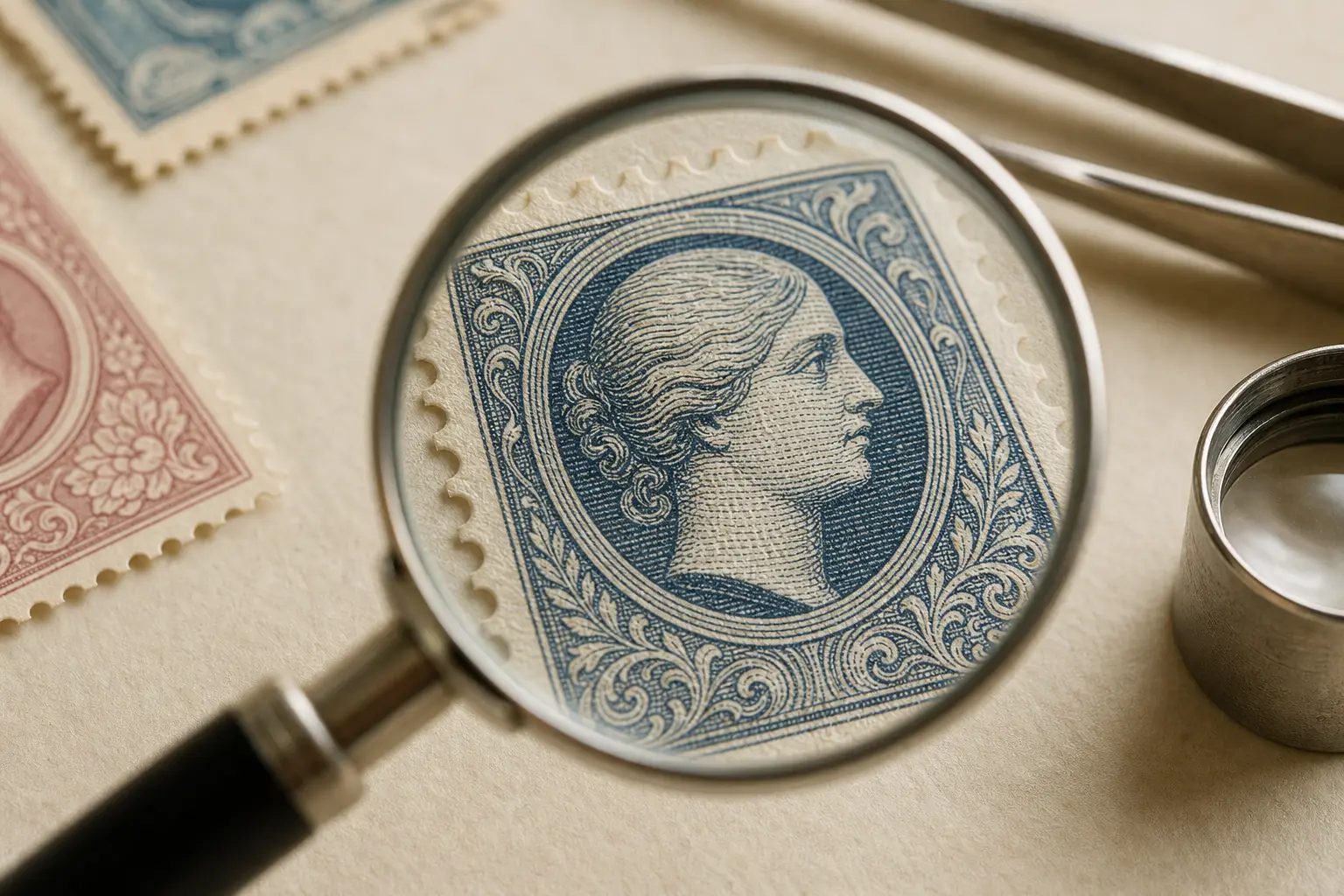
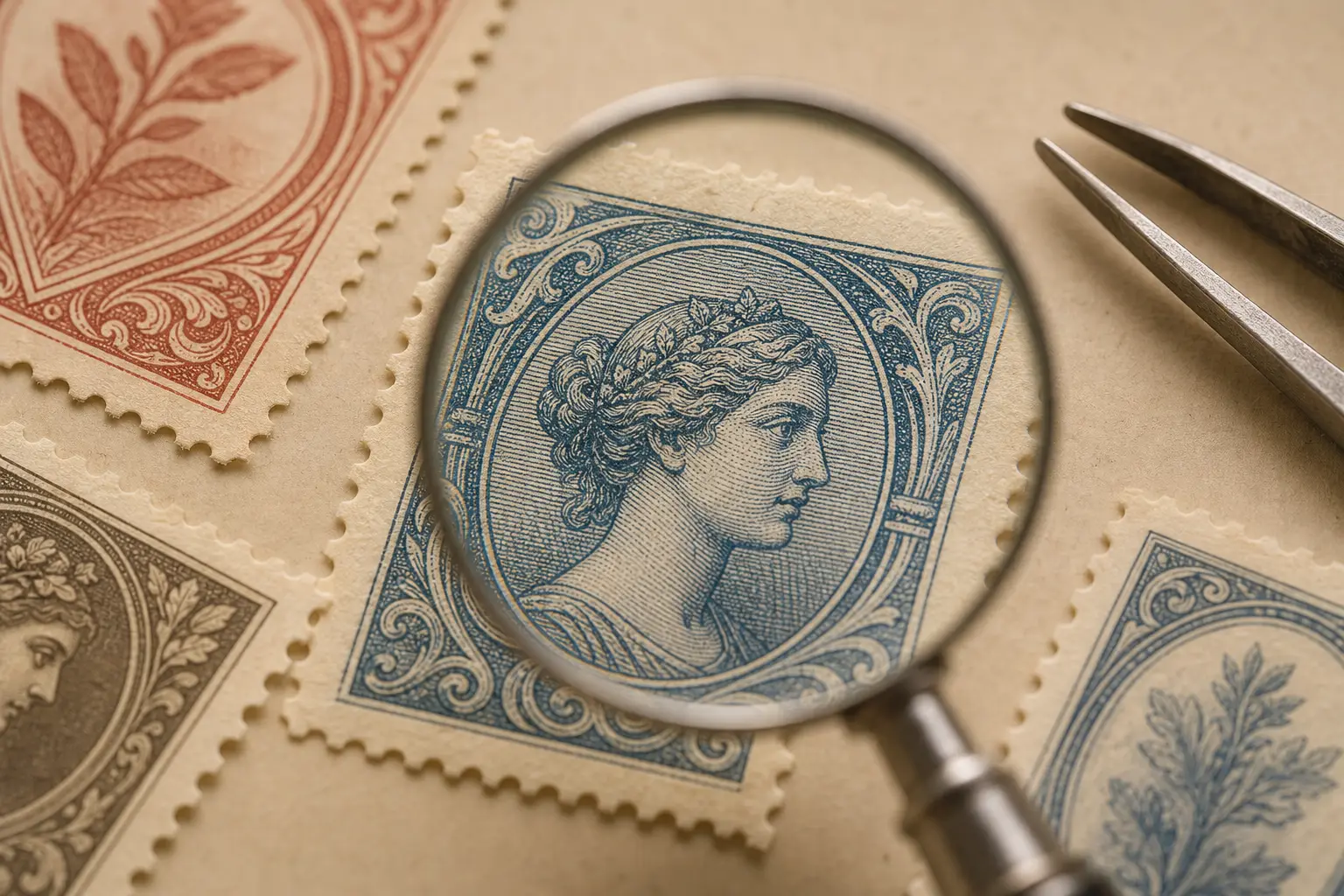
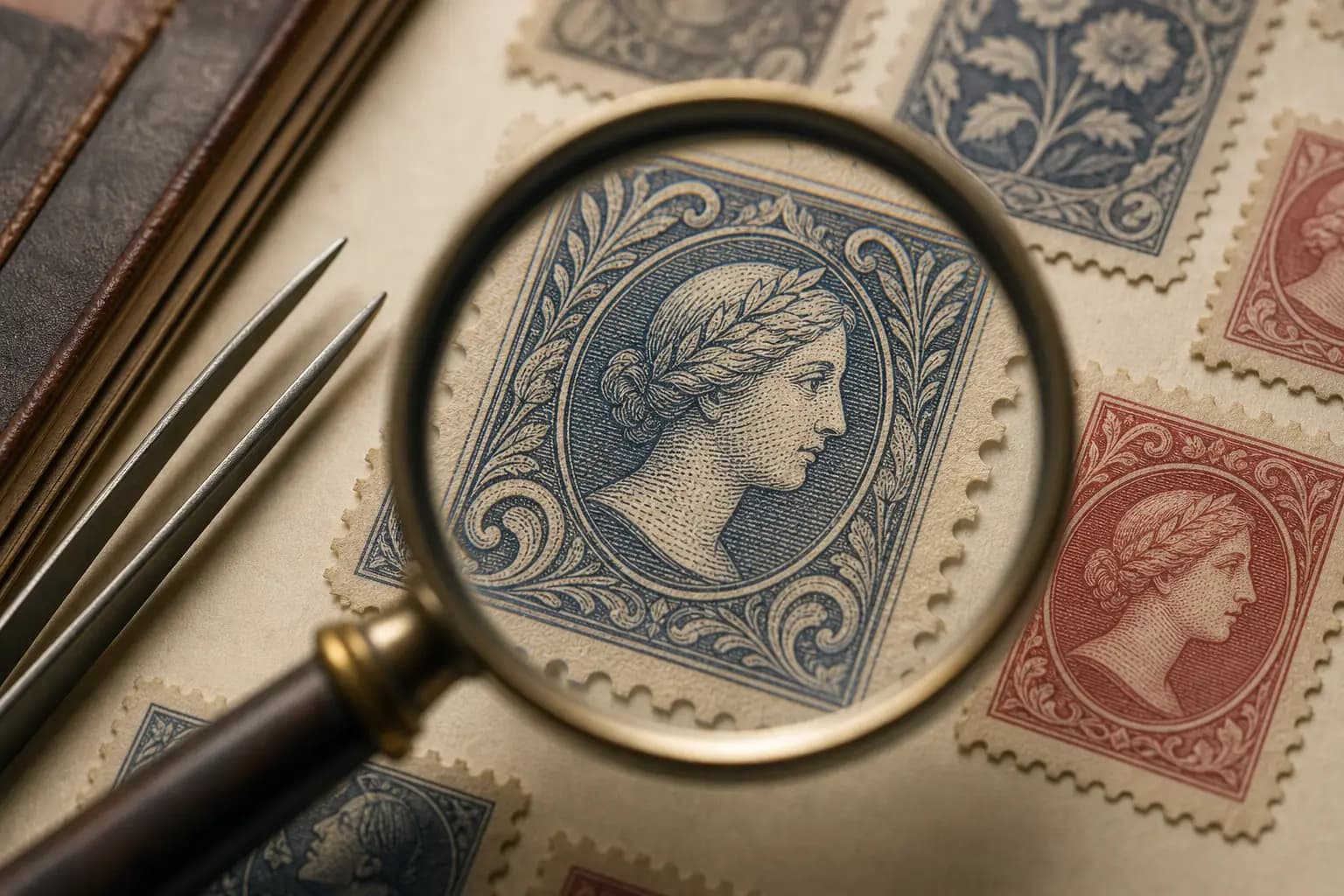
Begin with non-contact viewing only. Use diffuse light and, if needed, oblique light plus a modest magnifier. This lets you compare line quality, ink surface, and paper features without pressing on the stamp or relying on methods that could harm it. If you are making a collection record in StampSnap, note the clues you see rather than forcing a final label too early.
How line-engraved intaglio usually presents
Line-engraved intaglio is a recess process in which ink is transferred from deliberately incised lines. Its design is normally built from lines, hatching, cross-hatching, and stippling. Those line-based structures are important because they are part of the design itself, not merely a surface effect.
Under magnification and oblique light, raised ink can sometimes be seen, and pressure may leave debossing on the reverse. Those are supporting features rather than a single test, so avoid treating one impression as conclusive. If the reverse of a valuable stamp is fragile or gum is original, do not manipulate it roughly; use only careful viewing and record your observations for later comparison.
How gravure differs from line engraving
Gravure is also a recess process, but it forms tone from screened cells rather than from the line structures typical of line-engraved intaglio. That difference matters because both processes involve ink held below the surface, yet they do not build the image in the same way.
Collectors sometimes try to identify gravure by dots or screened effects alone, but that is not reliable. Screened or raised effects can appear in other processes too, so the better approach is to combine several observations. Look at the overall structure of the design, the way tone areas are built, and any supporting evidence from production records when available.
What to look for in letterpress and lithography
Letterpress and lithography are often confused because both can produce clear, modern-looking stamps. Letterpress is one of the major families identified by the APS, and it should be considered separately from lithography rather than folded into a generic “printed” category. The safest practice is to compare the stamp’s overall surface features with known examples and production information, not to rely on a quick glance.
Lithography, especially offset lithography, is a planographic process. The image is formed on a smooth surface rather than cut or etched into a plate. Oil-based ink adheres to the image area, and a rubber blanket transfers, or offsets, that image to paper. Modern lithography commonly uses separate process-color layers made from very fine dots, so dot patterns may be present but should never be used alone as proof of lithography.
Why dots, softness, or sharpness are not enough
A common mistake is to decide a process from the appearance of dots, softness, or blurred edges. The Smithsonian National Postal Museum notes that modern lithography can be sharp, so soft or blurred edges are not a dependable identifying rule. That means a crisp design does not rule lithography in, and a soft one does not rule it out.
The same caution applies to screened structures. The museum notes that a dot pattern must be interpreted with other evidence because gravure and other processes can also show screened structures under magnification. In practice, that means your best result comes from stacking clues: design structure, surface appearance, and any available production record, rather than expecting one visible trait to do all the work.
Use watermarks as a separate line of evidence
Watermarks are not a printing method, but they can be critical to correct identification because they are built into stamp paper as a security measure to deter counterfeiting. They may be words, letters, or symbols, and they are formed by dies attached to the frame used to make paper from pulp. Because of that, a watermark can separate stamps that otherwise share the same design.
Some stamps exist both on unwatermarked and watermarked paper, or on paper with different watermarks, and those differences may lead to separate catalog numbers. The APS notes that watermarks may be the sole difference between a very common stamp and one valued in the hundreds or thousands. That is why a printing study and a watermark check should be treated as related but distinct tasks.
A safe workflow for collectors
A practical workflow is simple. First, confirm whether the stamp is on the face or reverse and note its condition. Second, examine the design under diffuse and oblique light to see whether the image is built from lines, screened cells, or planographic dot layers. Third, check whether a watermark is present, using a safe method such as laying the stamp face down in a dark tray and applying commercial watermark fluid when appropriate.
Do not use household solvents or rough handling. The APS advises commercial watermark fluid, and notes that it evaporates quickly and should not impact the gum on an unused stamp. Some collectors use devices such as the Safe Signoscope or Morley Bright Watermark Detector, but the key point is to keep the process non-invasive. If you are building a record, save your observations in StampSnap as a likely identification, not a guaranteed one.
Frequently asked questions
Can I identify a stamp’s printing method from dots alone?
No. Dots or screened structures can appear in more than one process, so they are only one clue among several, not a standalone identification.
What is the safest way to study a stamp’s printing?
Use non-contact viewing with diffuse or oblique light and modest magnification, then compare the design structure with production records and other clues.
How is line-engraved intaglio different from gravure?
Line-engraved intaglio is built from incised lines, hatching, cross-hatching, and stippling, while gravure forms tone from screened cells.
Do watermarks help identify printing method?
Not directly. Watermarks are a paper feature, but they can separate otherwise similar stamp issues and help you identify the correct variety.
Should I trust soft edges as proof of lithography?
No. The Smithsonian National Postal Museum notes that modern lithography can be sharp, so soft or blurred edges are not a dependable rule.