The safest short answer
The safest way to prevent stamp damage is to handle dry stamps as little as possible, store them in acid-free albums or glassine until you are ready to organise them, and never use tape or glue. If a stamp is wet or softened, do not treat it like a dry stamp: let it dry first, then sort and store it with care.
If you want one practical rule to start with, it is this: use tongs for dry stamps, keep wet stamps off tools that can tear them, and choose storage that does not stick to the paper. That simple approach prevents many of the most common collector mistakes and supports a clean collection record in StampSnap or your own album notes.
Why handling is the first risk
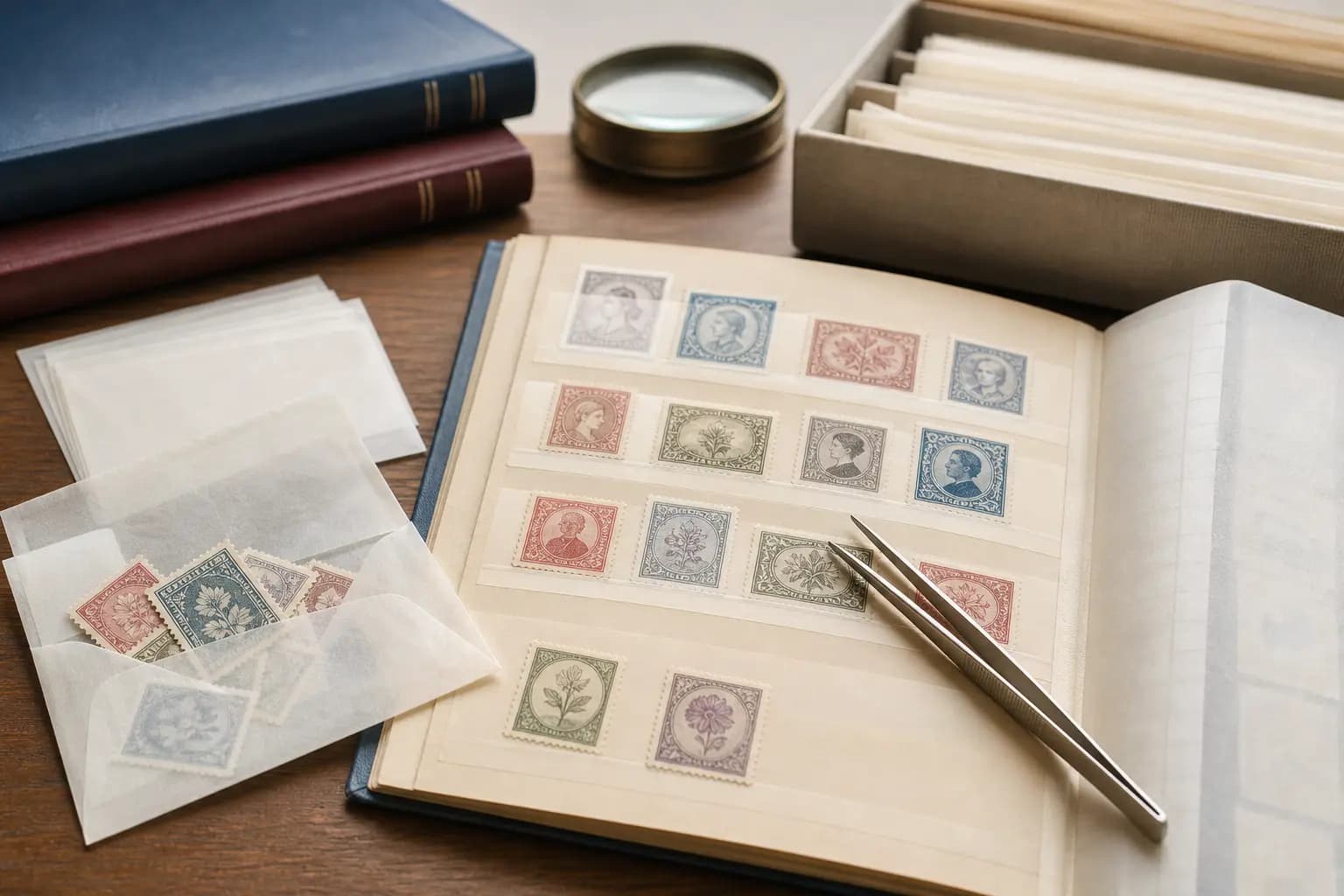
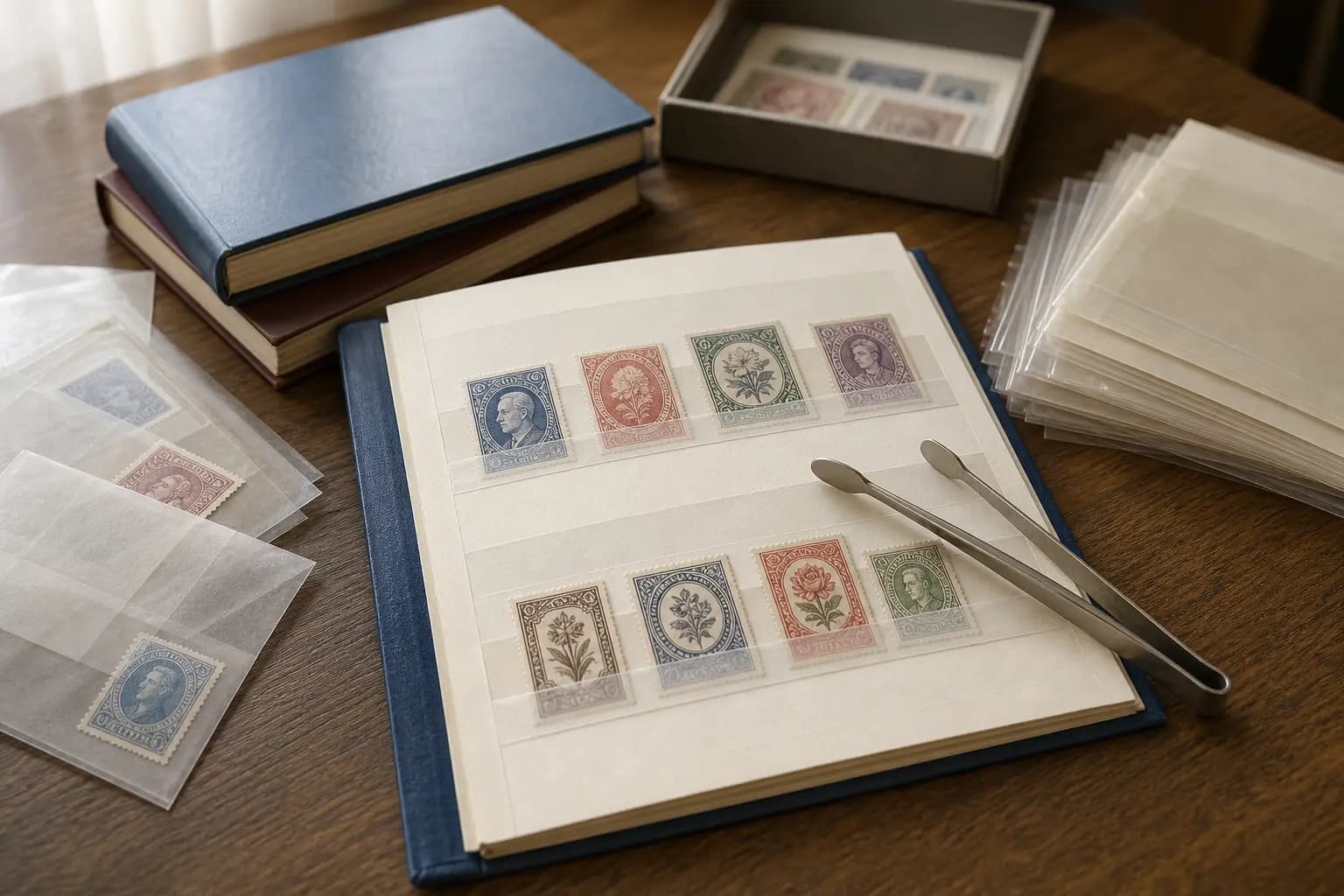
Even careful hands can transfer oil to a stamp, and the American Philatelic Society advises handling dry stamps with tongs because skin oil can damage them. Tongs are designed with a smooth gripping surface, so they are better suited to stamps than ordinary tweezers or fingers. A magnifying glass is also useful because it lets you inspect details without touching the stamp repeatedly.
When you are examining a stamp, keep the movement slow and purposeful. Pick it up once, check the details, and return it to a safe surface. Avoid passing the stamp back and forth between people. If a stamp is fragile, damaged, or still damp, set it aside and return to it later rather than trying to force a quick decision.
Dry stamps and wet stamps need different workflows
Do not use the same handling method for a dry stamp and a wet or softened one. Wet stamps are more easily damaged, and the APS soaking guidance says not to pull a stamp free before it is ready or you may tear it. That means the preservation workflow must begin with patience, not force. If you have removed a stamp from paper by soaking, allow it to float free naturally before lifting it with care.
After soaking, the APS advises rinsing the back gently and placing stamps between paper towels with a book on top to help prevent curling. Leave them to dry overnight. This drying step matters because damp stamps can curl, stick, or pick up new damage if stacked too soon. Only after a stamp is fully dry should you sort it, inspect it closely, or mount it.
How to store stamps before final album placement
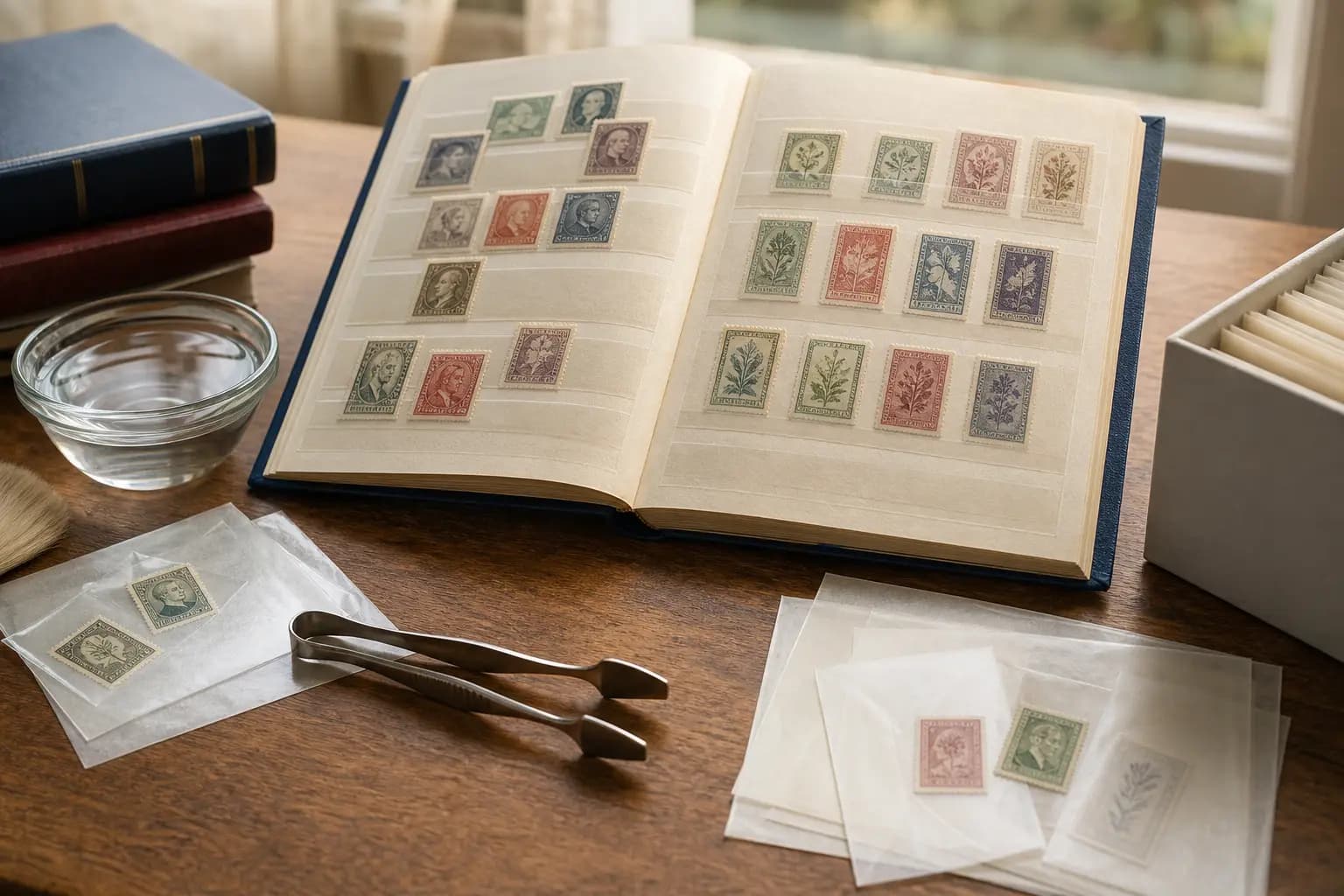
Until stamps are ready for an album page, store them in glassine envelopes or a stock book. The APS recommends glassine storage for stamps waiting to be mounted, and it notes that stock books can organise stamps in pockets without forcing them into permanent placement. This temporary stage is useful when you are sorting by country, topic, or service type.
Choose albums and pages carefully. Acid-free paper is preferred, and sticky pages should be avoided because they can damage stamps. If you use a photo album, make sure the paper is acid-free and not adhesive. Safe storage is not only about protecting value; it is also about preserving the condition needed for later identification, comparison, and a reliable collection record.
Hinges, mounts, and what never to use
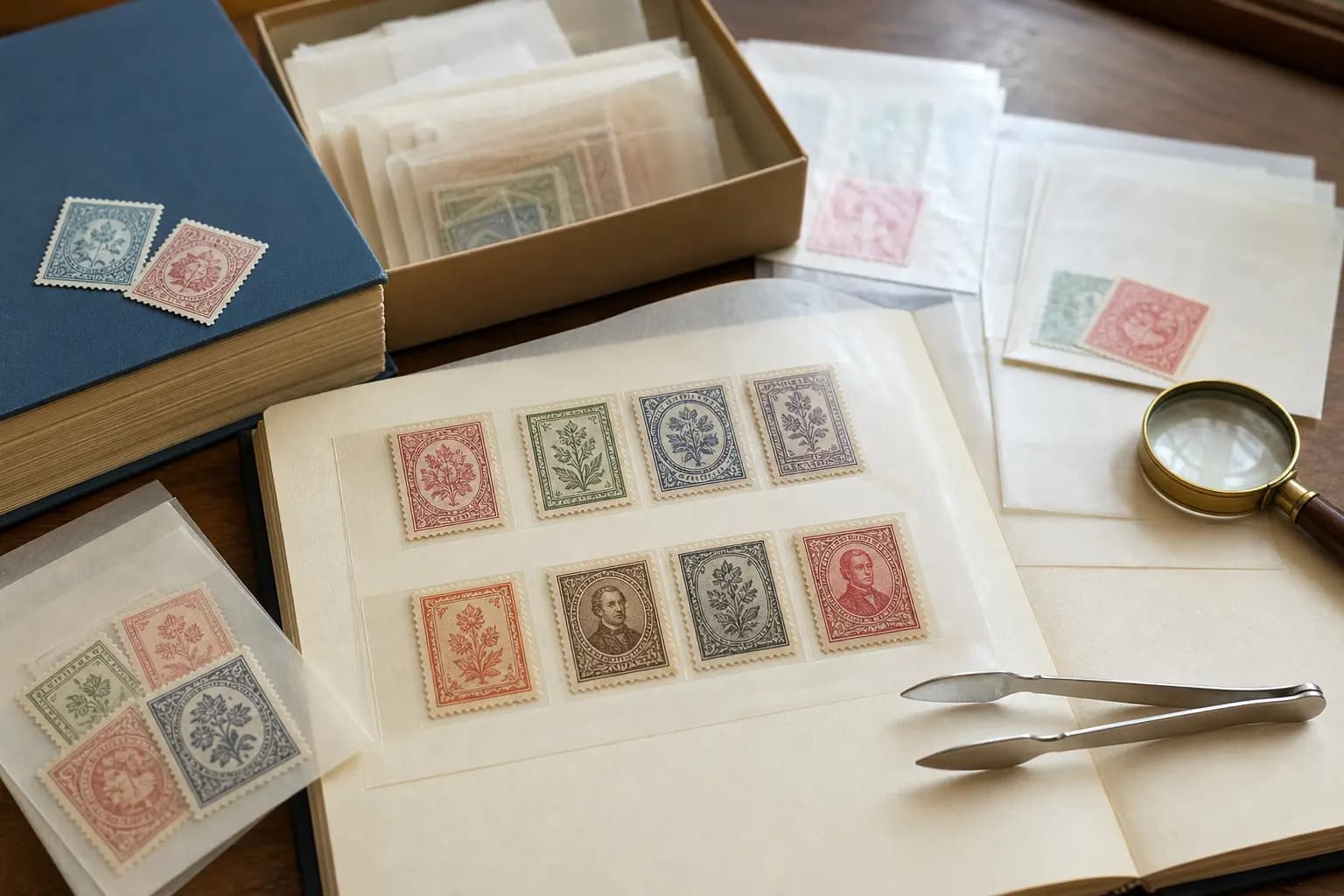
For album mounting, use either a hinge or a mount. The APS notes that both are designed to let you attach a stamp without resorting to tape or glue. Tape and glue can reduce value and may damage the stamp if you later try to remove it. Hinges are small folded pieces of translucent paper or plastic with gum on one side, while mounts are clear plastic sleeves.
Use the method that matches the stamp and your collecting goal, but keep the process gentle and deliberate. Do not press a stamp into an album pocket that is too tight, and do not use household adhesives to make a stamp stay in place. If you are uncertain, store the stamp safely first and decide on mounting later rather than risking irreversible damage now.
Sorting without causing avoidable wear
Sorting is part of preservation when it is done methodically. The APS suggests organising by country, topic, or service type such as airmail, special delivery, postage due, parcel post, or revenue stamps. When you sort, remove badly damaged stamps unless they are especially valuable or hard to replace. If you have duplicates, select the best copy, ideally one that is well centred and lightly cancelled, and keep the others for trading or later review.
This is also the stage where magnification and notes help. Small differences can separate one stamp from another, and a clear magnifier makes those details easier to see. A catalog can help you confirm issue date, description, printing, and used or unused condition. If you use StampSnap to create a first-pass identification or inventory note, treat it as a record aid rather than a final expert opinion.
A conservative preservation routine you can repeat
A safe routine is simple: inspect dry stamps with tongs, set aside any wet or softened stamps, dry them fully before handling further, then sort and store them in glassine, a stock book, or an acid-free album. Use hinges or mounts only after the stamp is completely dry and you are ready to place it permanently. Keep a magnifier, catalog, and tongs nearby so you do not need to improvise.
The most important preservation habit is restraint. Do not rush to separate every stamp from every envelope, do not use hot water, do not use tape or glue, and do not handle damp material as though it were stable. If you follow that order, you reduce the chance of tears, curling, sticking, and surface damage while keeping the collection orderly enough for later study.
Frequently asked questions
What is the safest way to handle a loose dry stamp?
Use stamp tongs and touch the stamp as little as possible. The American Philatelic Society says skin oil can damage stamps, so tongs are preferred for dry material.
Should I use tongs on a wet stamp?
No. Wet stamps are more easily damaged, so handle them as little as possible and let them dry first before using tongs or other tools.
What should I use for temporary storage before mounting?
Glassine envelopes or a stock book are safe temporary choices. They help keep stamps organised until you are ready to place them in an album.
Can I use tape or glue to mount a stamp?
No. Tape and glue can damage stamps and may reduce value if you later try to remove them. Use hinges or mounts instead.
How do I know when a soaked stamp is ready to move?
Wait until the stamp has floated free naturally, then rinse gently and dry it overnight between paper towels with light weight to help prevent curling.