The safest short answer
Store stamps before mounting them in a clean, dry, temporary holding place such as glassine envelopes or a stock book, and handle dry stamps with tongs rather than fingers. If a stamp is wet, softened, or just soaked, do not treat it the same way as a dry loose stamp; let it dry fully before normal handling.
The goal is simple: keep the stamp clean, flat, and separated from anything that can stain, crease, or stick to it. That means avoiding tape, glue, sticky album pages, and careless stacking. A careful holding system also makes later identification easier because you can compare similar stamps without repeatedly touching them.
Start by separating dry stamps from wet or damp material
The first preservation step is to separate stamps by condition. Dry stamps can be handled with tongs and moved into storage right away. Wet, damp, or recently soaked stamps are more fragile, so they should be left alone as much as possible until they are ready to be dried and sorted. The source guidance is clear that a wet stamp is easier to damage than a dry one.
If you have soaked stamps, place them between paper towels and add a book on top to help prevent curling, then leave them to dry overnight. Do not try to speed the process by rubbing, pulling, or forcing a stamp flat. If the stamp is still damp, it should not be treated like a finished collectible ready for ordinary storage.
Use the right temporary storage material
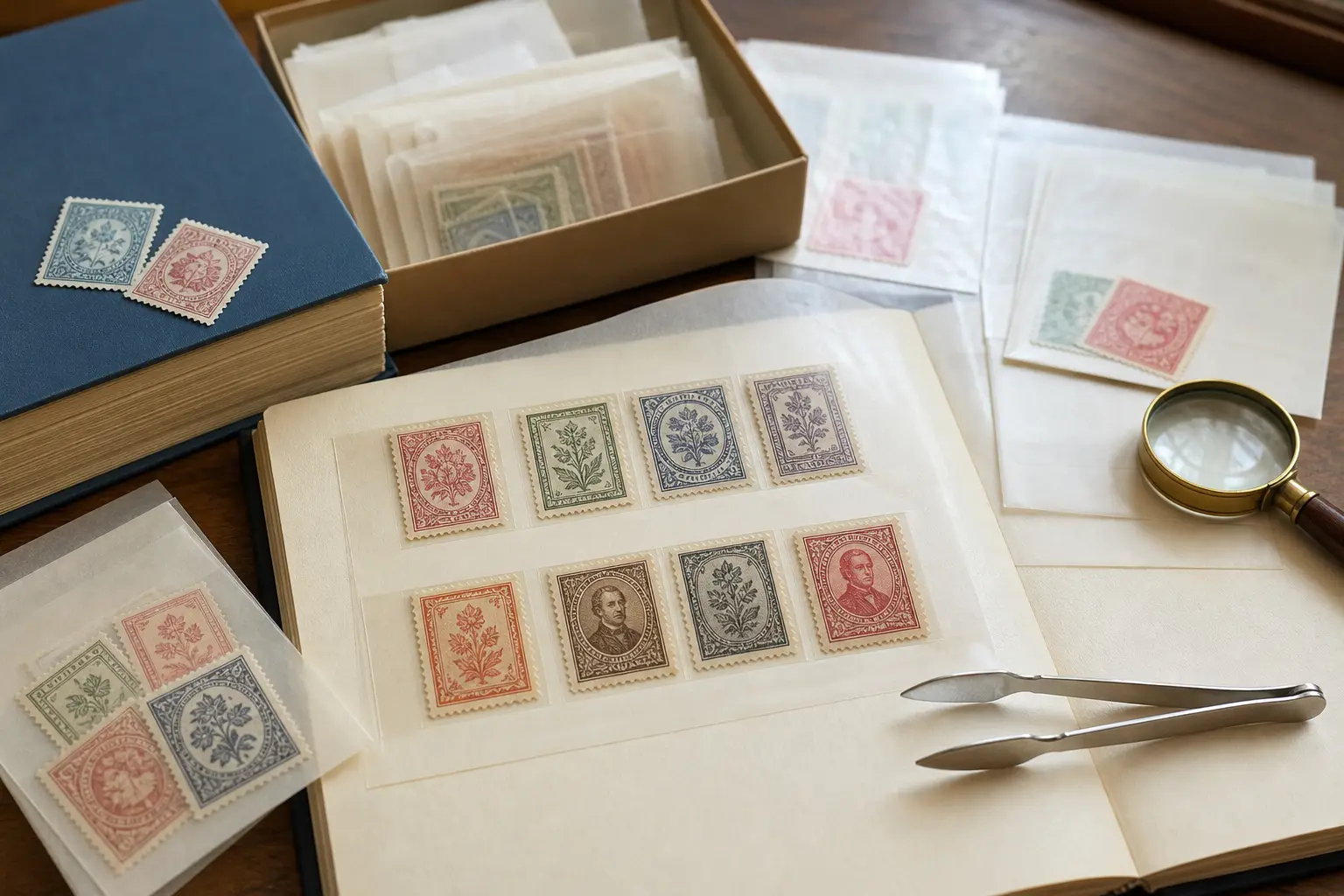
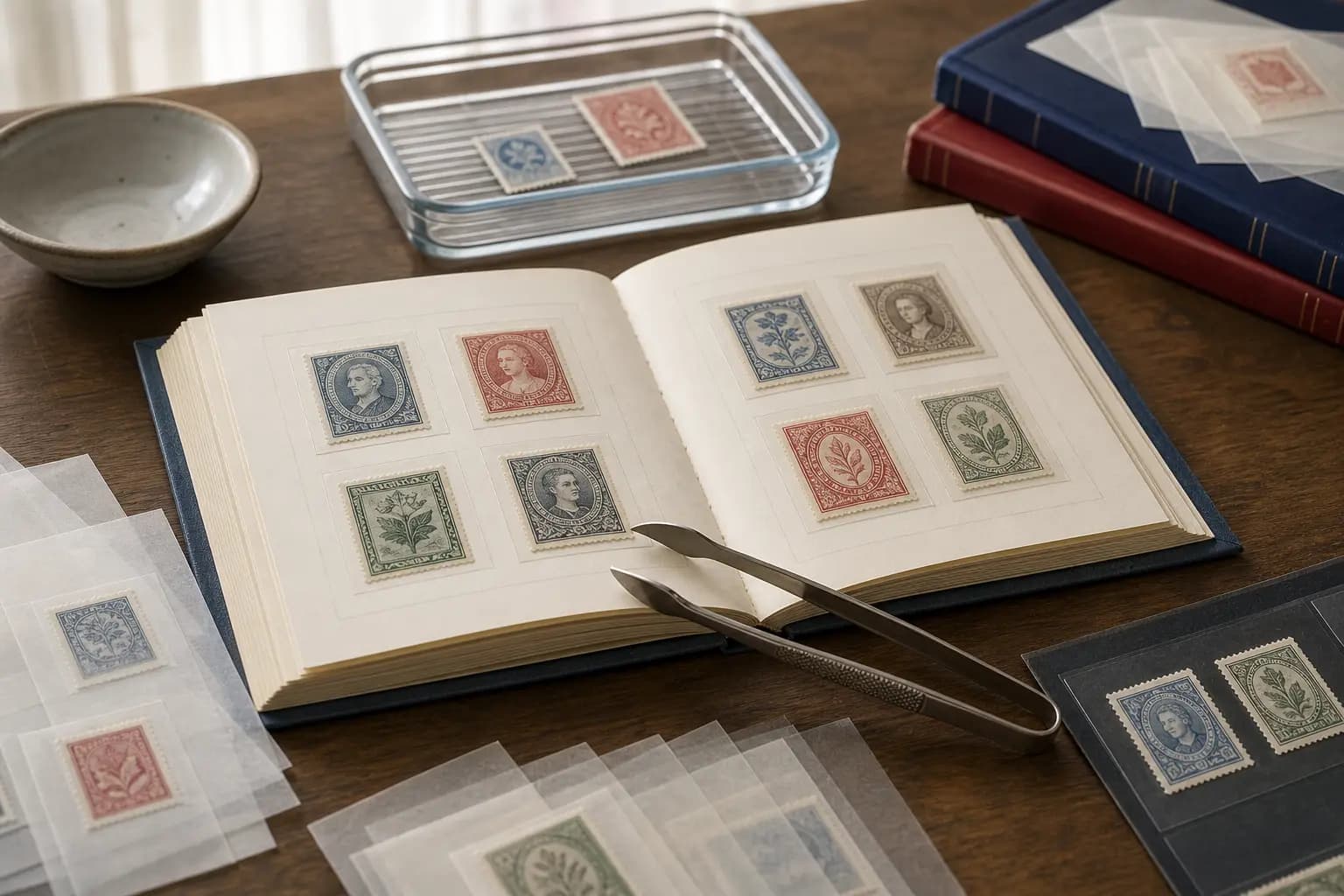
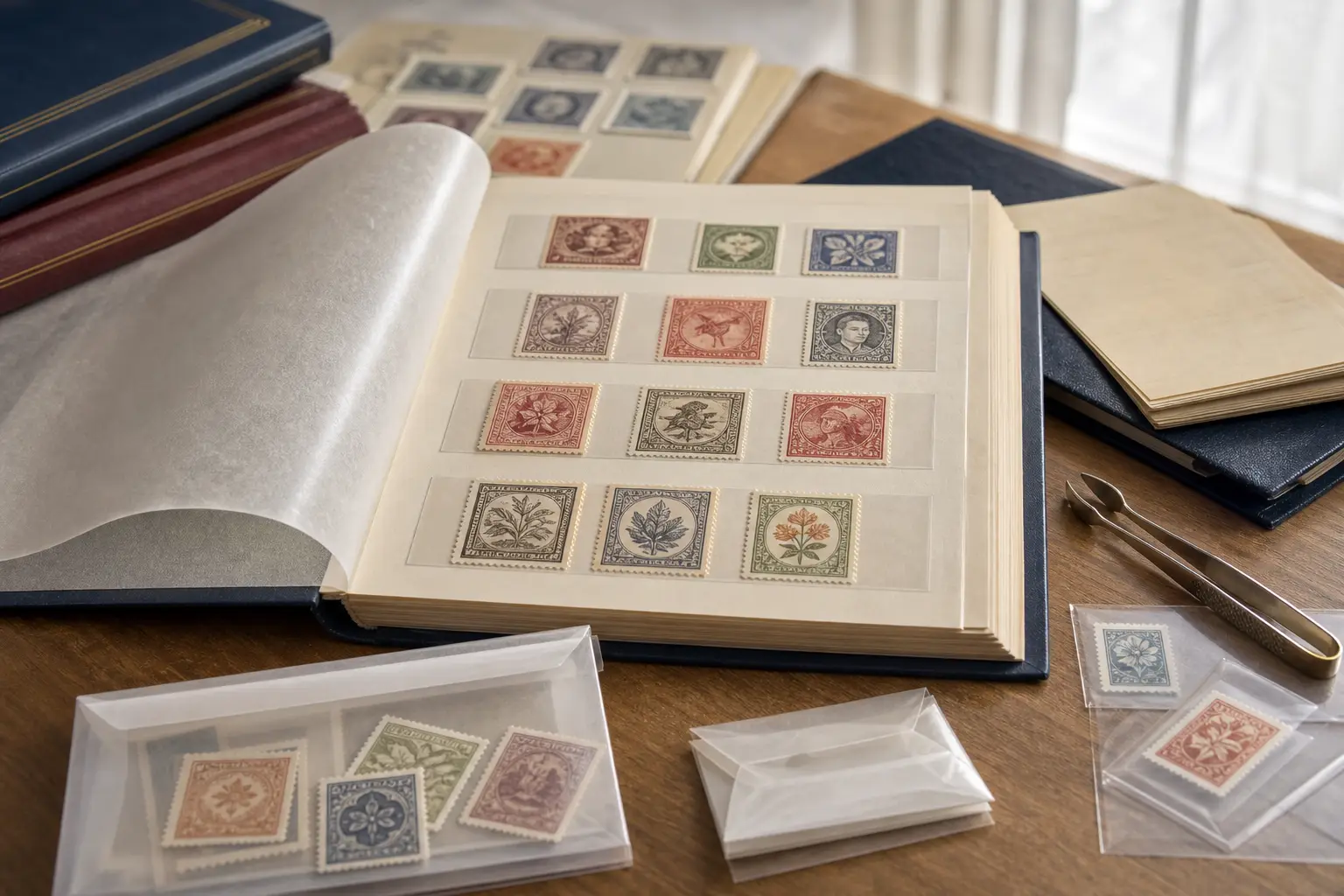
For loose, dry stamps, glassine envelopes are a practical short-term option until you are ready to mount them in an album or stock book. The American Philatelic Society also recommends albums for protection, and notes that stock books can be used to organise stamps in pockets without committing them to final placement too soon.
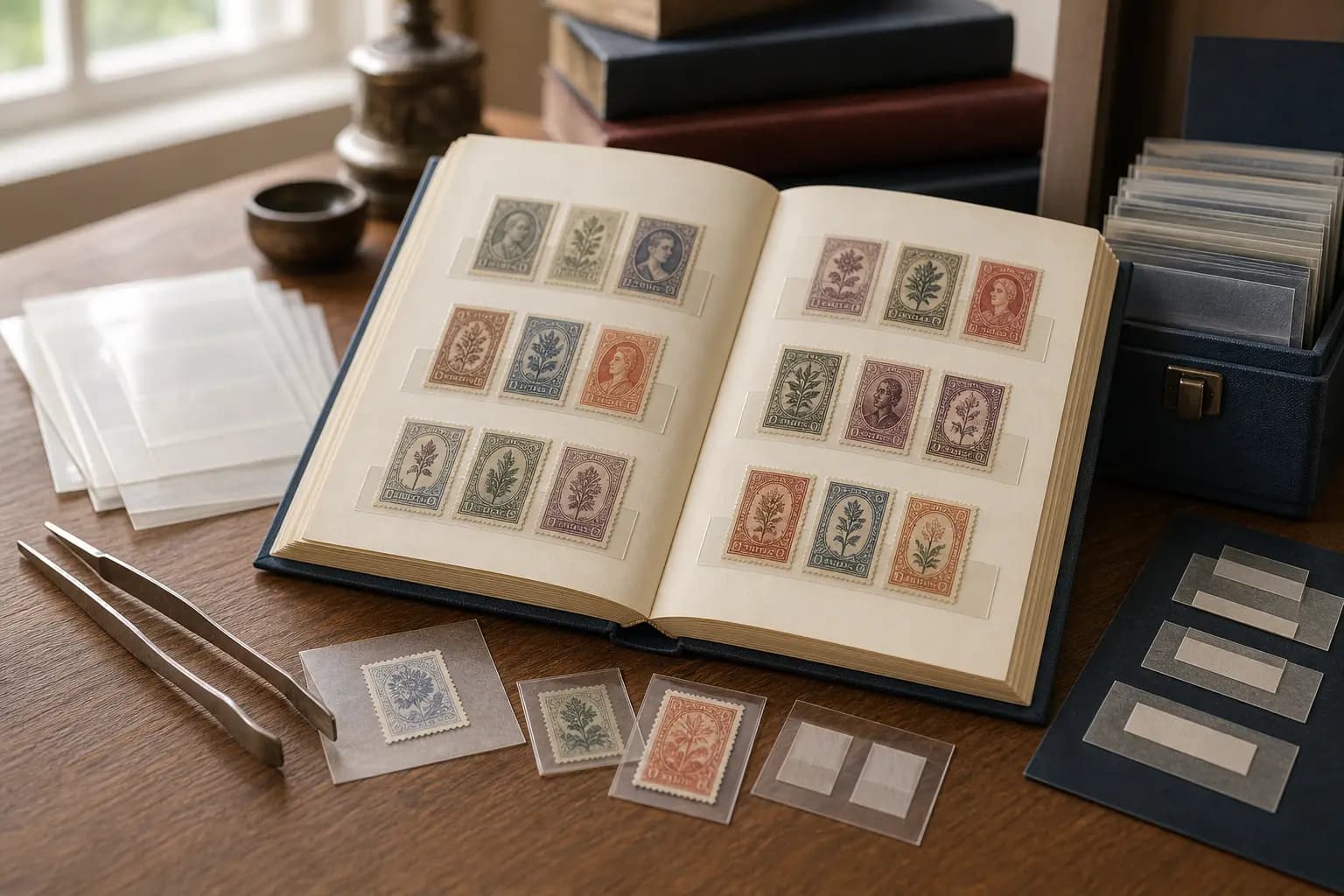
Choose storage that does not grip the stamp surface. The supplied evidence warns against sticky album pages, because they can damage stamps. It also warns against tape and glue, because both can reduce value and may damage the stamp when removal is attempted later. If you use an album, use hinges or mounts rather than adhesives.
Handle dry stamps with tongs, not with fingers
Dry stamps should be handled as little as possible. The reason is practical: even clean hands leave oil on the stamp surface, and that oil can damage the stamp over time. Stamp tongs are made for this job, with a smooth gripping surface designed to move stamps safely without the pressure and residue that fingers can leave behind.
Tongs are for dry stamps only. The preservation rule here is conservative: do not use tongs on a wet stamp, because a softened or waterlogged stamp can be bent, torn, or otherwise marked much more easily. If the stamp is not fully dry, set it aside and wait. Once it is dry, tongs make sorting, storing, and later mounting much safer.
Sort before you commit to an album page
Before mounting, sort your stamps into a structure that fits your collection. The supplied sources suggest sorting by country, by topic, or by service type such as airmail, special delivery, postage due, parcel post, or revenue. This stage is useful because it helps you see duplicates, compare similar designs, and decide what belongs together before anything is fixed into place.
If you have duplicates, choose the best one for your main collection and keep the others for trading or later comparison. Sorting is also a good time to remove badly damaged stamps, unless a damaged example is valuable or hard to replace. A careful temporary system keeps you from rushing a decision before you know what you actually have.
Use tools that support identification without harming the stamp
A magnifying glass can help you separate stamps that look alike by revealing small differences in design, printing, or condition. The American Philatelic Society recommends clear magnification without distortion, and suggests around 5x to 10x magnification. A perforation gauge is also useful when similar stamps differ only in the number of perforation holes along the edges.
If you are building a record of what you find, a simple collection note or a StampSnap record can help you keep track of the stamp’s country, condition, and placement plan before final storage. The important point is that identification work should stay non-destructive: look, compare, measure, and note, but do not force the stamp into a method that risks damage.
When you are ready to mount, use removable methods only
Mounting should happen only after the stamp is dry and sorted. The supplied evidence says hinges and mounts are the proper options for album pages, because they allow a stamp to be removed later without the harm caused by tape or glue. Hinges are lightly moistened and attached to the back of the stamp; mounts are clear plastic sleeves.
Some albums are printed with specific page categories, while others let you arrange stamps freely. Either can work, but the safest choice is the one that keeps the stamp supported, separated, and easy to remove later. If you are unsure, keep the stamp in a glassine envelope or stock book until you have a clear plan rather than forcing a quick mount.
A practical preservation workflow you can repeat
A simple routine works well: receive or sort the stamp, separate dry from wet, let any softened material dry fully, handle the dry stamp with tongs, place it temporarily in glassine or a stock book, and only then move it to an album with a hinge or mount. This sequence reduces handling and gives you time to compare similar stamps safely.
That method is deliberately cautious because preservation errors are often permanent. The safest storage is not the most elaborate one; it is the one that avoids pressure, moisture, sticky surfaces, and unnecessary handling. If a stamp seems fragile or unusual, slow down and keep it in temporary storage until you are sure of the next step.
Frequently asked questions
What is the safest temporary storage for loose stamps before mounting?
Glassine envelopes or a stock book are practical temporary storage options for loose, dry stamps until you are ready to mount them.
Should I use tongs on a wet stamp?
No. Wet or softened stamps are easier to damage, so let them dry first and then handle them with tongs if needed.
Can I use tape or glue to hold a stamp in place?
No. The supplied guidance says not to use tape or glue because they can damage the stamp and reduce its value.
How should I dry stamps before storage?
After soaking, place them between paper towels with a book on top to help prevent curling, then leave them to dry overnight.
What if two stamps look similar and I am not sure which one to keep?
Use safe tools like a magnifying glass and a perforation gauge to compare them, and keep the better example in your main collection while storing the other separately.