The Historical Context of the 1847 US Issues
The concept of prepaid postage revolutionized communication in the nineteenth century. Before this system, the recipient of a letter had to pay for its delivery upon arrival, which frequently resulted in a large portion of mail being refused by the public. To bypass these costs, some individuals even devised secret codes on the outside of envelopes so the recipient could read the message and refuse the letter. Sir Rowland Hill advocated for lowering postal rates and requiring payment in advance, leading Great Britain to issue the first postage stamps in 1840. Following this successful model, the United States officially entered the stamp-issuing era a few years later.
By requiring prepayment through adhesive stamps, the United States Post Office Department streamlined mail delivery across the expanding nation. The introduction of these stamps marked a transition from a system of localized, manual accounting to a standardized national postal service.
Identifying the Five-Cent Benjamin Franklin
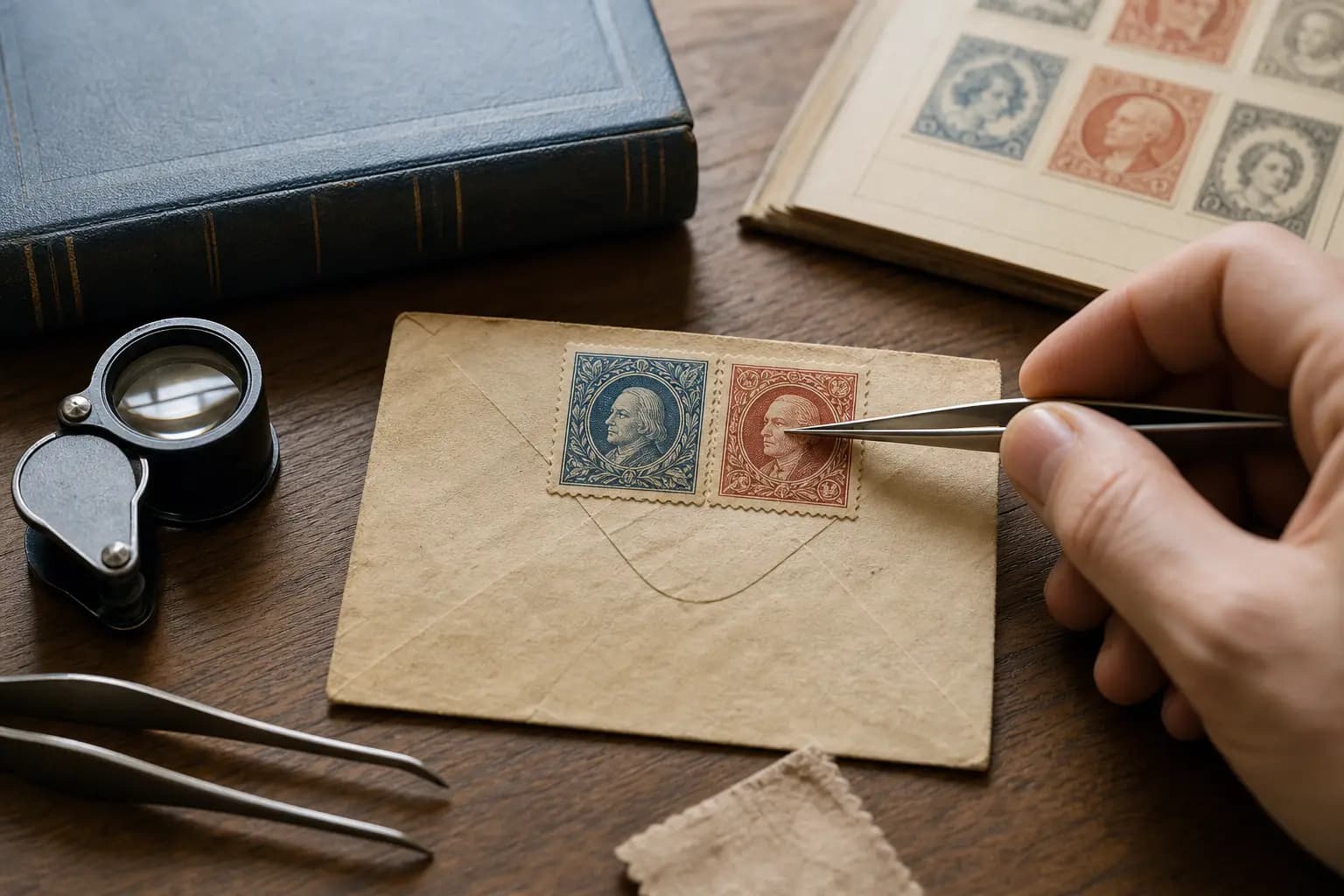
On July 1, 1847, the United States issued its very first postage stamps. The lower denomination of this historic release was the five-cent red brown stamp. This stamp features the portrait of Benjamin Franklin, who served as the first U.S. postmaster general. The printing of this classic issue was contracted to the prominent engraving firm of Rawdon, Wright, Hatch and Edson. When examining a potential 1847 five-cent stamp, collectors must look for the distinct red-brown coloration and the detailed engraving characteristic of the firm's intaglio process.
Identifying the Ten-Cent George Washington
The second stamp released on July 1, 1847, was the ten-cent black stamp. This higher denomination features the portrait of George Washington, the nation's first president. Like its five-cent counterpart, the ten-cent stamp was printed by Rawdon, Wright, Hatch and Edson. These early issues did not feature perforations; they were imperforate, meaning postal clerks had to cut them from sheets using scissors or shears. Consequently, the presence of clear, wide margins around the design is a critical factor in determining the physical quality and appeal of these classic stamps.
Release and Distribution Anomalies
Modern collectors are accustomed to first-day-of-issue ceremonies held in specific cities, but this was not the case in 1847. At that time, the first two U.S. stamps were not issued in a single designated city on their first day of release. Instead, they were distributed to major post offices as they became available. Because of this decentralized distribution, early cancellations from different cities carry unique historical significance. Identifying the origin of these early cancellations requires careful study of postal markings and historical records.
Distinguishing Early Classics from Later Look-Alikes
Identifying classic stamps requires a sharp eye and relentless curiosity. While the 1847 issues have highly distinct designs, later United States issues and look-alike definitives printed over subsequent decades can easily confuse developing collectors. For instance, later issues introduced security measures such as watermarks to deter counterfeiting. While the 1847 stamps were printed on unwatermarked paper, later U.S. issues featured watermarks like the double-line USPS from 1895 to 1910, or the single-line USPS from 1910 to 1916. Utilizing a digital tool like StampSnap can help you analyze design features and establish a likely identification record for your album.
Safe Handling and Expertizing Methods
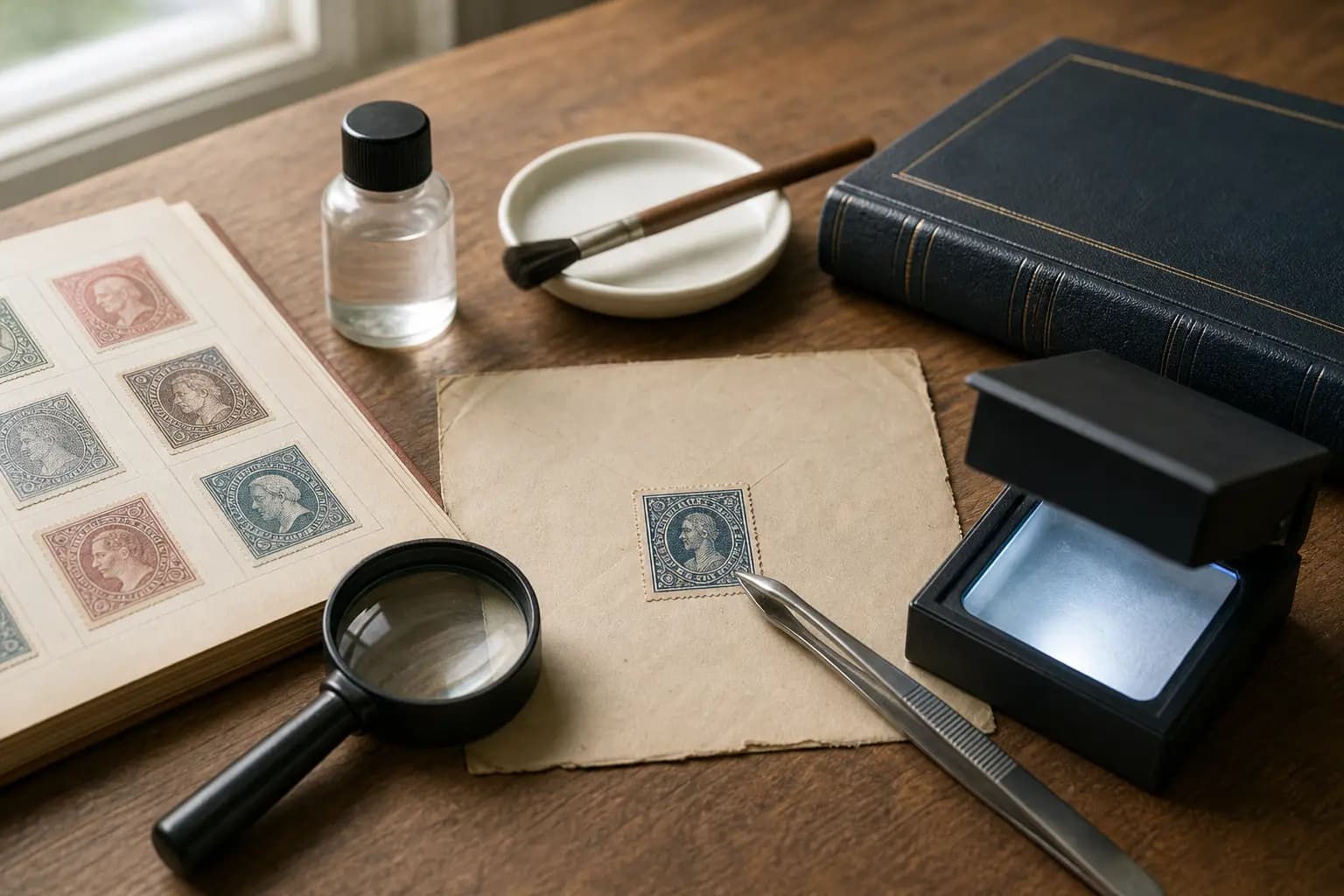
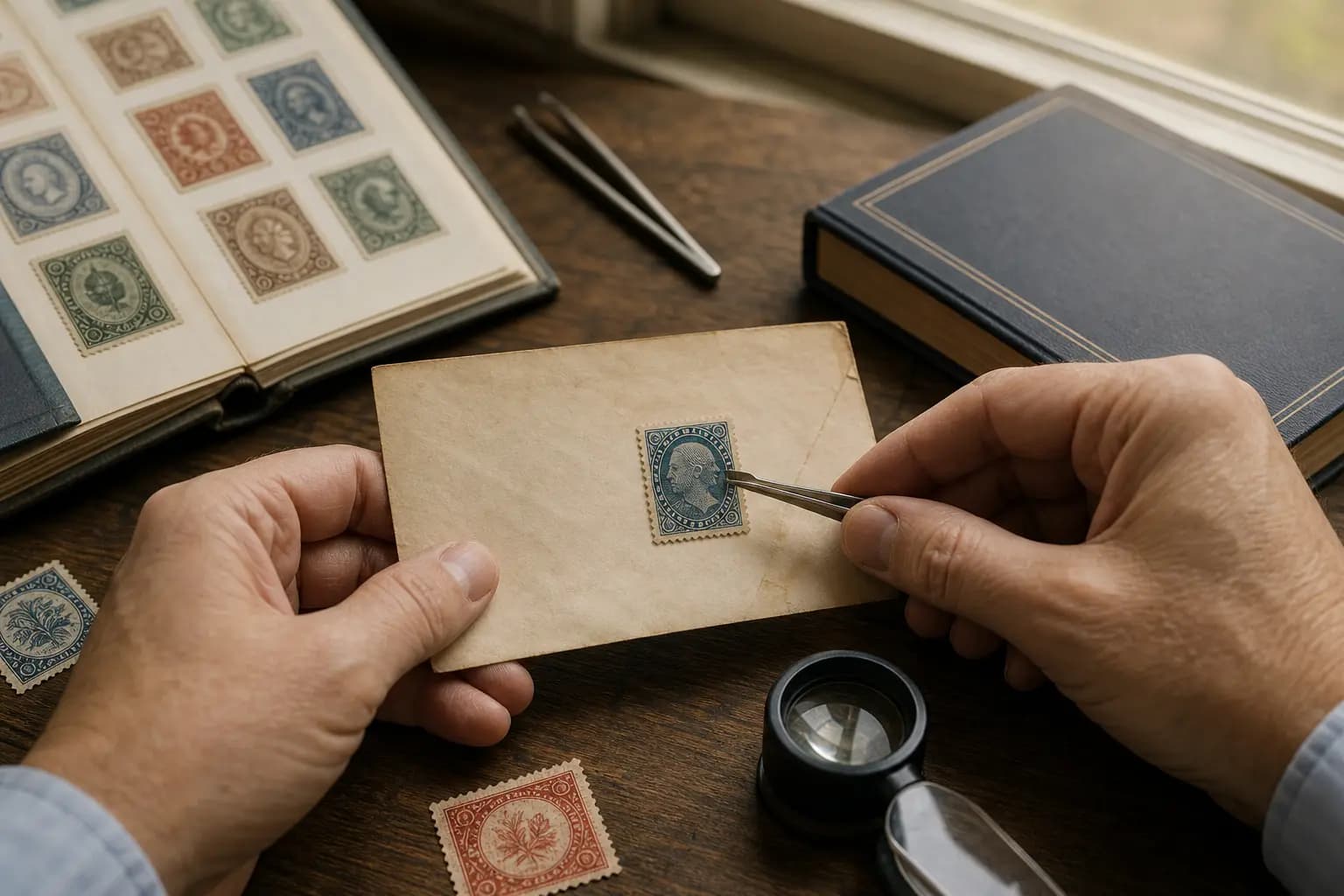
Early paper is highly fragile and susceptible to damage from improper handling. Collectors should always use professional stamp tongs rather than fingers to prevent skin oil transfer. If you need to inspect a stamp for hidden faults, such as thins, creases, or watermarks on later look-alike stamps, place the stamp face down in a dark tray and moisten it with a safe, commercial watermark fluid like Clarity. Never use household solvents, tape, or glue on classic philatelic material. Because visual identification alone is not always conclusive for high-value classics, professional expertizing is recommended to confirm authenticity.
Documenting and Valuing Your 1847 Stamps
The value of any 1847 classic stamp is highly dependent on its condition, margins, and the presence of any hidden faults. A stamp with four clear margins and a light cancellation is generally far more desirable than one with cut-into designs or hidden thins. Collectors can use StampSnap to log their findings, track condition notes, and maintain an organized inventory of their collection. Keeping detailed records of your stamps' physical traits ensures that your collection remains well-documented for future study and enjoyment.
Frequently asked questions
Who is pictured on the first two United States postage stamps issued in 1847?
The first two United States postage stamps, issued on July 1, 1847, picture Benjamin Franklin on the five-cent red brown stamp and George Washington on the ten-cent black stamp.
Were the 1847 U.S. stamps issued in a specific first-day city?
No, the first two U.S. stamps were not issued in a specific city on their first day of release. They were printed by Rawdon, Wright, Hatch and Edson and distributed to post offices as they became available.
How can I safely check if my classic stamp has hidden faults or watermarks?
To check for hidden faults like thins or creases, or to detect watermarks on later look-alike stamps, lay the stamp face down in a dark tray and moisten it with a safe, commercial watermark fluid. Never use household solvents, tape, or glue on your stamps.