The Four Major Families of Stamp Printing
To successfully identify and organize a postage stamp collection, collectors must understand the printing technologies used to produce them. The American Philatelic Society identifies four major families of printing methods used for postage stamps: line-engraved intaglio, gravure, letterpress, and lithography. While early classical issues often relied on a single method, more than one process may appear on a modern stamp.
Distinguishing these methods requires a methodical approach, as relying on a single visual clue can easily lead to misidentification. Using digital tools like StampSnap can help you log your findings and establish a likely identification record, which you can then verify through systematic physical analysis. By analyzing physical characteristics under controlled conditions, you can build a reliable system for classifying your stamps.
The Mechanics of Line-Engraved Intaglio
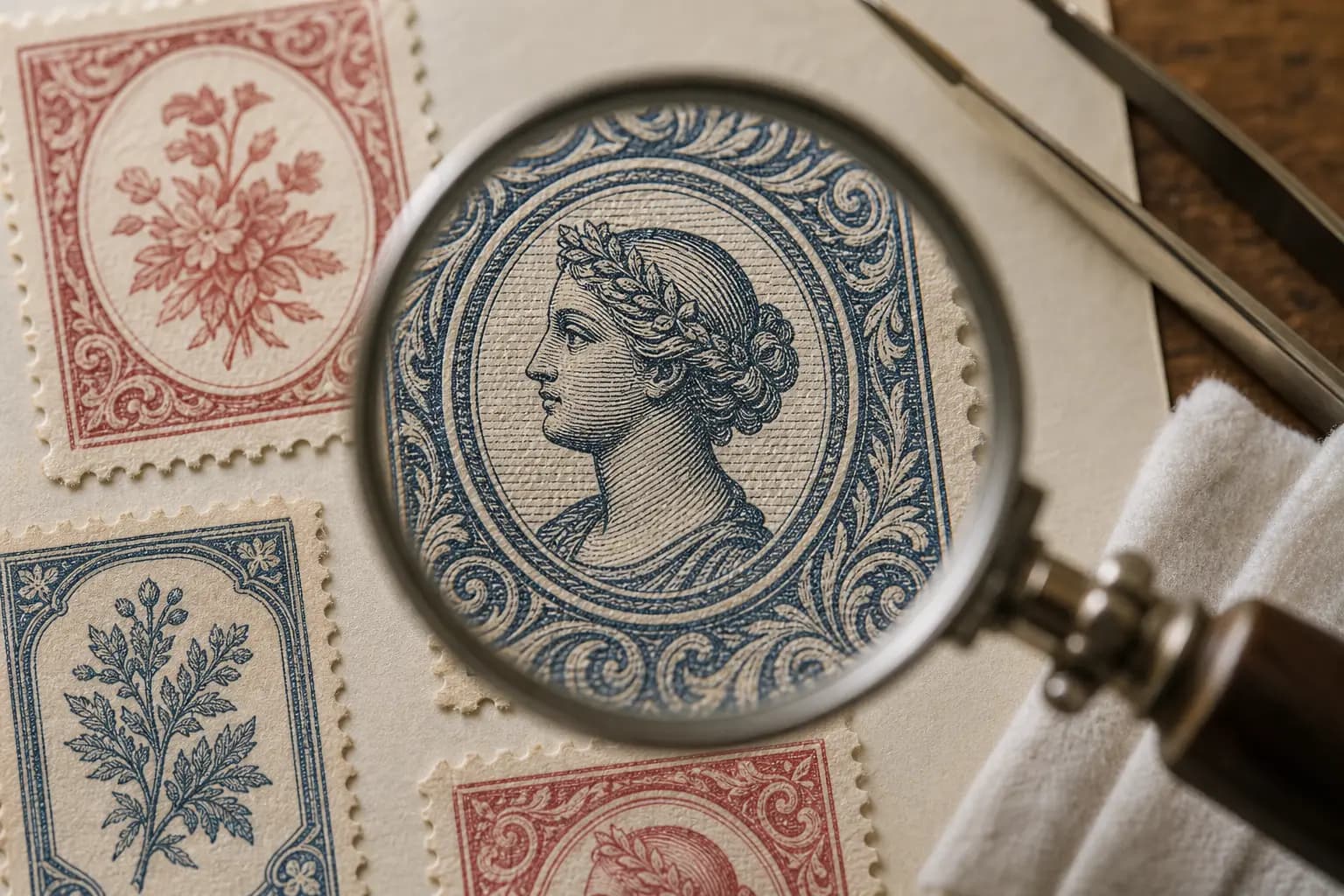
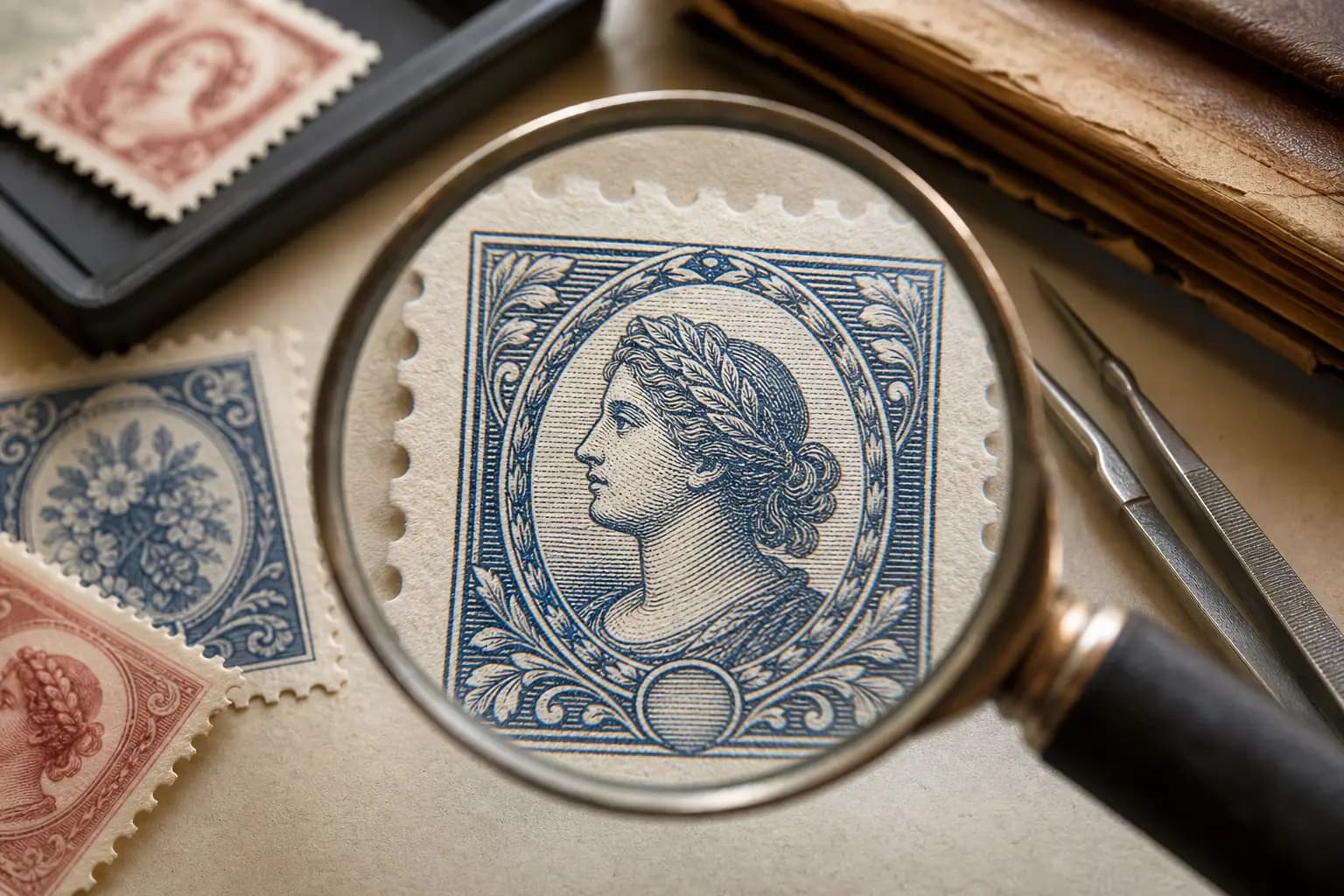
Line-engraved intaglio is a traditional recess printing process that has produced some of the world's most iconic stamps. In this method, the stamp design is transferred to the paper using ink held within deliberately incised lines on a metal plate. Because the ink is pulled from these deep recesses under immense pressure, the resulting design is normally constructed from distinct lines, hatching, cross-hatching, and stippling.
These engraved elements give intaglio stamps a highly detailed, crisp appearance that is difficult to replicate. Understanding how these lines are constructed is the first step in distinguishing intaglio from other recess or planographic methods. However, because other printing processes can also display fine details, you must look for specific physical relief clues to confirm your identification.
Detecting Raised Ink with Oblique Light
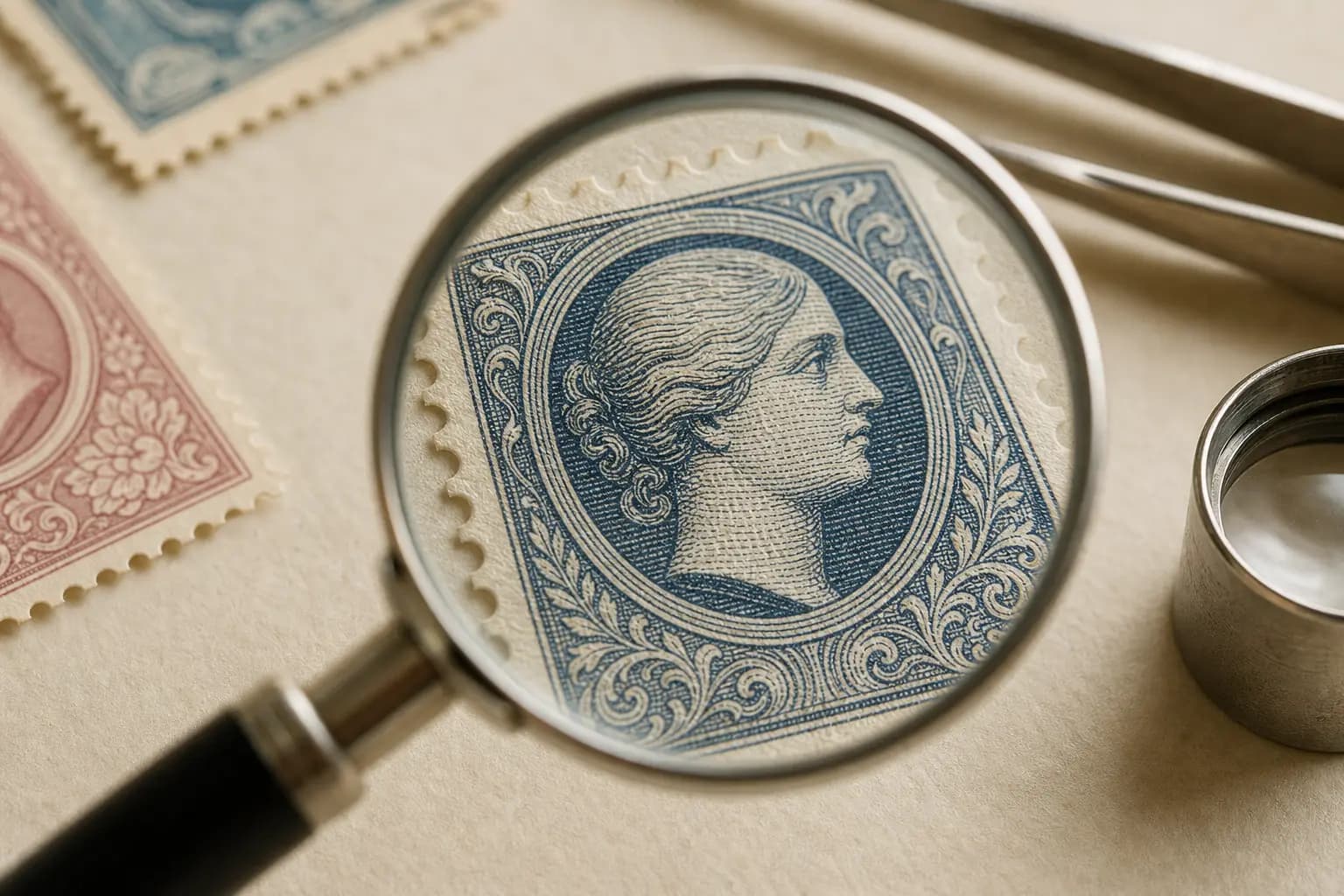
One of the most notable physical characteristics of line-engraved intaglio is the physical texture of the ink on the paper. Because the paper is forced into the incised lines of the plate, the ink is deposited in raised ridges on the surface of the stamp. This raised ink can sometimes be seen under non-contact magnification when paired with oblique light.
Oblique light, or light directed at a shallow angle across the surface of the stamp, casts tiny shadows behind the ridges of ink, making the three-dimensional texture visible. However, collectors must treat this as a supporting feature rather than a single, definitive test. Other printing processes can occasionally mimic raised effects, meaning you must gather multiple clues before making a final determination.
Examining the Reverse for Debossing
The intense pressure required to force paper into the incised lines of an intaglio plate often leaves a physical impression on the stamp paper itself. When examining the reverse side of an intaglio stamp, collectors may observe debossing, which is a slight indentation or flattening of the paper corresponding to the design on the front.
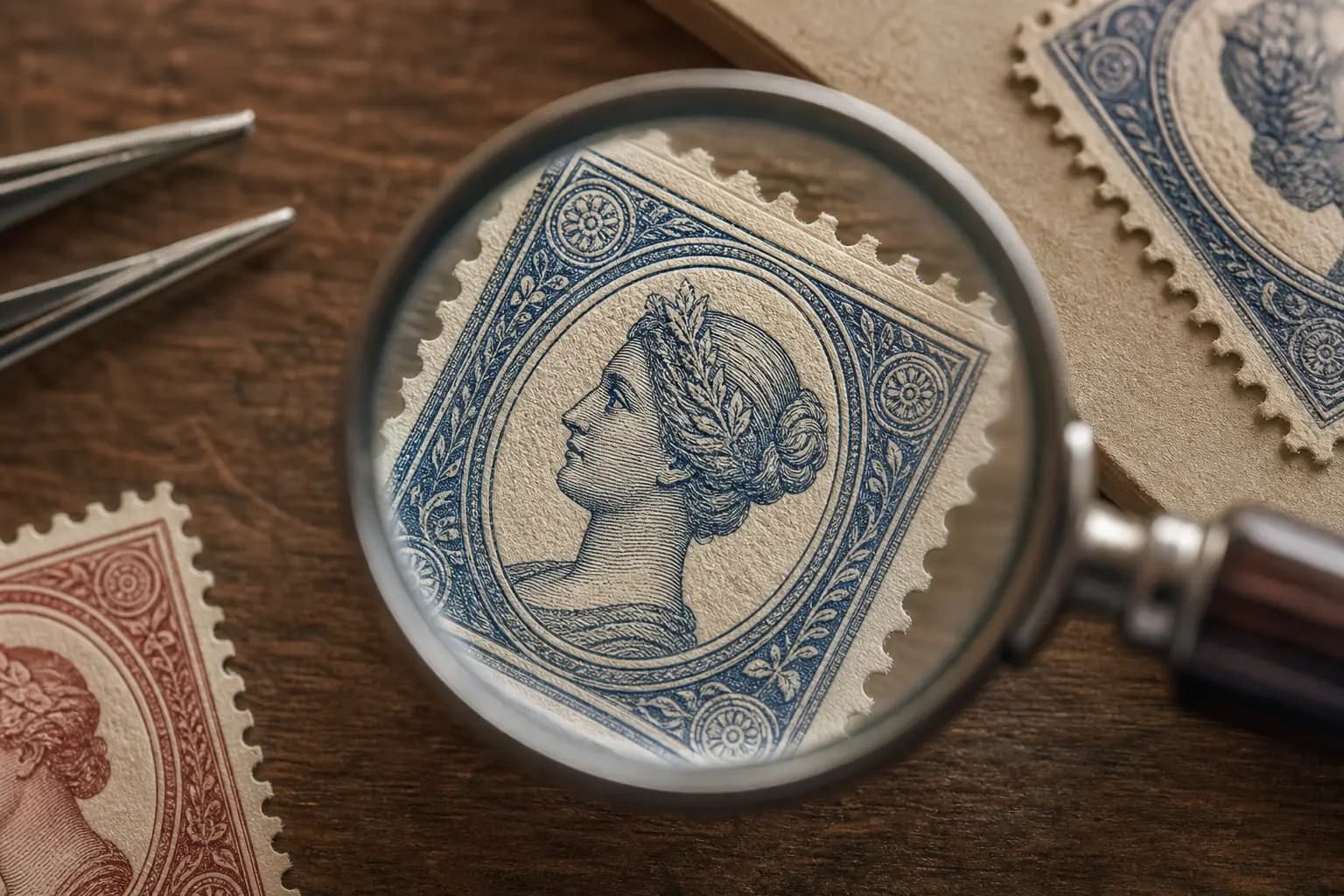
Like raised ink, debossing is a supporting feature that helps confirm the high-pressure nature of the printing process. To inspect for debossing safely, place the stamp on a clean, flat surface and use non-contact magnification under oblique light to check for subtle paper distortions on the back. Never apply heavy pressure or handle the stamp with bare hands during this inspection.
Distinguishing Intaglio from Gravure and Lithography
A common pitfall in stamp identification is assuming that any recessed or textured print is line-engraved intaglio. Gravure is another recess process, but unlike intaglio, it forms tone from screened cells rather than incised lines. Furthermore, modern offset lithography—a planographic process where the image is formed on a smooth surface and transferred via a rubber blanket—commonly combines separate process-color layers made from very fine dots.
Because screened or raised effects can also appear in other processes, you cannot diagnose a printing method from dots or ink softness alone. Instead, you must treat these visual features as cumulative clues that point toward a specific printing family. Comparing the design structure under magnification with known examples of each family is the safest way to avoid errors.
Combining Visual Observations with Production Records
Because modern stamps frequently combine multiple printing processes, visual inspection alone is rarely enough for a definitive identification. Collectors should always combine their physical observations with official postal production records. When you encounter a challenging stamp, you can use StampSnap to scan the design and create a likely identification record.
From there, consult specialized stamp catalogs and printing histories to verify which processes the security printer actually utilized. By matching your physical observations of raised ink, debossing, or screen patterns with the official production records, you can confidently organize your collection and avoid misidentifying complex issues.
Frequently asked questions
How can I see raised ink on a line-engraved intaglio stamp?
You can detect raised ink by examining the stamp under non-contact magnification using oblique light. Oblique light is directed at a shallow angle across the stamp's surface, which casts tiny shadows behind the raised ridges of ink, making the physical texture visible.
Is debossing on the reverse side always present on intaglio stamps?
No. While the high pressure of the intaglio process may leave debossing on the reverse side of the paper, it is a supporting feature rather than a guaranteed test. Paper thickness, dampness during printing, and subsequent soaking can all affect whether debossing remains visible.
Can other printing processes show screened or raised effects?
Yes. Gravure is another recess process that forms tone using screened cells, and other printing methods can also show screened or raised effects under magnification. Because of this, you should never diagnose a printing process based on a single visual clue.
What are the four major printing families used for postage stamps?
According to the American Philatelic Society, the four major printing families used for postage stamps are line-engraved intaglio, gravure, letterpress, and lithography.