The Invisible Threat to Stamp Preservation
When handling postage stamps, the greatest threat often comes from an invisible source: the natural oils on your fingertips. No matter how thoroughly you wash and dry your hands, your skin continuously produces oils and moisture that can transfer to paper. Over time, these organic substances react with stamp paper, inks, and gum, causing gradual discoloration, staining, and degradation. To preserve the long-term value and physical integrity of your collection, minimizing direct finger contact is absolutely essential.
While some beginners attempt to handle stamps with household tweezers, this practice is highly destructive. Standard tweezers feature sharp or serrated tips that can easily puncture, crease, or scratch delicate paper. Specialized stamp tongs provide a safe, flat gripping surface engineered specifically for philatelic material, ensuring that your stamps remain in good condition by handling them as little as possible.
Understanding Stamp Tongs vs. Household Tweezers
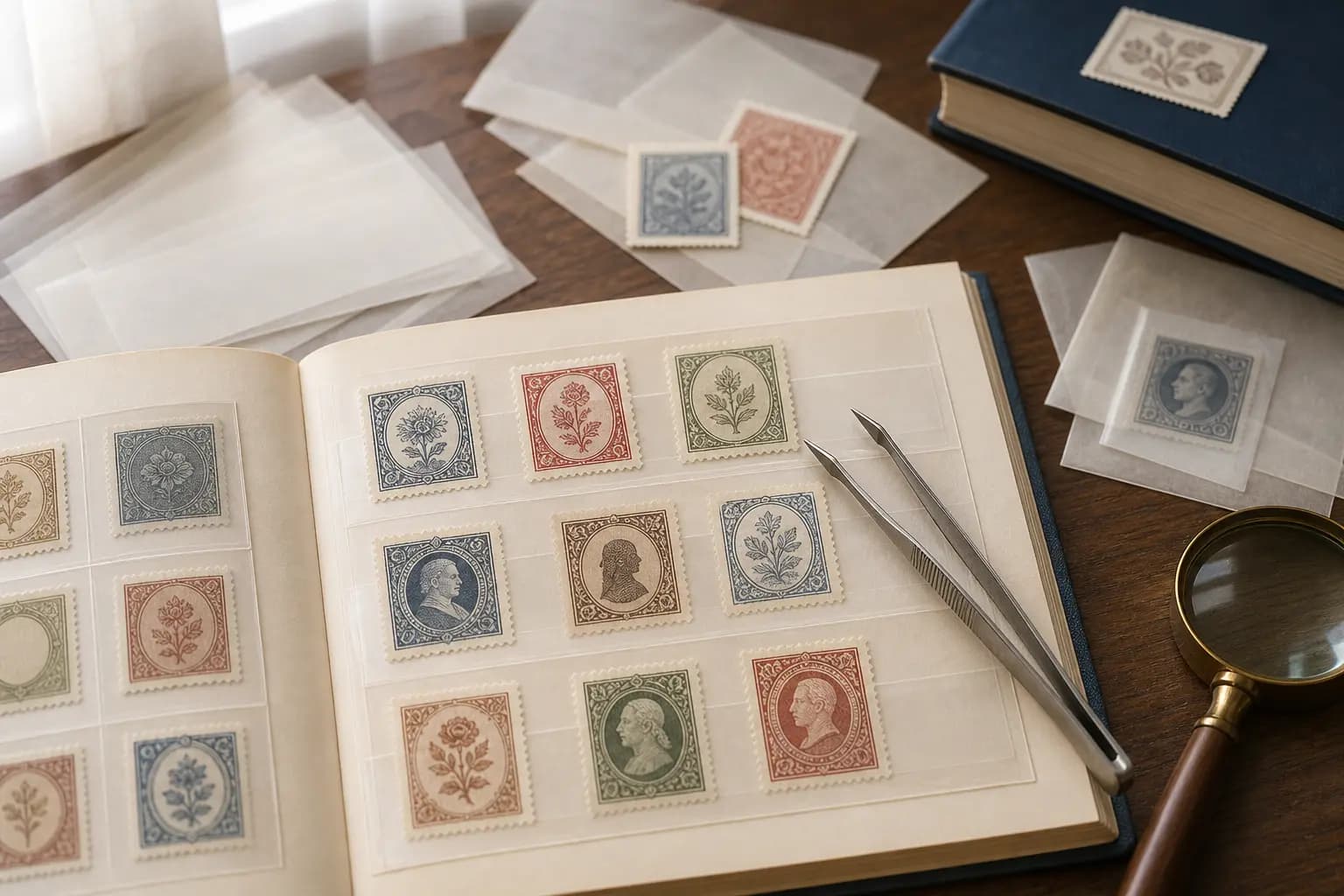
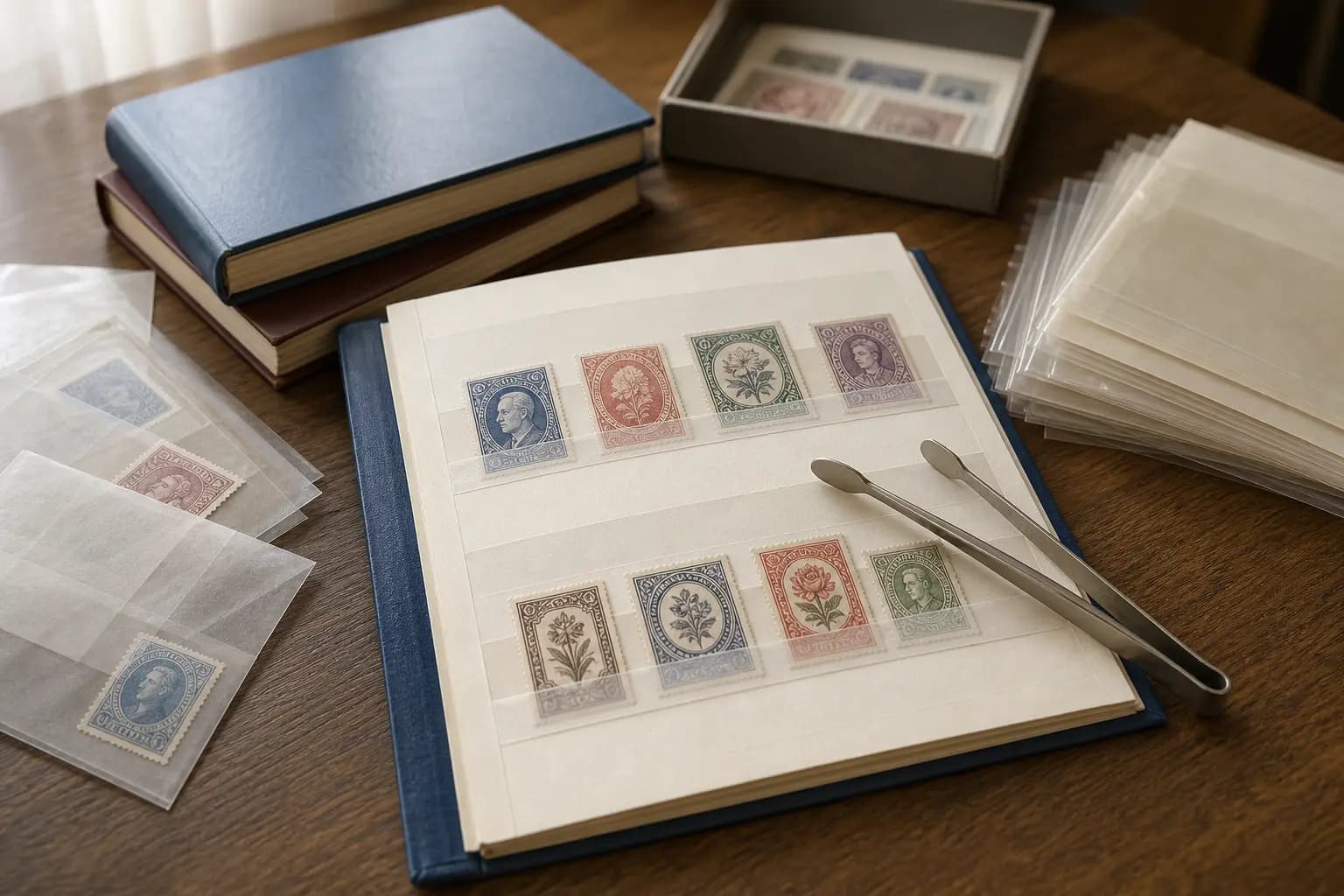
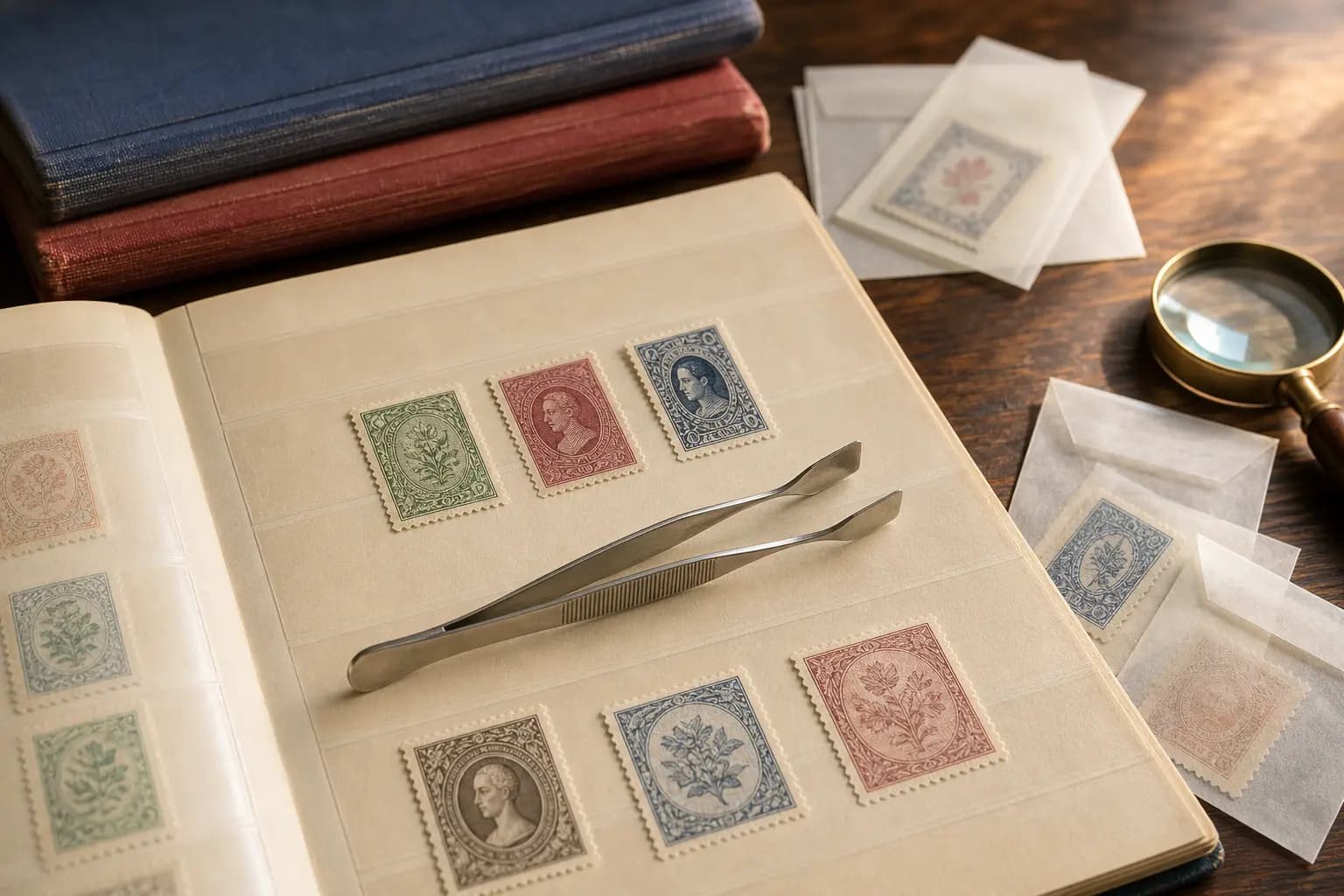
Stamp tongs may resemble cosmetic tweezers, but their design is fundamentally different. Tongs are manufactured with highly polished, completely smooth gripping surfaces. This lack of ridges prevents the tool from leaving indentations or tearing fragile paper fibers. Using the correct tool ensures that stamps can be moved, inspected, and organized without leaving physical traces or causing accidental damage.
When selecting stamp tongs, you will encounter various tip styles, including spade, pointed, and round tips. Regardless of the style, the primary goal is to ensure the gripping surface is entirely smooth and free of sharp burrs. Investing in a dedicated pair of philatelic tongs is one of the simplest and most effective ways to safeguard your collection from mechanical wear.
The Golden Rule: Only Use Tongs on Dry Stamps
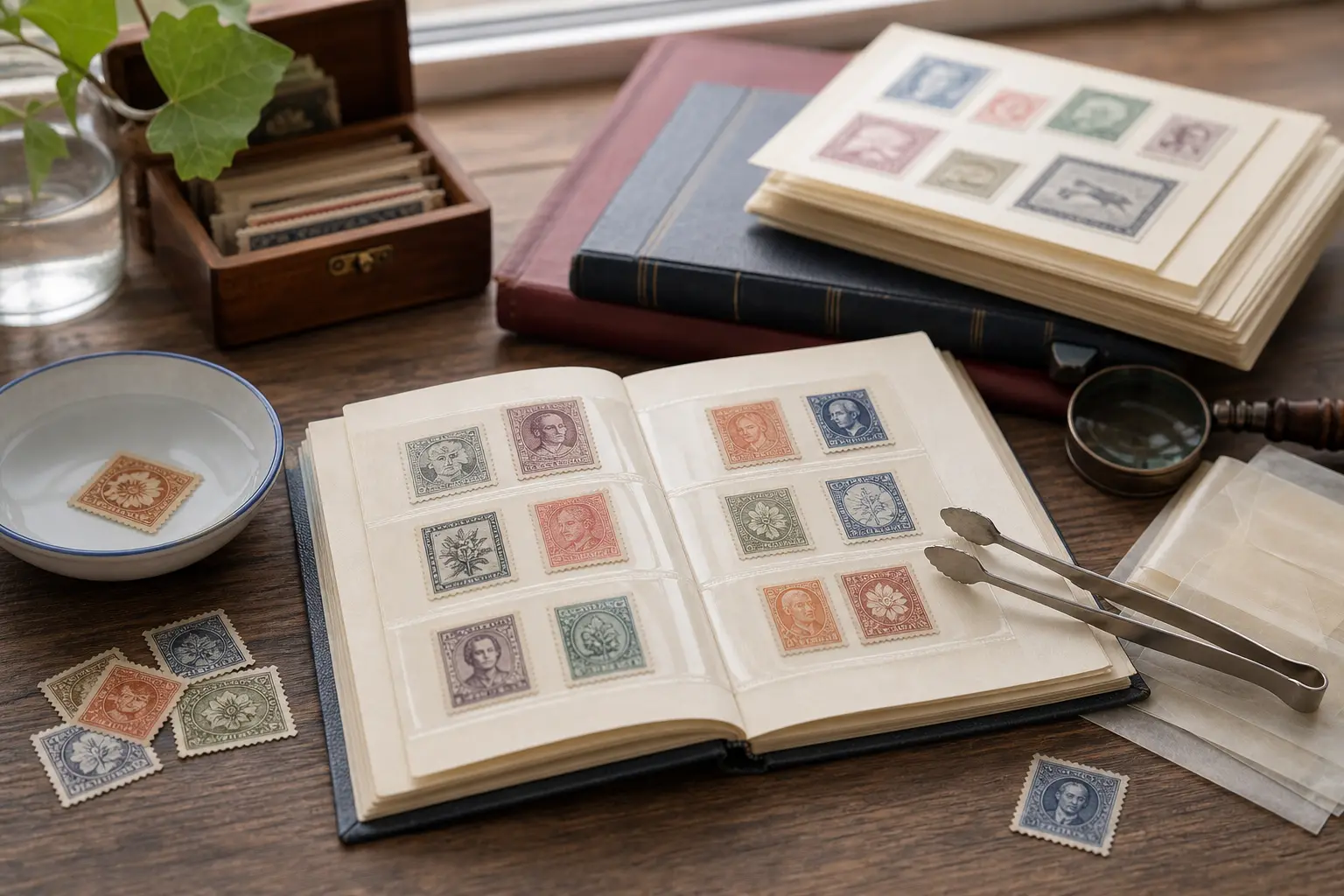
A critical distinction in philatelic preservation is the physical state of the stamp paper. While tongs are the standard tool for organizing dry stamps, they should never be used to handle wet or softened stamps. When stamps are wet—such as during the soaking process to remove them from envelope paper—the paper fibers expand and become highly fragile.
Attempting to pinch a wet stamp with metal tongs can easily gouge the softened paper, slip and cause a tear, or strip away remaining gum. Instead, wet stamps should be handled with extreme care, allowing them to slide gently without direct pressure. Only after your stamps have dried completely overnight and are safely flattened should you resume using your stamp tongs for sorting.
Safe Techniques for Handling Dry Stamps
Using stamp tongs effectively requires a light touch and a methodical approach. Always work over a clean, flat, and well-lit surface to minimize the risk of dropping a stamp. Gently slide the flat tips of the tongs under the body of the dry stamp, ensuring you do not pinch the delicate perforations along the edges. Grip the stamp lightly near its center, applying minimal pressure.
Avoid dragging the stamp across rough surfaces or album pages. Instead, lift it cleanly and place it precisely. If you are preparing to catalog your collection, you can use StampSnap to capture a clear image of the dry stamp while it is safely positioned on a clean background, helping you create a digital record without unnecessary physical handling.
Complementary Tools for Safe Inspection
To further minimize physical handling, combine your use of stamp tongs with other non-contact inspection tools. A high-quality magnifying glass is an excellent companion, allowing you to examine fine design details and minor variations without touching the stamp repeatedly. Experts recommend a magnifying lens with at least 5x to 10x magnification that folds into a protective case to prevent scratches.
By using tongs to position the dry stamp and a magnifier to inspect it, you eliminate the need for direct finger contact entirely. For advanced organization, you can use StampSnap to help identify the likely issue and log its details into your digital catalog. This systematic approach ensures your physical stamps remain undisturbed in their protective storage.
Long-Term Storage and Preservation Practices
Once your dry stamps have been sorted and inspected using your tongs, storing them correctly is the final step in preservation. Temporary storage in clean glassine envelopes keeps them safe from dust. When you are ready to mount them permanently, always use archival-safe methods such as peelable hinges or clear plastic mounts rather than household tape or glue, which will permanently ruin the stamp's paper and value.
Establishing a strict routine of using stamp tongs for dry handling, keeping wet stamps completely free of tong contact, and utilizing protective storage protects your philatelic material for generations. Safe handling is a fundamental habit that separates casual collectors from dedicated preservationists, ensuring your collection remains in pristine condition.
Frequently asked questions
Why can't I just wash my hands instead of using stamp tongs?
While washing your hands is important, your skin immediately begins reproducing natural oils and moisture after washing. These invisible oils transfer to the stamp paper upon contact, leading to yellowing, staining, and long-term chemical degradation of the paper and ink.
Is it safe to use stamp tongs on wet stamps after soaking?
No, you should avoid using tongs on wet stamps. Wet paper is highly fragile and easily torn or gouged by the hard edges of tongs. Allow wet stamps to dry and flatten completely overnight before handling them with tongs.
What is the difference between stamp tongs and regular tweezers?
Regular household tweezers often have sharp edges or serrated, ridged gripping surfaces designed to grab objects tightly. Stamp tongs feature completely smooth, highly polished flat gripping surfaces designed to hold delicate paper securely without pinching, scratching, or tearing it.
How should I store my stamps after handling them with tongs?
Store your sorted dry stamps in protective glassine envelopes, stock books, or stamp albums. Always use peelable hinges or clear plastic mounts to attach them to album pages, and never use tape or glue, which will damage the stamps and decrease their value.