The Dual-Track Approach to Stamp Identification
For stamp collectors, identifying a specimen accurately often requires looking beyond the surface design. Many classic stamps share identical illustrations but differ fundamentally in how they were printed and the paper on which they were produced. To classify these issues correctly, philatelists employ a dual-track approach that combines printing family analysis with watermark detection.
By systematically evaluating these physical characteristics, you can distinguish common varieties from rare, highly prized issues. Tools like the StampSnap app can help you organize your findings and create a likely identification record as you build your digital catalog.
Identifying the Four Major Printing Families
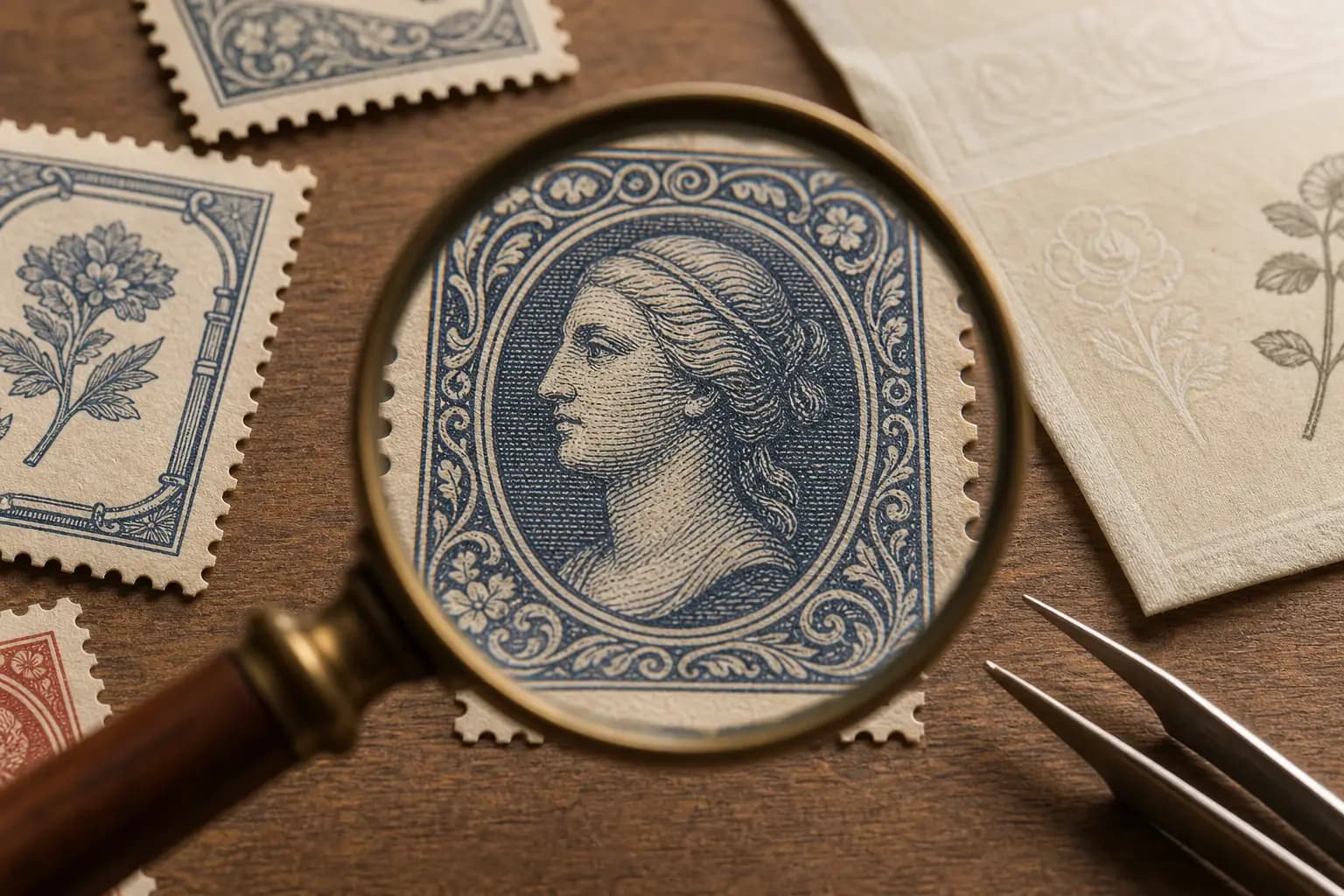
The American Philatelic Society identifies four major printing families used for postage stamps: line-engraved intaglio, gravure, letterpress, and lithography. Line-engraved intaglio transfers ink from deliberately incised lines on a plate, creating a design constructed from lines, hatching, cross-hatching, and stippling. Gravure is also a recess process but forms its tones from tiny, screened cells.
Letterpress relies on raised relief surfaces to apply ink. In contrast, offset lithography is a planographic process where the image is formed on a smooth surface. Oil-based ink adheres to the image area, and a rubber blanket offsets that image onto the paper. Modern stamps may even combine more than one of these processes on a single issue.
Avoiding Pitfalls with Cumulative Visual Clues
When analyzing printing methods, collectors must treat visual features as cumulative clues rather than absolute proof. It is a mistake to diagnose a printing process based on a single characteristic, such as dots or edge softness. For instance, while modern lithography can be incredibly sharp, soft or blurred edges are not a dependable rule for identification.
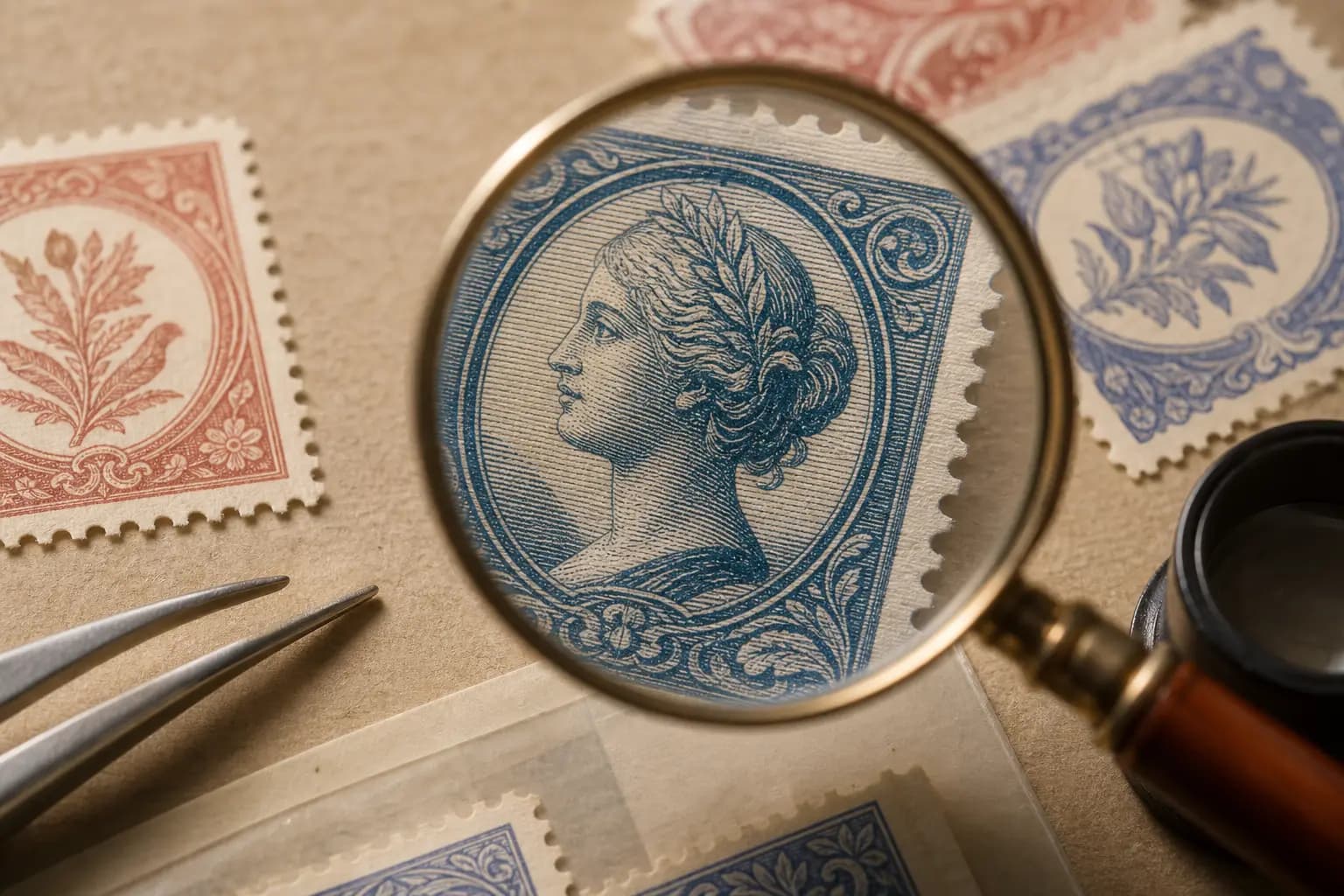
Furthermore, screened structures appear under magnification in both gravure and modern lithography. To examine these details safely, use only non-contact magnification under diffuse or oblique light. Oblique light can help reveal raised ink or paper debossing on the reverse of intaglio stamps, but these observations must always be combined with production records for a reliable conclusion.
The Importance of Paper Watermarks
Watermarks serve as a critical security measure incorporated into stamp paper to deter counterfeiting. These marks—which can be words, letters, or symbols—are formed by dies attached to the frame used to make paper from pulp, creating thin areas in the paper. Because some stamps exist on both watermarked and unwatermarked paper, or feature different watermark designs, catalog publishers assign them separate numbers.
A watermark can be the sole difference between a highly common stamp and an incredibly scarce variety. While some watermarks from countries like Ireland or Italy are easily visible to the naked eye, many stamps require specialized detection methods to reveal their hidden patterns.
Safe Watermark Detection and Fault Analysis
To safely detect a watermark, place the stamp face down in a dark tray and moisten it with a specialized watermark fluid. This fluid temporarily brings up the watermark as dark lines against a lighter background. The American Philatelic Society recommends using commercial watermark fluids, such as Clarity, which are safer for your health and your stamps than alternative solvents like lighter fluid.
Commercial watermark fluid evaporates rapidly and will not damage the gum on an unused stamp. Beyond revealing security marks, dipping your stamps in watermark fluid is an excellent way to inspect the paper for hidden faults, such as thins, creases, or repairs, which heavily impact the stamp's overall condition.
Distinguishing Challenging U.S. Watermarks
United States stamps feature several distinct watermarks, including the letters 'USPS' on postage stamps, 'USPOD' or 'USA' on postal stationery, and 'USIR' on revenue stamps. Between 1895 and 1910, U.S. stamps utilized a double-line 'USPS' watermark (Scott watermark 191). This was replaced from 1910 to 1916 with a single-line 'USPS' watermark (Scott watermark 190).
These single-line watermarks are notoriously difficult to detect, often showing only a tiny fragment of a single letter. Successfully identifying these partial letters requires patience, proper fluid, and a dark background to isolate the thin areas of the paper pulp.
Synthesizing Your Philatelic Discoveries
By combining printing method analysis with watermark detection, you can confidently classify complex stamp issues. Once you have examined the surface under non-contact magnification and checked the paper in a watermark tray, you can synthesize these clues to find the correct catalog listing.
You can then use StampSnap to document the specific printing family and watermark type, ensuring your collection record is accurate and well-organized. This methodical approach protects your stamps from damage while elevating your skills as a serious philatelist.
Frequently asked questions
How do I safely view a watermark on a stamp with original gum?
Lay the stamp face down in a dark tray and moisten it with a commercial watermark fluid like Clarity. This fluid evaporates quickly and will not damage or dissolve the gum on an unused stamp.
Can I identify a stamp's printing process solely by looking for dots?
No. Screened structures and dot patterns appear in multiple printing processes, including gravure and modern lithography. You must treat visual features as cumulative clues and consult production records rather than relying on a single visual test.
What is the difference between double-line and single-line U.S. watermarks?
Double-line 'USPS' watermarks (Scott watermark 191) were used on U.S. postage stamps from 1895 to 1910. Single-line 'USPS' watermarks (Scott watermark 190) were used from 1910 to 1916 and are generally much more difficult to detect, often appearing as only a small portion of a letter.
Why does oblique light help when identifying line-engraved intaglio stamps?
Oblique light, when paired with non-contact magnification, can reveal the raised ink on the surface of a line-engraved intaglio stamp, as well as potential debossing on the reverse side caused by the high pressure of the printing press.