The Role of a Stamp Catalog in Philately
A stamp catalog serves as an indispensable reference book for philatelists of all experience levels. It is filled with detailed illustrations, descriptions, and historical context that can help you identify and learn about your stamps. For those who do not wish to purchase a catalog immediately, these comprehensive guides can often be borrowed from local libraries, making them highly accessible resources for research.
When you encounter an unidentified stamp, the catalog acts as a roadmap. It provides critical information such as the date when the stamp was issued, the reason for its issuance, and the specific printing method used during production. By learning how to systematically navigate these listings, you can transform a chaotic pile of stamps into an organized, well-documented collection.
Matching Visual Details with Catalog Illustrations
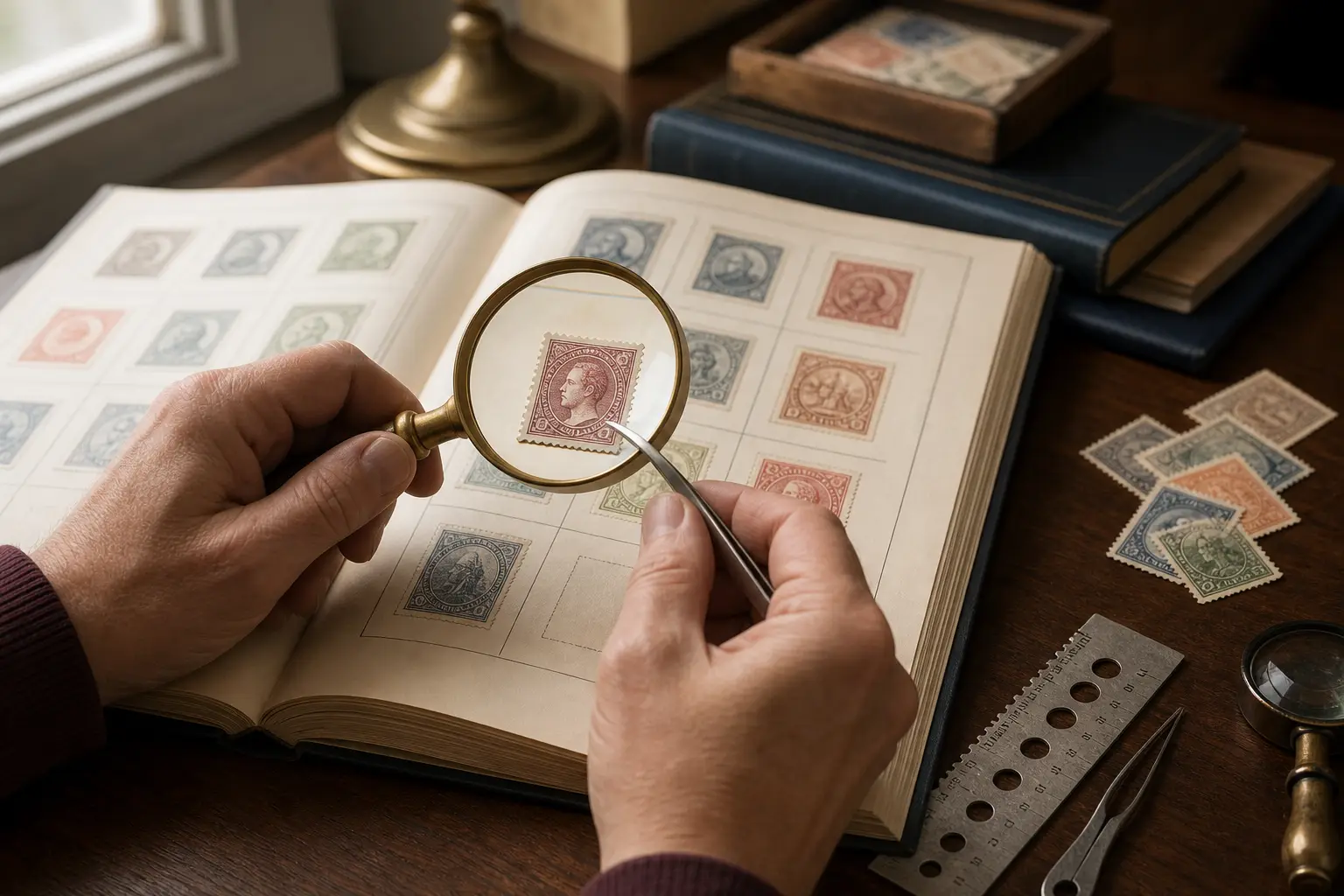
The first step in using a catalog is comparing your physical stamp to the printed illustrations. However, many stamps look incredibly similar at first glance, despite having vastly different origins or values. To find the subtle differences that distinguish a common variety from a rare one, a magnifying glass is an essential tool.
We recommend using a magnifying lens with at least 5 times to 10 times magnification that magnifies clearly without distortion. Selecting a magnifier that folds into a protective case will also help prevent scratches on the lens. By carefully inspecting the design details under magnification, you can match the stamp to the correct catalog illustration and read the accompanying description to confirm your finding.
Verifying Issue Dates and Historical Context
Every catalog listing includes the specific date or year when a stamp was officially released. This historical timeline is vital for narrowing down your search, especially when dealing with classic issues. For example, the first two United States postage stamps were issued on July 1, 1847, featuring a five-cent red-brown design of Benjamin Franklin and a ten-cent black design of George Washington, printed by Rawdon, Wright, Hatch and Edson.
Knowing these historical details allows you to place your stamp within a specific era. If you have a stamp that features a particular historical figure or monarch, you can look up the active years of that individual to find the correct section of the catalog. For instance, stamps from Great Britain can be identified by the image of the ruling monarch, which is a unique privilege permitted because Great Britain issued the first postage stamp, the Penny Black, in 1840.
Analyzing Printing Methods and Perforations
Beyond visual designs, catalogs provide technical data on how a stamp was printed and finished. Different print runs of the same design might use distinct printing methods, which are clearly noted in the catalog descriptions. Understanding these production differences is key to accurate identification.
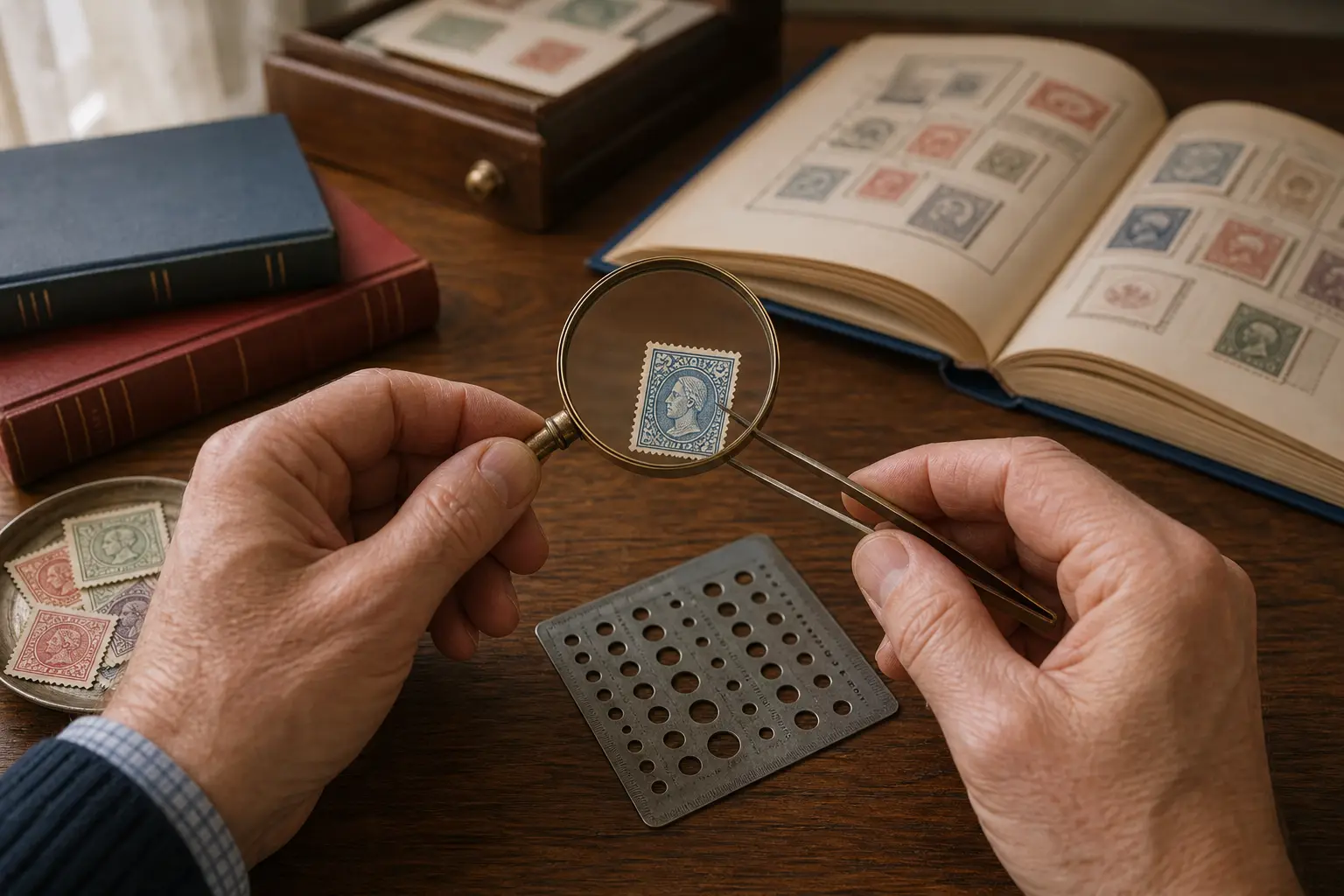
Perforations are another critical variation documented in catalogs. Some stamps share an identical design but feature different numbers of perforations along their edges. Rather than manually counting these tiny holes, you can use a perforation gauge made of cardboard, plastic, or metal. By matching the stamp's edges to the scales on the gauge, you can quickly find the exact measurement that corresponds to the catalog listing.
Interpreting Catalog Values and Condition
Stamp catalogs provide estimated values for stamps in both used and unused conditions. It is important to remember that these values are informational and highly dependent on the physical condition of the stamp. A stamp with minor damage, thins, or heavy cancellations may value significantly less than a pristine copy.
Additionally, historical significance does not always equate to high market value. The famous 1840 Penny Black of Great Britain, which was the world's first postage stamp, is highly sought after but not tremendously valuable because millions of copies were printed and used. Using a digital tool like StampSnap can help you create a likely identification and maintain a digital record of your stamps as you cross-reference them with catalog values.
Safe Handling Practices During Research
While researching your stamps with a catalog, safe handling must remain your top priority. You should handle dry stamps as little as possible with your bare hands. Even after thorough washing, natural oils from your skin can transfer to the paper and cause permanent damage over time.
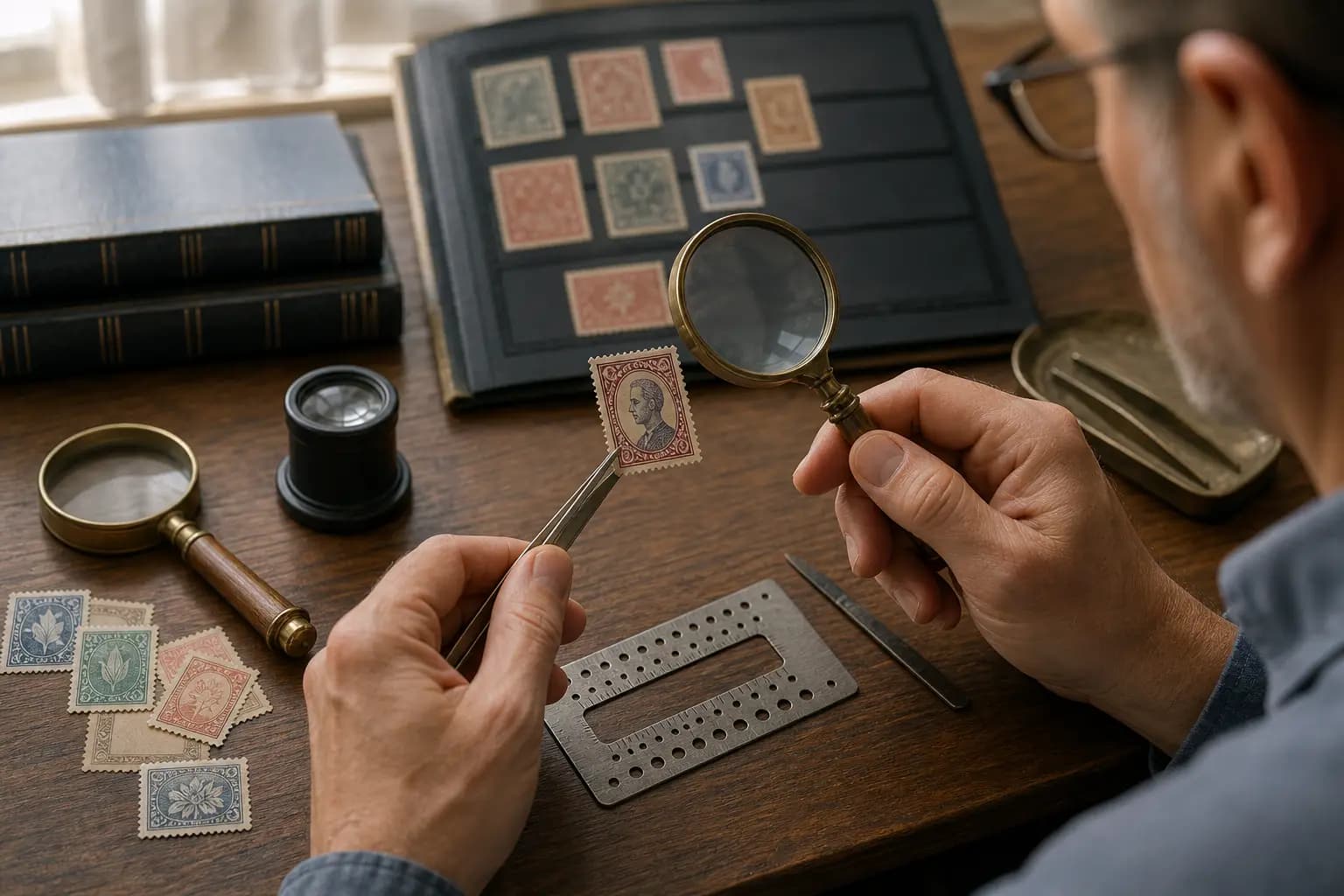
To prevent this, always use stamp tongs with a smooth gripping surface designed specifically for philatelic material. Avoid using standard household tweezers, which have ridged tips that can tear fragile paper. You can use StampSnap to take a clear digital image of your stamp for reference, allowing you to study the design on your screen and minimize physical handling while you search through the catalog pages.
Frequently asked questions
Can I borrow a stamp catalog instead of buying one?
Yes, stamp catalogs can often be borrowed from local libraries, making them an excellent, cost-effective resource for collectors who are just starting out.
Why does the catalog list different values for used and unused stamps?
Catalogs list separate values because the condition and market demand for a stamp can vary greatly depending on whether it has been postally used or remains in its original, unused state.
How do I know if my stamp matches a catalog illustration if the colors look slightly different?
Stamps can experience color fading or variations over time. You should use a magnifying glass with 5x to 10x magnification to inspect the fine lines of the design and check if the issue date and printing details match the catalog description.
Why is the 1840 Penny Black not extremely valuable if it was the first stamp?
Although the Penny Black was the world's first postage stamp, millions of copies were printed and used. Because they are relatively common in the philatelic market, a nice used copy remains highly accessible to collectors.