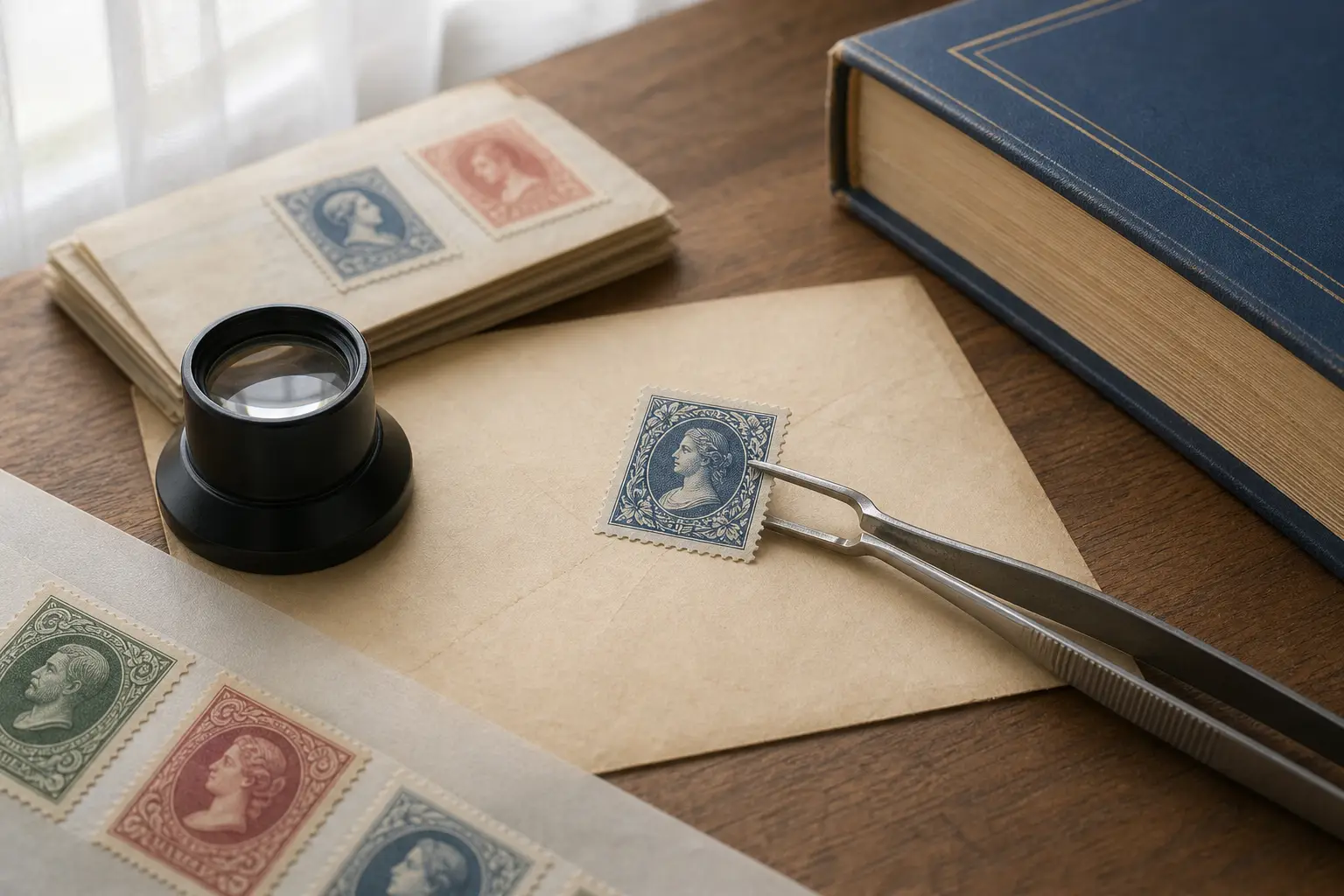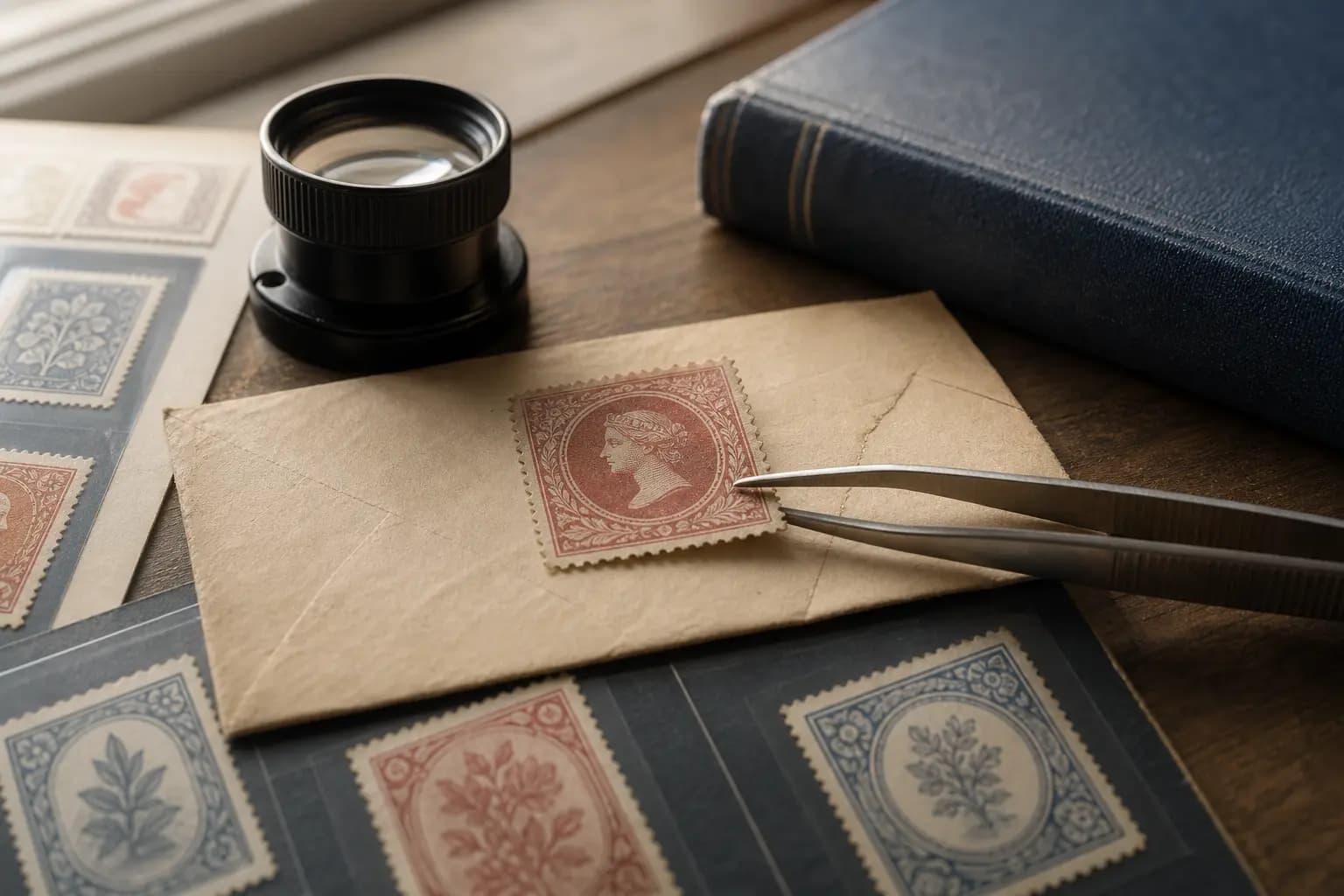
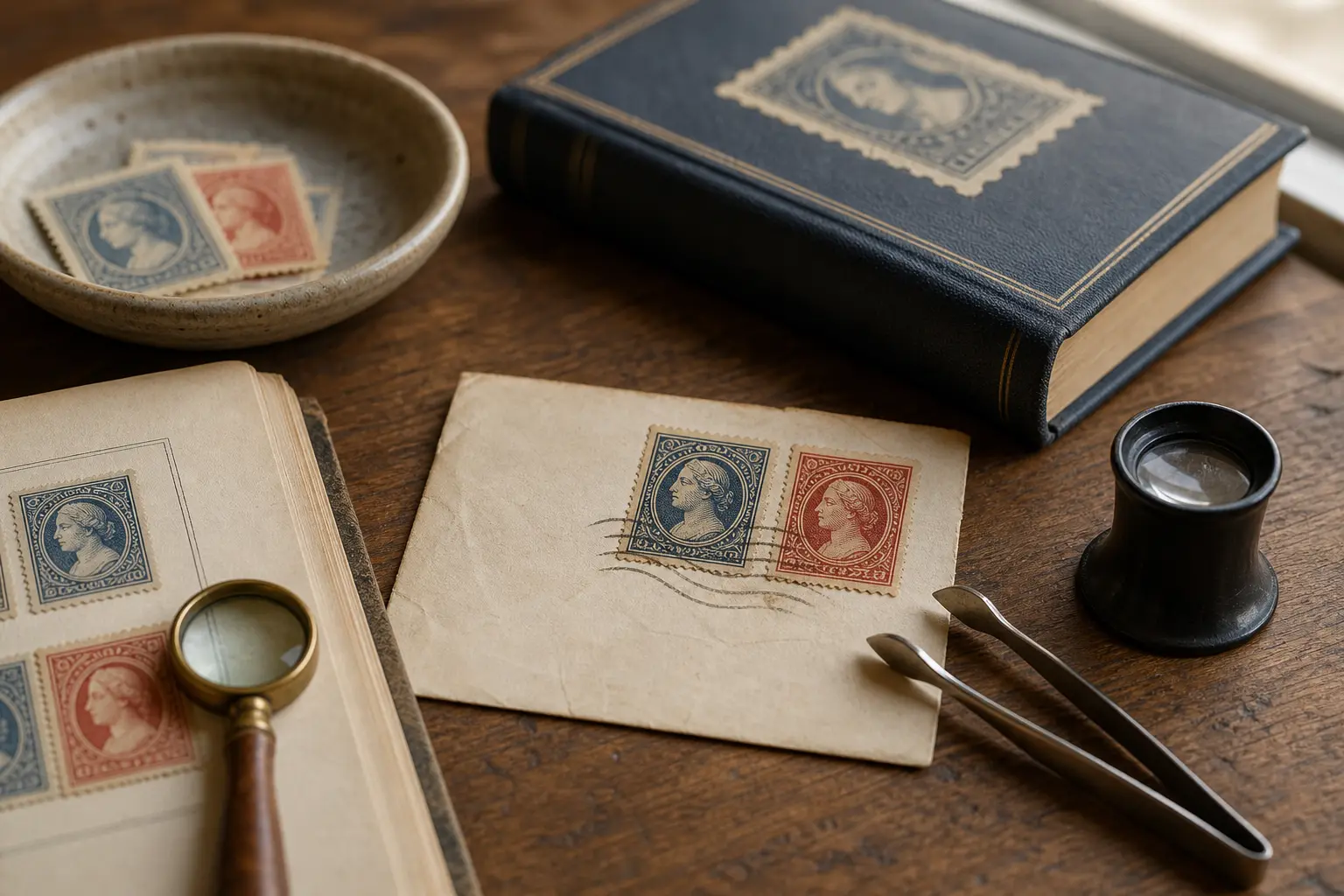
The short answer: small differences can change value
Two stamps with the same basic design can have different values because they may not be the same issue. A stamp can differ by watermark, perforations, colour, or a small design detail that changes its catalog number. In collecting terms, that means a stamp that looks familiar at first glance may belong to a different listing once you examine it closely.
This is why value questions about look-alike stamps are really identification questions first. The American Philatelic Society notes that looking at the nation, design, watermark, perforations, and colour helps narrow a stamp to the correct catalog entry. When those features point to a different entry, the value can change as well. The safest approach is to identify the exact stamp before making any assumption about worth.
Why the same design is not always the same stamp
The APS examples show that two very similar stamps can differ in small but important ways. One North Borneo pair differed by the wording in the design: one paid postage, while the later version paid both postage and revenue, and that wording changed the catalog identity. A Liechtenstein pair used the same basic portrait design, but one stamp was a definitive and the other commemorated a specific anniversary by changing the upper corner details and adding date inscriptions.
These examples show the collector problem clearly: the overall picture may stay familiar while the function, date, or wording changes. That is why a collector should not rely on a quick glance. Tiny alterations can place a stamp into a different catalog line, and that difference can affect how the stamp is described, collected, and valued.
Watermarks are one of the biggest hidden differences
Watermarks are a security measure built into stamp paper to help deter counterfeiting. They may appear as words, letters, symbols, monograms, or numbers, and they can be the only difference between two otherwise similar stamps. The APS explains that stamps with the same design but different watermarks, or with a watermark versus no watermark, generally receive separate catalog numbers.
That matters for value because a watermark can separate a common stamp from one catalogued much higher. Some watermarks are easy to see by holding the paper to light, but many are not. The APS says the best method is to lay the stamp face down in a dark tray and moisten it with watermark fluid so the watermark appears as dark lines against a lighter background. It also notes that commercial watermark fluid is preferred over improvised methods, and that APS helped develop a safer product for stamps and for health.
How to compare similar stamps without guessing
Start with the safest visible clues before moving to more specialized checking. Compare the country, the wording on the stamp, the position of dates or corner marks, the colour, and whether the perforations match. Then look for any catalogue note that points to a known difference, such as a changed inscription or altered corner design. If the stamp is on paper with a watermark, treat that as a key identification feature rather than a side detail.
If you are recording a stamp for later study, StampSnap can help you keep a note of the visible features you observed, but it does not replace careful identification. Make one record for each candidate version if you are unsure, because uncertainty is normal when the difference is small. A methodical record is more useful than a rushed conclusion, especially when the stamp is from a country or period you do not know well.
When the value difference comes from condition, not design
Not every value difference between similar stamps comes from the issue itself. Condition also matters, and the APS material on watermarking notes that some collectors use watermark fluid to look for faults such as thins and creases. That means two stamps that belong to the same catalog listing can still have different desirability if one has damage or a problem that the other does not.
This is another reason to avoid assumptions. A stamp with a special watermark may be scarce in catalog terms, but if it has faults, the market interest can be different from a clean example. Conversely, a common stamp in very good condition is still the same issue; it does not become a different catalog item just because it looks fresh. Identification and condition are related, but they are not the same question.
A safe, methodical checking routine
Use good light, a clean work surface, and tools designed for stamp handling. Keep the stamp dry unless you are using a method specifically meant for watermark detection, and do not use household solvents or other improvised liquids on the stamp. The APS specifically recommends commercial watermark fluid for watermark checking because it evaporates quickly and should not affect the gum on an unused stamp.
If the stamp is valuable, unusual, or still on cover, stop when you have enough evidence for a cautious identification and consider expert help before doing anything more. The goal is to narrow the stamp to the correct issue without causing damage. A careful comparison of design details, watermark, and perforations is usually enough to decide whether two similar stamps are the same listing or different ones.
What to do before you rely on a value estimate
Treat any value discussion as conditional on exact identification and condition. First determine whether the stamp is the same issue, a different watermark variety, or a different printing with a small design change. Then consider whether the stamp shows faults, since those can affect desirability and price expectations even when the issue is correctly identified.
If you want a practical workflow, compare the stamp against a trusted reference and note the features that matter most: watermark, perforations, wording, dates, and colour. If those features still do not settle the question, it is better to leave the stamp unidentified than to force a guess. That conservative approach protects the stamp and gives you a better basis for any later valuation.
Frequently asked questions
Why can two stamps with the same design have different values?
Because small differences such as watermark, perforations, colour, wording, or date details can make them separate catalog entries, and separate entries can carry different values.
Is a watermark really enough to change a stamp’s value?
Yes. The APS says some stamps with the same design differ only by the presence or type of watermark, and those differences generally receive separate catalog numbers.
What is the safest way to check for a watermark?
Place the stamp face down in a dark tray and use commercial watermark fluid. The APS says this is the best method and that the fluid should evaporate quickly.
Should I assume a look-alike stamp is the common version?
No. Similar stamps can differ in small but important ways, so it is safer to compare the visible details methodically before deciding.
Does a value difference always mean one stamp is rarer?
Not always. The difference may come from a watermark, a wording change, a date difference, or condition. The stamp must be identified correctly before any value judgment.