Start with the safest answer
To tell a stamp’s printing process safely, begin with the idea that no single visual feature proves the method by itself. The American Philatelic Society groups postage stamps into four major families: line-engraved intaglio, gravure, letterpress, and lithography. Modern stamps may combine more than one process, so the best identification comes from several clues considered together, not one dramatic feature.
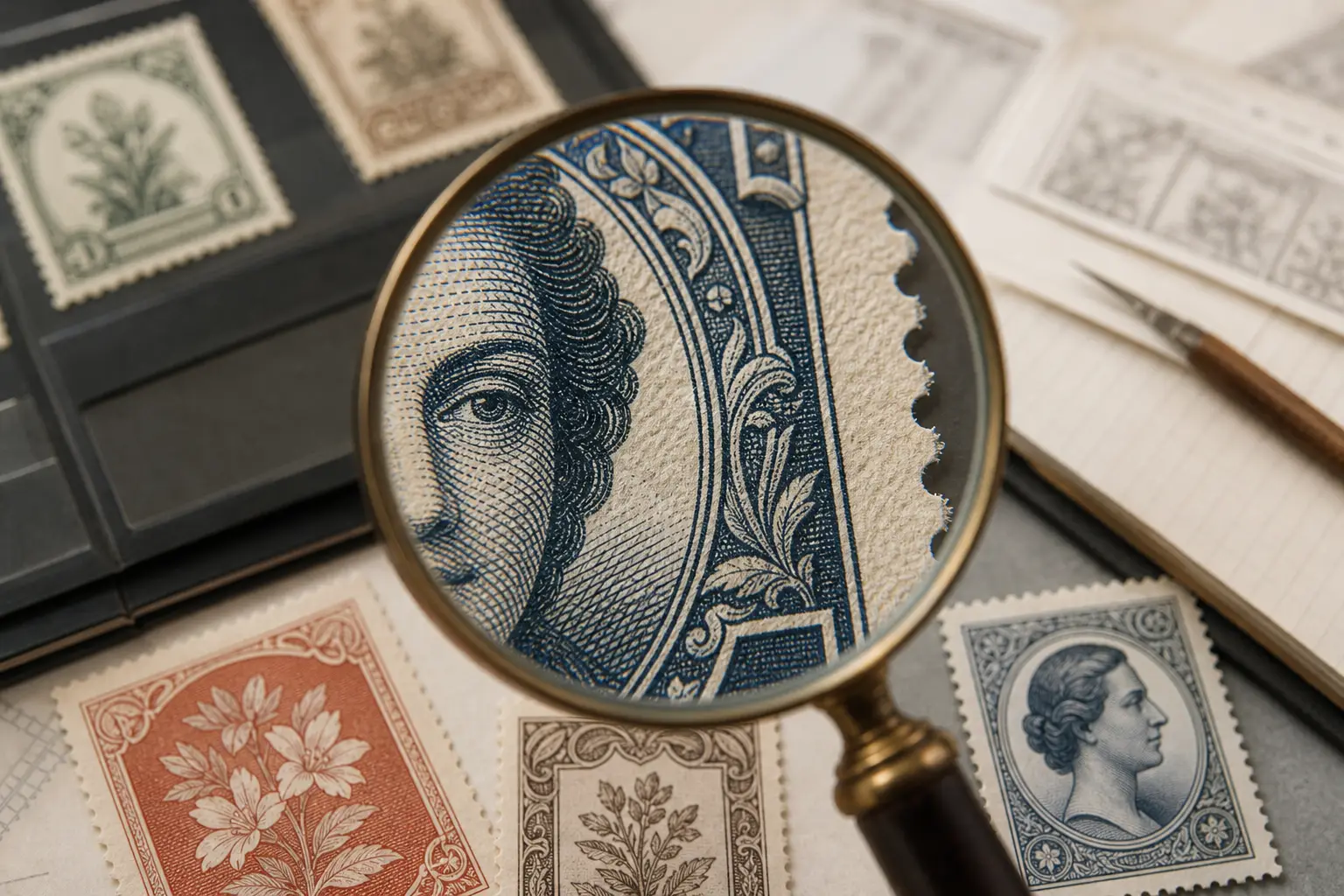
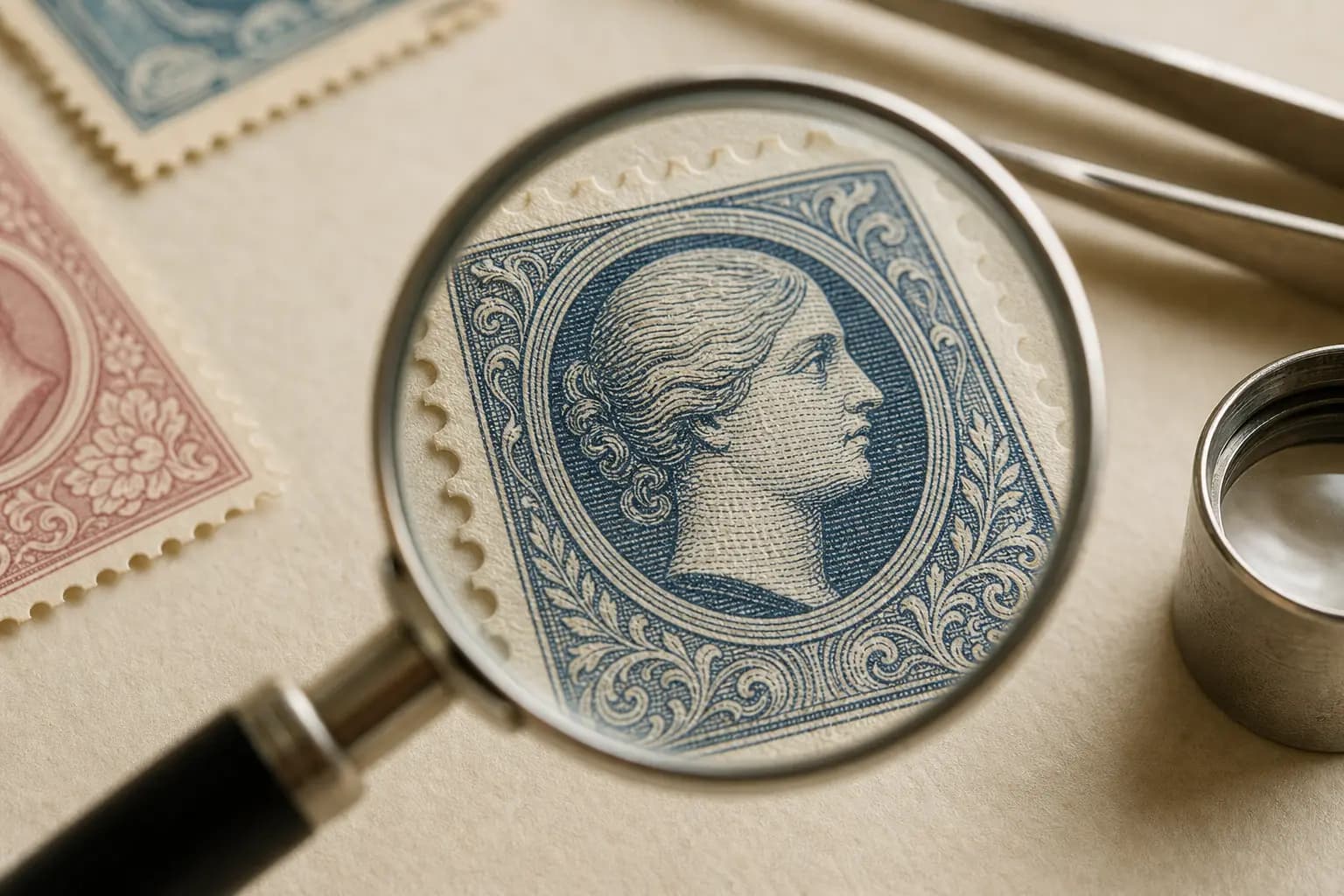
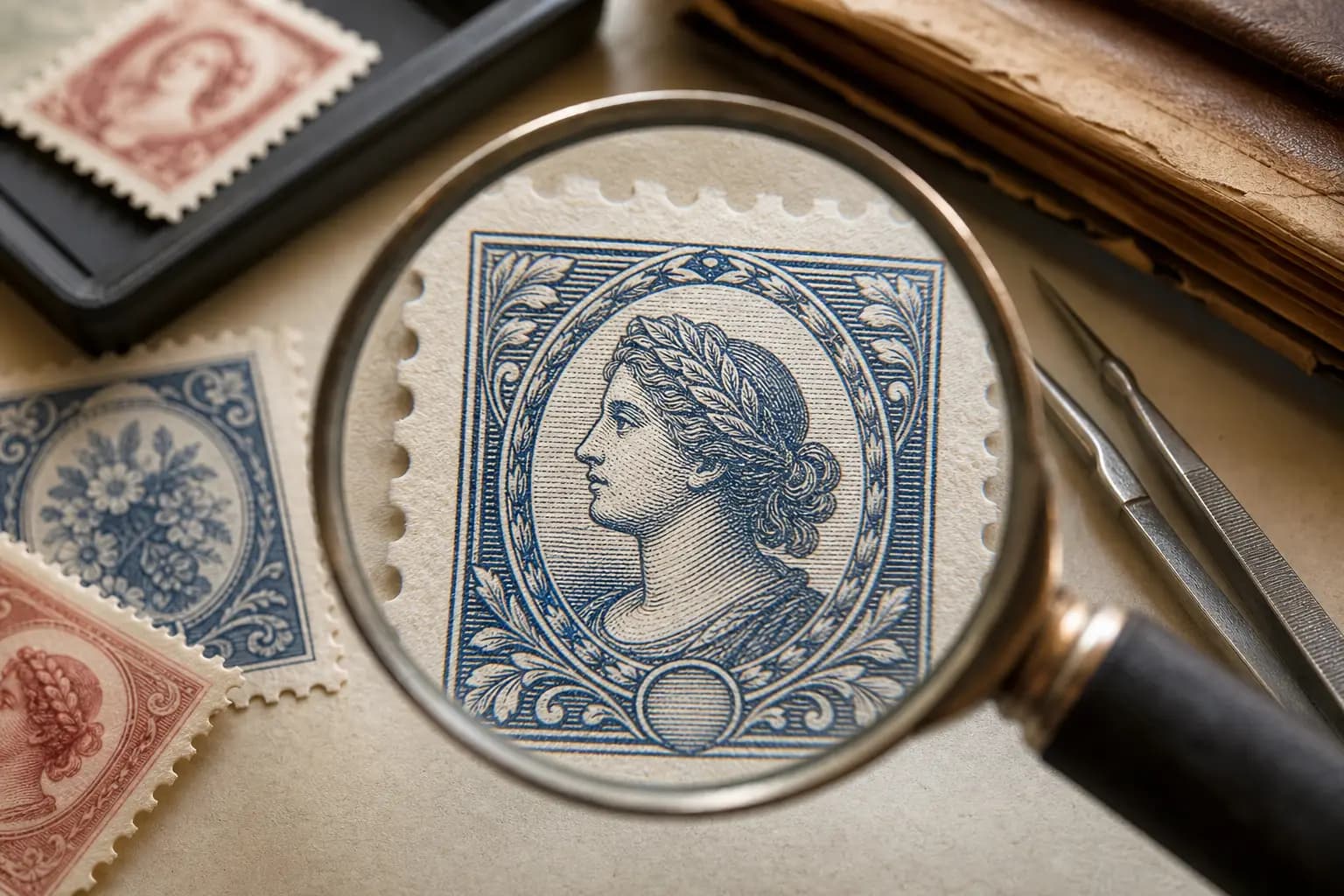
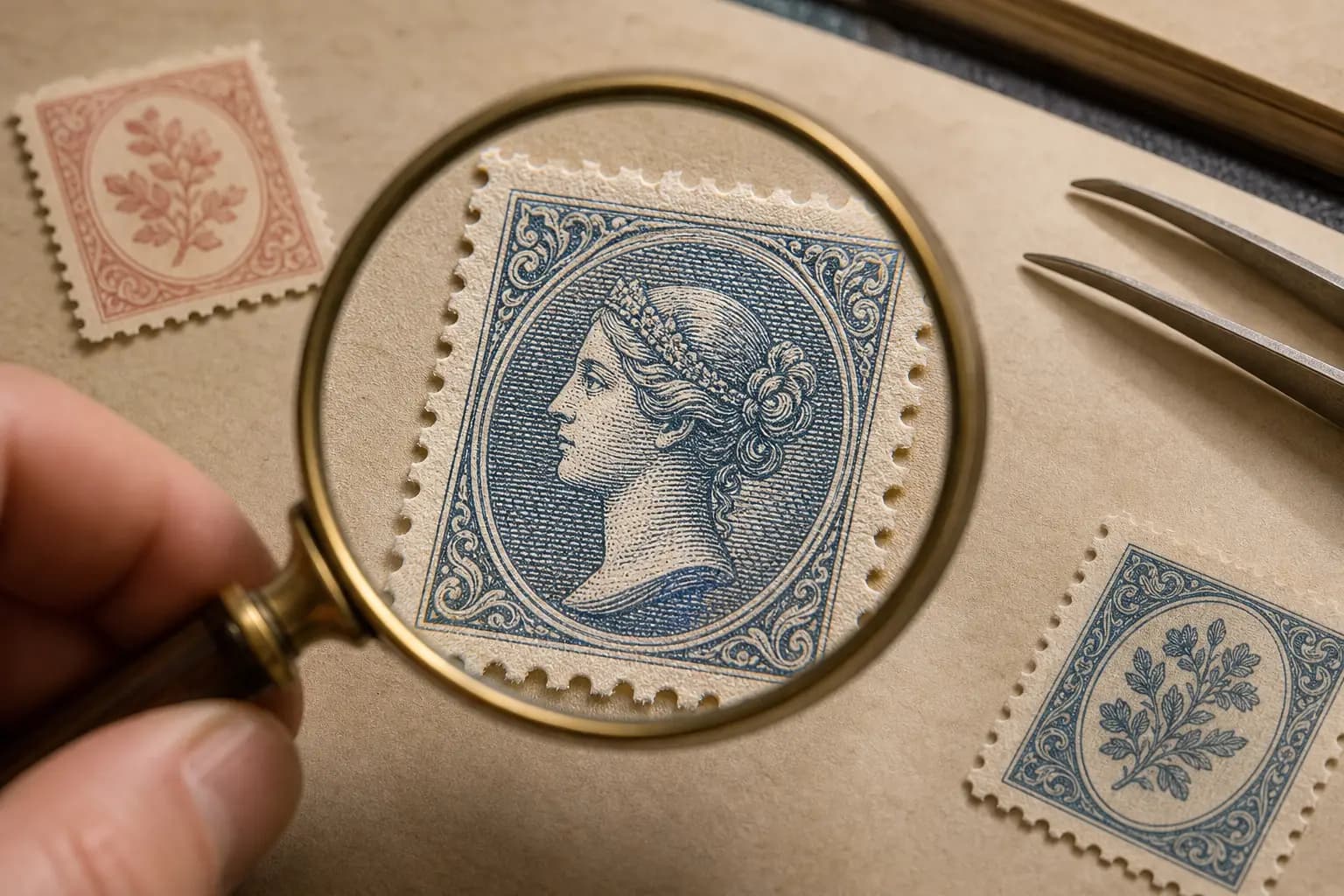
A practical first pass uses non-contact magnification and diffuse or oblique light. Look for the overall design structure, the texture of the ink, and any paper effects, but do not force a conclusion from softness, blur, or dot pattern alone. Those features can be misleading, especially on modern issues where processes may overlap.
How line-engraved intaglio usually shows itself
Line-engraved intaglio is a recess process in which ink transfers from deliberately incised lines. The APS notes that its designs are normally built from lines, hatching, cross-hatching, and stippling. Under magnification and oblique light, you may sometimes see raised ink, and the pressure of printing may leave debossing on the reverse.
Even here, the evidence is cumulative rather than absolute. Raised ink can help, but its presence or absence does not settle every case. A collector should compare the design’s line construction with the tactile and light-based clues, then confirm the result against production records when available. That approach is especially useful when a stamp has a detailed engraved appearance but also includes other printing elements.
Why gravure can be confusing at first glance
Gravure is also a recess process, but its tone is formed from screened cells rather than from the kind of line work associated with line-engraved intaglio. This is why a stamp can look shaded or textured and still not be the same process as an engraved intaglio issue. The APS specifically warns that screened or raised effects can appear in other processes too.
For that reason, do not diagnose gravure from one close-up dot pattern alone. Use magnification to compare the pattern with the whole design, then check whether the stamp’s appearance fits the production context. If the surface seems screened, treat that as one clue among several and keep searching for corroborating evidence.
What lithography can and cannot tell you
The Smithsonian National Postal Museum describes offset lithography as a planographic process, meaning the image is formed on a smooth surface rather than cut or etched into a plate. Oil-based ink adheres to the image area, and a rubber blanket transfers, or offsets, that image to paper. Modern lithography often combines separate process-color layers made from very fine dots.
This is where caution matters most. The museum notes that modern lithography can be sharp, so soft or blurred edges are not a dependable identifying rule. A dot pattern must be interpreted with other evidence because gravure and other processes can also show screened structures under magnification. If a stamp looks crisp, dotted, or color-layered, that may support lithography, but it should never be your only test.
Use paper and watermark evidence as part of the picture
Paper evidence can be just as important as print surface evidence. The APS explains that watermarks are security measures incorporated into stamp paper to deter counterfeiting, and they may appear as words, letters, symbols, or monograms formed by dies attached to the papermaking frame. Those dies create thin places in the paper, which is why a watermark may show as a lighter or darker form when viewed correctly.
The same design can exist on unwatermarked paper, or on paper with different watermarks, and that difference may define a separate catalog listing. Because of that, a watermark can be the only difference between a common stamp and a much scarcer variety. For identification work, hold paper to light first when appropriate, and for difficult cases use a proper watermark fluid or detector rather than risky improvisation.
A safe workflow for collectors
A good workflow starts with a clean, dry stamp on a stable surface. Use non-contact magnification and diffuse or oblique light to study the design, then note whether the strongest clues point toward line-engraved intaglio, gravure, letterpress, or lithography. After that, compare your observations with any available production records, because the APS emphasizes that records are part of the evidence, not an afterthought.
If you need a collection note or identification record, StampSnap can help you organise the clues you observed, but the identification should still be treated as a collector’s working conclusion rather than a certificate. Avoid household solvents and do not rely on touch alone for valuable material. The safest habit is to record what you can see, record what you cannot prove, and leave room for revision.
Common mistakes to avoid
The most common mistake is trying to identify a process from one feature, such as a dot pattern, a soft edge, or the appearance of raised ink. The supplied sources are clear that these are supporting features rather than single tests, and they can occur in more than one process. Another mistake is ignoring the possibility that a modern stamp combines more than one printing method.
A second frequent error is overusing contact methods or unsuitable chemicals. For printing study, stay with non-contact magnification and safe light. For watermark work, use the recommended tools and methods for the paper, and do not damage the stamp in an attempt to force a quick answer. Careful observation usually gives a better result than aggressive handling.
Frequently asked questions
Can I identify a stamp’s printing process from dots alone?
No. The supplied sources say dot patterns can help, but they must be interpreted with other evidence because gravure and other processes can also show screened structures.
Is a soft or blurred image proof of lithography?
No. The Smithsonian source says modern lithography can be sharp, so softness or blur is not a dependable identifying rule.
What is the safest way to study printing clues?
Use non-contact magnification and diffuse or oblique light, then compare the visible clues with the stamp’s production context and records.
How does line-engraved intaglio differ from gravure?
Line-engraved intaglio is built from incised lines, while gravure forms tone from screened cells. Similar-looking surface effects can still appear in other processes, so you need multiple clues.
Why do watermarks matter when identifying a stamp?
Watermarks are part of the paper and can be the only difference between two catalog-listed varieties, sometimes with major value differences. They should be checked carefully and safely.