The short answer
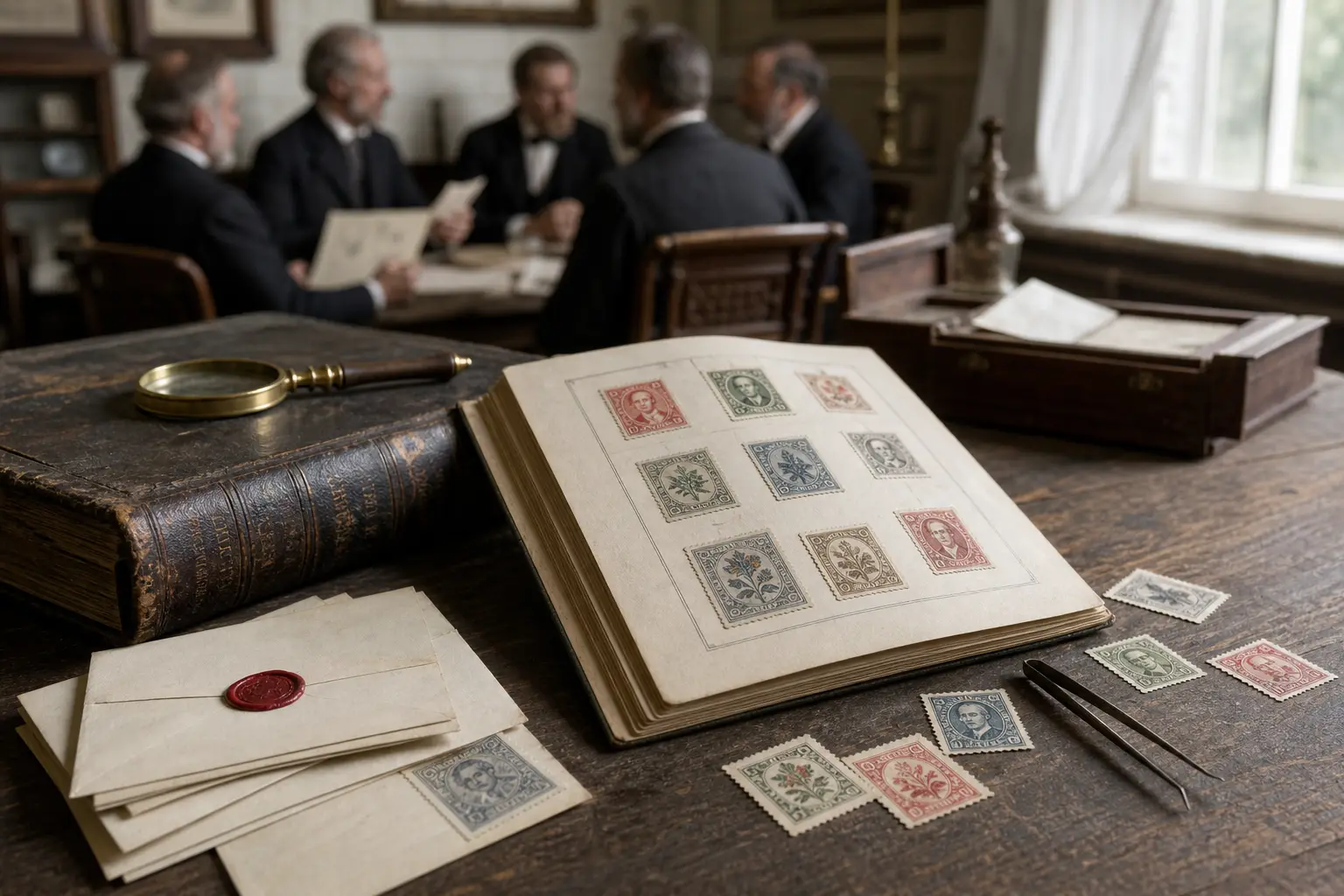
Philatelic clubs became organised networks when collectors moved beyond isolated collecting and started meeting to compare, discuss, and exchange stamps. According to the Smithsonian National Postal Museum, shared interests then encouraged local clubs and societies devoted to particular countries, periods, or subjects. In other words, the network grew from practical collecting needs first, and from formal organisation second.
The key historical point is that these groups were not only social gatherings. The Smithsonian account says societies published research, created reference material, and helped collectors share specialist knowledge. The American Philatelic Society adds a dated milestone: by 1886, several prominent collectors were discussing a national organisation, and a committee was formed in April 1886 to explore that idea. That shows organised philately becoming more structured by the late nineteenth century.
From local meetings to broader organisation
The Smithsonian National Postal Museum describes organised philately as beginning with collectors gathering to compare, discuss, and exchange stamps. That simple activity matters because it creates repeat contact, common standards of interest, and a reason to meet again. Once collectors know that others value the same material, a club can become more than a social circle: it can become a dependable network for learning and sharing.
The same source says local clubs and societies often formed around particular countries, periods, or subjects. That specialisation helped collectors find people with closely matched interests, which made discussion more useful and reference sharing more relevant. For a collector today, that is still the basic pattern: the more specific the interest, the more useful the network can be for identifying, sorting, and recording material. A tool such as StampSnap may help create a likely identification or collection record, but it should be treated as a working note, not a final authority.
Why clubs mattered beyond social contact
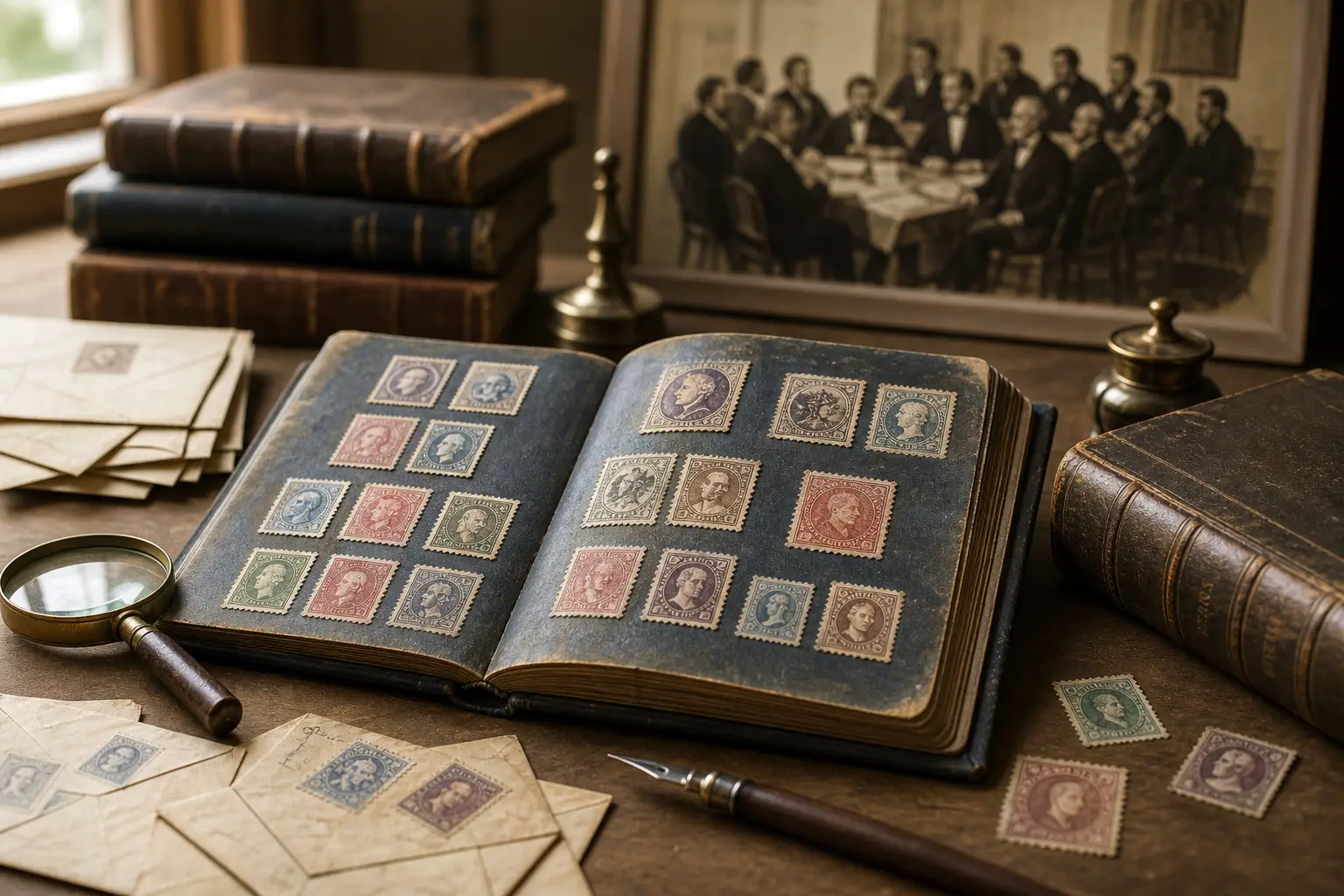
The Smithsonian source is especially useful because it explains what clubs and societies actually did. They published research, created reference material, and helped collectors share specialist knowledge. That means their value was educational as well as social. They became places where information could be checked, organised, and passed on rather than relying on memory alone.
This is also where the history of philately becomes more concrete. Research publication and reference-making are signs of an organised field, not just a hobby. When a group produces material that others can consult later, it preserves knowledge for collectors who were not present at the original meeting. The source also notes that exhibitions gave participants a structured way to present collections, learn from other displays, and compete for recognition, while making clear that not every organisation offered the same services.
A dated milestone in the United States
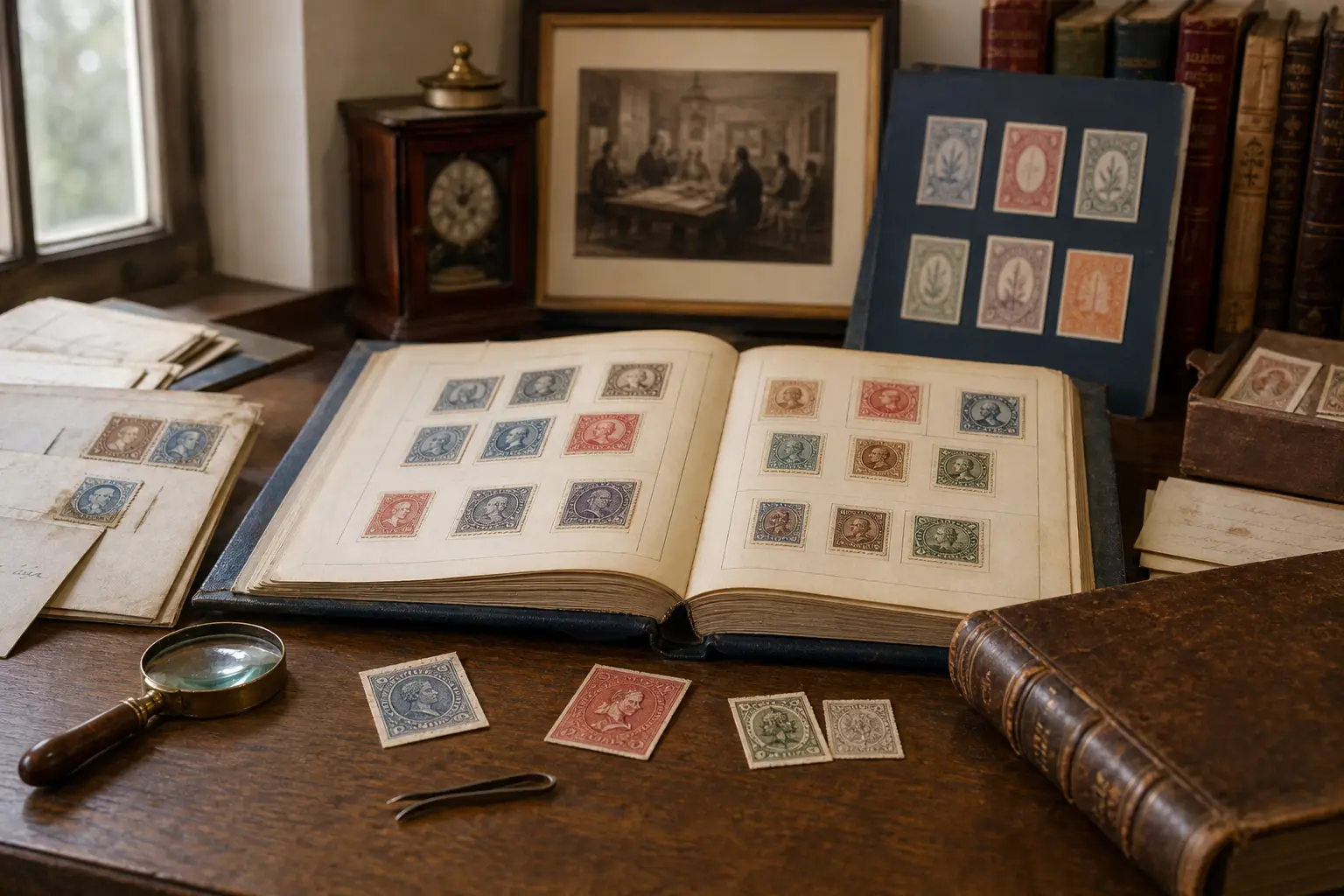
The American Philatelic Society history page provides a specific timeline for organised philately in the United States. It says that collecting grew steadily from a few enthusiasts in the 1850s, and that by the 1880s there were an estimated 25,000 stamp collectors in the United States. In 1886, several prominent collectors began discussing the possibility of a national organisation of philatelists.
The same source says that by April 1886 they had formed the Committee on National Organization and printed an announcement about the possible formation of a national organisation. It also records that on September 13, 1886, a committee in New York City adopted the name American Philatelic Association. For history-minded collectors, those dates are important because they show the shift from loose enthusiasm to formal structure.
What the early association shows about organised collecting
The APS history page also shows how a formal philatelic body could support collectors in practical ways. Its constitution said the objects of the association were to assist members in acquiring knowledge in regard to philately, to cultivate friendship among philatelists, and to enable them to affiliate with members of similar societies in other countries. That wording matters because it shows a bridge between local collecting and international exchange.
The early association also set up services that illustrate how organised networks functioned. The APS history page names an annual convention, a purchasing department, an exchange department for duplicate stamps, a library department, and a counterfeit detector. Those services were specific to that organisation and its era, but they help explain why clubs and societies became so influential: they made collecting easier to learn, easier to organise, and easier to connect across distances.
How to read this history as a collector
If you are trying to place a club, society, or exhibition in philatelic history, look first for signs of purpose. Does the group compare material, publish research, build reference material, or support exhibitions? Those are the activities named in the Smithsonian account, and they are stronger historical signals than a simple meeting list or club name. A society that records knowledge is usually part of a wider collecting network, not just a local group of enthusiasts.
For your own collection, it helps to keep these history clues separate from stamp identification. A club may help you learn how collectors described material in its time, but it does not by itself authenticate a stamp or replace expert examination. If you record a club card, society notice, exhibition label, or related item, note the date, name, and any stated purpose exactly as shown. That creates a safer, more useful collection record and makes later checking easier.
The lasting pattern
The lasting pattern is simple: philatelic clubs became organised networks when collectors turned shared interest into regular exchange, then into published knowledge, then into formal associations. The museum evidence shows the early social and educational functions. The APS history shows the move to named national organisation in 1886, with clear services and goals. Together, they show a hobby becoming a structured community.
That history still matters because many collectors today rely on the same basic habits: compare, discuss, record, and return to the group for help. The format has changed, but the logic has not. Whether you are researching club history, tracing a society’s role in your area, or simply organising what you own, the safest approach is still methodical: preserve context, note dates, and treat each source of information as one part of the larger record.
Frequently asked questions
When did organised philately begin to take shape?
The Smithsonian National Postal Museum traces organised philately to collectors gathering to compare, discuss, and exchange stamps, while the APS records a clear U.S. milestone in 1886 when collectors discussed and then formed a national organisation.
What did early philatelic societies do?
According to the Smithsonian source, they published research, created reference material, helped collectors share specialist knowledge, and supported exhibitions. The APS history also shows practical services such as exchange and library functions.
Were all stamp clubs the same?
No. The Smithsonian source specifically warns that not every organisation offered the same services. Clubs and societies varied by place, period, and purpose.
Why is 1886 important in American philatelic history?
The APS history page says collectors formed a Committee on National Organization in April 1886 and adopted the name American Philatelic Association on September 13, 1886.
Can a club or society identify a stamp for me?
A club can help you compare and discuss material, but it does not authenticate a stamp. Use club knowledge as support, and keep your own notes and records carefully.