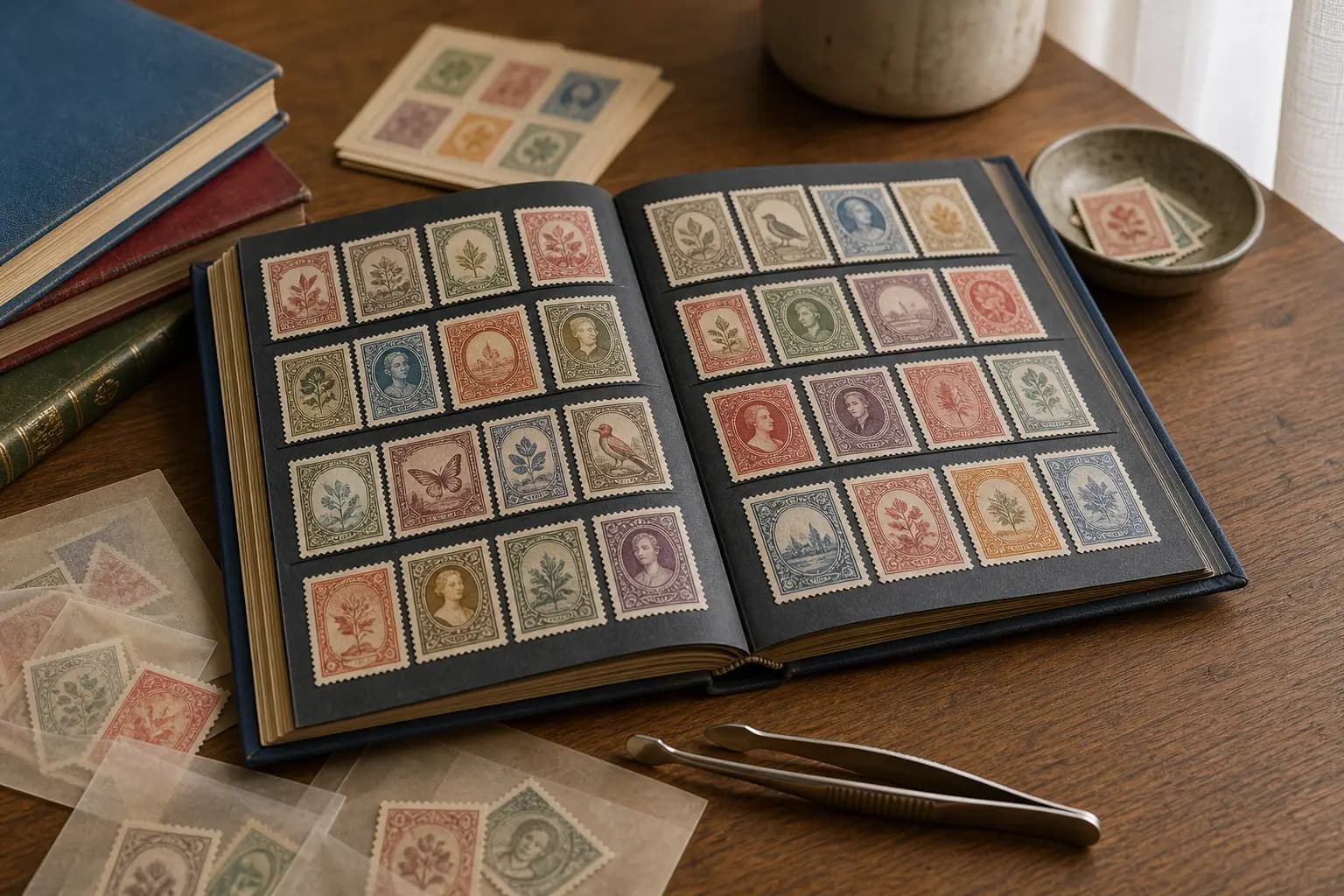
Start with a focus that feels enjoyable
The simplest answer is this: choose the kind of stamps you enjoy looking at and can realistically keep organized. There is no right or wrong way to collect, and stamp collecting can be shaped around your interests, time, space, and budget. Many collectors begin with a subject, place, or style that already matters to them, rather than trying to build a complete world collection from the start.
This matters because collecting should be sustainable. The American Philatelic Society notes that worldwide collecting can become unrealistic if you try to gather every stamp ever issued, while narrower goals often make the hobby more manageable. A good first choice is one that keeps you curious without making the collection feel like homework.
Choose among the main collecting styles
The main approaches described by the American Philatelic Society are worldwide collecting, country collecting, topical collecting, mint or used collecting, collecting by type, and collecting by other traits such as color or shape. Each style gives you a different way to organize what comes in the mail or what you find through dealers, clubs, and exchanges.
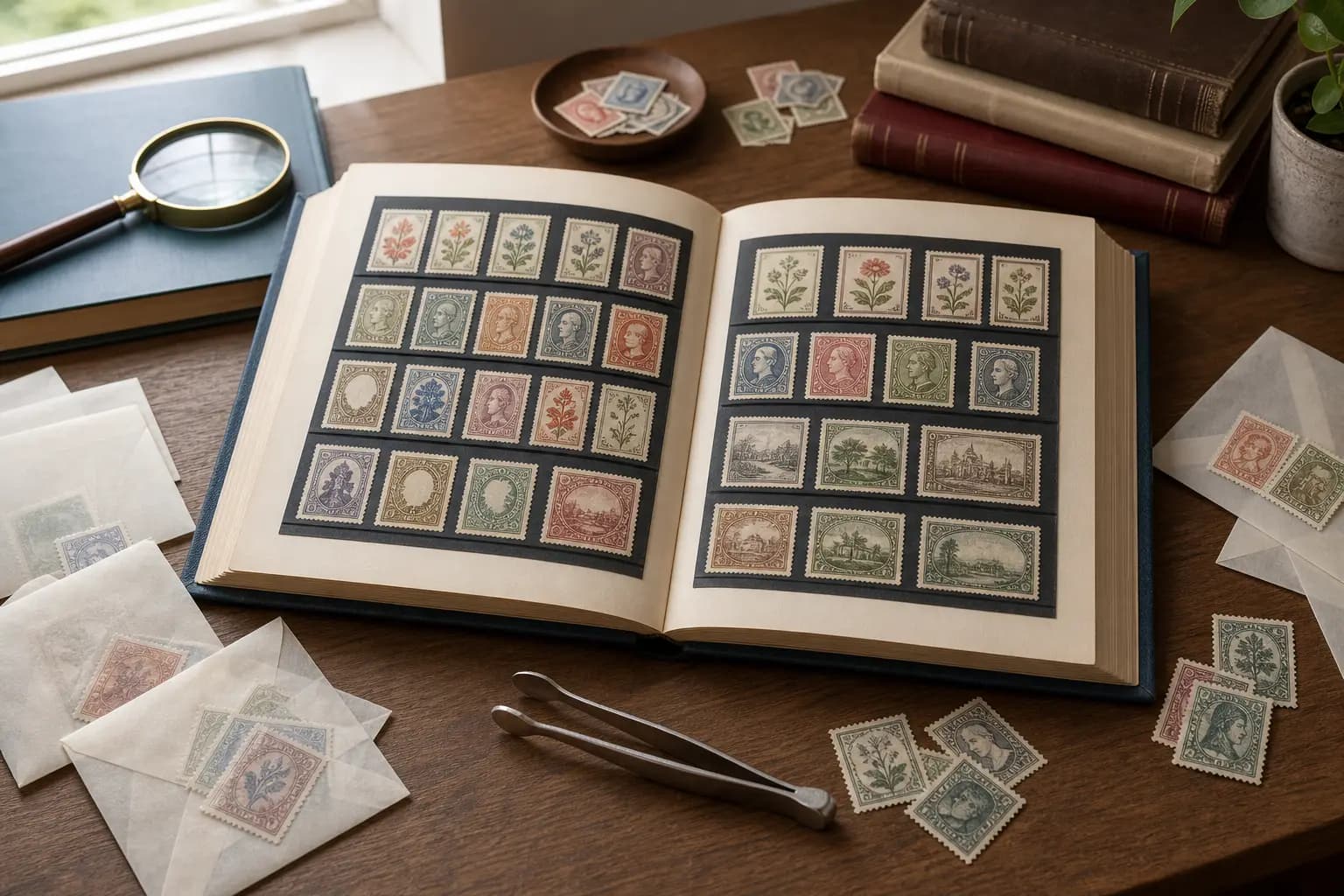
Worldwide collecting is broad and flexible, but it can become large very quickly. Country collecting is more focused and often begins with your home country, a place that interests you, or a country whose stamps you simply like. Topical collecting lets you build around themes such as animals, birds, flowers, ships, space, scouts, Disney, or sports, and it can also include postmarks, first day covers, and postal stationery when those match the topic.
Think about what you can realistically maintain
A specialty should fit the way you actually collect. If you have limited space or time, a broad worldwide approach may feel satisfying at first but become difficult to maintain. A narrower focus can help you sort, store, and learn more consistently. The APS also notes that some collectors narrow country collecting further, for example by limiting themselves to stamps issued since they were born.
Practical limits are not a weakness; they are part of good collecting. If you enjoy variety, a topical or mixed collection may suit you. If you prefer order and steady progress, one country or one service type may be easier to manage. The best specialty is the one you can continue without pressure.
Decide whether mint, used, or mixed fits your goals
Many collectors prefer either mint stamps or used stamps. Mint stamps have never been used and look the way they did when sold at the post office. Used stamps have already carried mail. The choice affects both the look of the collection and the kind of care it needs.
The APS notes that used stamps often cost less than mint stamps, although there are exceptions, and that used stamps do not require you to preserve original gum. That can make mounting simpler because inexpensive hinges may be used for album pages. Used stamps may also offer cancellations that some collectors find interesting. If you like the appearance of fresh stamps, mint may be more satisfying. If you like postal history clues and simpler handling, used may be the better fit.
Use tools and references to keep your choice organized
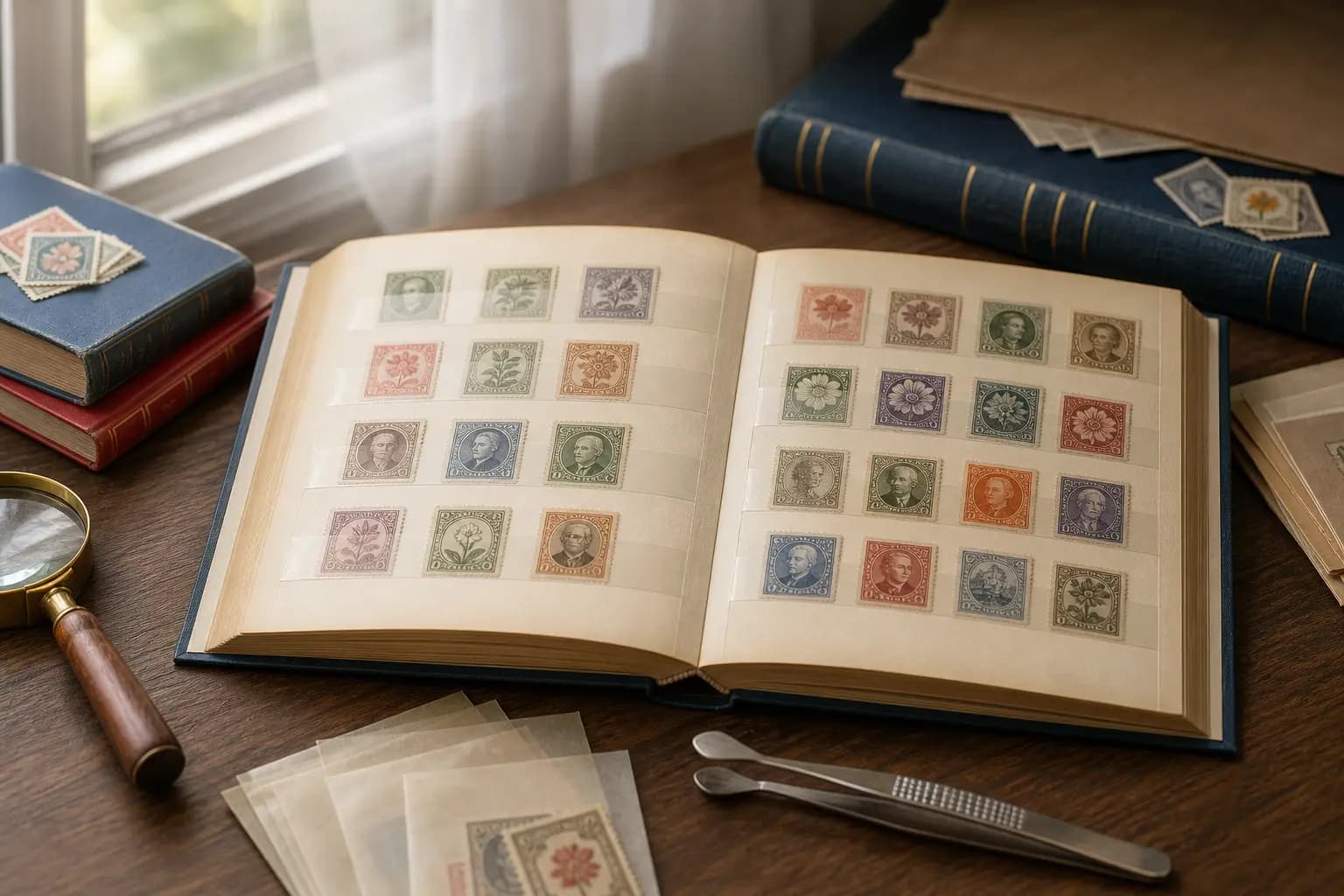
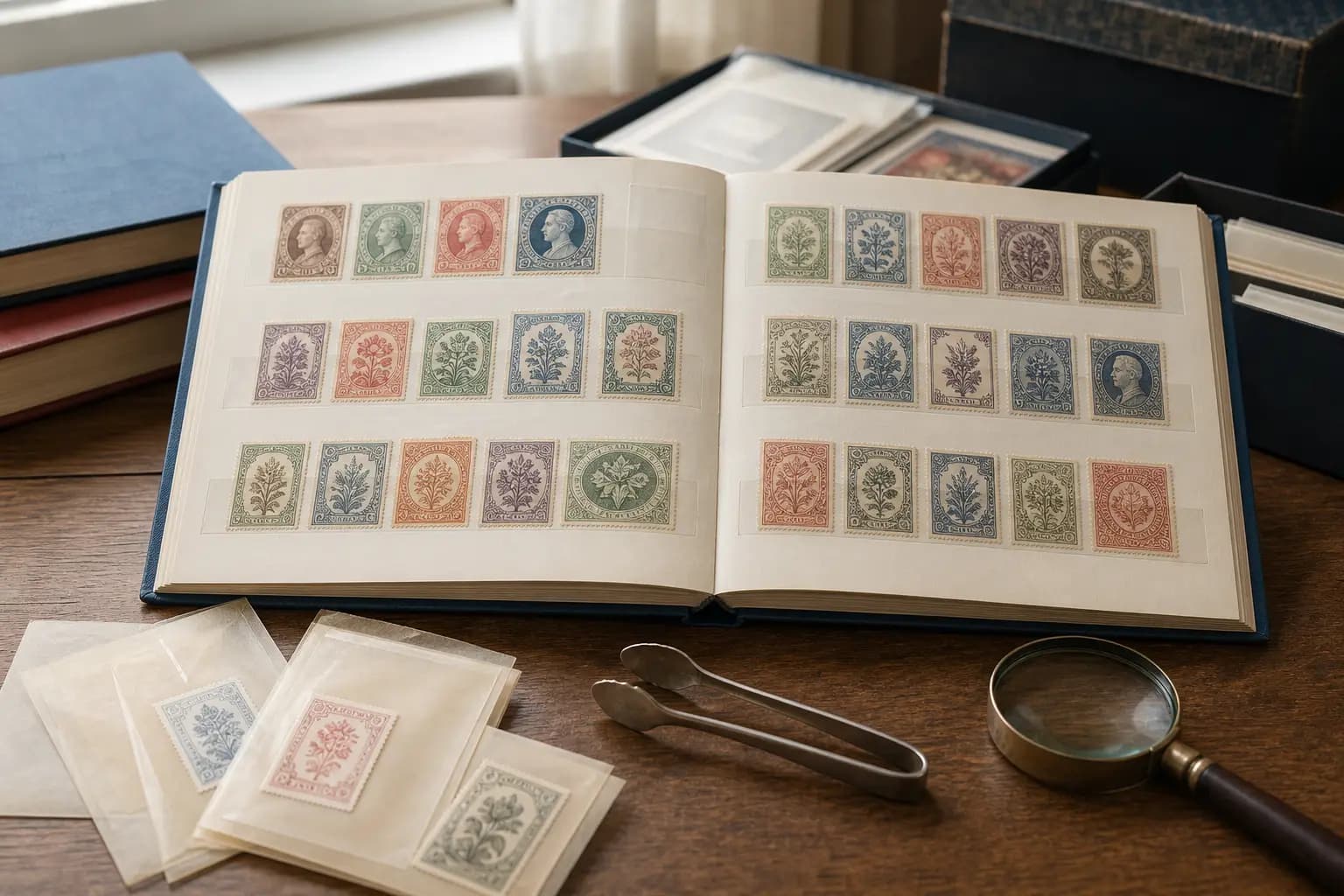
A small, careful toolkit can make any specialty easier to manage. The Smithsonian National Postal Museum recommends stamp tongs, an album, and a general reference book as a simple starting set. Tongs help you pick up loose stamps without direct finger contact, and a magnifying glass helps reveal small design details. A perforation gauge can also help distinguish look-alike issues by measuring perforations.
The museum also describes watermark detectors, color guides, and catalogs as specialist aids, while noting that catalogs can record details such as issue date and printing method. That is a useful reminder that a stamp should not be identified from one clue alone. Compare what you see with reliable references, and record uncertain items as possible matches rather than final identifications. StampSnap can help create a likely identification or collection record, but it should be treated as a working record, not an official determination.
Build a collecting plan you can actually enjoy
Once you have a direction, make the plan simple. Write down what counts for your collection and what does not. If you choose a topical collection, decide whether you want only stamps, or also postmarks, first day covers, and postal stationery. If you choose a country collection, decide whether you are aiming for all issues or only a time period that feels realistic.
A clear rule set prevents later confusion and helps you stay consistent when sorting new material. It also makes it easier to trade, buy, or inherit stamps without feeling overwhelmed. Collections grow better when they have boundaries, because the boundaries help you see progress.
Let your specialty change as you learn
Many collectors do not keep the same focus forever. You may begin with worldwide stamps, then move to a single country, then discover that service types or a topic such as birds or ships is more rewarding. That is normal. The hobby is flexible enough to allow changes as your knowledge grows.
If a collection stops being enjoyable, it is reasonable to narrow it, split it into smaller parts, or begin a new focus. Stamp collecting is meant to provide relaxation and learning, and the most useful specialty is the one that keeps those goals in balance. A collection that suits your habits today can always be adjusted later.
Frequently asked questions
What is the easiest way to choose a stamp collecting specialty?
Start with a theme, country, or stamp type that already interests you, then narrow it until it feels manageable for your time, space, and budget.
Is worldwide collecting a good first choice?
It can be a fun starting point, but the APS notes that collecting every stamp ever issued is probably unrealistic for most people, so many collectors eventually narrow their focus.
Should I collect mint stamps or used stamps?
Either can work. Mint stamps keep their original unused appearance, while used stamps often cost less and do not require gum preservation. Choose the style you enjoy handling and organizing.
Can I collect more than one type of material?
Yes. The APS says collectors may include stamps, covers, postal stationery, postmarks, and other related material, as long as the collecting plan is clear.
How can I avoid misidentifying stamps in a new specialty?
Use tongs, a magnifying glass, a perforation gauge, and reliable references. Compare physical clues with catalogs, and treat uncertain matches as provisional rather than final.