The safest answer: wait until the stamp is fully dry
If you have soaked a stamp, the most important rule is simple: do not handle it like a dry stamp until it is fully dry. Wet stamps are easier to tear, stretch, curl, and mark, so the safest approach is to let the stamp release naturally from the paper, then move it with care and let it dry flat before any sorting, mounting, or album work.
The American Philatelic Society advises collectors to be patient and not pull a stamp free before it is ready, because that can tear the stamp. It also recommends removing soaked stamps carefully and leaving them to dry overnight. If a stamp is still damp, treat it as fragile material, not as a finished collector item ready for tongs, hinges, or storage in an album.
Decide first whether soaking is the right choice
Before you soak anything, decide whether the stamp should be removed at all. Sometimes the whole envelope is worth keeping because of a special cancel, a message, or an image on the cover. In that case, preserving the entire envelope is often the safer collector choice than trying to separate the stamp.
The APS notes that most stamps can be soaked from envelopes, but many U.S. self-adhesives issued in 2004 or later may not soak easily, if at all. Its FAQ adds that most current U.S. self-adhesives do not simply soak off because their backing is oil based rather than water based. That means a soaked stamp is not always the right starting point, and forcing the issue can damage both the stamp and the paper.
Let the stamp release on its own, then rinse gently
When soaking is appropriate, place the cut envelope section stamp side up in lukewarm water, not hot water, and do not overcrowd the bowl. The APS recommends separating brightly coloured envelopes first, because the colour may bleed, and changing the water after a few batches if you are soaking many items. These small steps help reduce staining and contamination.
Once the stamp floats free, lift it out gently and rinse the back in fresh water to remove remaining gum. Do not try to pull the stamp away from the paper before it is ready. If you are using tongs, the key point is that they are for dry stamps; a wet stamp is more easily damaged than a dry one, so keep wet-handling to the minimum needed for safe transfer.
Dry flat to prevent curling and sticking
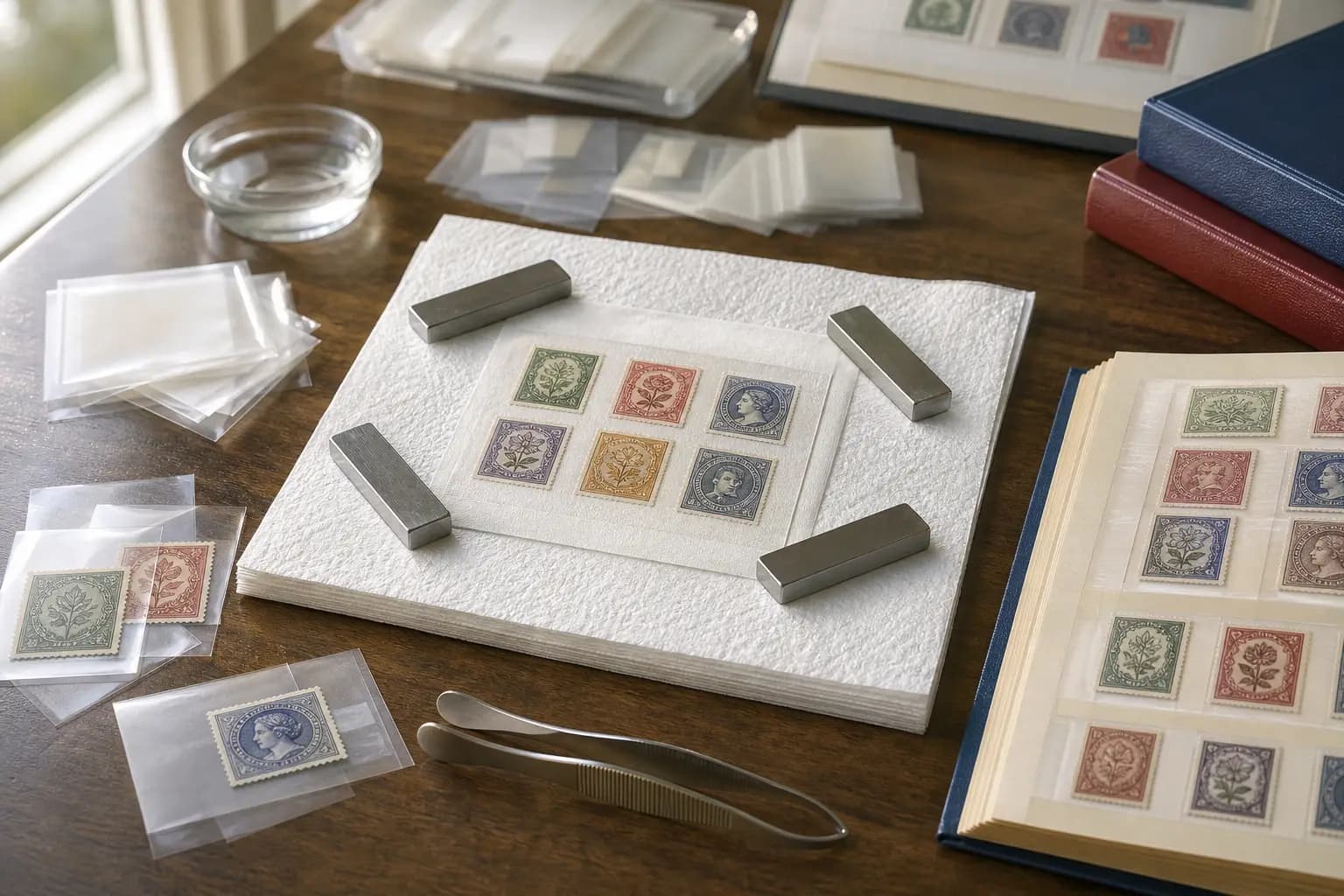
After rinsing, place the stamp between paper towels and use a book or similar flat weight on top if needed to help prevent curling. Leave it to dry overnight or until fully dry. This is a preservation step, not a shortcut: drying too soon, stacking damp stamps together, or moving them repeatedly can leave bends, wrinkles, or sticking points that are hard to correct later.
For collectors who are sorting many stamps at once, keep the drying area clean and separate from any finished material. A stamp that feels dry on the front can still retain moisture at the back or edges, so do not rush it into a stock book or album page. If you use StampSnap to create a likely identification or collection record, make that record only after the stamp is dry and stable enough to photograph or compare safely.
Sort only dry stamps and keep damaged items separate
Once a stamp is fully dry, you can sort it by country, topic, or service type such as airmail, special delivery, postage due, parcel post, or revenue. The APS also recommends choosing the best copy when you have duplicates, usually the one that is well centred and lightly cancelled. Sorting is easier and safer when you work only with dry material, because damp stamps can stick to surfaces or to each other.
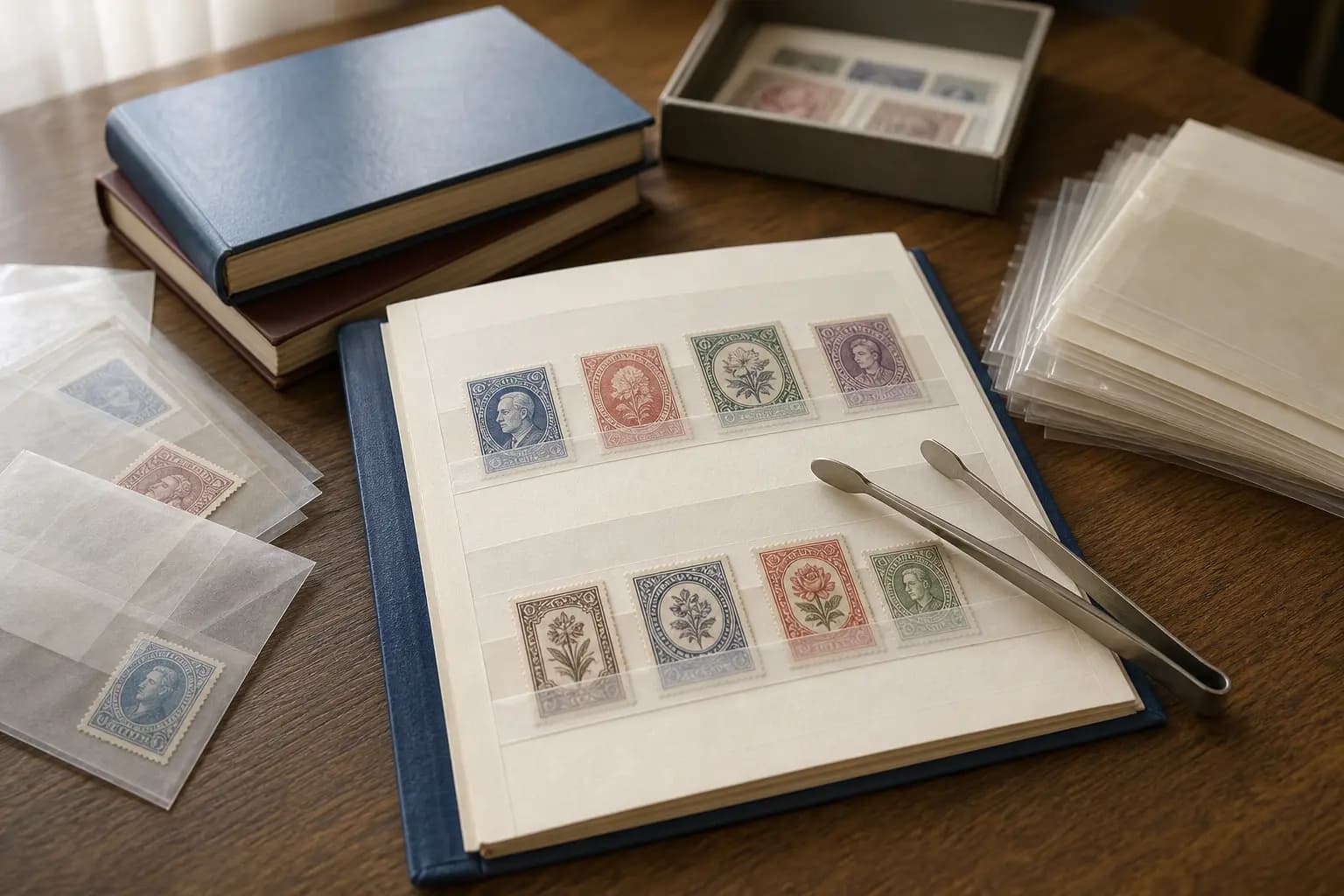
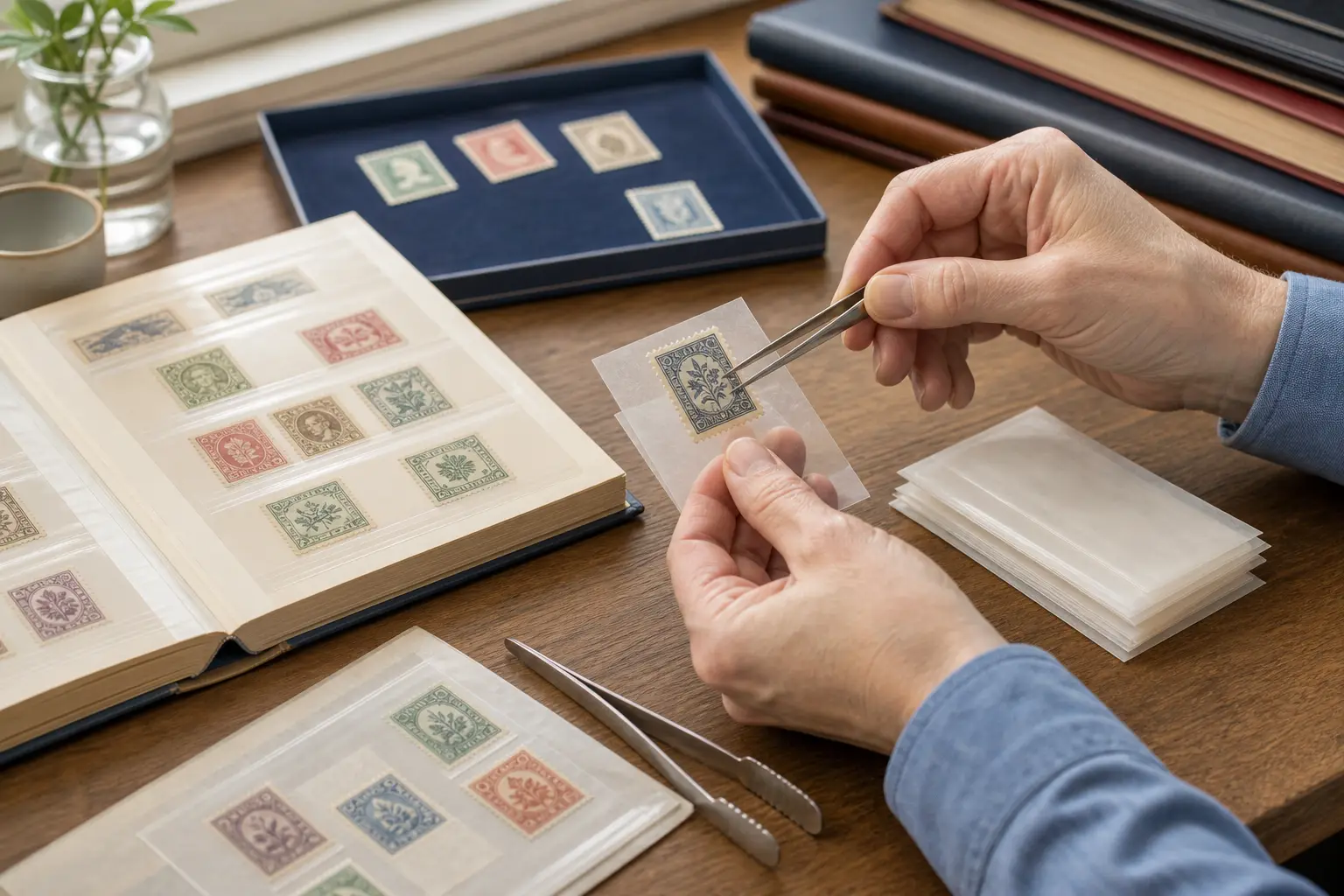
If a stamp is badly damaged, set it aside rather than forcing it into a collection, unless it is valuable or difficult to replace. That advice is conservative and practical: a damaged stamp can still belong in a reference group or study set, but it should not be handled roughly just to complete a page. Keep dry stamps in glassine envelopes until you are ready to mount them.
Use album materials that protect, not harm
For storage, the APS recommends albums or stock books, and it specifically warns against sticky photo album pages because they can damage stamps. If you make your own pages, use acid-free paper. This matters because preservation is not only about removing a stamp safely; it is also about keeping it stable after removal, especially if you are building a long-term collection.
When mounting dry stamps in an album, use a peelable hinge or a stamp mount. The APS warns against tape or glue because they can decrease value and may damage the stamp if removal is attempted later. Hinges and mounts are designed for collector use, and the right choice depends on how you want to organise the page and how much reversibility you want later.
Use the right tools, and use them at the right time
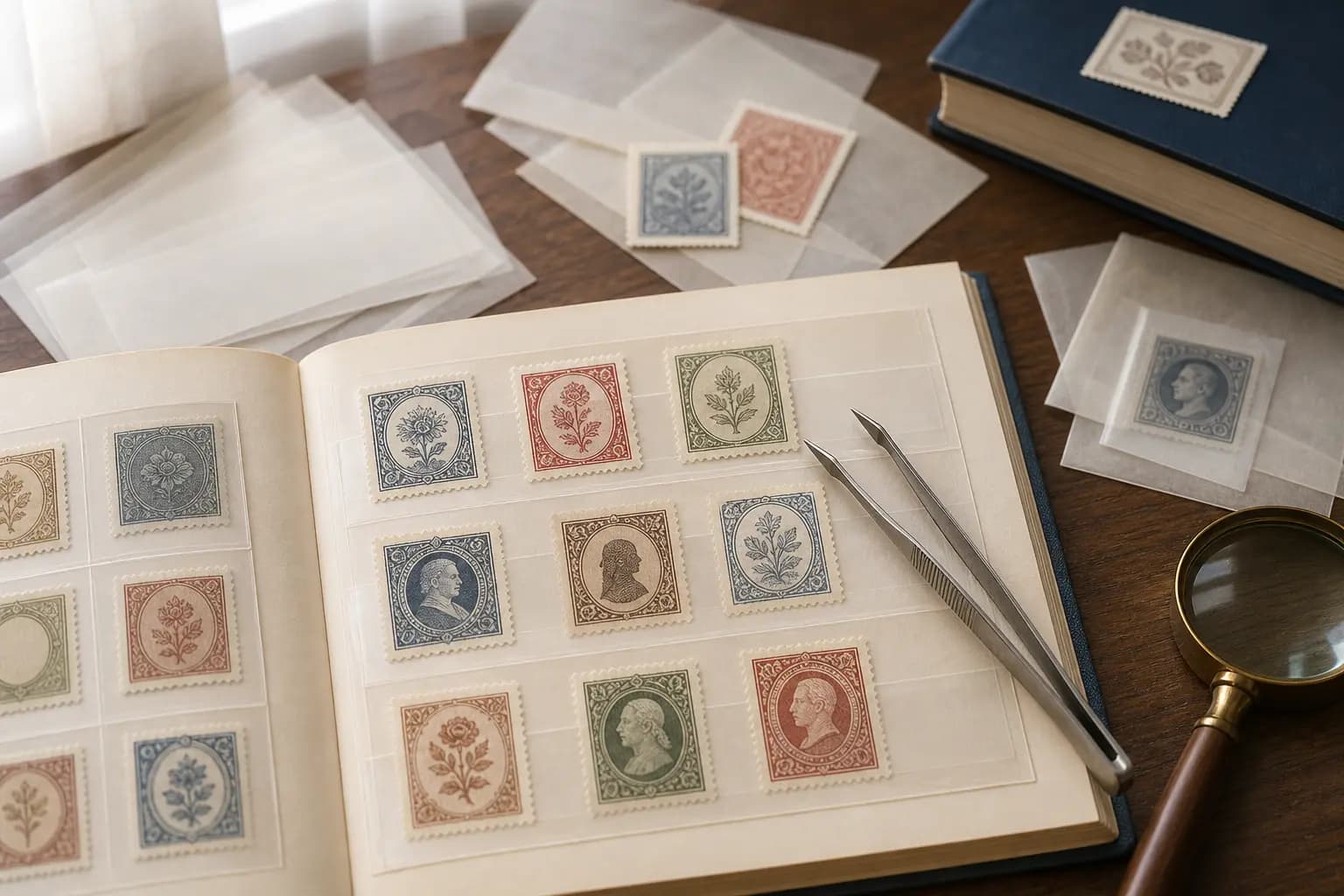
For dry stamps, the APS recommends stamp tongs to reduce skin-oil damage, because even carefully washed hands can leave oil that harms the stamp. It also recommends a magnifying glass with clear, distortion-free viewing, ideally around 5x to 10x magnification, so you can examine details without touching the stamp repeatedly. A perforation gauge can help when you need to compare perforation counts instead of guessing by eye.
These tools are most useful when the stamp is dry, flat, and stable. That is the conservative preservation principle behind every step: minimise touch, avoid heat, avoid sticky materials, and let the stamp reach a fully dry state before detailed examination. If you are uncertain whether the item should be soaked, mounted, or preserved on cover, choose the least invasive option first.
Frequently asked questions
Can I use tongs on a wet stamp?
No. The APS says tongs are for handling dry stamps, and a wet stamp is more easily damaged than a dry one. Wait until the stamp is fully dry before using tongs.
How long should a soaked stamp dry?
The APS advises leaving soaked stamps to dry overnight. If the stamp still feels damp, give it more time before sorting, mounting, or placing it in storage.
Should I soak every stamp removed from an envelope?
No. First decide whether you want to keep the envelope intact, especially if it has a special cancel or image. Also, many modern U.S. self-adhesives do not soak off easily because their backing is oil based.
What is the safest way to store dry stamps after soaking?
Keep fully dry stamps in glassine envelopes until you are ready to mount them, or place them in an album or stock book using hinges or mounts rather than tape or glue.