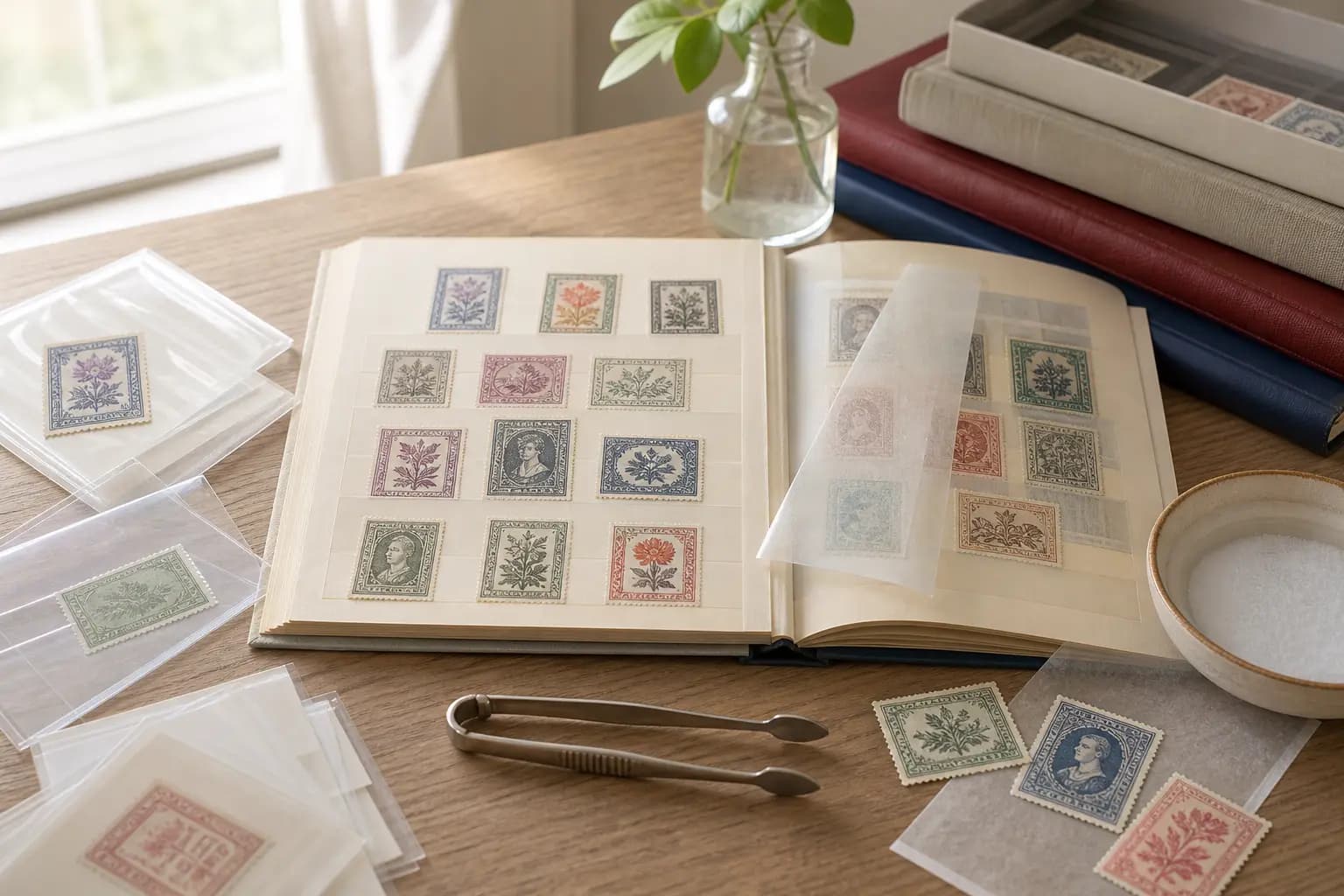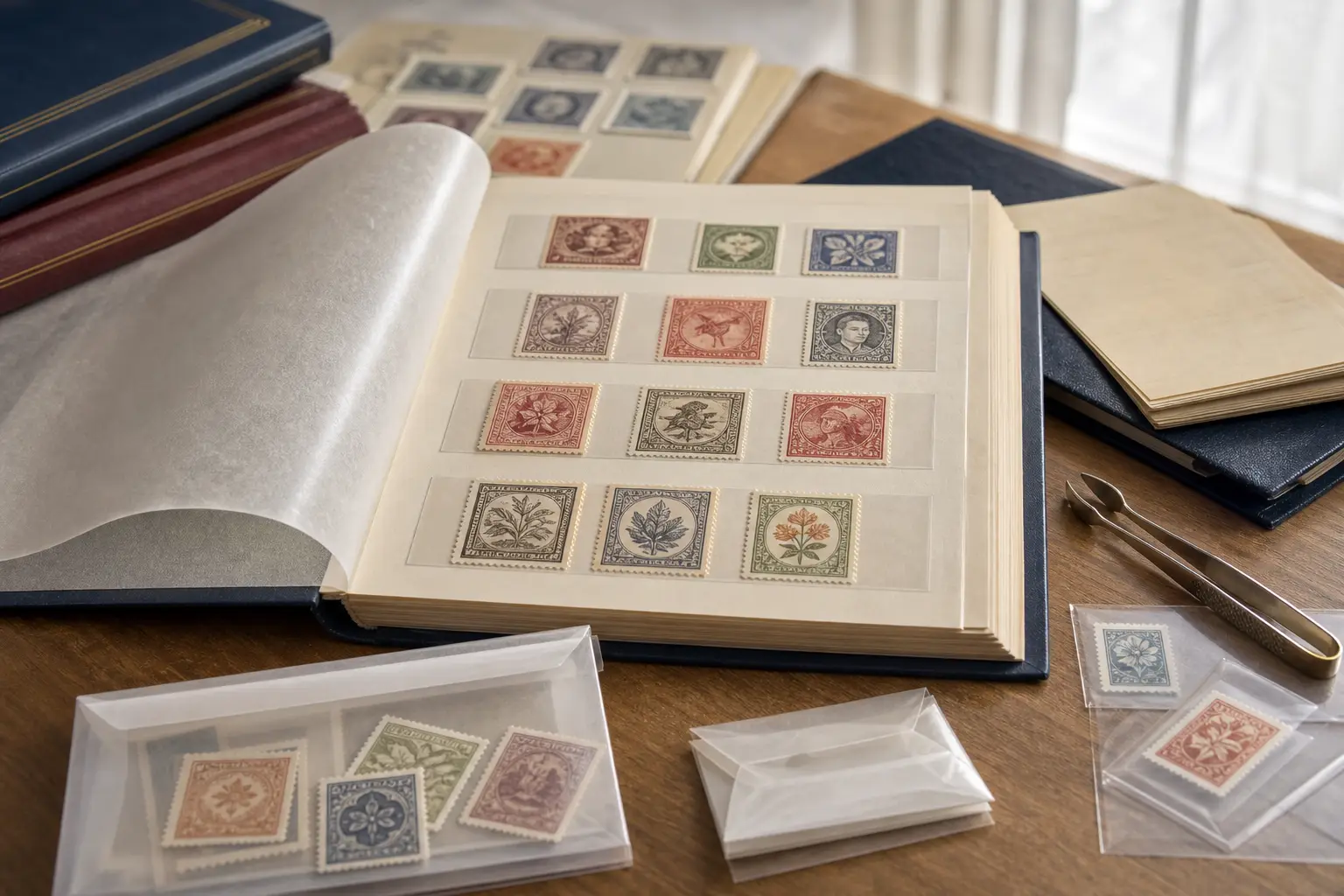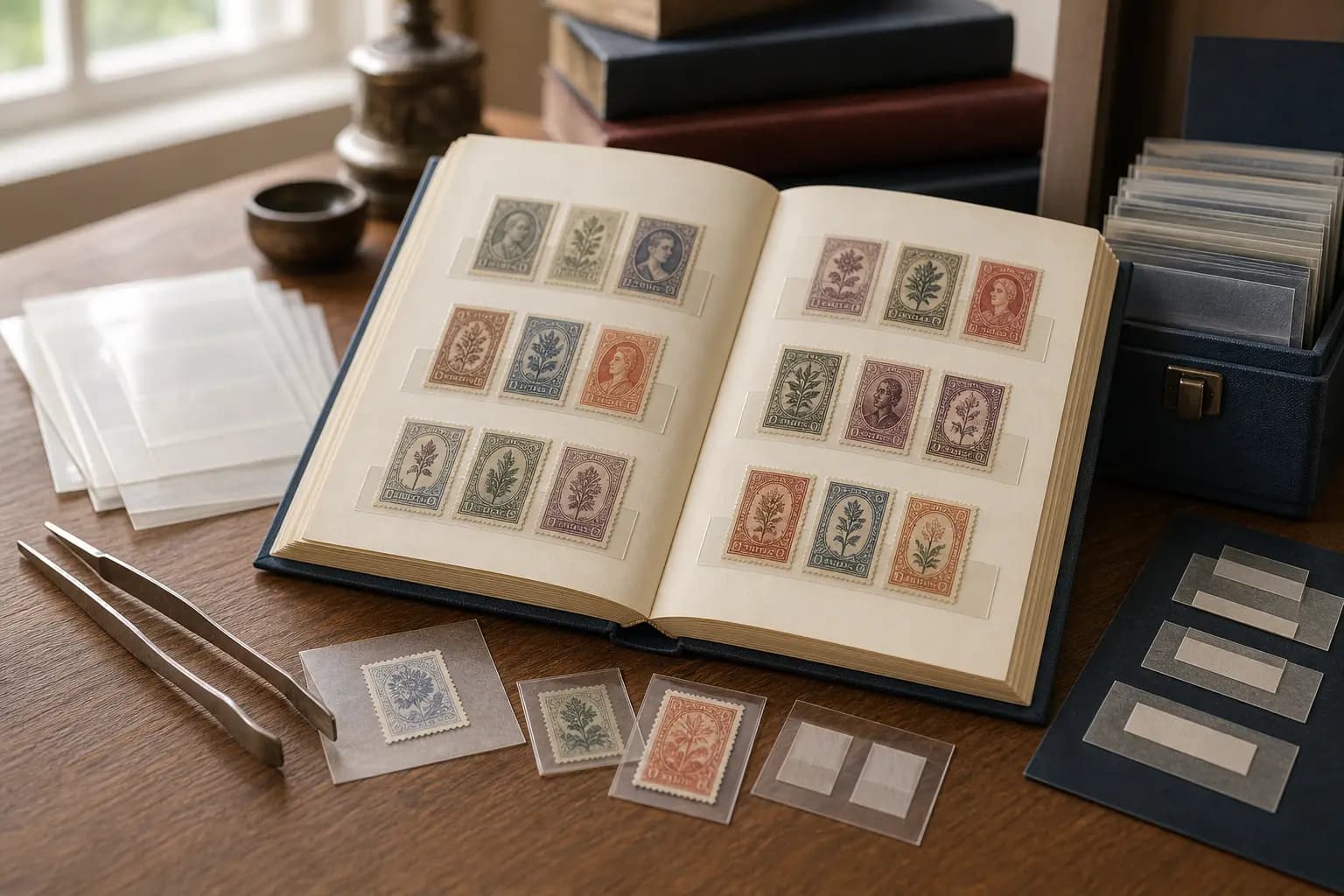
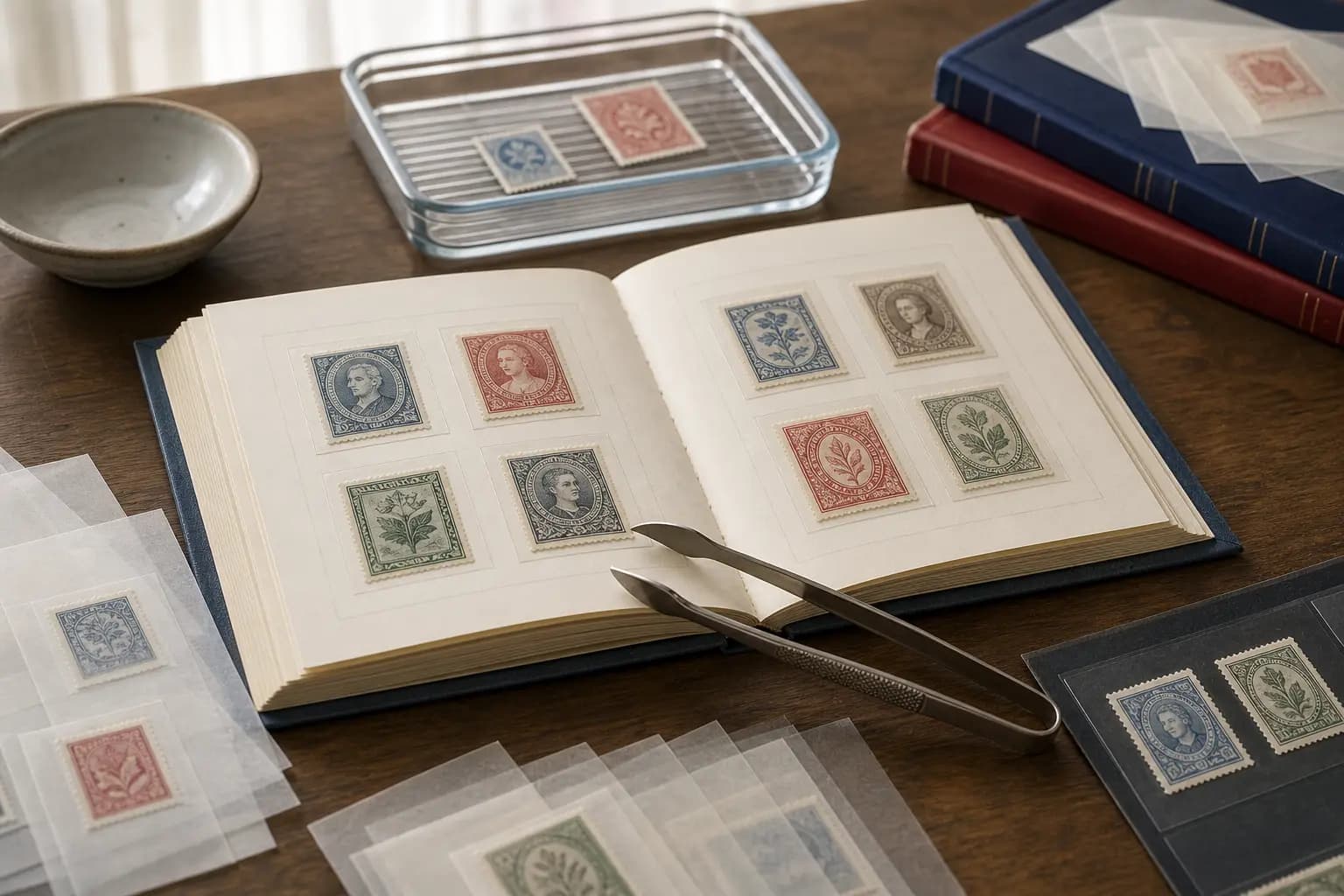
The safest rule: match your handling to the stamp’s condition
If you want to avoid damage, start by asking whether the stamp is dry, damp, wet, or still attached to paper. Dry, loose stamps can be handled carefully with tools, but wet or softened stamps need a much gentler approach because they tear and curl more easily. The safest method is to slow down, separate the material by condition, and only move to the next step when the stamp is ready.
For dry stamps, collectors are advised to handle them as little as possible and use stamp tongs rather than fingers. The American Philatelic Society notes that skin oil can damage stamps, even when hands are clean, and that tongs are designed with a smooth gripping surface for stamps. For wet stamps, the same source warns that they are more easily damaged than dry ones, so forceful lifting, pinching, or repeated repositioning should be avoided.
How to handle loose dry stamps without causing marks
Dry stamps are the easiest to work with, but they still deserve careful treatment. Use stamp tongs to pick up a loose stamp by one edge with a light grip, and keep the stamp over a clean, flat surface so it cannot fall or bend. The goal is not speed; the goal is to reduce contact and preserve condition for storage, identification, or later mounting.
A magnifying glass also helps you inspect dry stamps without touching them repeatedly. The American Philatelic Society recommends a lens that shows details clearly and without distortion, and suggests 5x to 10x magnification. This is useful when you need to compare similar stamps, check perforations, or look for small differences before you place anything into an album or stock book.
What to do with wet, damp, or softened stamps
Wet stamps should be treated as fragile material, not as finished collectibles ready for normal handling. If you have soaked stamps, let them float free from the paper on their own rather than pulling them loose early, because tearing is more likely if they are forced. After removal, the back can be rinsed gently in fresh water to help remove gum, but the stamp should still be moved as little as possible while it is soft.
The safest drying method described by the American Philatelic Society is to place the stamps between paper towels and put a book on top to help prevent curling, then leave them to dry overnight. Do not use hot water during soaking, because it may damage the stamps. Also separate brightly colored envelopes before soaking, since their color may bleed. One practical rule is simple: use tongs for dry stamps, but avoid trying to manipulate a wet stamp as if it were dry.
When you should not soak, pull, or rush a stamp
Not every stamp should be removed from its envelope, and not every envelope should be broken apart for the sake of the single stamp. If a special cancel, image, or other postal feature on the envelope matters to you, the safer choice is to keep the entire envelope in your collection. That preserves context and avoids unnecessary handling of the stamp itself.
The same caution applies to self-adhesive stamps. The American Philatelic Society notes that many U.S. self-adhesives issued in 2004 or later will not soak easily, if at all, and the FAQ explains that most current U.S. self-adhesives use an oil-based backing rather than a water-based one. If a stamp will not release easily, do not force it. Identify the type first, then use an appropriate method for that backing rather than guessing.
How to sort stamps safely before storage
Once stamps are dry, sorting becomes much easier and much safer. You can organise by country, topic, or service such as airmail, special delivery, postage due, parcel post, or revenue. If you have duplicates, select the best copy by condition and keep the others for trading or reserve material. Damaged stamps can be removed from your working set unless they are unusual or difficult to replace.
This is also the point where reference tools matter. A stamp catalogue can help identify issue dates, descriptions, how a stamp was printed, and listed values in used and unused condition. A perforation gauge can help distinguish similar stamps that differ only in perforation count, and StampSnap can be used to create a likely identification or collection record as you compare your notes against a reference source. None of these tools replaces care with the stamp itself; they support it.
Storage choices that protect stamps after handling
After sorting, place stamps in glassine envelopes until you are ready to mount them, or store them in a proper album or stock book. The American Philatelic Society recommends albums with acid-free paper and warns against sticky photo-album pages, which can damage stamps. Stock books are also useful because they let you organise material without immediately committing to a final page layout.
To mount stamps, use hinges or mounts rather than tape or glue. Tape and glue can reduce value and may damage the stamp if you later try to remove it. If you are using hinges, follow the specific, careful method described by the American Philatelic Society, and only do this once the stamp is fully dry. The preservation rule is consistent: keep handling minimal, keep materials suitable, and never use a shortcut that becomes permanent damage.
A simple preservation routine for collectors
A reliable routine is to separate stamps by condition, dry them fully, inspect them with minimal handling, then store them in a protective format. Dry stamps can be handled with tongs, wet stamps should be left to settle and dry without force, and any item still attached to paper should be evaluated before removal. That sequence prevents the most common mistakes: tearing, curling, staining, and accidental adhesive damage.
If you remember only one preservation principle, make it this: the stamp’s condition determines the tool. Dry material can be moved with tongs, soft material should be supported and left alone, and storage should wait until the stamp is stable. That method is conservative, repeatable, and suitable whether you collect a few modern stamps or build a broader reference collection over time.
Frequently asked questions
Should I use tongs on a wet stamp?
No. Tongs are recommended for dry stamps, while wet stamps are more easily damaged and should be handled as little as possible until they are fully dry.
Can I pull a stamp off the paper as soon as it starts to loosen?
No. Wait until it floats free on its own. Pulling early can tear the stamp or damage the paper fibres.
What is the safest way to dry soaked stamps?
Place them between paper towels and put a book on top to help prevent curling, then leave them to dry overnight.
Should I always remove stamps from envelopes?
No. If the envelope has a special cancel or image you want to keep, it is safer to preserve the entire envelope rather than remove the stamp.
What should I use instead of tape or glue when mounting stamps?
Use hinges or mounts. Tape and glue can damage the stamp and make later removal harmful.