Quick answer
A stamp is likely self-adhesive if it was made to stick without traditional water-activated gum, but you should not assume it will soak off safely. The American Philatelic Society notes that until 2007 almost all United States self-adhesives could be removed by soaking in water for about 20 minutes, while most current U.S. self-adhesives will not simply soak off because the backing is oil based rather than water based.
That means the safest identification approach is to inspect the stamp first, then decide how to handle it. If you are unsure, treat it as a possible self-adhesive and avoid routine soaking until you have more evidence from a catalog, a careful visual check, or a record made in your collection notes.
What self-adhesive means in practice
In collector terms, the key issue is not only whether the stamp sticks, but what is on the back and how it was intended to be removed. The APS FAQ distinguishes older U.S. self-adhesives that could usually be removed in water from more recent ones that use an oil-based backing. That difference matters because the removal method affects both identification and preservation.
A self-adhesive stamp may look ordinary from the front, especially if it shares a design with a gummed issue. For that reason, the back, the issue date, and the description in a stamp catalog can be more useful than appearance alone. The APS tools guidance also notes that a catalog can show the date issued, how the stamp was printed, and the value in used and unused condition, which helps narrow down what you have.
Safe clues to check before handling
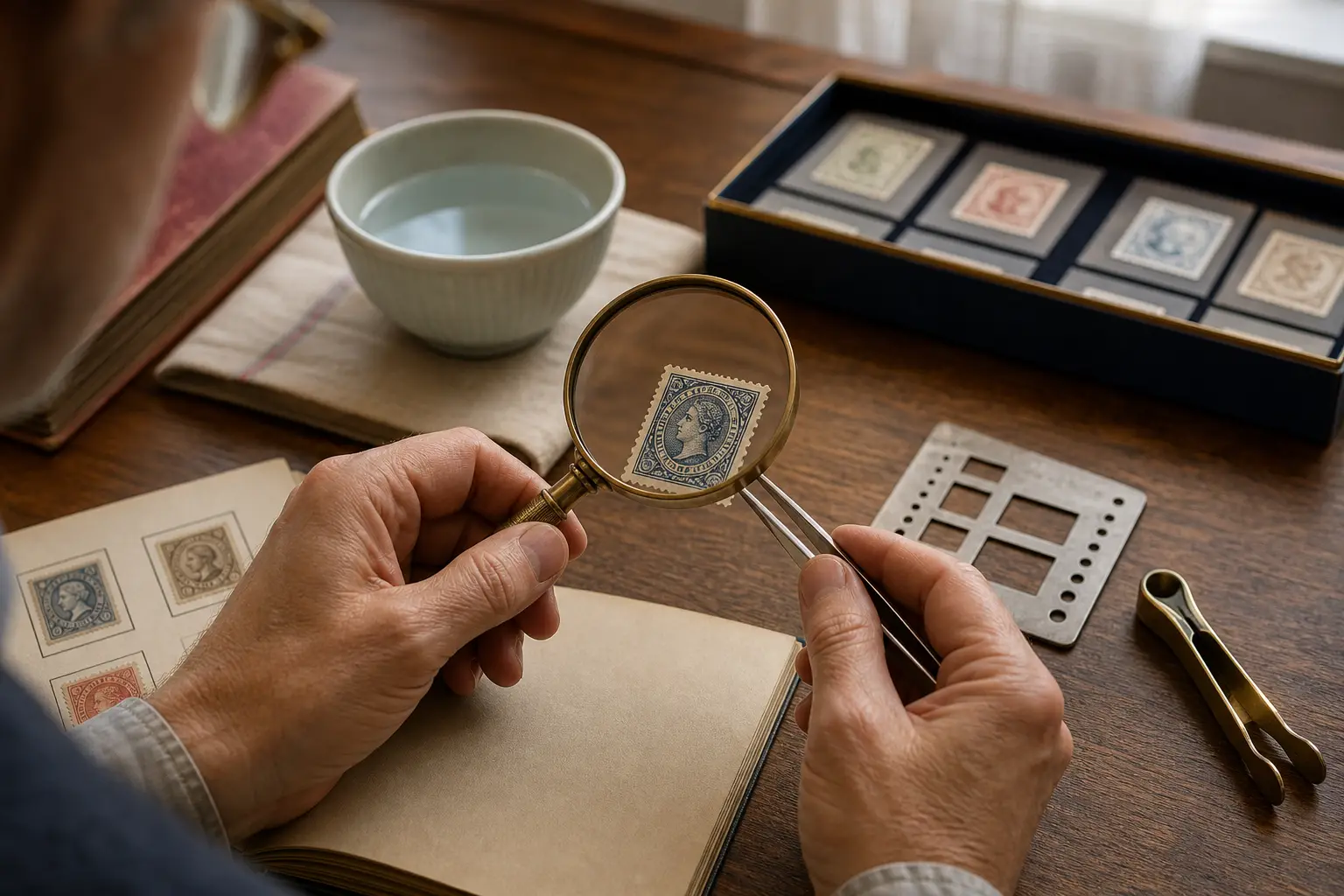
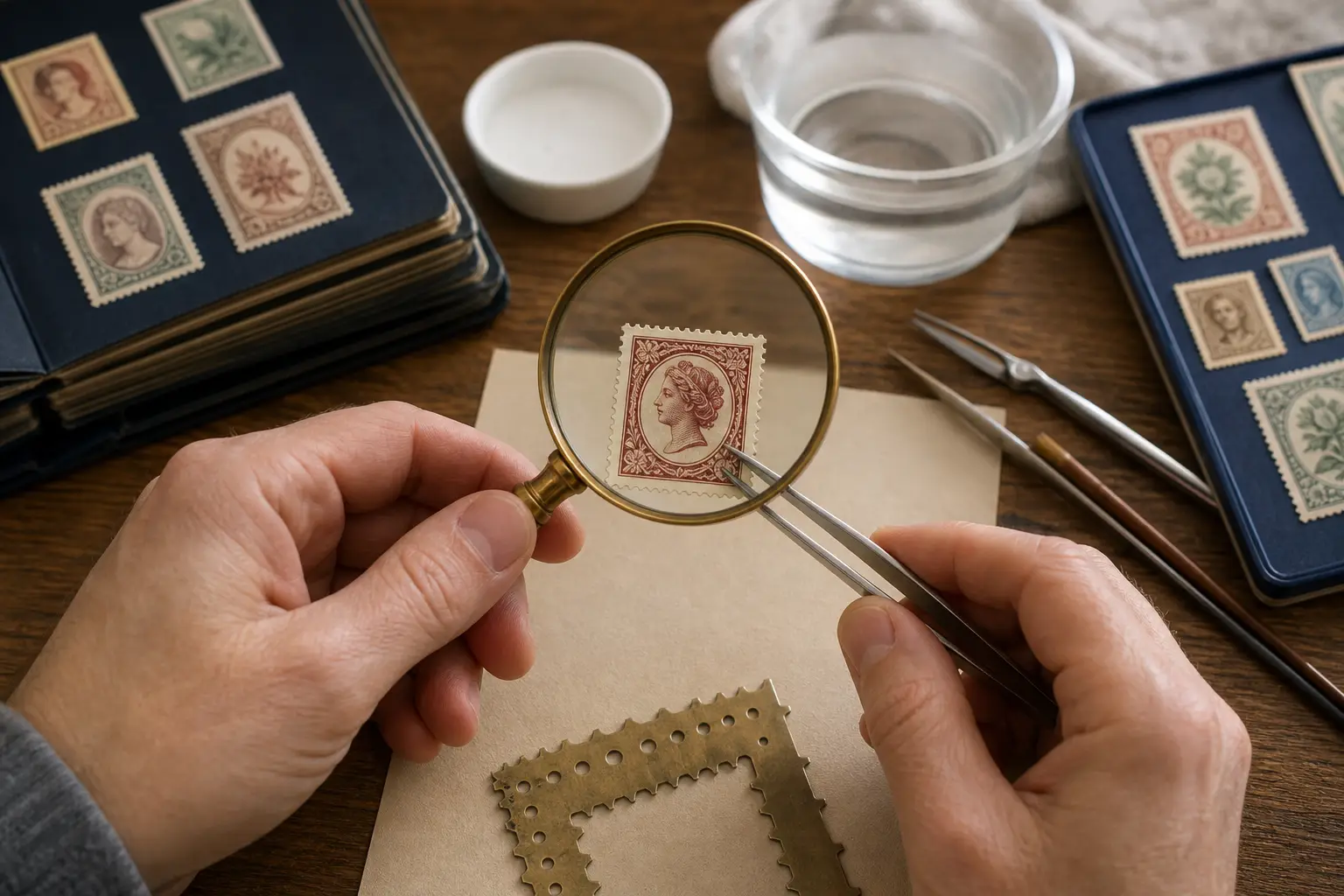
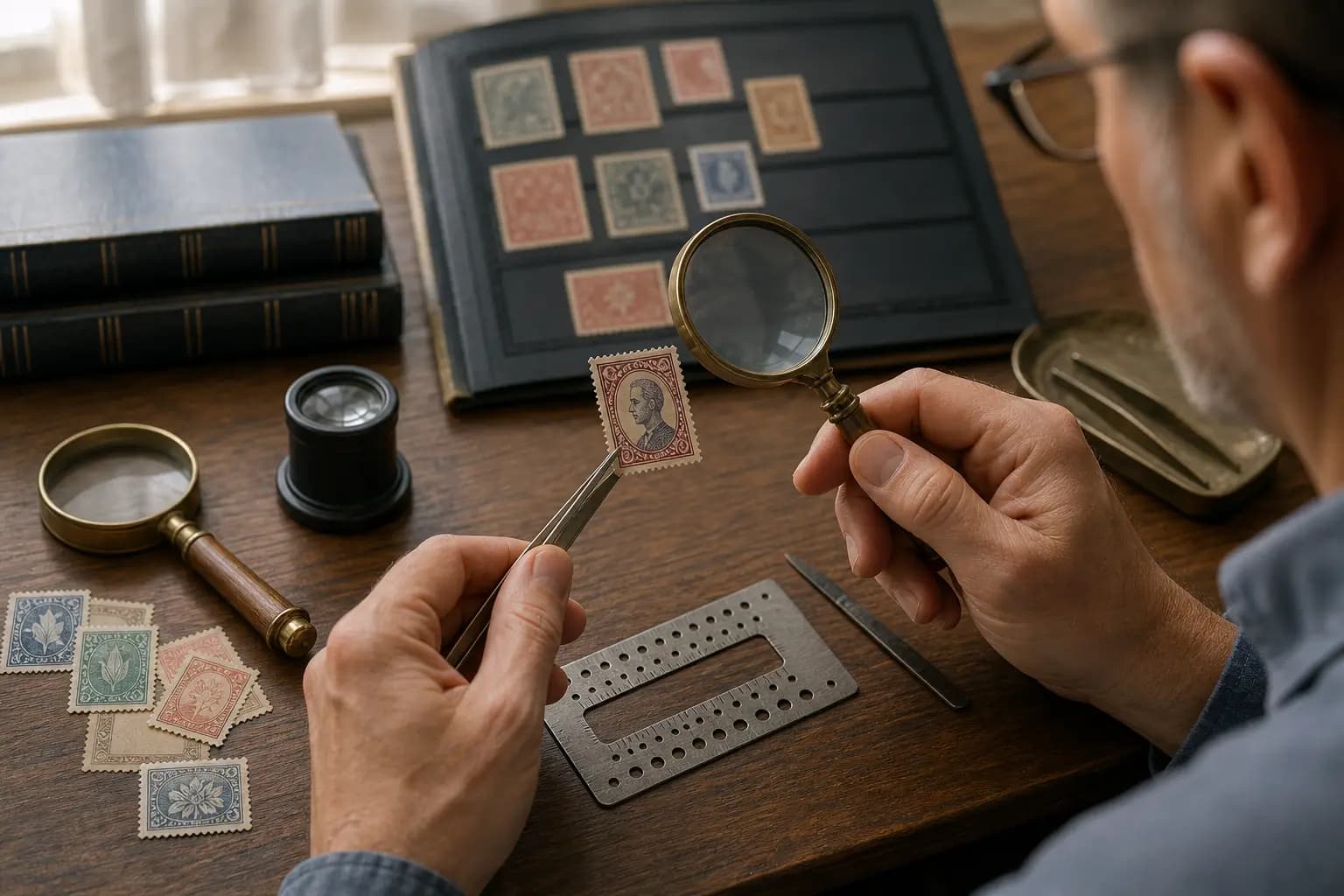
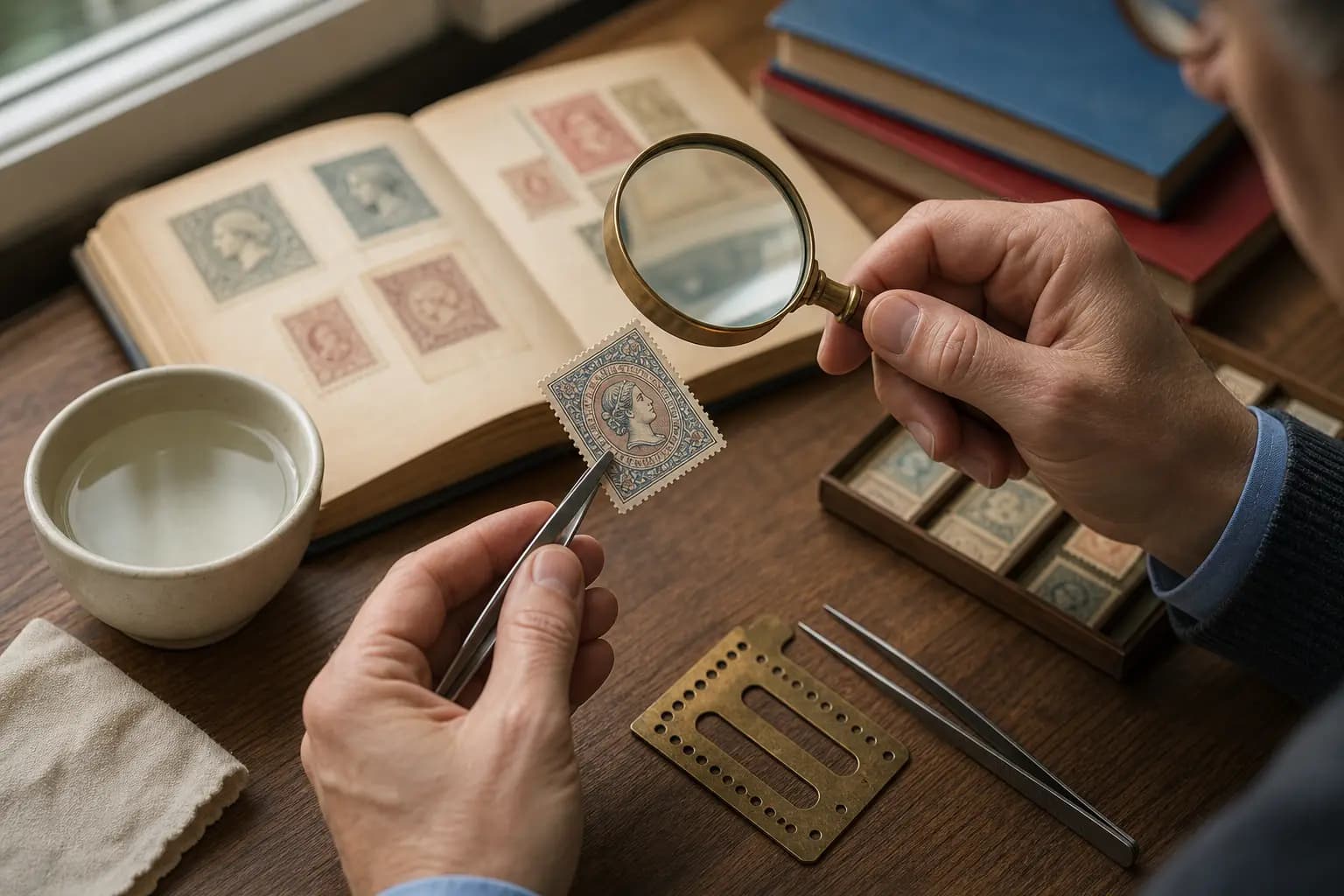
Start with a dry, clean surface and good light. Use stamp tongs rather than your fingers for dry stamps, because the APS warns that skin oil can damage stamps even when hands are washed. A magnifying glass can help you compare tiny details without touching the stamp more than necessary, and the APS recommends a lens with about 5x to 10x magnification and no distortion.
Look for evidence that the stamp was meant to be self-adhesive rather than water-activated. If the stamp is on paper or cover, the safest course is not to force a separation test just to confirm a hunch. Visual inspection and printed references are safer than trial-and-error handling, especially when the stamp might have a backing that does not release in water.
When soaking is and is not appropriate
Do not assume that soaking is a universal test. The APS states that most current U.S. self-adhesives will not simply soak off paper since their backing is oil based rather than water based, and that an oil solvent is required to help remove the backing. Because the source evidence does not provide a universal solvent method for every stamp, the conservative approach is to avoid home experiments and instead verify the issue first.
If you are dealing with an older U.S. self-adhesive and the stamp is already on paper, the APS notes that soaking in water for extended periods of about 20 minutes used to work for almost all pre-2007 U.S. self-adhesives. Even then, you should only consider soaking when you have enough confidence that the material is meant to release in water and when preserving the stamp justifies the risk.
How to compare similar stamps without damage
Many stamps appear to be alike, and the APS specifically says a magnifying glass can reveal small differences that help identify a rare stamp. Use that same method for self-adhesives: compare size, design details, and any catalog description rather than trying to peel or separate the stamp as a first step. A stock book or album can help keep similar examples organized while you compare them.
If you collect more than one example of a design, note whether the issue appears used, unused, or attached to paper. A stamp catalog can help you record those details in a consistent way. StampSnap can be useful here as a collection record tool, but not as an authenticity guarantee; the point is to document what you observe so that later comparison is easier and safer.
A careful identification workflow
First, examine the stamp with tongs and a magnifier, then check a catalog entry for issue date, printing notes, and whether the stamp is described as self-adhesive. Second, compare the back and attachment method with what the reference says, paying close attention to whether the issue is from the period when U.S. self-adhesives changed in backing behavior. Third, decide whether the stamp should stay on paper or be left untouched until you have stronger evidence.
This workflow is intentionally conservative. The APS materials emphasize that no tools are required to be a stamp collector, but a few tools are useful for organizing, identifying, and handling stamps. Using those tools in order, instead of testing by force, helps protect the stamp and keeps your identification notes trustworthy.
What to do if you still are not sure
If the stamp remains uncertain after visual inspection and catalog comparison, record it as unconfirmed rather than guessing. That is especially important when the stamp may be self-adhesive, because an incorrect soaking decision can damage both the stamp and its backing. The APS also reminds collectors that album and storage choices matter, so keep the item flat and protected while you continue researching.
When possible, compare the item against documented examples from reputable references or ask for help from a knowledgeable collector or society. The key is to avoid irreversible handling until the evidence is enough to support a decision. In stamp study, a careful maybe is better than a damaged certainty.
Frequently asked questions
How can I tell if a stamp is self-adhesive without soaking it?
Use tongs, good light, and a magnifier to inspect the stamp and compare it with a catalog description. Do not rely on a soaking test first, because many current U.S. self-adhesives will not release in water.
Can all self-adhesive stamps be soaked off paper?
No. The APS says most current U.S. self-adhesives will not simply soak off because their backing is oil based rather than water based. Older U.S. self-adhesives were often removable in water.
Should I use tape or glue if a stamp starts lifting?
No. The APS advises against tape or glue because they can damage the stamp and reduce its value. Use proper album materials, hinges, or mounts instead.
What tools are most useful for identifying a possible self-adhesive stamp?
Stamp tongs, a distortion-free magnifying glass, and a stamp catalog are the most useful tools named in the APS guidance.
What should I do if I am not sure whether the stamp is self-adhesive?
Leave it unaltered, record what you see, and compare it with a catalog or other reliable reference. If the stamp is on paper, do not test it by soaking unless you are confident that the backing is intended to release in water.