The short answer: check whether the stamp is a Great Britain issue
If a stamp does not show a country name, the first safe question is whether it could be from Great Britain. The supplied evidence says Great Britain is the only country permitted to issue postage stamps without including its name, and it may instead show an image of the ruling monarch, often in the upper right-hand corner.
That clue does not prove the identification by itself, but it gives you a strong starting point. If the stamp lacks a country inscription, you should compare the portrait or monarch image, the overall design, and any other visible details before you make a label for your collection record.
Do not jump to conclusions from the missing country name alone
A missing country name is a useful clue, not a final answer. The evidence also notes that many countries do not use English, so a name may be present even when it is not immediately recognizable to you. That means the stamp may look anonymous at first glance even when it is not.
For that reason, treat the absence of a familiar country name as a prompt to investigate, not as proof. Write down what you can actually see: portrait, lettering style, denomination placement, and overall layout. If you use StampSnap to create a likely identification or collection record, keep the result provisional until you confirm it with other clues.
Use a magnifying glass to read the small details safely
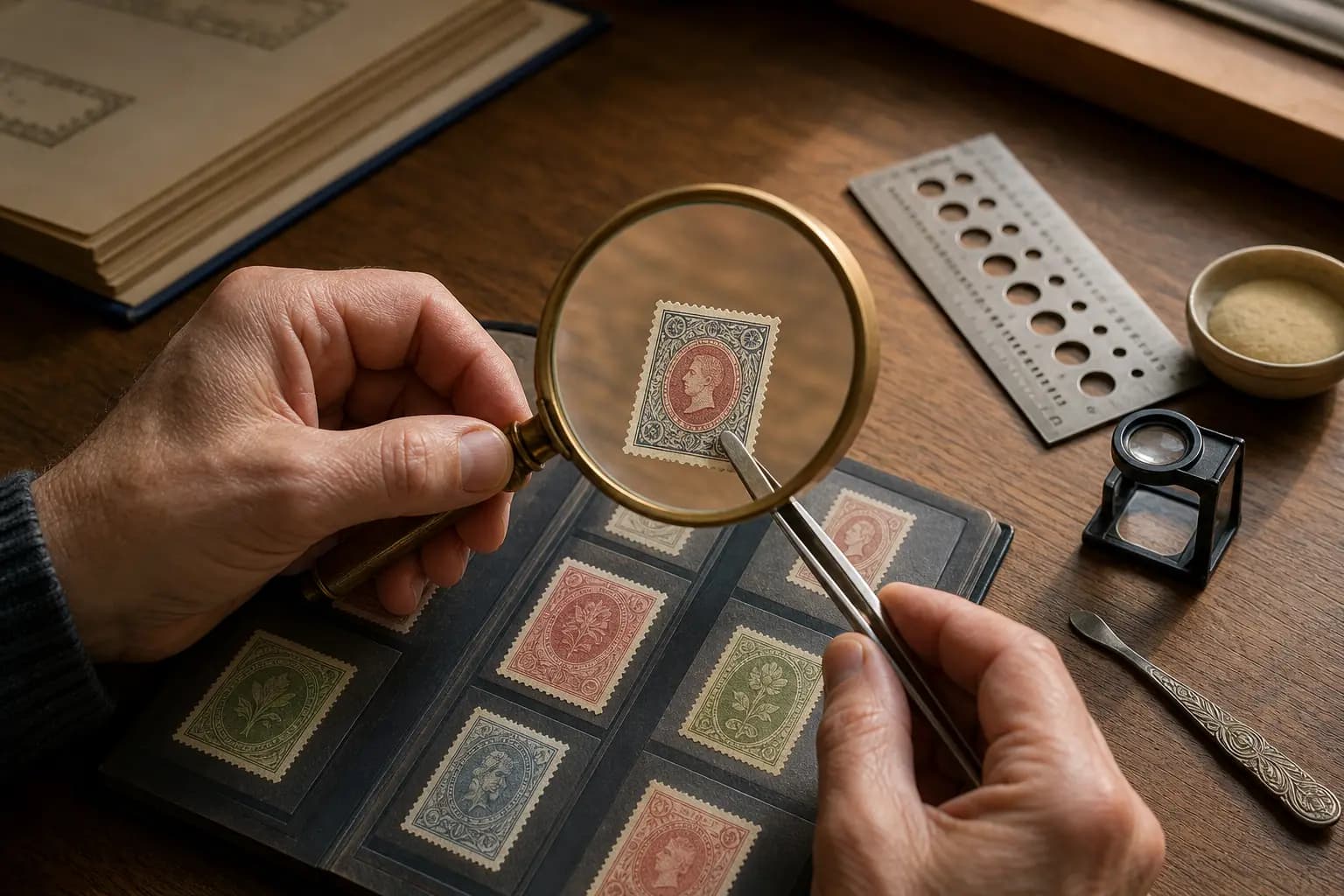
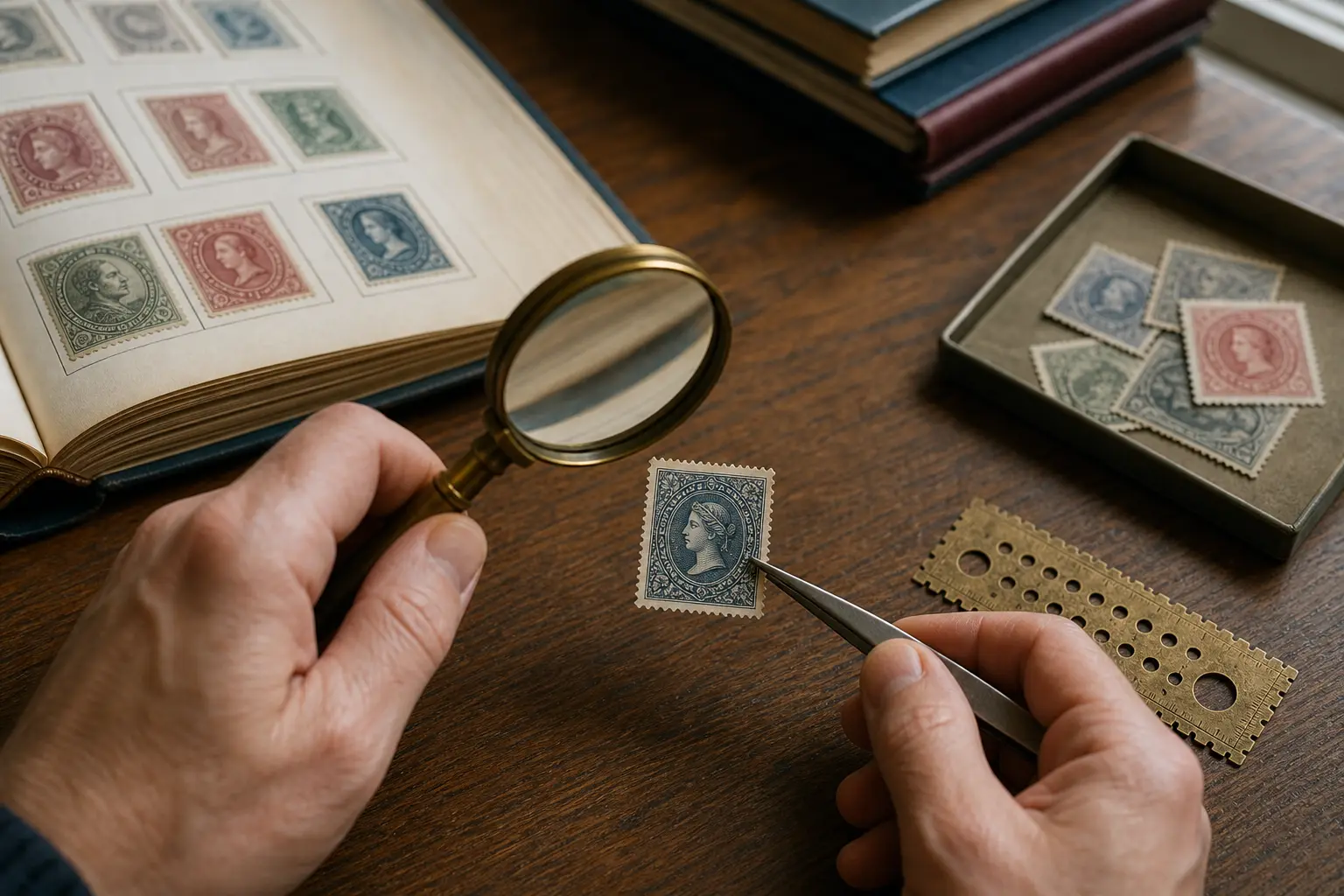
The American Philatelic Society recommends a magnifying glass because some stamps appear to be alike, but close inspection can reveal small differences that help identify a rare stamp. A lens with clear, distortion-free magnification of about 5x to 10x is suggested, and a case helps protect the lens from scratches.
Under magnification, check whether the portrait is a monarch, whether the lettering is complete, and whether tiny design features repeat across multiple candidates. This is especially useful when the country name is absent or hard to read, because the smallest visible differences may be the best guide to the correct issue.
Compare the stamp with catalog illustrations instead of guessing
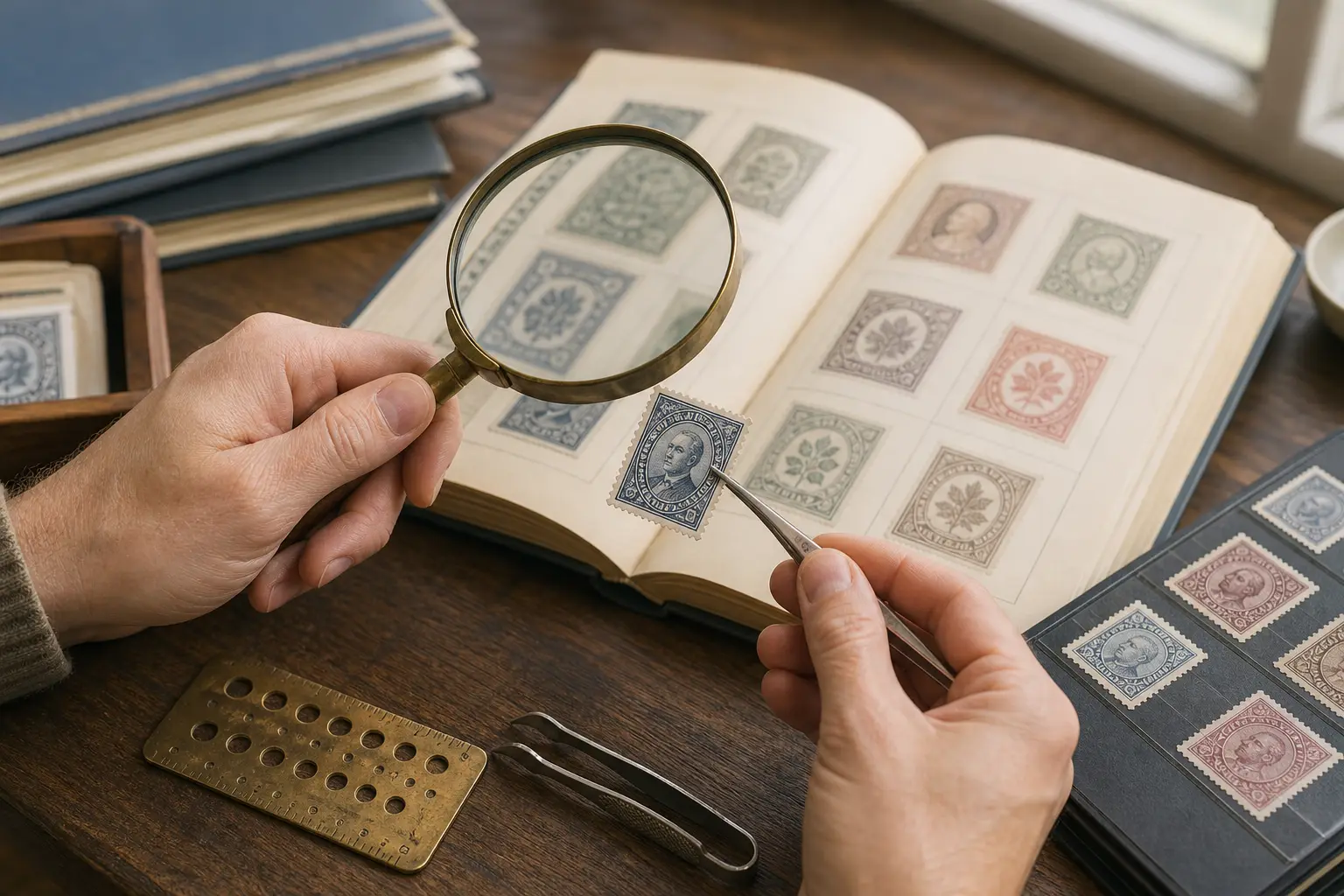
A stamp catalog is one of the most useful references for identification. The supplied evidence says catalogs include illustrations and information such as the date of issue, a description of the stamp, why it was issued, how it was printed, and the value in used and unused condition. That makes a catalog a practical next step after your first visual check.
Use the catalog to compare your stamp against illustrated candidates that share the same portrait, layout, or denomination placement. A match on one feature is not enough. The safest approach is to look for several features that agree, then note any uncertainty if the stamp still does not fit a single example cleanly.
Check perforations because similar designs can still differ
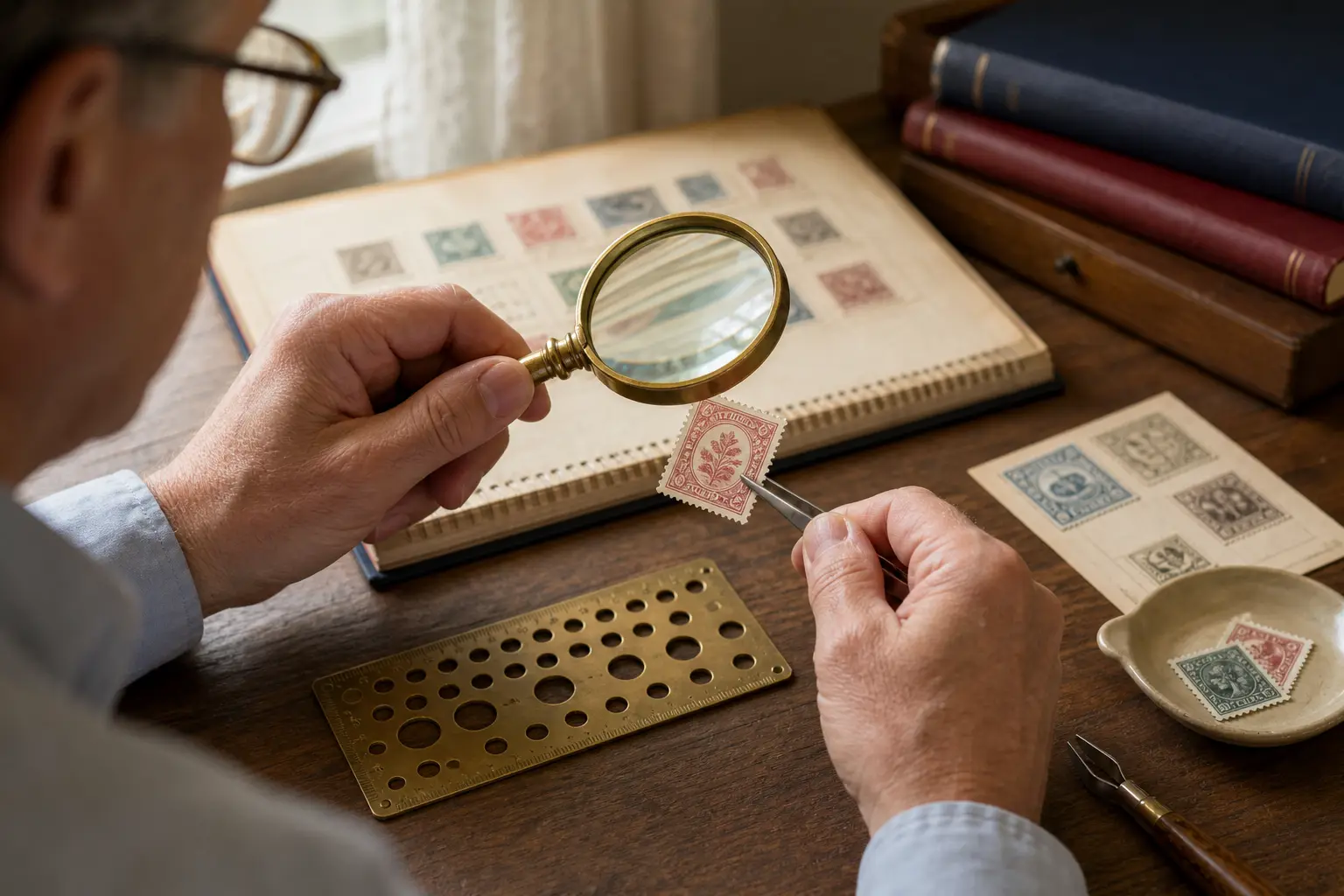
The APS notes that some stamps have the same design but different numbers of perforations, the holes between stamps that make them easy to separate. A perforation gauge makes this measurement simple and avoids the confusion of counting holes by hand along a 20 millimeter row on each edge.
Perforation differences are especially helpful when a stamp lacks a clear country name and seems to belong to a familiar design family. If the design looks right but the perforations do not match the catalog illustration, do not force the identification. Record the discrepancy and keep looking for a better match.
Use the condition of the stamp as part of the process, not as a shortcut
Safe handling matters while you are identifying the stamp. The APS recommends stamp tongs for dry stamps because skin oils can damage them even when hands are washed. Handle the stamp as little as possible, and avoid tape or glue because they can damage the stamp and reduce its value.
If the stamp is attached to paper, do not improvise with household products. The evidence here does not support using solvents on ordinary stamps, and it specifically notes that current U.S. self-adhesive stamps may require an oil solvent to separate from paper. That is a separate situation from identification, so if you are unsure, leave the stamp as found and focus on visible clues first.
Build a simple record so you can compare candidates later
A careful identification record helps you avoid repeating work and helps you compare similar stamps later. Note what you can observe without damaging the item: whether the country name is absent, whether a monarch appears, the apparent design family, the perforation count, and any catalog candidate you have checked.
This kind of record is useful whether you keep a paper log or use a digital tool. The goal is not to force a final answer immediately. It is to narrow the possibilities methodically, keep the stamp safe, and leave a clear trail of evidence for later review.
When to stop and call it uncertain
Stop and label the identification as uncertain if the stamp does not match a catalog example on more than one feature, or if the country name is missing and the portrait or lettering does not clearly fit Great Britain. A cautious label is better than a confident mistake.
Uncertainty is normal in stamp identification. The safest habit is to separate what you can prove from what you only suspect. If the stamp remains ambiguous after checking the visible design, the magnifier, and perforations, keep it as a provisional identification until you find a stronger match.
Frequently asked questions
Can a stamp be identified if it does not show a country name?
Yes, sometimes. The safest first check is whether it is a Great Britain stamp, since Great Britain is permitted to omit its name and may show the ruling monarch instead.
Does a missing country name prove the stamp is from Great Britain?
No. It is only a clue. You should compare the portrait, lettering, catalog illustrations, and other visible details before deciding.
What tools help most with this kind of identification?
A magnifying glass, a stamp catalog, and a perforation gauge are the most useful tools named in the supplied evidence.
Should I remove the stamp or use tape to inspect it better?
No. The evidence advises handling dry stamps with tongs and warns against tape or glue. Keep the stamp safe and work from visible clues first.
What if the stamp still does not match a catalog illustration?
Treat the identification as uncertain. Record the mismatch, keep the stamp safe, and continue comparing other candidates rather than forcing a conclusion.