The safest short answer
A stamp may soak off in water if it is on paper with a water-based adhesive or if it is an older self-adhesive that was made to release after extended soaking. But you should not assume that every self-adhesive will behave that way. The safe approach is to identify the issue period and backing clues first, then choose the least risky removal method.
The American Philatelic Society states that until 2007 almost all United States self-adhesives could be removed from envelopes by soaking in water for about 20 minutes. It also says most current U.S. self-adhesives will not simply soak off because their backing is oil based rather than water based. That is the key identification point: age and backing type matter.
What clues matter before you try anything
Begin with the stamp itself and the envelope or cover it is on, if present. Look for issue information in a catalog, because a catalog can give the date the stamp was issued, a description of the stamp, how it was printed, and the value in used and unused condition. That record does not remove all uncertainty, but it helps you narrow whether a stamp belongs to a period when soaking was usually possible.
If the stamp is self-adhesive, do not treat it like a traditional gummed stamp. The APS notes that current U.S. self-adhesives are often backed with oil-based material, which changes how they respond to water. Visual inspection alone may not be conclusive, so it is better to treat unfamiliar material as uncertain until you have checked the issue details.
Use tools that support identification, not guesswork
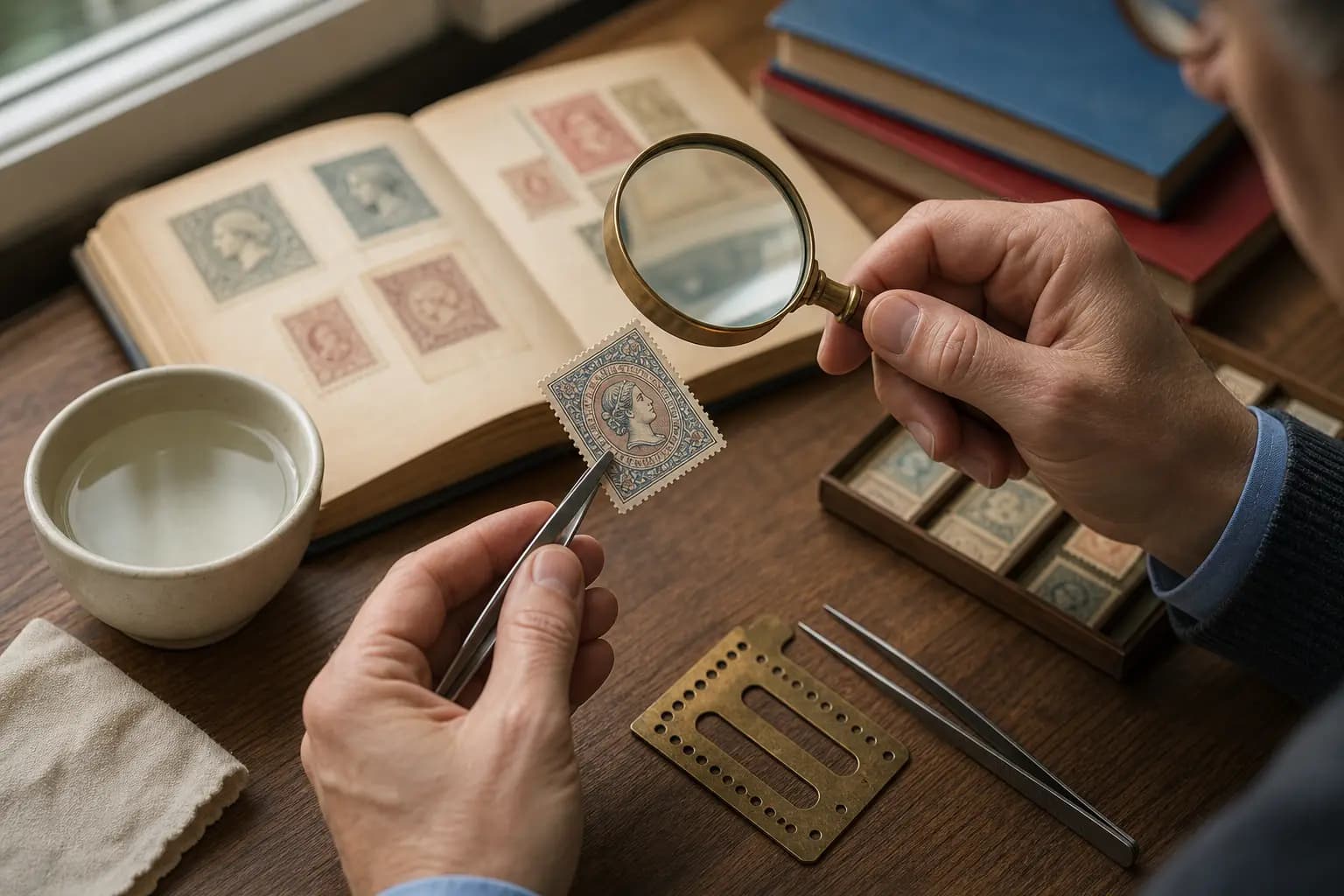
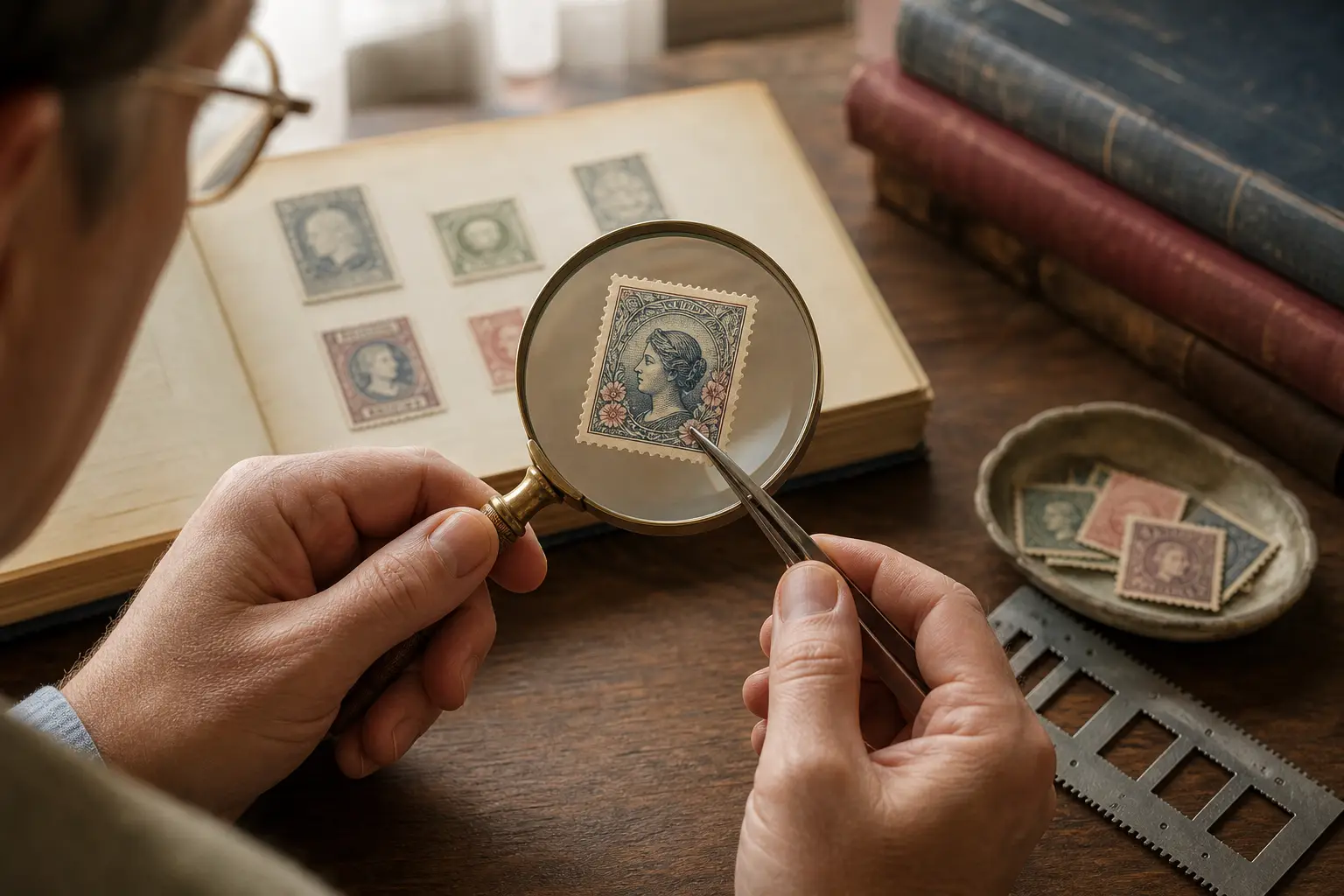
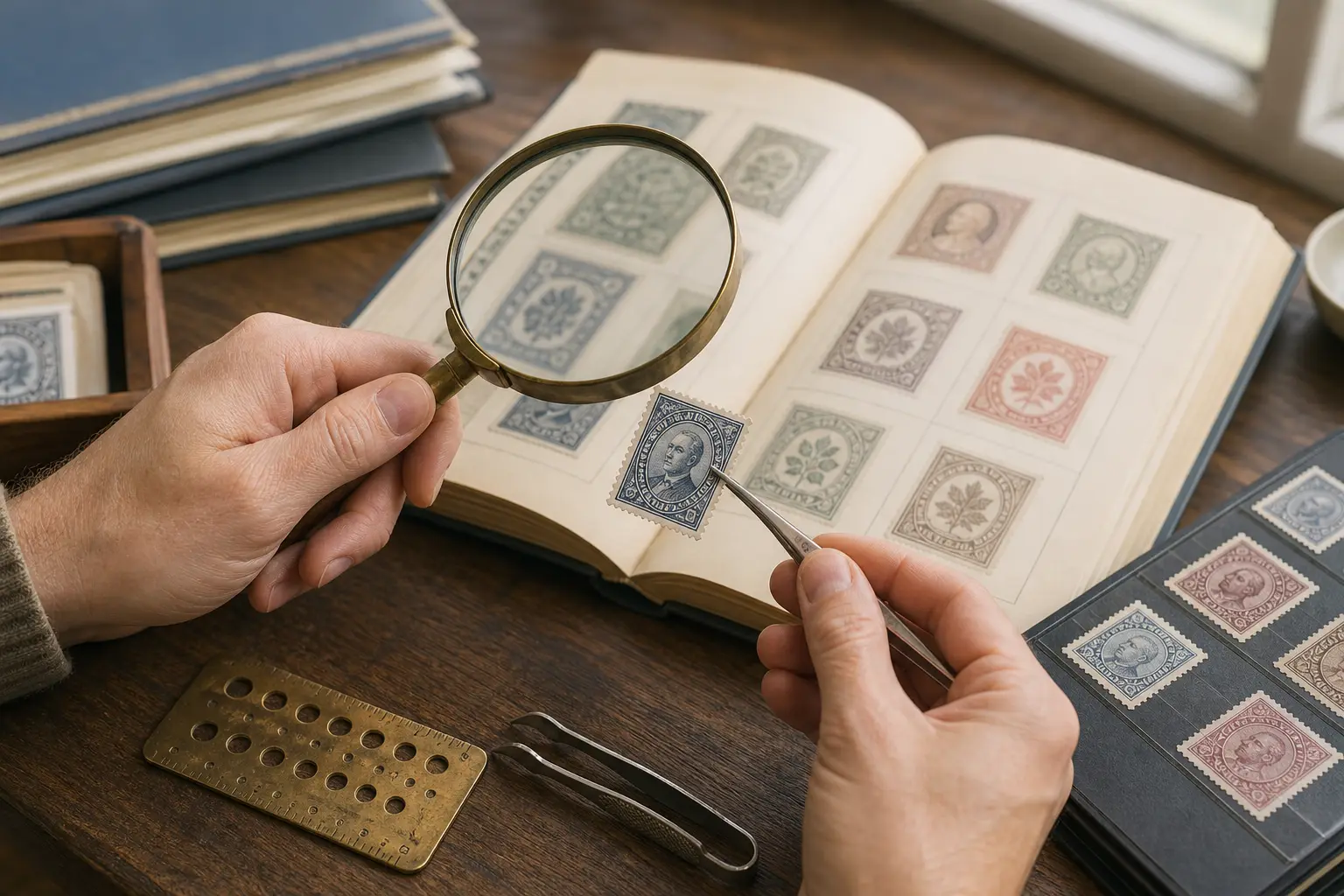
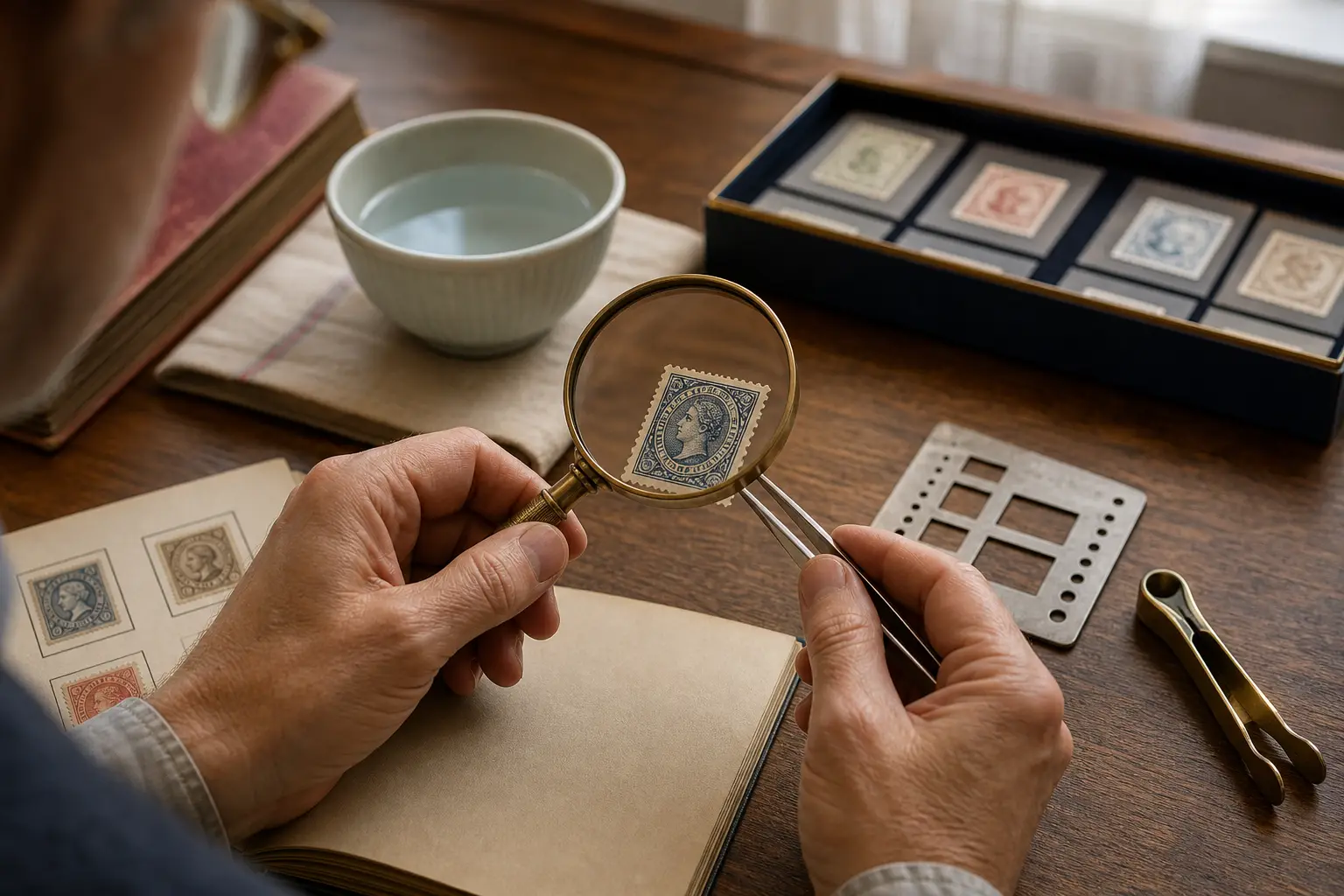
The APS recommends a few basic tools that help with identification and handling: stamp tongs, a magnifying glass, stamp catalogues, and a perforation gauge. Tongs help you handle dry stamps with less skin oil exposure, and magnification can reveal small differences that are easy to miss with the naked eye. For this question, a catalogue is especially important because it tells you whether you are looking at a period or type that may need soaking, caution, or a different method.
A magnifying glass with clear, undistorted magnification can help you inspect the adhesive area, paper surface, and edges without touching the stamp repeatedly. Do not rely on household tricks, tape, glue, or force. If you are recording what you see, a note in StampSnap can help you keep a likely identification together with the catalog description and your handling decision.
How to think about soaking risk
If the stamp is from a period when soaking was commonly successful, you still need to proceed carefully and recognize that condition matters. The APS’s guidance about older U.S. self-adhesives refers to extended soaking in water, not quick guessing. If you do not know the issue, or if the adhesive type is unclear, pause and gather more evidence before you immerse it.
Do not assume that water alone will solve every removal problem. The APS explains that many current U.S. self-adhesives have oil-based backing and therefore will not simply soak off. In other words, a stamp that looks modern or self-adhesive may require a different method, and forcing it in water can create unnecessary damage.
A methodical identification workflow
First, identify whether the item is a postage stamp, a self-adhesive issue, or another kind of mail-related material. The APS reminds collectors that stamp collecting can include covers, envelopes, meter markings, labels, and other ephemera, so context matters. Next, consult a catalogue for the issue date and description, then inspect the stamp with magnification for clues that match that record.
Second, decide whether the item belongs to the older group that often soaked off or to the more recent group that may have oil-based backing. If you are still uncertain, label the item as unresolved rather than testing it immediately. That is a safer collector habit than making a guess and risking paper loss, adhesive residue, or surface damage.
Safe handling while you investigate
Handle dry stamps as little as possible. The APS specifically advises using tongs because skin oil can damage stamps even when hands seem clean. Store stamps in an album or stock book, and avoid sticky pages, tape, or glue. Those materials can damage stamps and make later identification harder by altering the surface you are trying to study.
If a stamp is already on paper and you are not sure how it will behave, the safest course is often to postpone removal until you have a stronger identification. Collectors who want a record can note the issue details, the mounting or backing uncertainty, and a tentative soak-off assessment. A careful record is often more useful than a rushed test.
When identification is still uncertain
Not every stamp can be identified confidently from a quick look. Country names may be absent on some issues, and the APS notes that Great Britain is the only country permitted to issue postage stamps without including its name, using the monarch image instead. That kind of exception shows why you should compare the stamp to catalogue information rather than rely on a single visual clue.
If the stamp is unusual, valuable to you, or difficult to interpret, preserve it in its current state and seek more evidence before attempting removal. StampSnap can help you save photos and notes so you can compare the stamp against catalogue details later, but it should be used as an aid to collection records, not as a substitute for careful examination.
Frequently asked questions
Can I tell if a stamp will soak off just by looking at it?
Sometimes you can guess, but you should not rely on appearance alone. Issue date, stamp type, and catalogue notes are safer clues than a quick visual judgment.
Do all self-adhesive stamps need special treatment?
No. The APS says that until 2007 almost all United States self-adhesives could be removed by extended soaking, but most current U.S. self-adhesives have oil-based backing and will not simply soak off.
What tools help me identify a stamp before I try soaking it?
The APS recommends stamp tongs, a clear magnifying glass, a stamp catalogue, and a perforation gauge. For soak-off questions, the catalogue is especially helpful because it gives issue and description details.
Should I use tape or glue if a stamp is hard to handle?
No. The APS advises against tape and glue because they can decrease value and may damage the stamp when you later try to remove it.
What should I do if I am still unsure whether the stamp will release in water?
Do not force it. Keep it dry, record what you know from the catalogue and your inspection, and treat the removal decision as unresolved until you have better evidence.