Start with the simplest identification question
If you are trying to identify a self-adhesive stamp, the key question is not only what the design shows, but whether the stamp was made to lift from paper in water at all. The American Philatelic Society notes that until 2007 almost all United States self-adhesives could be removed by soaking in water for extended periods, but most current U.S. self-adhesives will not simply soak off paper because their backing is oil based rather than water based.
That means a stamp that looks ordinary on the front can behave very differently when separated from an envelope. A safe identification approach begins with the piece in front of you: look for self-adhesive construction, note whether it is on cover, and avoid assuming that every modern stamp will respond to the same removal method.
Why backing type changes the removal decision
The evidence supplied by the American Philatelic Society is clear on one important point: water is not always enough. For most current U.S. self-adhesives, the backing is oil based rather than water based, and the Society states that an oil solvent is required to help remove that kind of backing. A stamp may still be a genuine postage stamp even if it does not release in the way older self-adhesives did.
For collectors, the practical lesson is to treat soakability as an identification outcome, not a guess. If you do not know whether the piece is an older water-based issue or a newer oil-based one, do not force the process. Uncertainty is normal here, and the safest answer is to preserve the item intact until you can match it against reliable references or a collection record.
Use the right tools before you attempt any separation
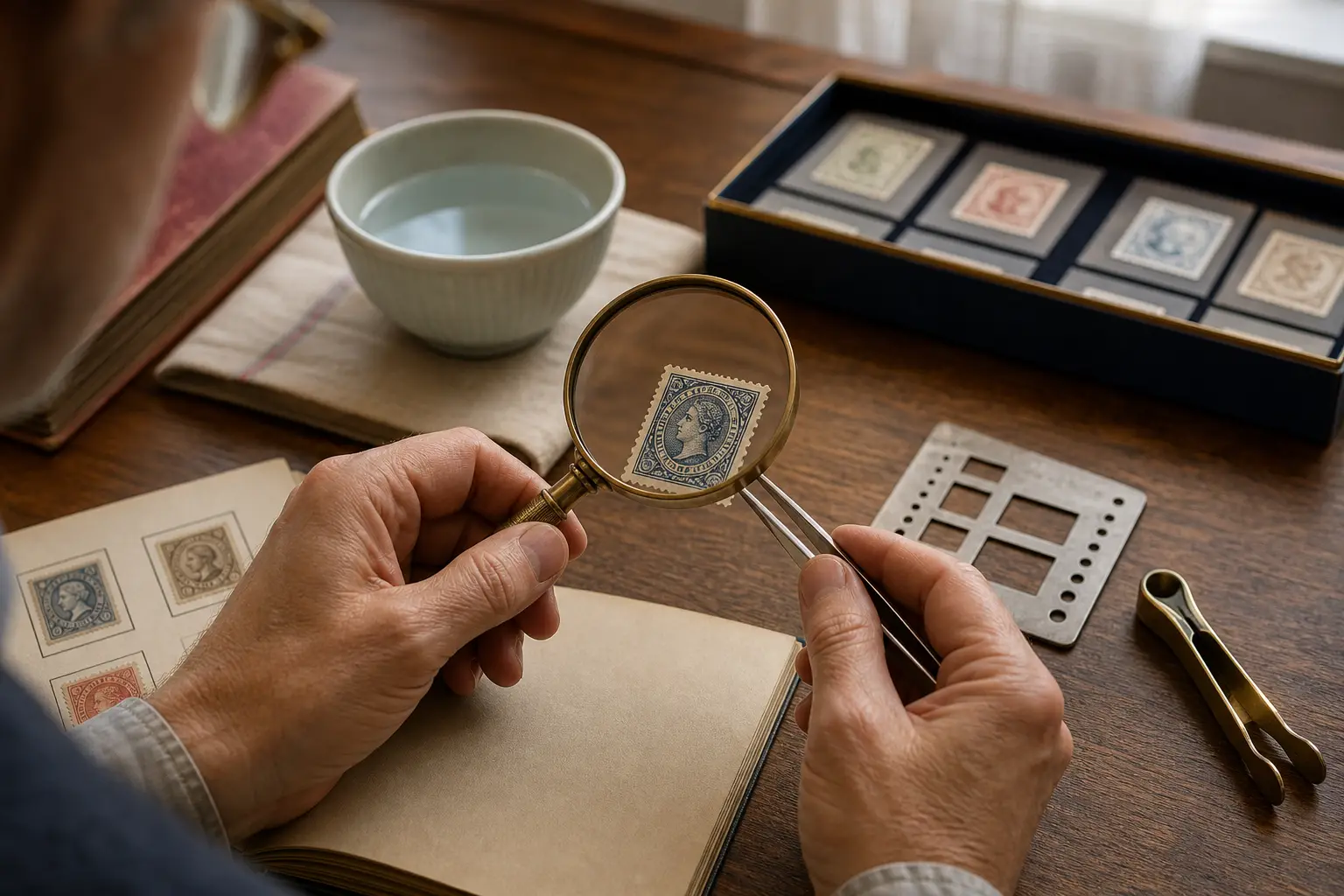
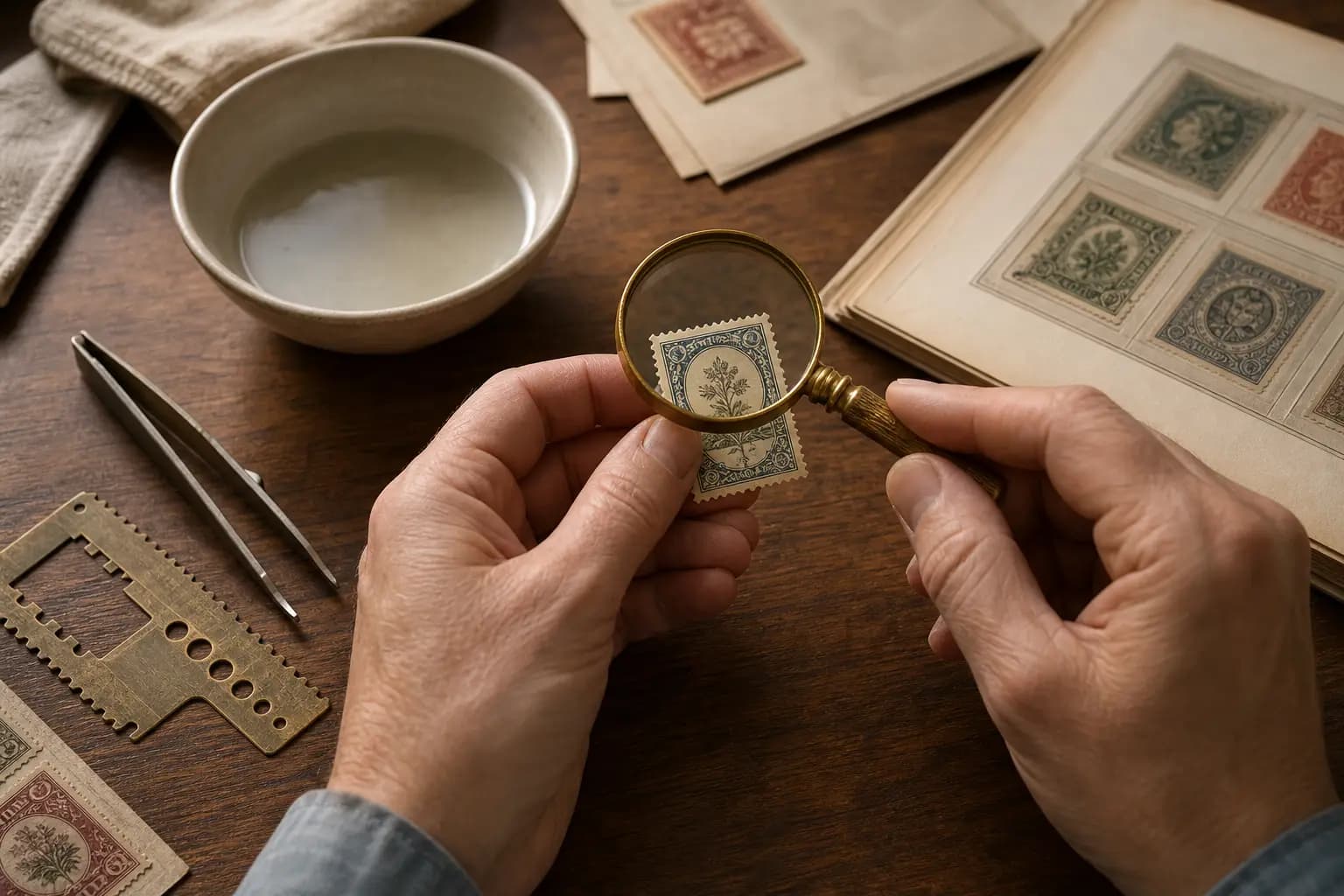
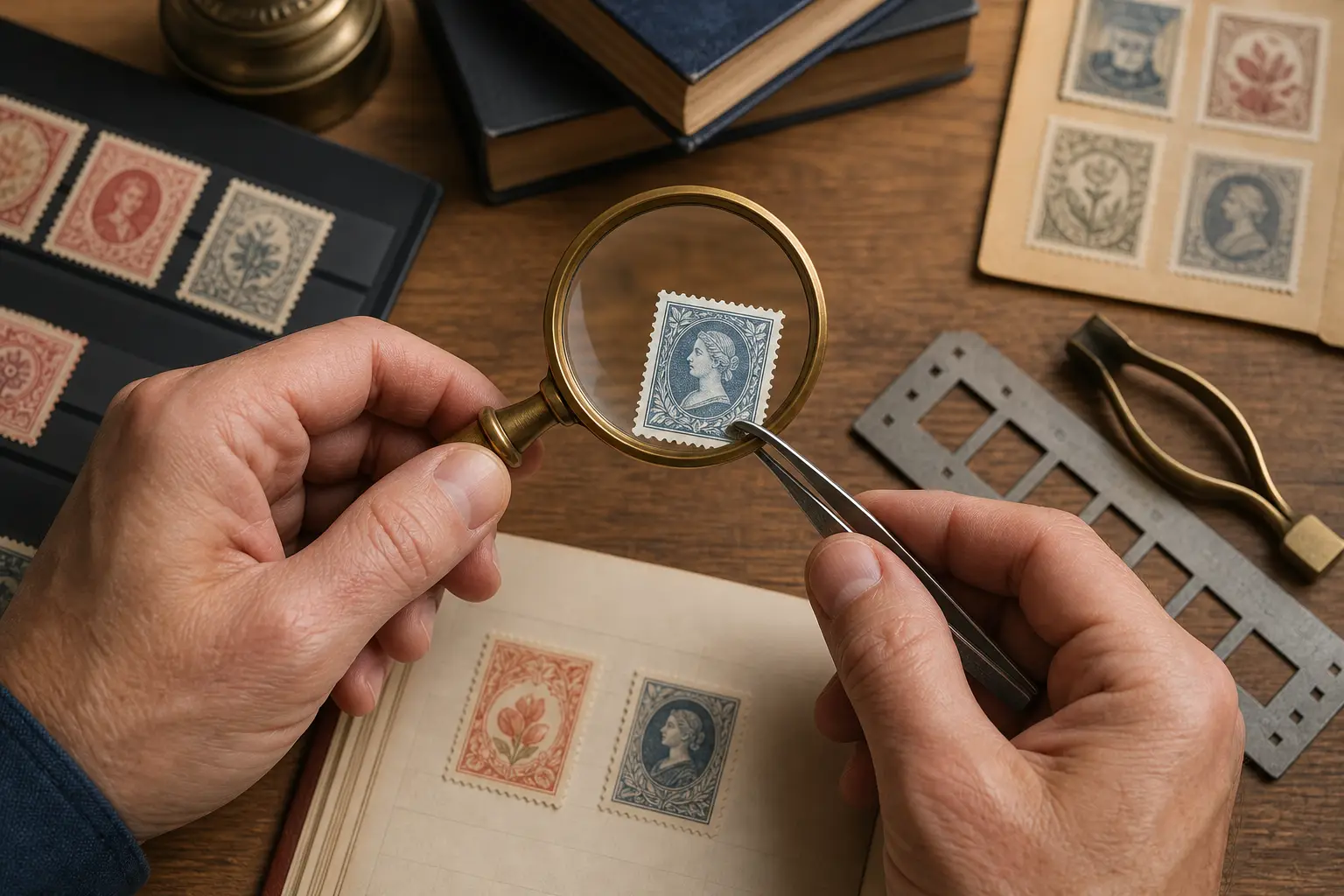
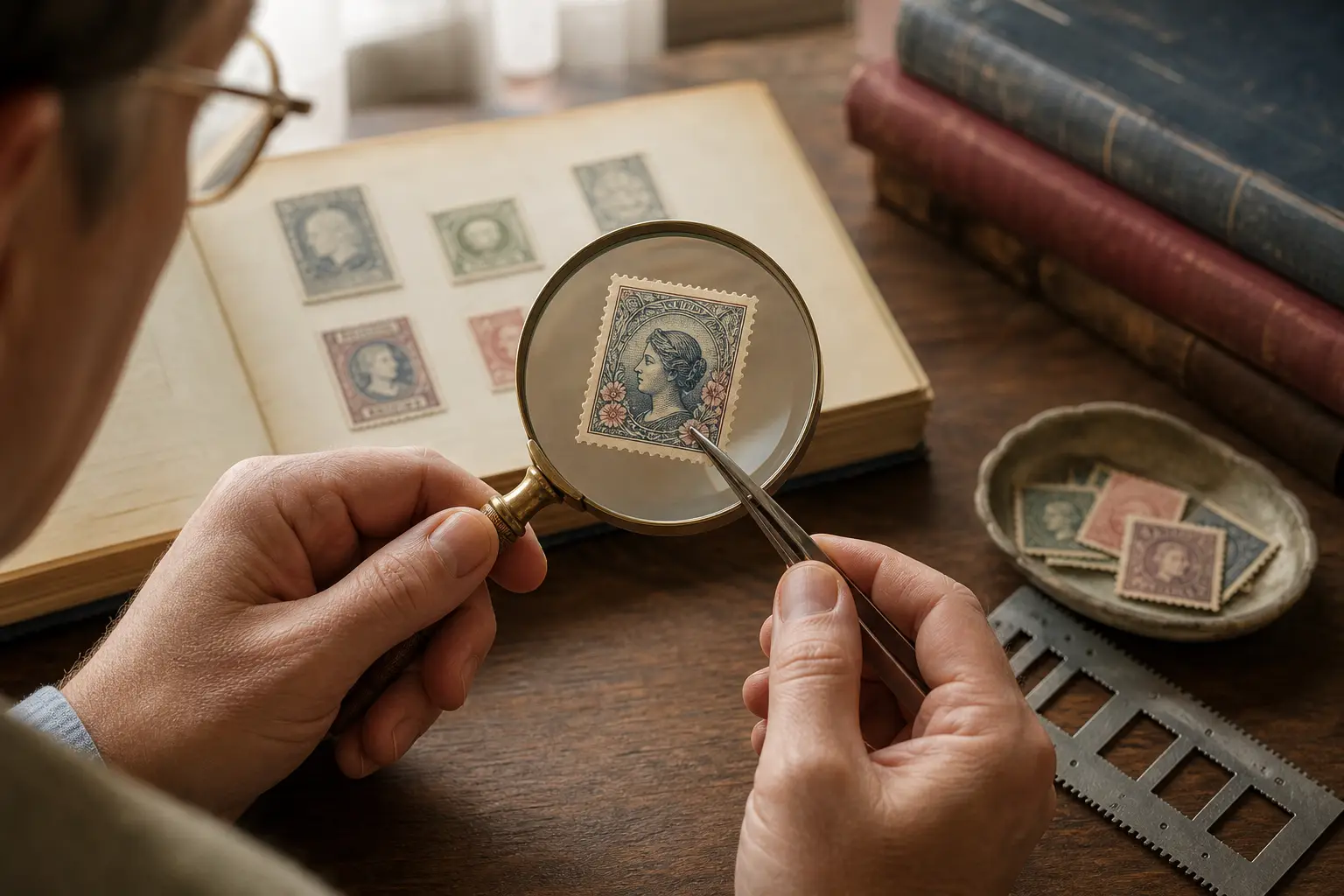
The APS says no tools are required to be a stamp collector, but a few are useful for organizing, identifying, and handling stamps. Stamp tongs are recommended for dry stamps because skin oils can damage them, and a magnifying glass can reveal small differences that help identify similar stamps. A stamp catalog is also described as a helpful reference because it can show the issue date, description, reason for issue, printing method, and value in used and unused condition.
These tools matter because identification often happens before any removal decision. Tongs help you keep handling to a minimum, magnification helps you inspect details without touching the stamp surface, and a catalog can help you decide whether the item is a self-adhesive issue with special backing or simply a stamp that should remain on the envelope for now. If you use StampSnap to build a record, keep the image and notes focused on identification, not on appraisal.
How to judge a stamp safely before soaking
Begin with dry handling only if the stamp is already loose enough to handle, and use tongs rather than fingers. Then check the stamp and its context: is it a modern self-adhesive, does the item come from a period when water-based backing was still common, and does the reference material suggest normal soak-off behavior or something different? The supplied evidence supports a cautious workflow, not a shortcut.
If the stamp is on paper and you are unsure, do not try household solvents, tape, or glue. The APS warns against tape and glue because they can reduce value and damage the stamp when you later try to remove it. When the backing is uncertain, the conservative choice is to leave the stamp as found until you have enough information to classify it safely.
What to do when the stamp does not behave as expected
A stamp that resists soaking is not automatically damaged or fake. According to the APS FAQ, most current U.S. self-adhesives do not simply soak off paper because the backing is oil based. That means resistance to water can be a normal feature of the issue, not a mistake in your method.
If the piece is important to you, the best next step is to pause and reassess rather than escalate quickly. Use catalog information, compare the stamp to other examples, and record what you see before attempting any removal method. If you are building an organized collection, note whether the stamp is best kept on cover, since some mail pieces carry useful postal context that is lost if the stamp is separated.
A methodical routine for collectors
A safe routine is simple: identify the stamp type, check whether it is a self-adhesive, consult a catalog or other reference, and handle it with tongs if it is dry and loose. If the stamp is attached to paper and you cannot confirm that water is appropriate, do not proceed as though all adhesives are the same. The supplied sources support careful comparison, not trial and error.
For many collectors, the goal is not just separation but a reliable record of the item. A short note, a catalog comparison, and a clear photo can be enough to document the stamp until you are certain how it should be treated. That is often the safest way to keep identification useful while avoiding unnecessary damage.
Keep the identification question separate from value claims
The American Philatelic Society notes that stamp catalogs may list value in used and unused condition, but that does not mean every stamp should be treated the same way in practice. Condition, backing type, and handling history all matter. The purpose of identification here is to determine what you have and how it should be handled, not to assume a market result.
That distinction is especially important with self-adhesives. A stamp may be modern, common, or familiar in design, yet still require different treatment because of its backing. If you keep the identification step separate from any value question, you are less likely to damage a piece that should have remained intact.
Frequently asked questions
Do all self-adhesive stamps soak off in water?
No. The supplied APS evidence says that until 2007 almost all U.S. self-adhesives could be removed by soaking in water, but most current U.S. self-adhesives will not simply soak off because their backing is oil based rather than water based.
How can I tell if a self-adhesive stamp is safe to soak?
Check the issue in a stamp catalog or other reference first, and confirm whether it is an older water-based type or a newer oil-based type. If you are not sure, do not force the separation.
What tools help with identification before I remove a stamp?
The APS recommends useful tools such as stamp tongs, a magnifying glass, a stamp catalog, and a perforation gauge. For self-adhesives, catalog information is especially helpful because it can show how the stamp was printed and what condition notes may apply.
Should I use tape or glue if a stamp will not come off cleanly?
No. The APS specifically warns not to use tape or glue because they can reduce value and damage the stamp when removal is attempted later.
What if I am not sure whether the stamp should stay on the cover?
When you cannot confirm the backing type or removal method, the safest choice is to leave the piece intact for now and document it first. That preserves the postal context and avoids unnecessary damage.