Start with the process family, not a single clue
The safest way to identify a stamp’s printing process is to work from a group of clues, not from one feature alone. The American Philatelic Society identifies four major families used for postage stamps: line-engraved intaglio, gravure, letterpress, and lithography. That framework is useful because modern stamps can combine more than one process, so a single stamp may not fit neatly into one visual box.
If you want a practical answer right away, begin by asking whether the stamp looks like line-engraved intaglio, gravure, letterpress, or lithography, then test that impression against other evidence. Do not rely on softness, blur, or dot pattern by itself. The point is to narrow the possibilities methodically and then confirm them with records when possible. StampSnap can help you create a likely identification or collection record, but it should still be treated as a working note rather than a final determination.
How line-engraved intaglio usually presents
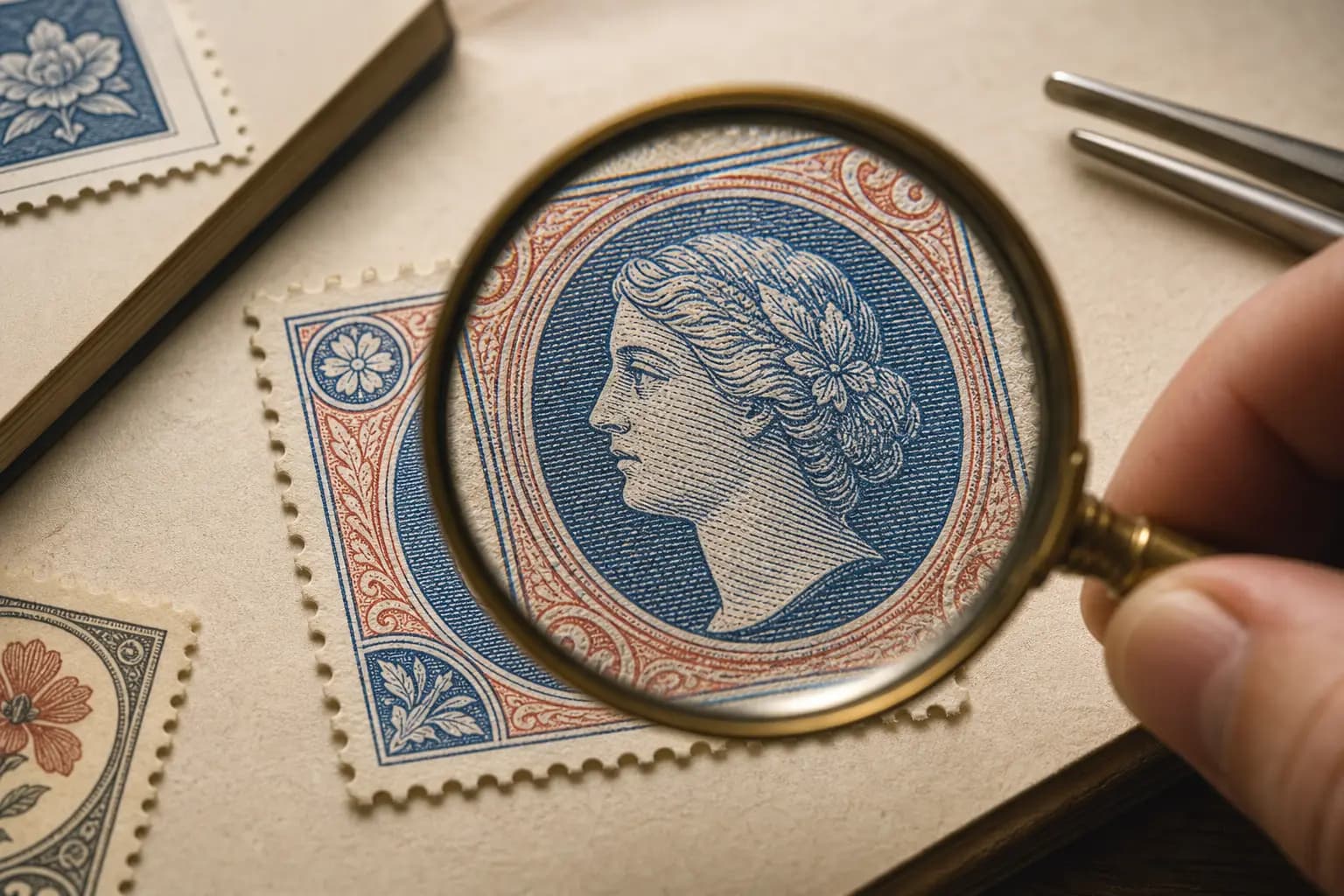
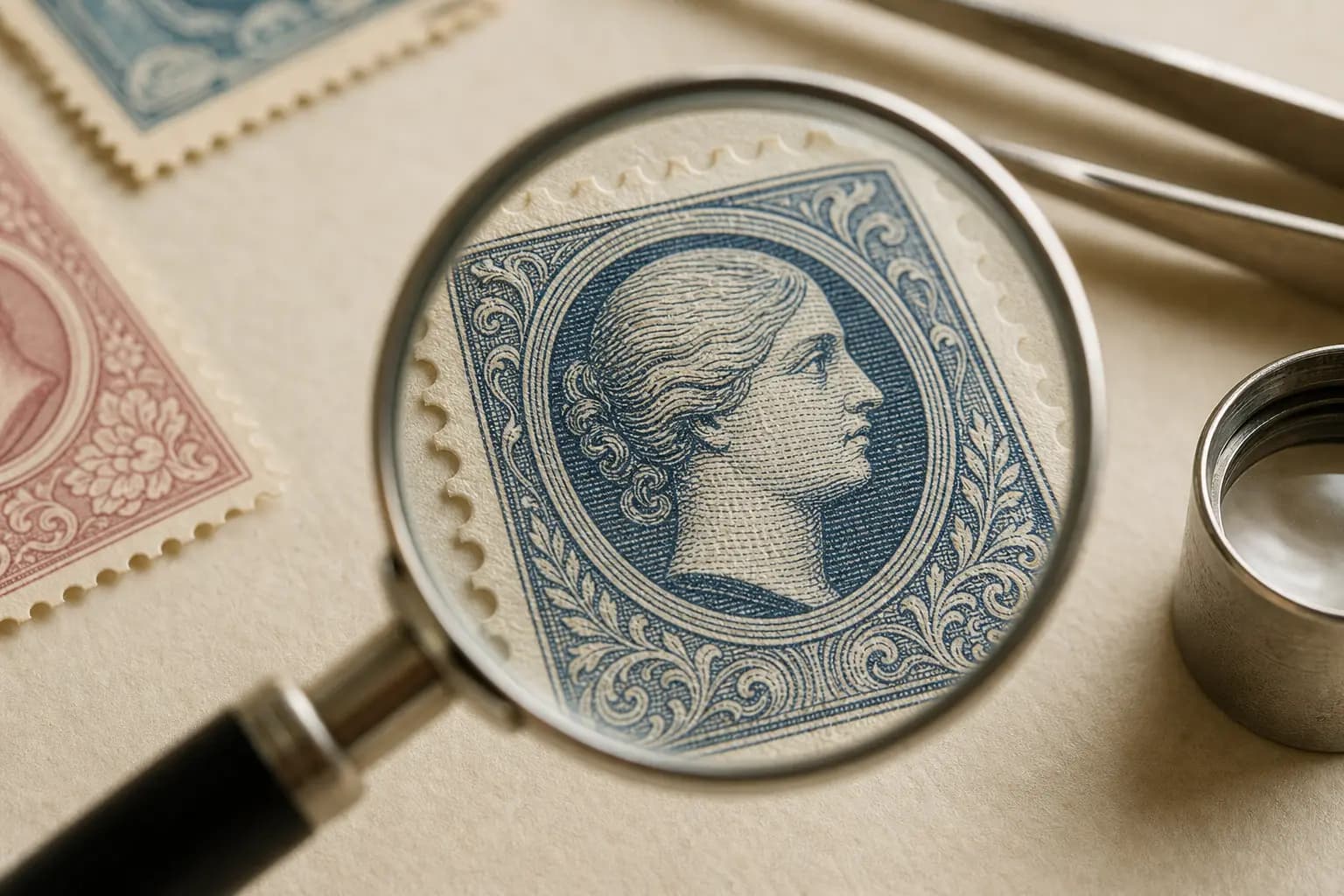
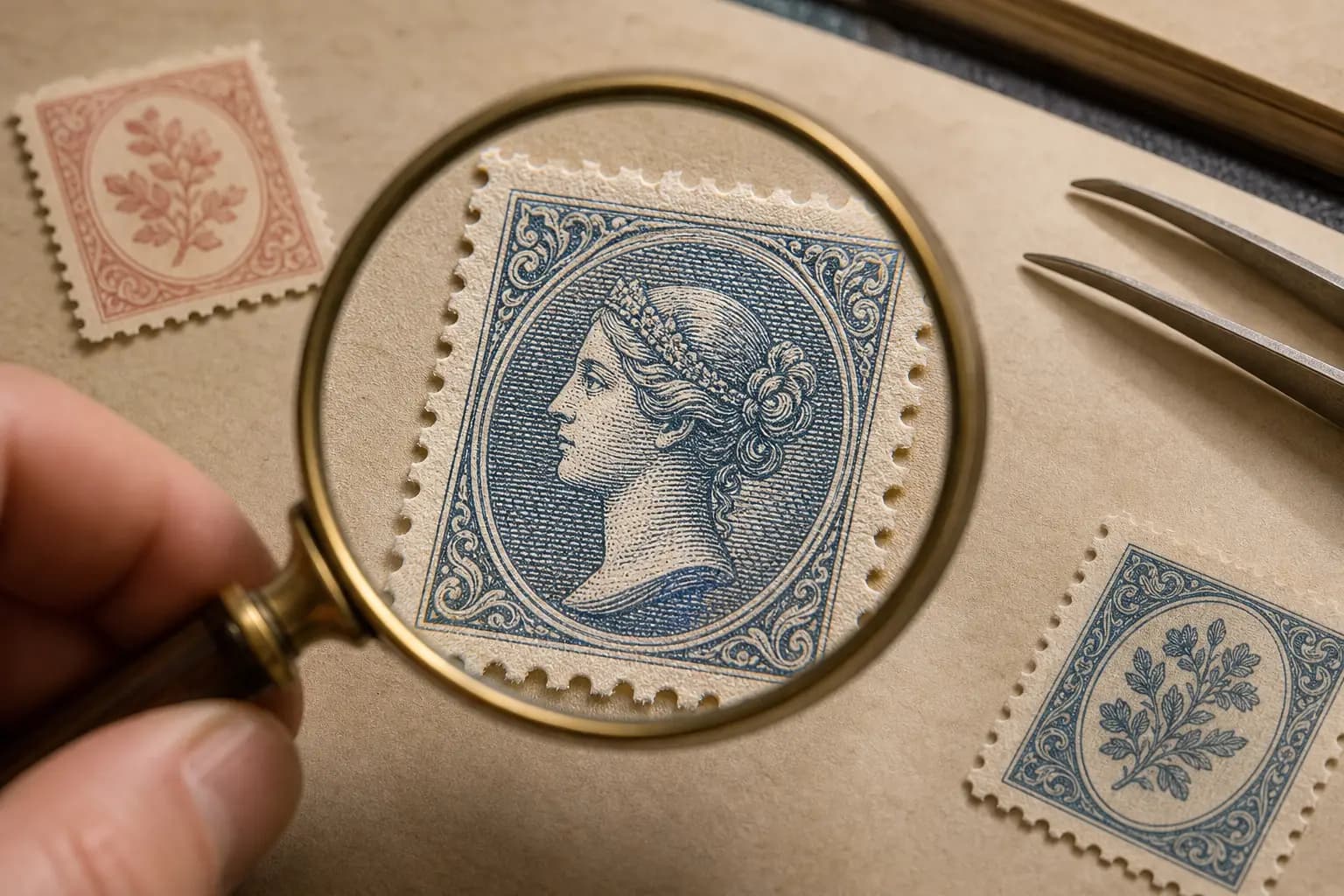
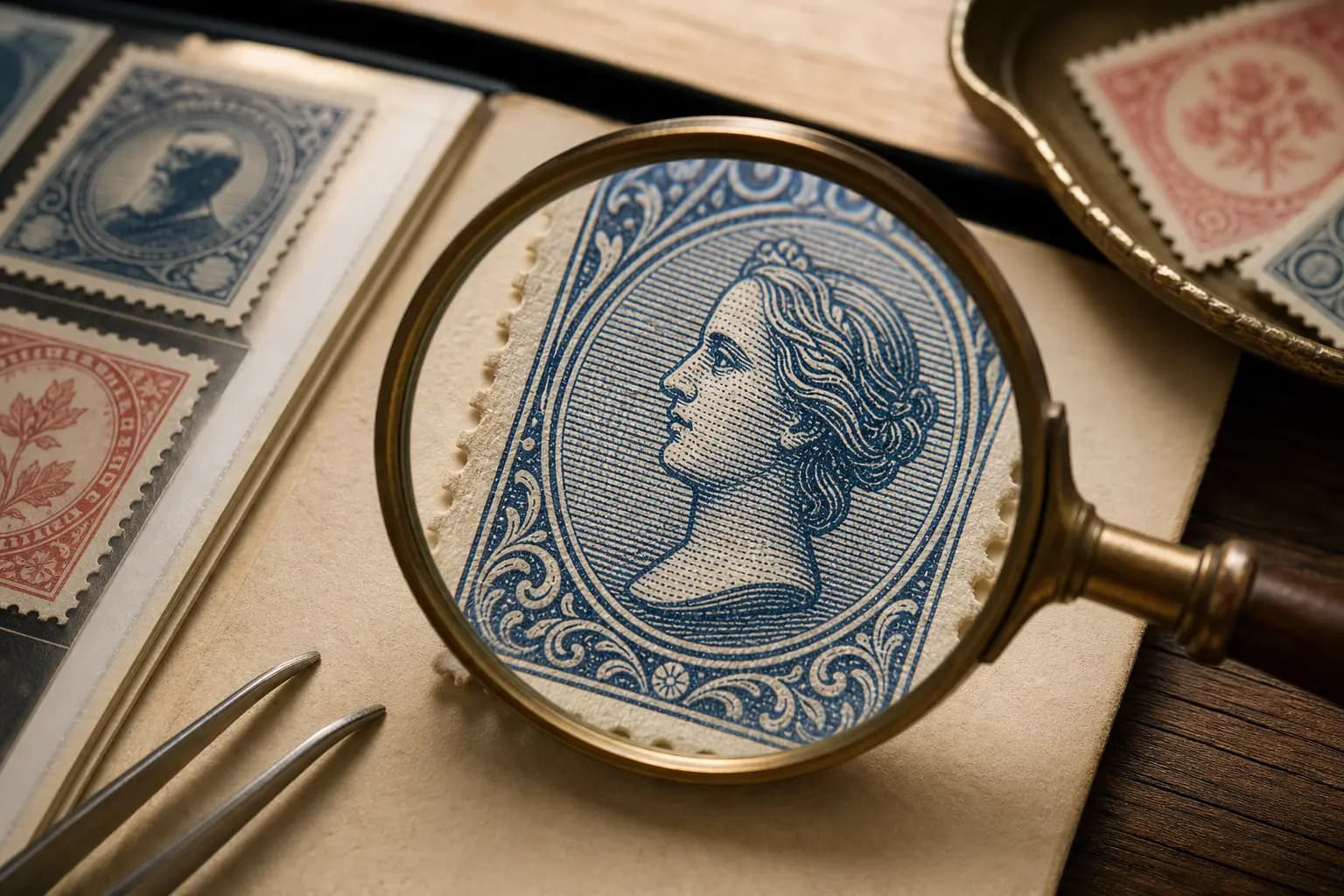
Line-engraved intaglio transfers ink from deliberately incised lines. In the APS description, the design is normally built from lines, hatching, cross-hatching, and stippling. Under non-contact magnification and oblique light, collectors may sometimes see raised ink, and pressure may leave debossing on the reverse. These are supporting features, not single tests, and they are best used together.
Because the method depends on engraved lines, intaglio often gives a structured look to the image rather than a flat field of tone. Still, that appearance should not be treated as proof on its own. A careful collector compares the stamp’s line construction, surface impression, and any reverse-side pressure marks with the design style and the issue records.
How to separate gravure from lithography without guessing
Gravure is also a recess process, but it forms tone from screened cells. That matters because screened structures can appear in other processes too, so a dot or cell pattern does not automatically identify gravure. The APS specifically warns collectors to combine observations and consult production records. In practice, that means treating the screened appearance as one clue among several, not as a conclusion.
Offset lithography is different because it is a planographic process: the image is formed on a smooth surface rather than cut or etched into a plate. The Smithsonian National Postal Museum notes that oil-based ink adheres to the image area, and a rubber blanket transfers, or offsets, that image to paper. Modern stamp lithography commonly uses separate process-color layers made from very fine dots, but the museum also notes that modern lithography can be sharp, so soft or blurred edges are not a dependable identifying rule. A dot pattern must be interpreted with other evidence because gravure and other processes can also show screened structures under magnification.
Do not diagnose a process from dots, softness, or shine alone
This is where many identifications go wrong. Fine dots can appear in lithography, but they can also appear in gravure. Likewise, a stamp that looks soft at first glance may still be sharply printed by lithography. The safe rule is to use cumulative clues: image structure, surface impression, ink character, and any process-specific construction seen under magnification.
A practical way to think about it is to ask what the print appears to be doing. Is the image built from engraved lines? Does the tone seem to come from screened cells? Is the image transferred from a smooth planographic surface using process-color layers? None of these questions should be answered by one visual feature alone. If the evidence conflicts, keep the identification provisional until you can compare it with production records or reliable reference material.
Use only non-contact viewing and controlled light
For stamp study, use non-contact magnification with diffuse or oblique light. That combination lets you inspect the surface, line structure, and possible debossing without risking abrasion or pressure damage. The goal is to observe, not to alter, and that is especially important on older or valuable material that should not be handled roughly.
Avoid methods that require contact, force, or improvised cleaning. The sources here support careful viewing, not intervention. A darkened room with a good light source can help reveal surface differences, but the light should remain controlled and gentle. If the stamp is fragile, mount-free, or especially significant to your collection, consider limiting handling to the minimum needed for a safe inspection and record the observations rather than repeatedly rechecking the same item.
Why production records matter as much as the stamp itself
Physical clues are strongest when they match production records. The APS explicitly recommends consulting production records, especially because a modern stamp may use more than one process. That means the stamp on your desk can be only part of the evidence trail. A design that appears to show screened tone, for example, may still need confirmation from known printing documentation.
This is also why a methodical collection record is valuable. When you note the stamp’s visible clues, compare them with issue information, and save the result, you reduce the chance of repeating the same uncertainty later. If you use StampSnap, the useful role is to capture those working notes and images so you can revisit them alongside the published records. The record should remain open to revision if better evidence appears.
A safe collector workflow for printing identification
Start by observing the stamp in normal light, then move to diffuse or oblique light under non-contact magnification. Ask which of the four major families best fits the visible evidence: line-engraved intaglio, gravure, letterpress, or lithography. If you see engraved-looking line work, note whether the design is constructed from lines, hatching, cross-hatching, and stippling. If you see screened tone, note that as a clue, not a verdict.
Next, compare what you saw with issue references and any production records you can access. Do not force an identification from a single dot pattern, a soft look, or a raised effect. On modern stamps especially, more than one process may be present. A careful collector records the uncertainty clearly, keeps the stamp safe, and allows the evidence to accumulate before deciding which printing family is most likely.
Frequently asked questions
What are the major stamp printing families I should know first?
The APS identifies four major families used for postage stamps: line-engraved intaglio, gravure, letterpress, and lithography.
Can I identify a printing process from dots alone?
No. Dots or screened structures are only clues. Gravure and other processes can also show screened patterns, so you should combine several observations and consult records.
Is a soft or blurred look a reliable sign of lithography?
No. The Smithsonian National Postal Museum notes that modern lithography can be sharp, so softness or blur is not a dependable identifying rule.
What is the safest way to inspect a stamp for printing clues?
Use non-contact magnification with diffuse or oblique light, and avoid contact methods or improvised treatment.
Why should I check production records if I can see the print clearly?
Because a modern stamp may use more than one process, and physical clues are best interpreted alongside production records.