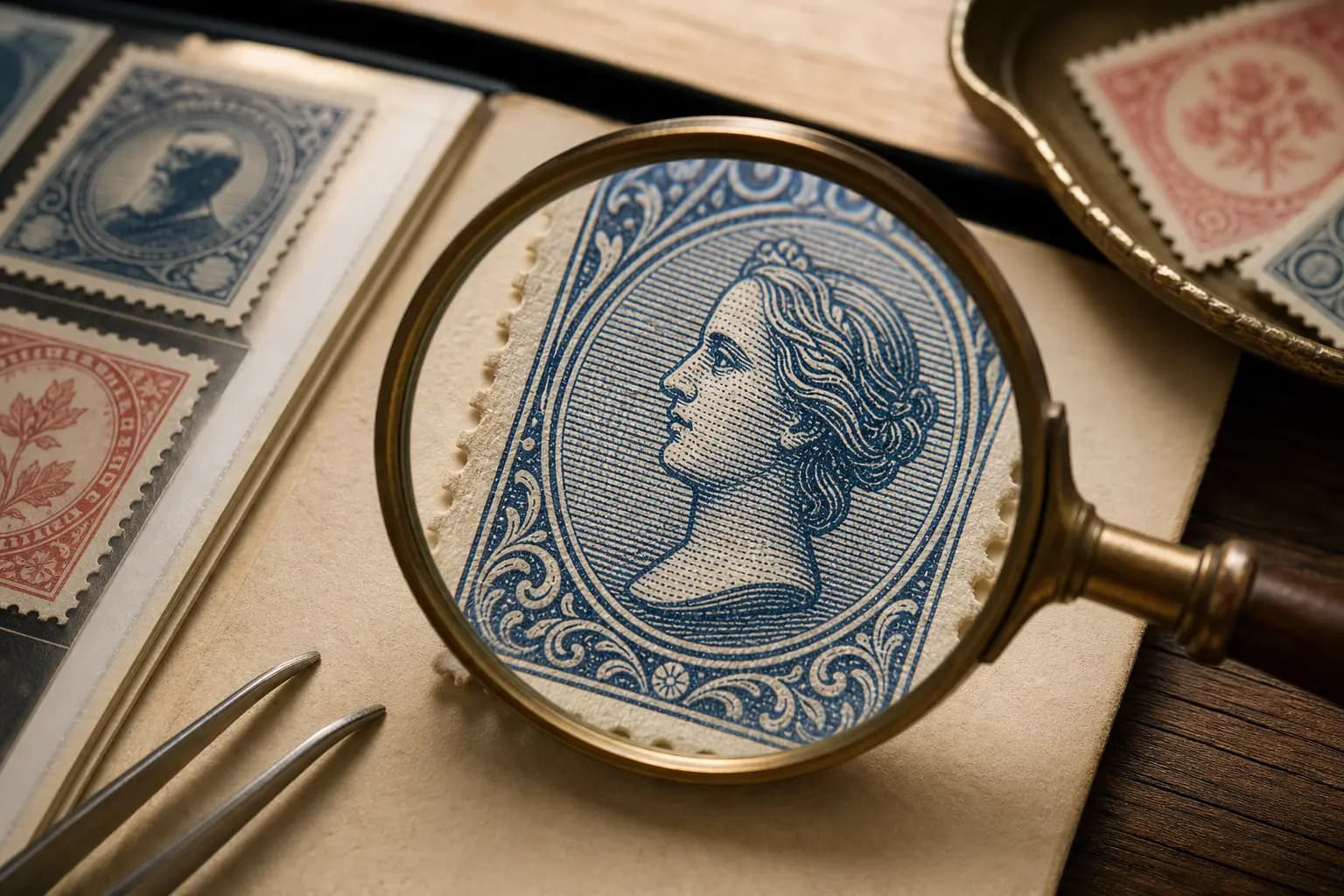
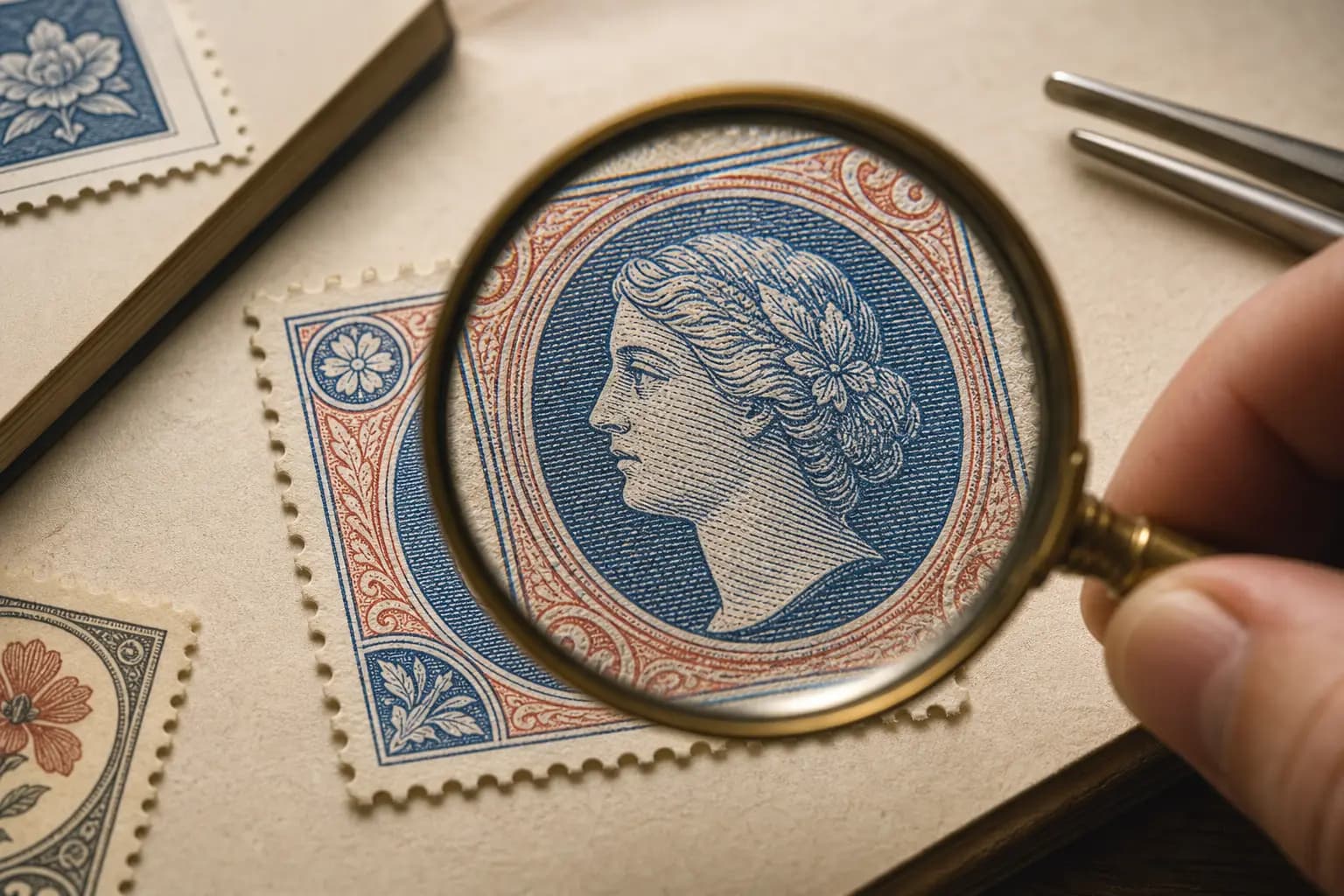
Start with the main question: can one stamp use more than one printing process?
Yes. Some modern stamps combine more than one printing process, so the safest answer is not to look for one magic clue, but to compare several clues together. The American Philatelic Society identifies four major families used for postage stamps: line-engraved intaglio, gravure, letterpress, and lithography. A stamp may show features from more than one of these families, especially on modern issues.
That matters because collectors sometimes try to identify a stamp from a single surface feature, such as dots, shine, or edge softness. The sources supplied here do not support that shortcut. Instead, they show that printing evidence should be treated as cumulative: what the design looks like under magnification, how ink sits on the paper, and whether the reverse shows pressure or debossing all contribute to a more reliable identification.
What does line-engraved intaglio look like?
Line-engraved intaglio is a recess process in which ink is transferred from deliberately incised lines. Its design is normally constructed from lines, hatching, cross-hatching, and stippling. Under non-contact magnification and oblique light, collectors may sometimes see raised ink, and the pressure of printing may leave debossing on the reverse. These are supporting features, not a single test.
That distinction is important. Raised ink or reverse debossing can help point toward line-engraved intaglio, but they do not identify a stamp on their own. You should look for the overall structure of the design as well: line work, hatch patterns, and a sense that the image was built from engraved forms rather than only from tone or flat colour. If the stamp also shows other process traits, it may be a hybrid rather than a single-process issue.
How does gravure differ from line-engraved intaglio?
Gravure is also a recess process, so it can be confused with line-engraved intaglio if you rely only on the fact that ink appears to come from below the surface. The key difference in the source evidence is that gravure forms tone from screened cells. That means the printed appearance may be built from a screen-based pattern rather than from the engraved line structure typical of line-engraved intaglio.
Collectors should be careful not to turn screened appearance into a conclusion by itself. The American Philatelic Society notes that screened or raised effects can appear in other processes too, so the right method is to compare all available clues and then consult production records. If a stamp seems to show both fine screen structure and another process trait, that is exactly the kind of case where a mixed-process explanation may be plausible.
What should you look for in lithography and offset lithography?
Lithography is a planographic process, meaning the image is formed on a smooth surface rather than cut or etched into a plate. In offset lithography, oil-based ink adheres to the image area, and a rubber blanket transfers, or offsets, that image to paper. The Smithsonian National Postal Museum explains that modern stamp lithography commonly combines separate process-colour layers made from very fine dots.
Those dots are useful evidence, but only as part of a larger comparison. The museum warns that modern lithography can be sharp, so soft or blurred edges are not a dependable identifying rule. It also says a dot pattern must be interpreted with other evidence because gravure and other processes can also show screened structures under magnification. In practice, that means you should compare dot form, overall design behaviour, and any records that describe the production method before drawing a conclusion.
Why letterpress and mixed modern production matter
The APS includes letterpress among the four major families used for postage stamps, which is useful because modern stamps are not always produced by a single classic method. When a stamp combines processes, one portion of the design may carry one printing character while another portion shows a different one. That is why the safest identification method is to read the whole stamp, not just one corner or one motif.
For example, a design might show engraved-looking line work in one area and a separate dot-built colour layer elsewhere. That does not automatically prove a specific production sequence, but it is a strong reason to suspect multiple processes. This is also where a collection record can help. If you use StampSnap to create a likely identification note for later checking, keep the note descriptive rather than definitive, and leave room for correction when records or literature are added.
A safe, methodical workflow for identification
Begin with clean, dry handling and use only non-contact magnification with diffuse or oblique light. Do not use household solvents, and do not rely on touch or scraping to test the surface. First, ask what the design seems built from: engraved lines, screened cells, or fine process-colour dots. Then compare the reverse for pressure marks or debossing only if the stamp can be viewed safely without bending or stressing it.
Next, separate observation from conclusion. Record what you can see, such as line work, screen structure, raised ink, or colour layering, and keep in mind that each of these may be only one clue. The best-supported identification often comes from combining the physical clues with production records. When records are not available, the correct answer may be tentative, and it is better to say “likely” or “possibly mixed process” than to force a final label.
How to avoid common mistakes when reading stamp printing
The most common mistake is treating one visible trait as a diagnosis. The supplied sources specifically caution against using softness, blur, or dot pattern alone, because modern lithography can be sharp and gravure can also show screened structures. Another mistake is to ignore the fact that one stamp may include more than one process. If the evidence seems to point in different directions, that is not a failure; it is a sign to slow down and compare more carefully.
A second mistake is using risky handling methods that can harm the stamp before you have identified it. Keep the stamp dry unless a separate, justified conservation step is needed, and avoid any solvent experiments. If the item is valuable, fragile, or on cover, work only with appropriate tools and light. The goal is not to prove a theory at any cost. It is to build a careful, defensible record of what the stamp most likely shows.
Frequently asked questions
Can I identify a stamp’s printing process from dots alone?
No. The sources say dot patterns must be interpreted with other evidence because gravure and other processes can also show screened structures, and modern lithography can be sharp.
What are the main printing families used for postage stamps?
The American Philatelic Society identifies four major families: line-engraved intaglio, gravure, letterpress, and lithography.
How is line-engraved intaglio different from gravure?
Both are recess processes, but line-engraved intaglio is built from deliberately incised lines, while gravure forms tone from screened cells.
What is the safest way to inspect printing clues?
Use non-contact magnification with diffuse or oblique light, and combine several visual clues instead of relying on one surface feature.
Should I trust a visual guess if the stamp may use more than one process?
Only as a tentative note. The safest approach is to record the visible clues and confirm them with production records when possible.