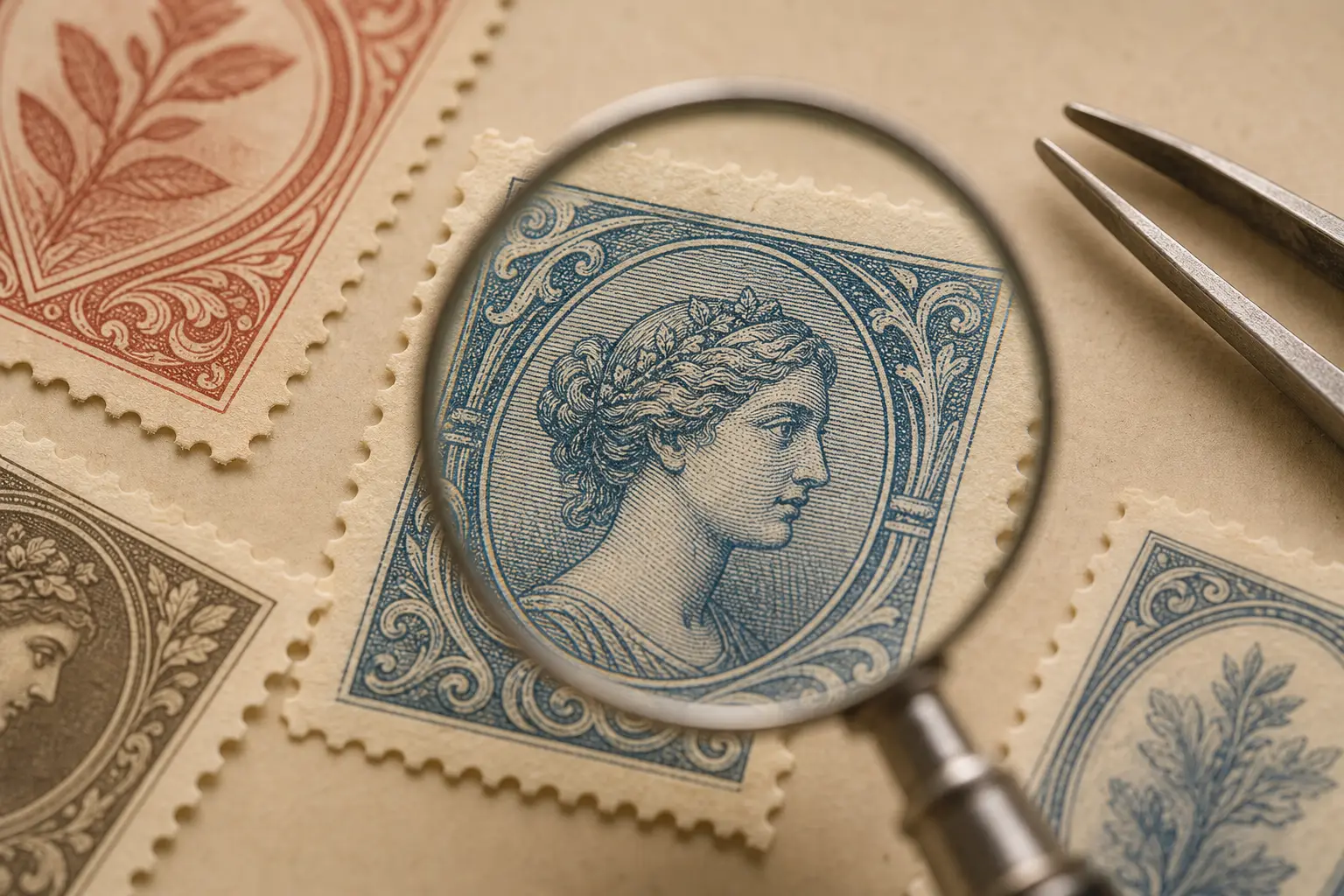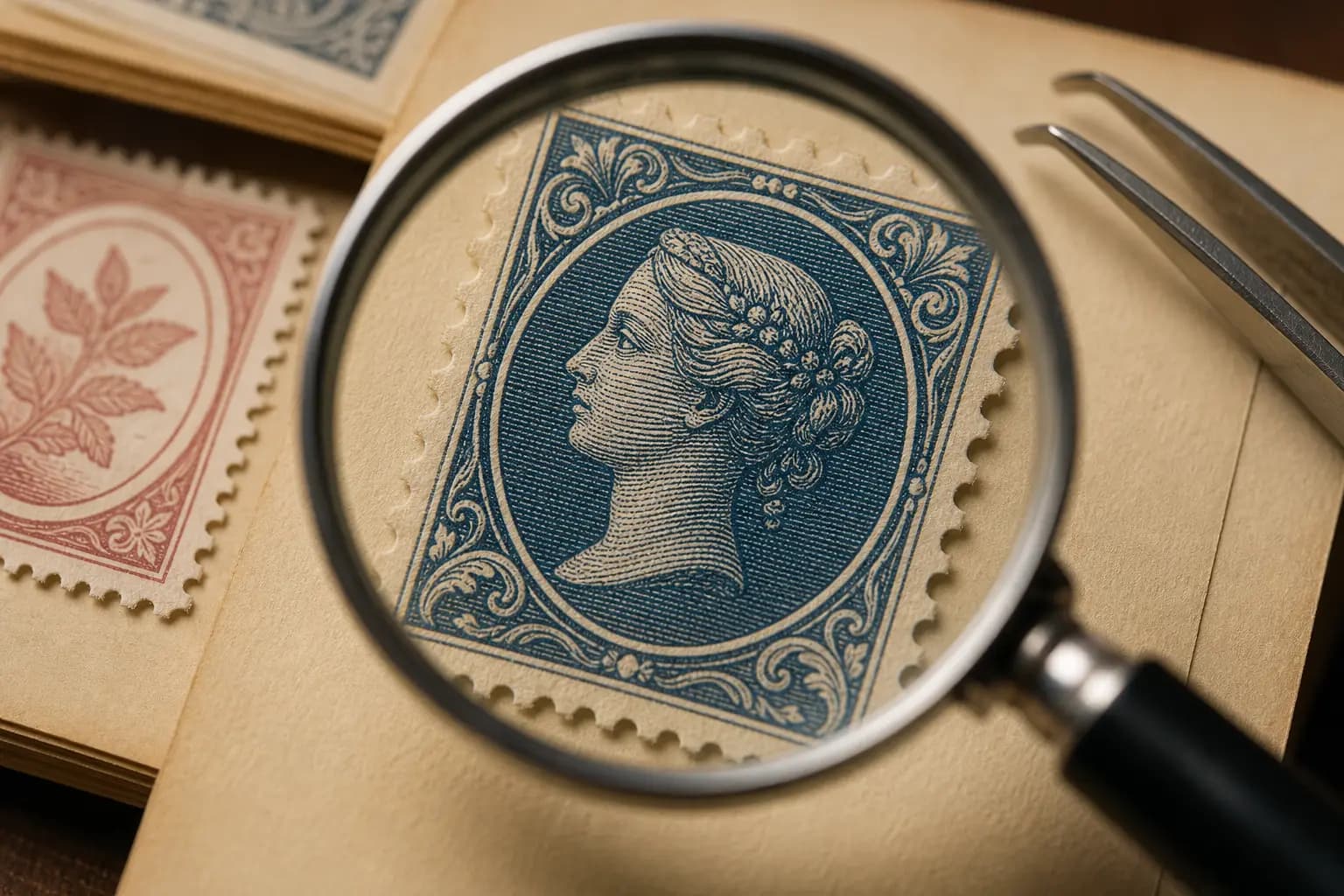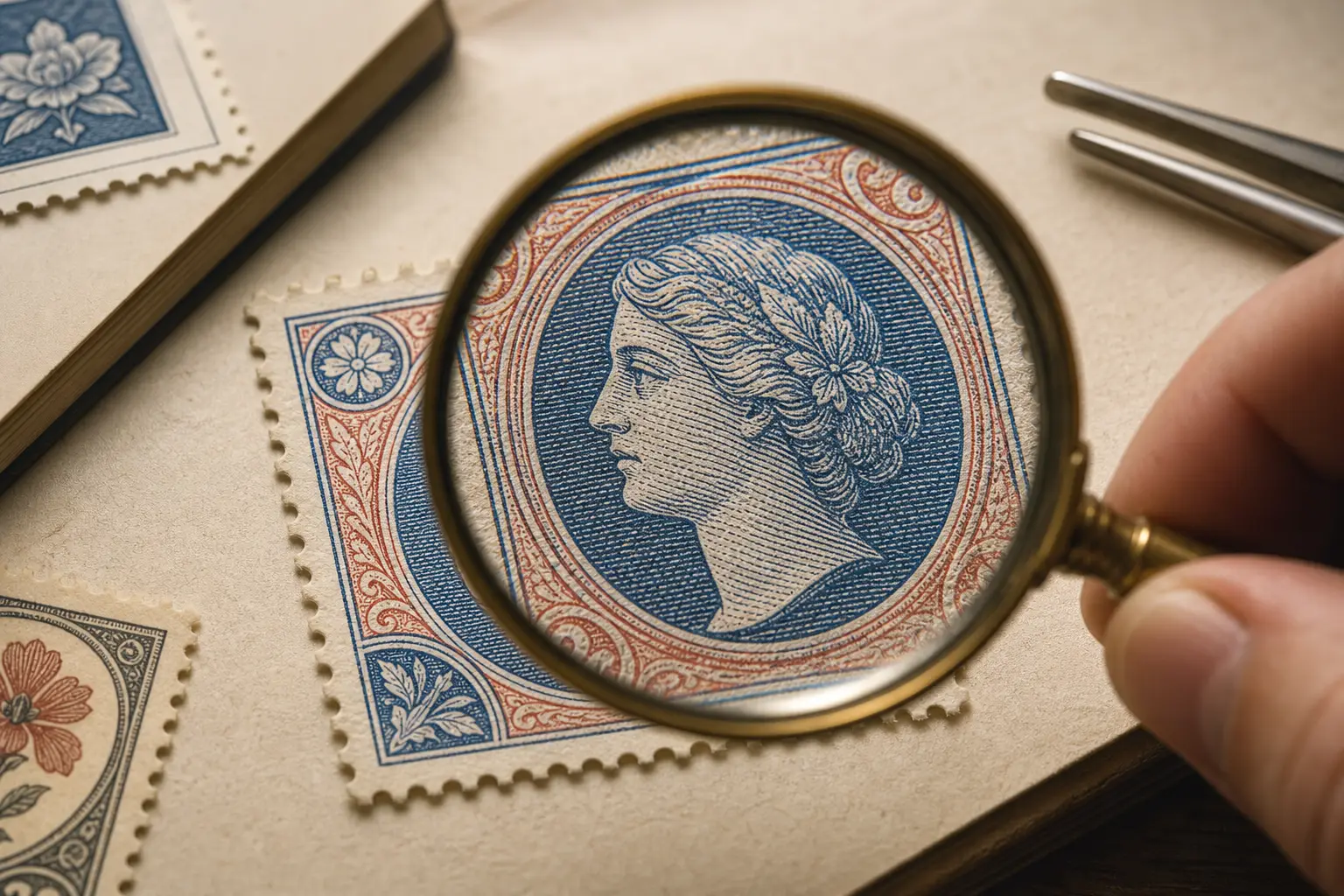
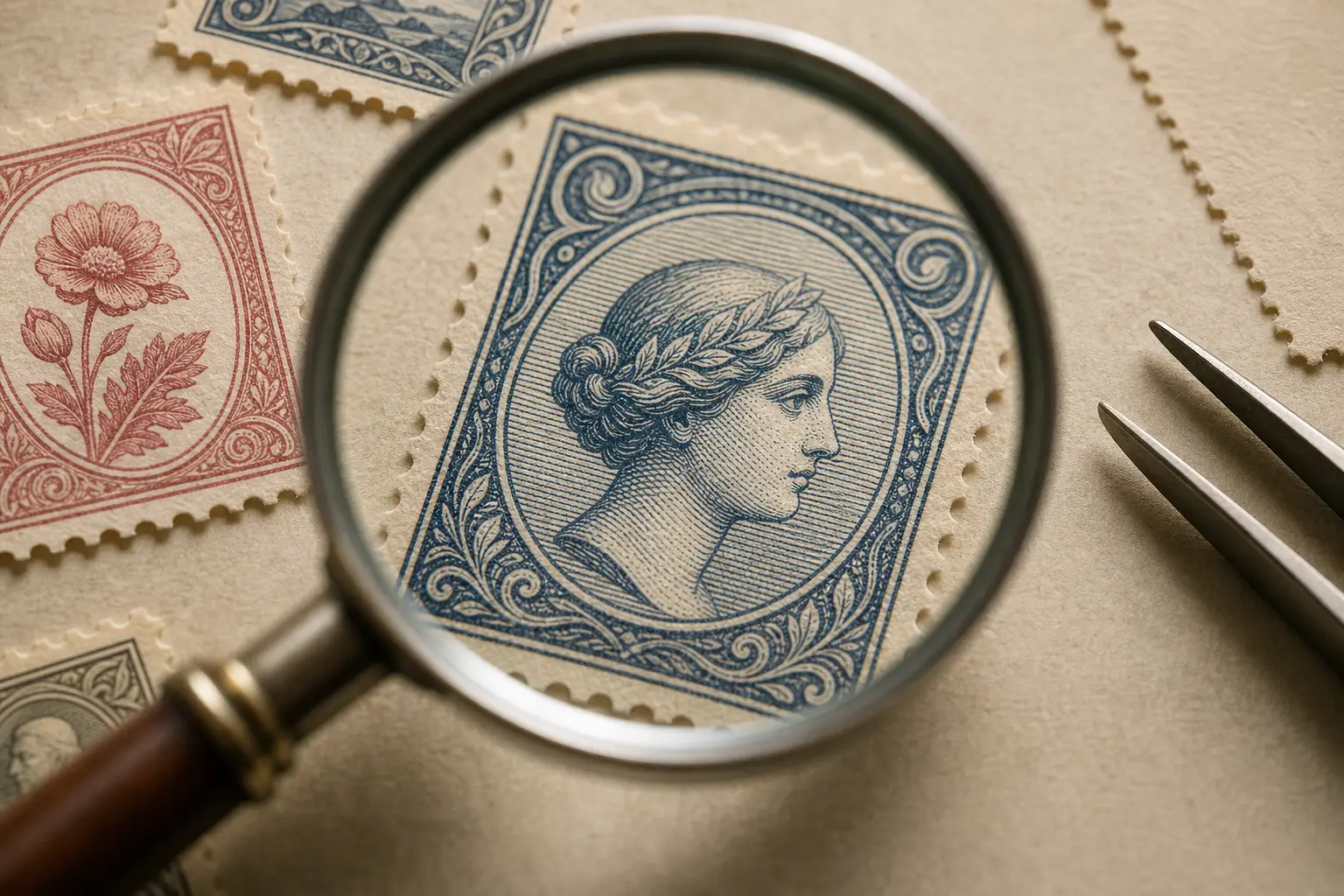
Start with the safest question: what printing family does the stamp suggest?
The safest way to identify a stamp’s printing method is to treat every visible clue as part of a larger picture. The American Philatelic Society identifies four major families used for postage stamps: line-engraved intaglio, gravure, letterpress, and lithography. That means the first job is not to guess one effect, but to ask which family best fits the combined evidence on the stamp.
This matters because modern stamps may show more than one process, so a single feature can mislead. A dot pattern, a smooth-looking surface, or a slightly raised impression may all appear in more than one printing family. Build your answer from the whole stamp, not from a quick glance at one corner or one letter. If you are making a record, StampSnap can help you note the likely identification, but the observation still needs to be treated as provisional until you have compared more clues.
Use magnification and light, but do not let one clue decide the case
Use non-contact magnification only, and look under diffuse light first, then oblique light. These lighting changes help you see whether ink sits on the surface, whether lines appear deliberately engraved, and whether the image is constructed from fine dots or screened cells. The key rule is cumulative diagnosis: no single test should decide the printing method by itself.
For line-engraved intaglio, the design is normally built from lines, hatching, cross-hatching, and stippling. The APS notes that raised ink can sometimes be seen under magnification and oblique light, and pressure may leave debossing on the reverse. Those are supporting features, not guarantees. Gravure is also a recess process, but it forms tone from screened cells, so screened or raised-looking effects alone do not prove gravure either.
How line-engraved intaglio differs from gravure
Line-engraved intaglio is the family collectors often associate with a very drawn, engraved look. Its design language is usually linear: fine strokes, repeated hatching, cross-hatching, and stippling create form and shading. Under magnification, you may see ink that appears to sit up on the paper in small ridges, and careful angled light may reveal pressure marks on the back.
Gravure also prints from a recess process, but the tone comes from screened cells instead of the line structure typical of line-engraved intaglio. That is why a stamp that looks “textured” is not automatically one or the other. The APS specifically warns that screened or raised effects can appear in other processes too, so you should compare the whole image, the way the shading is built, and any available production records before settling on a conclusion.
How to think about letterpress and lithography without overcalling them
Letterpress belongs to the major families used on postage stamps, but it should still be judged from the full set of clues rather than from roughness or apparent sharpness alone. A stamp may look bold or simple in one area and still not reveal its printing family from that feature by itself. The practical lesson is to compare border behavior, fine detail, and any repeated patterning, while remembering that modern stamps can combine processes.
Offset lithography is different because it is a planographic process: the image is formed on a smooth surface rather than cut or etched into a plate. The Smithsonian National Postal Museum explains that oil-based ink adheres to the image area, and a rubber blanket transfers, or offsets, that image to paper. Modern lithography can be sharp, so soft or blurred edges are not a dependable identifying rule. Treat any dot pattern as a clue only, since gravure and other processes can also show screened structures under magnification.
Use paper and watermark clues as a separate check
Paper clues can strengthen an identification, especially when the design evidence is inconclusive. Watermarks are security features incorporated into stamp paper to deter counterfeiting, and they may be words, letters, or symbols formed by thin places in the paper. Some stamps exist on both watermarked and unwatermarked paper, or on paper with different watermarks, so a paper clue can matter even when the printed design looks identical.
The APS notes that stamps with the same design but different watermark status or watermark design generally receive separate catalog numbers. That means a watermark can be the only difference between a common stamp and one that is catalogued separately. The safest check is to examine the stamp face down in a dark tray and use watermark fluid, rather than trying to force the answer from appearance alone. For unused stamps, use appropriate watermark fluid and avoid methods that could affect the gum.
A safe, repeatable workflow for collectors
Begin with a clean, dry workspace and good indirect light. First, look for the overall design style: line-based engraving, screened tone, or a planographic printed look. Second, examine the stamp under non-contact magnification with oblique light, and record only what you can actually see. Third, compare those clues against the known major families: line-engraved intaglio, gravure, letterpress, and lithography. Do not decide from softness, a dot pattern, or one raised-looking area alone.
If the stamp still remains uncertain, check the paper and watermark as a separate step. Use a dark tray and watermark fluid where appropriate, and keep the stamp flat and supported. This method is slower than a quick guess, but it avoids damage and reduces misidentification. A careful note in StampSnap can help you organise what you saw, what you ruled out, and what still needs comparison against production records or expert literature.
When uncertainty is the correct answer
Not every stamp can be identified confidently from visual clues alone, and that is normal. Multiple processes may appear on a modern stamp, and screened or raised-looking effects can occur in more than one family. If the evidence is mixed, the honest answer is to record the most likely family and mark it as unconfirmed until you can compare it with production records or trusted reference material.
That conservative approach protects both the stamp and your collection notes. It also helps you avoid turning a partial clue into a false certainty. In practice, the best identification habits are the same ones that prevent damage: use non-contact magnification, keep light controlled, and let the whole stamp, not a single feature, guide the conclusion.
Frequently asked questions
Can I identify a stamp’s printing method from dots alone?
No. Dot patterns can be a clue, but they are not decisive because gravure and other processes can also show screened structures under magnification.
Is a soft or blurred edge proof of lithography?
No. The Smithsonian National Postal Museum notes that modern lithography can be sharp, so softness or blur is not a dependable identifying rule.
What is the safest way to check a watermark?
Place the stamp face down in a dark tray and use watermark fluid when appropriate. This is the APS-recommended method for many stamps.
Can one stamp use more than one printing process?
Yes. The APS notes that more than one process may appear on a modern stamp, so identification should be based on combined clues.
Should I remove a stamp from a cover to inspect printing clues?
No. Do not remove material casually just to inspect printing. Use safe, non-contact observation and other non-damaging checks first.