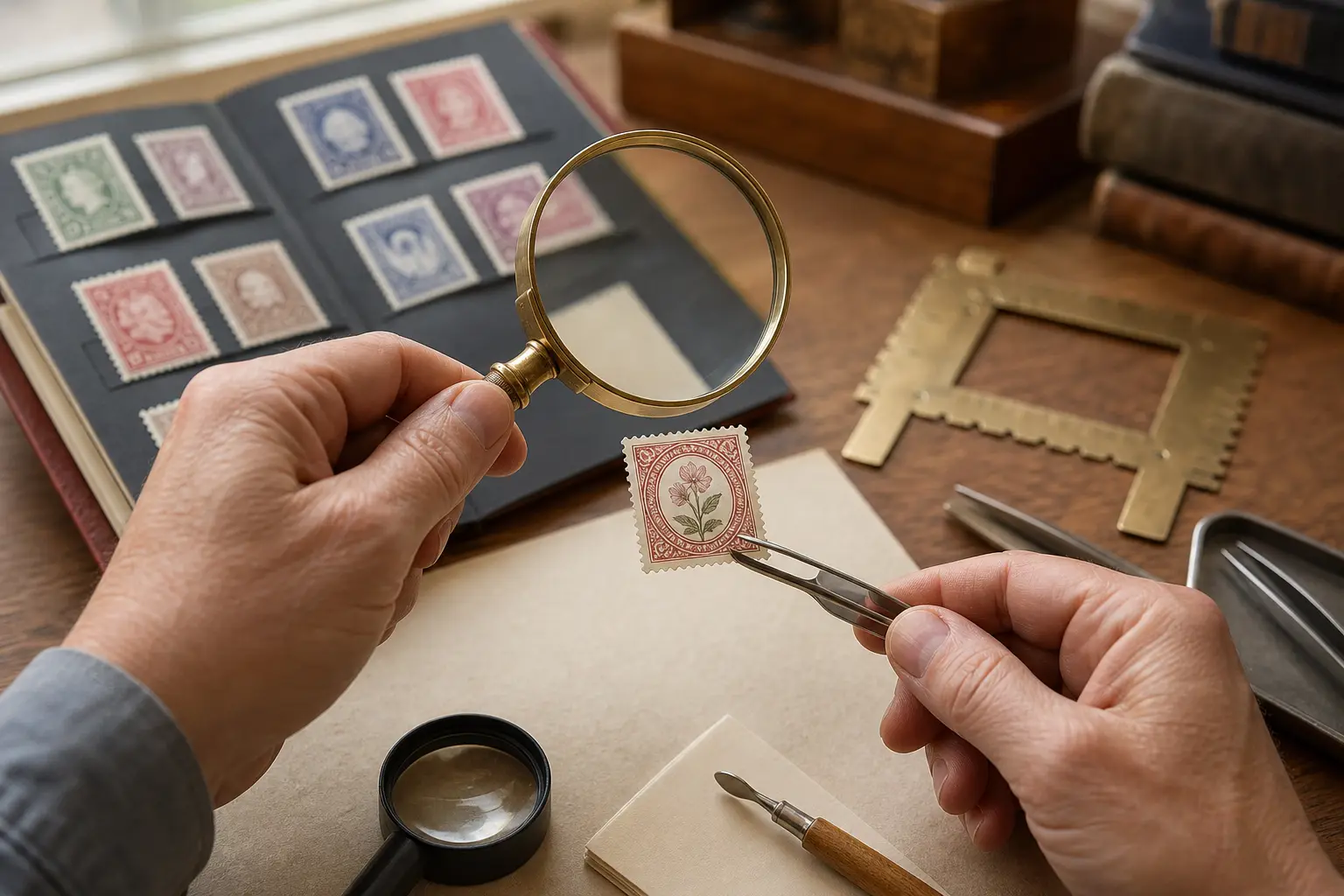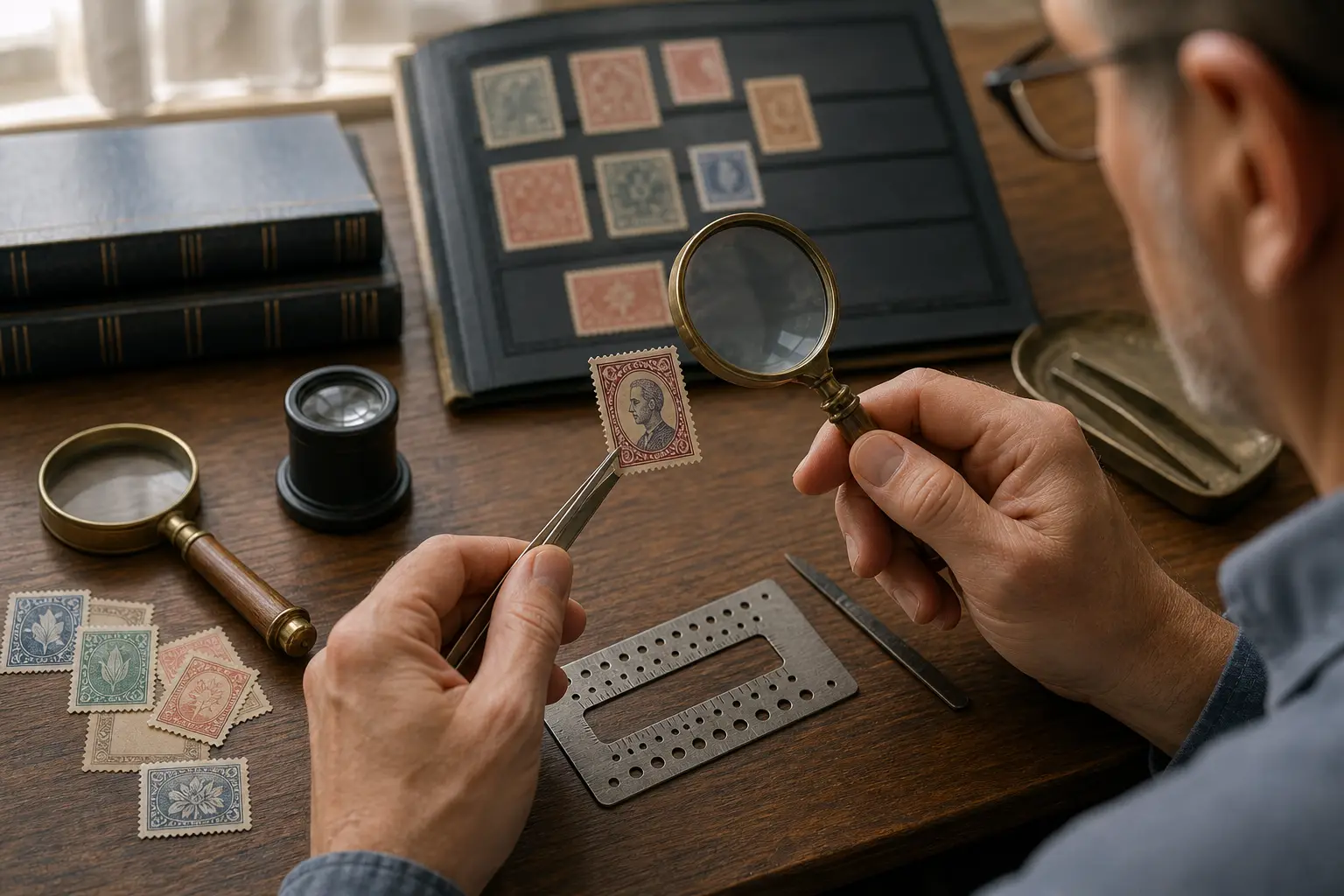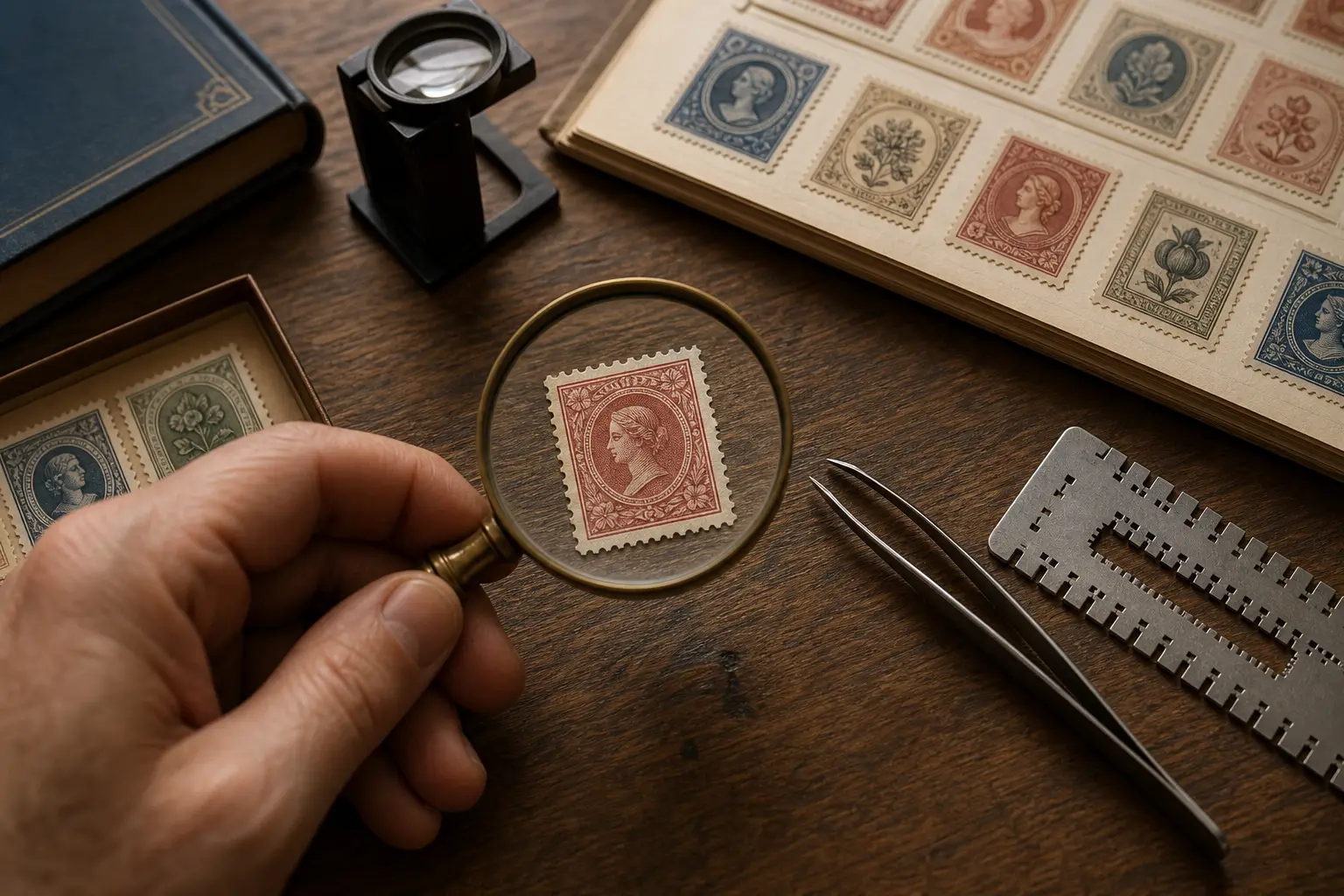
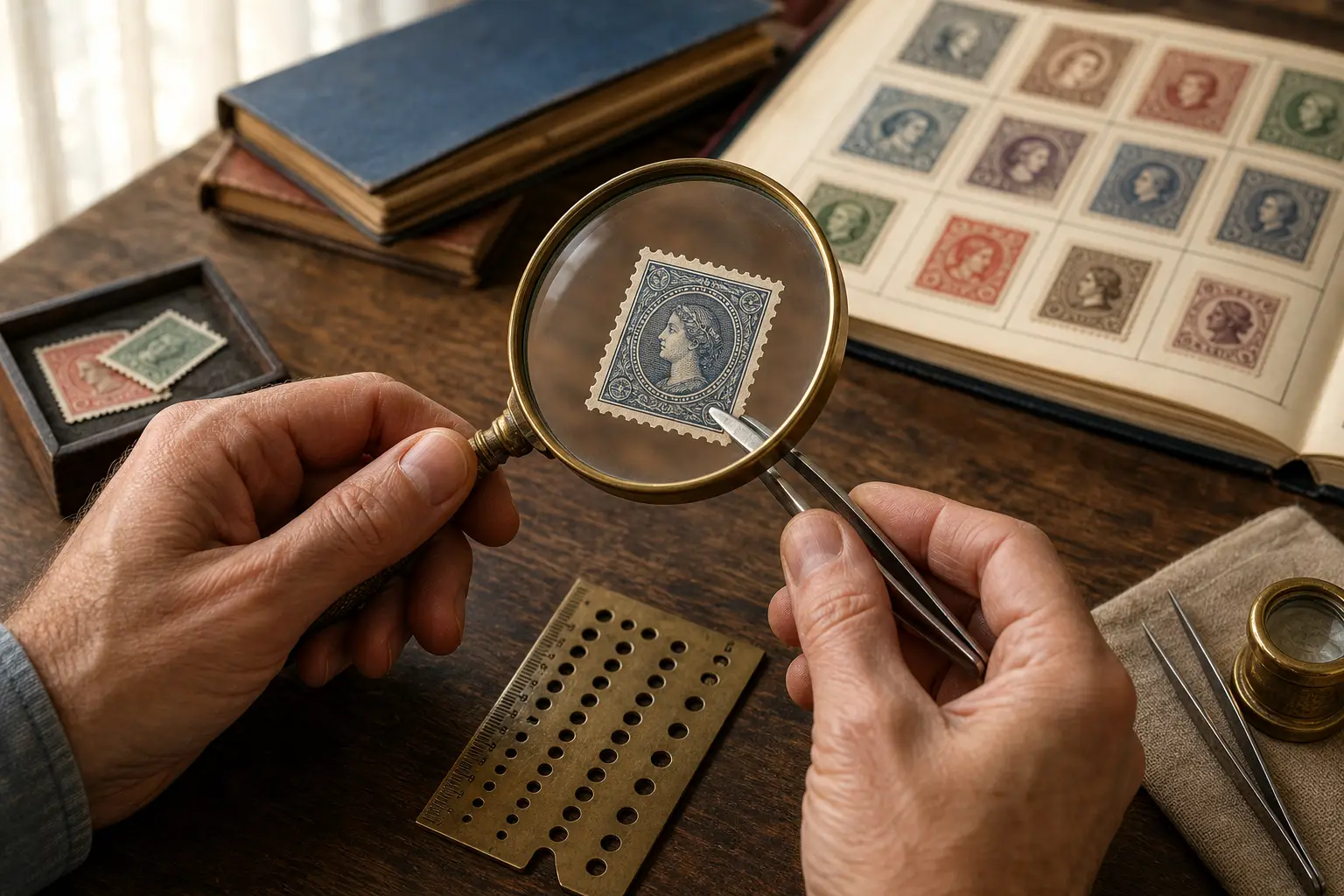
Start with the simplest answer: compare the perforations
If two stamps appear identical at first glance, perforations are one of the most practical ways to separate them. Some stamps have the same design but different numbers of perforations, and that difference can be enough to identify a different issue or variety. The American Philatelic Society specifically notes that a magnifying glass and a perforation gauge help collectors find these differences.
A careful perforation check is a good first step because it is non-destructive and easy to repeat. You do not need special wealth or advanced experience to begin, and the APS notes that stamp collecting itself does not require special skills. What you do need is patience, good light, and a method that lets you compare the edges of the stamp accurately.
What perforations are and why they matter
Perforations are the holes between stamps that make them easy to separate. The APS explains that different perforation counts can exist on stamps with the same design, which is why two examples that look alike may not actually be the same. In identification work, that means the edge pattern is not just a condition detail; it may be part of the stamp’s identity.
Because the differences can be small, your eye alone may not be enough. A magnifying glass that shows details clearly without distortion is useful, and the APS recommends one with about 5x to 10x magnification. With magnification, you can see whether the holes line up evenly, whether one edge is longer or shorter, and whether the perforation style matches what a reference source shows.
How to check perforations safely
Handle dry stamps as little as possible, and use stamp tongs rather than fingers. The APS says skin oil can damage stamps even after washing, so tongs with a smooth gripping surface are the safer choice. If the stamp is in a condition that makes handling risky, stop and place it back in safe storage rather than forcing a closer look.
To compare perforations, hold the stamp flat and view each side under good light. Then use a perforation gauge to match the edges against the gauge scales until the holes align exactly. The APS notes that counting holes by hand along a measured row is possible, but the gauge makes the measurement much simpler and less confusing. If a stamp seems close but not exact, treat that as a sign to keep checking rather than assuming.
Why the gauge is better than guessing
A perforation gauge helps standardise what you see. Instead of estimating whether a side has slightly more or fewer holes, you can compare it to a fixed scale. The APS describes gauges made of cardboard, plastic, or metal, and says they allow you to place the stamp against each scale until the perforations match. That matters because a small measurement difference may separate one stamp from another.
The safest habit is to measure the same stamp more than once, especially if you are studying a stamp that appears to match another issue. A single quick glance can miss an offset edge or a misleading angle. If you are organising a collection record in StampSnap, note the perforation reading alongside the image so you can revisit the identification later without having to guess from memory.
Confirm the result with a catalog or record
Perforations should not be used in isolation when you can check a catalog. The APS says a stamp catalog is a useful reference book with illustrations and details such as the date of issue, a description of the stamp, why it was issued, how it was printed, and the value in used and unused condition. That means the catalog can help you confirm whether the perforation result fits the issue you think you have.
This is also where uncertainty matters. A similar design, a different perforation count, and a matching catalog illustration can point toward an identification, but a visual check alone is not the same as official authentication. If the stamp seems important or unusual, keep the evidence together: a clear photo, the perforation reading, and the catalog notes that support your conclusion.
Common mistakes collectors should avoid
Do not use tape or glue to hold a stamp in place while you measure it. The APS warns that these materials can decrease value and may damage the stamp if removal is attempted later. Do not rely on sticky album pages either, because they can damage stamps over time. Safe storage and careful handling matter before and after identification.
Another common mistake is deciding too quickly from a partial view of the edge. Perforations need to be checked side by side, and a stamp that looks ordinary at one angle may show a different count on another side. If the stamp is mint, used, or mounted, keep the condition in mind and avoid any handling method that could harm the item just to force a clearer reading.
A practical identification workflow you can repeat
Begin with a visual comparison, then use a magnifying glass, then measure with a perforation gauge, and finally confirm with a catalog. This sequence keeps the process simple and repeatable. It also reduces the risk of overinterpreting a single clue, which is especially important when two stamps share the same design.
Collectors often find that this method turns a confusing pair of lookalikes into a manageable problem. Over time, it also builds a useful reference habit: a measured stamp, a note of the reading, and a catalog check become a record you can review later. StampSnap can help you keep that record organised, but the identification itself still depends on careful observation and comparison.
Frequently asked questions
Can two stamps with the same design have different perforations?
Yes. The APS notes that some stamps have the same design but different numbers of perforations, and that difference can help identify a different stamp.
What is the safest way to check perforations?
Use stamp tongs for dry stamps, good light, a magnifying glass, and a perforation gauge. Avoid handling the stamp with your fingers more than necessary.
Do I need a perforation gauge to identify a stamp?
A gauge is not the only way, but the APS recommends it because it makes perforation measurement much simpler than counting holes by hand.
Should I rely on perforations alone to identify a stamp?
No. Perforations are an important clue, but the APS also recommends using a stamp catalog to confirm issue details, printing information, and descriptions.
What if the perforation reading does not match exactly?
Treat that as uncertainty, not a final answer. Recheck the stamp under magnification and compare it again with a catalog before deciding.