The quickest safe answer
You can usually identify a self-adhesive stamp without soaking it by examining the stamp and its backing carefully, using a magnifying glass, and checking a stamp catalog for printing and issue details. The safest approach is to avoid any test that could damage gum, backing, or the envelope piece before you know what you have.
According to the American Philatelic Society, many current U.S. self-adhesives will not simply soak off paper because their backing is oil based rather than water based. That means a quick water test is not a reliable identification shortcut for modern material, and it can create avoidable handling risk.
Start with what you can see, not what you can remove
Look at the stamp on its own and, if it is still on paper, study the back edge and surrounding paper without forcing separation. A self-adhesive stamp may have a backing layer that is part of the issue, so any attempt to peel, scrape, or tug can leave damage that is harder to reverse than the identification problem itself.
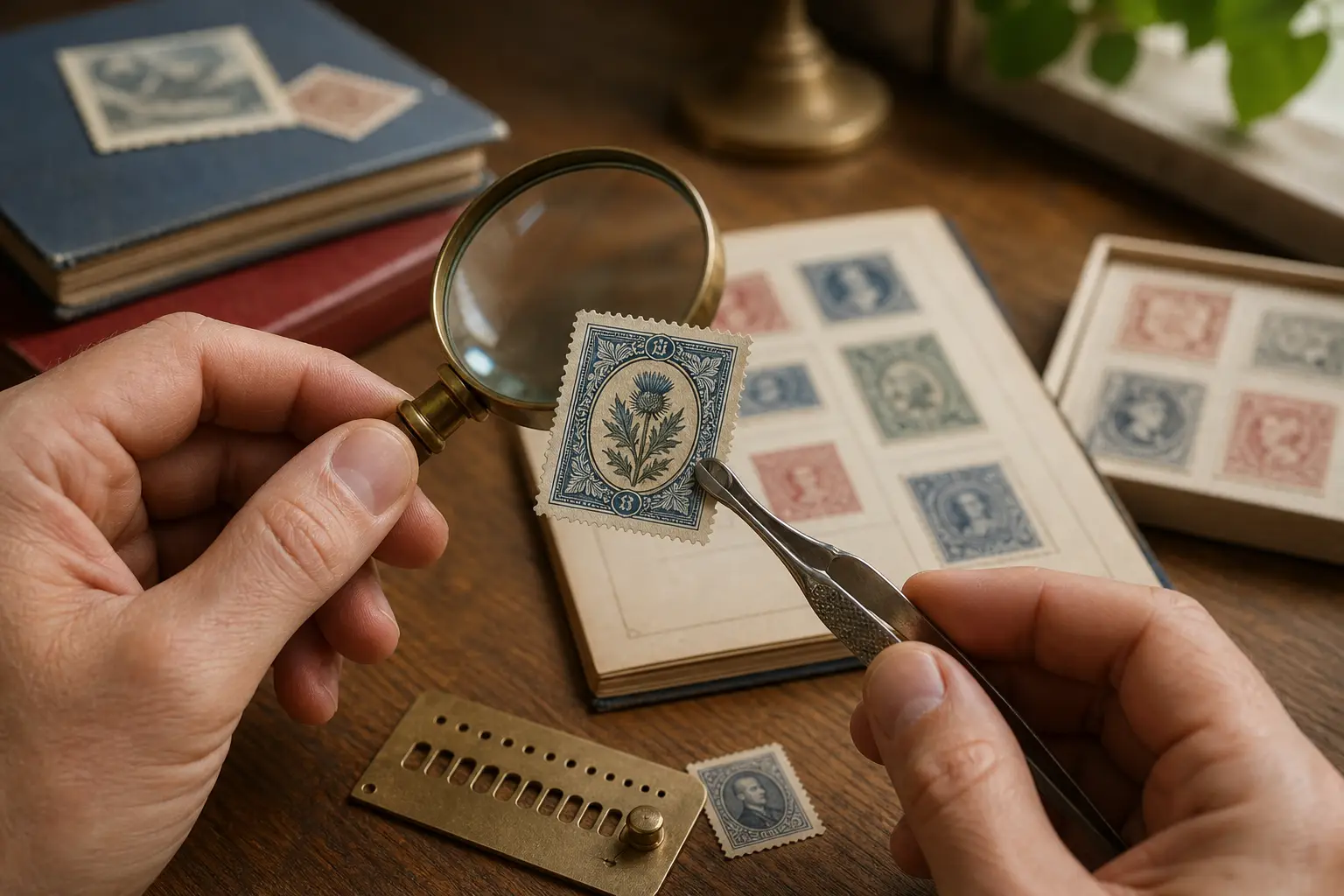
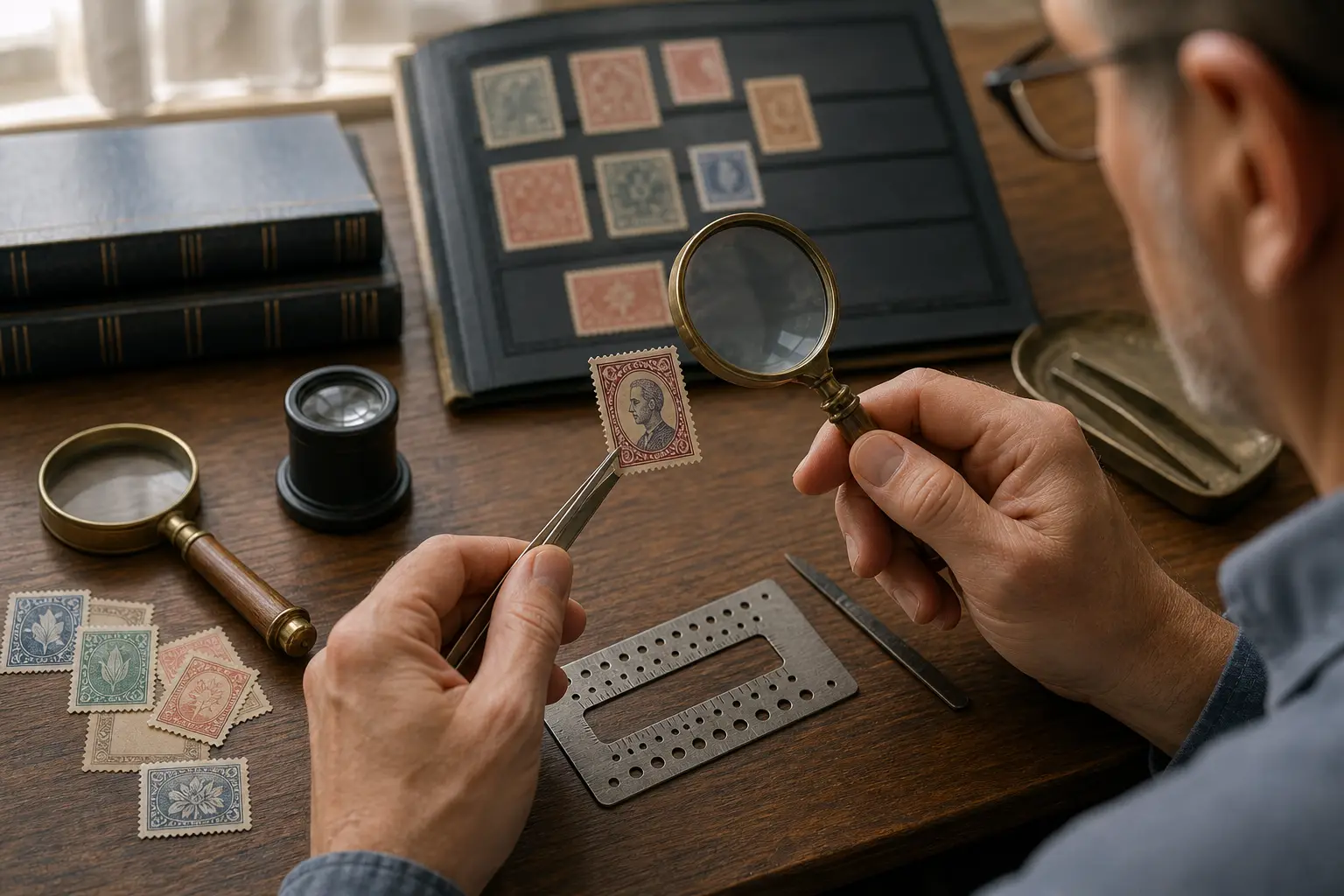
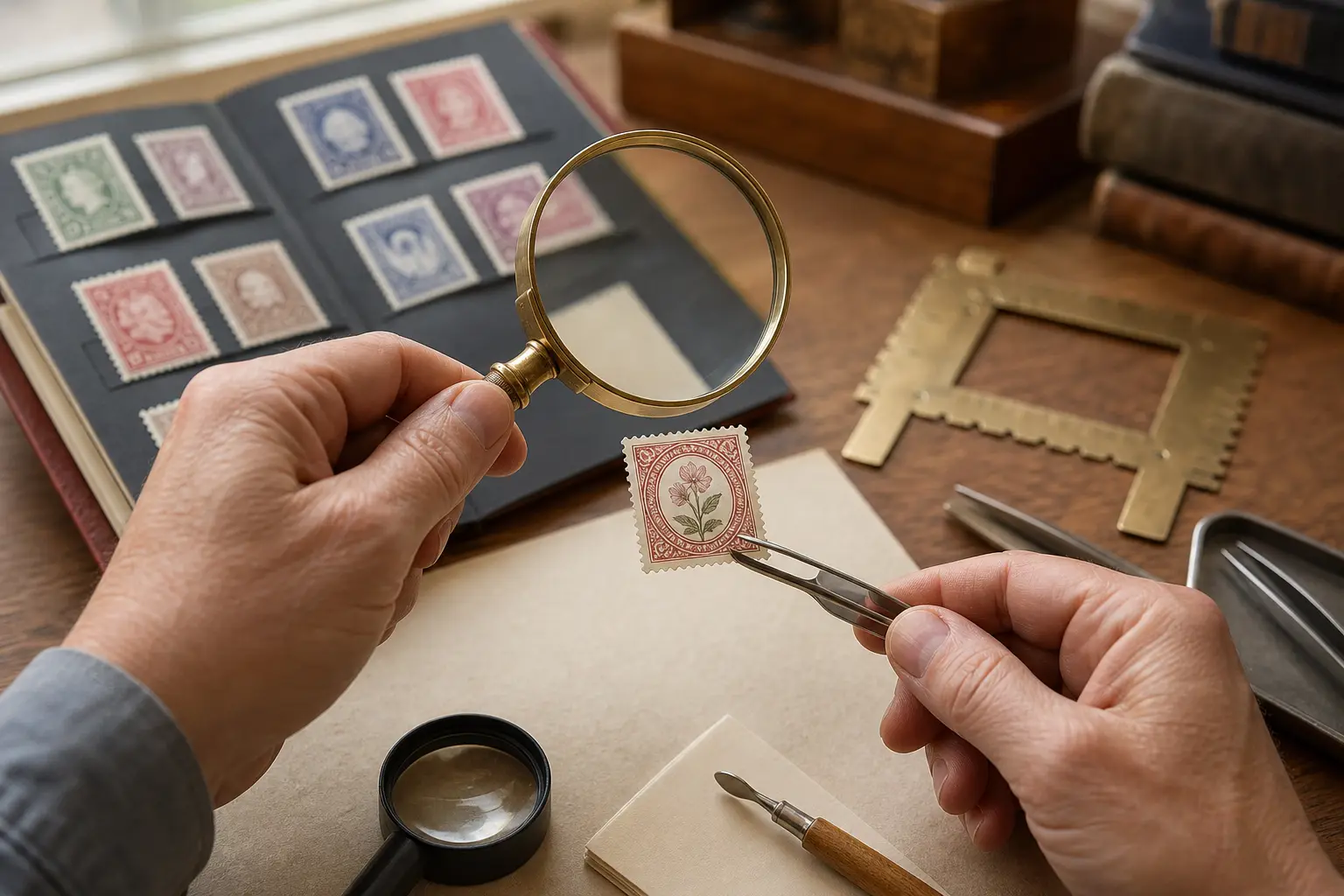
If the stamp is already loose, handle it as little as possible. APS recommends stamp tongs for dry stamps because oil from your skin can damage them. That advice matters here because self-adhesive issues often have surface and backing features that are easier to preserve than to repair.
Use a magnifier to look for identification clues
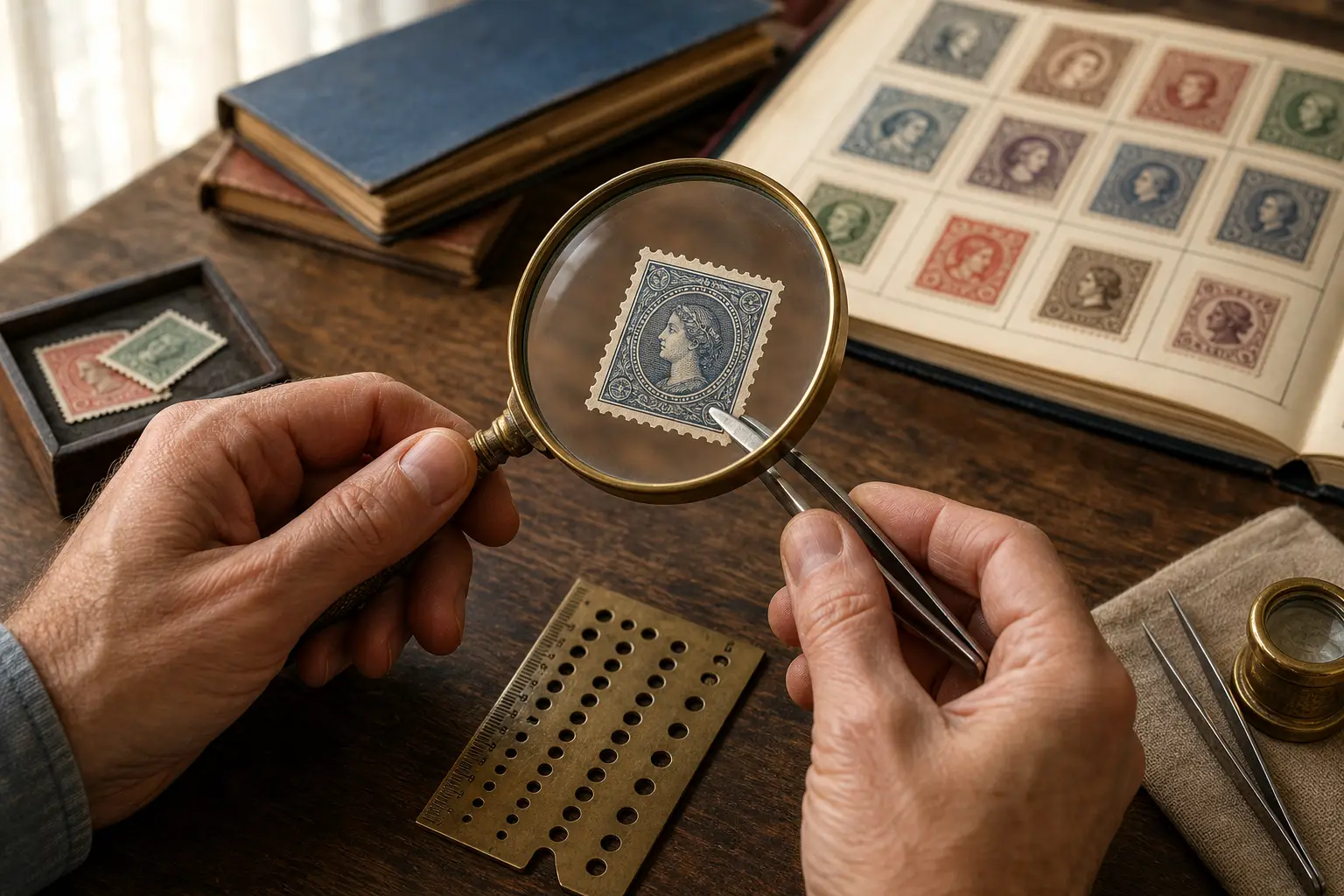
A magnifying glass is one of the simplest tools for this task. APS notes that some stamps appear alike until close inspection reveals small differences that help identify a stamp, and recommends a lens with about 5 times to 10 times magnification. Choose one that gives a clear image without distortion so the details you see are dependable.
Under magnification, compare the stamp design, printing details, perforations if present, and any visible text or markings against catalog images or your own reference notes. If you are recording possible matches in StampSnap, treat the result as a working identification record rather than a final determination.
Check the catalog before you try any removal test
A stamp catalog can tell you whether a stamp was issued as a self-adhesive, when it was issued, how it was printed, and what its used and unused listings are. APS describes catalogs as a helpful reference filled with illustrations and issue information, which makes them especially useful when two stamps look similar but behave differently in water.
If the catalog or reference notes show that the issue is a modern U.S. self-adhesive, do not assume soaking will work. APS states that before 2007 almost all U.S. self-adhesives could be removed by soaking in water for extended periods, but most current U.S. self-adhesives will not simply soak off paper.
Why water can be the wrong first test
Collectors sometimes assume that if a stamp is on paper, water will separate it. The APS FAQ explains that for most current U.S. self-adhesives, the backing is oil based rather than water based, so water alone is not enough. In other words, a stamp may be self-adhesive even though a normal soak does not release it.
That is why identification should come first and removal second. If you are unsure, it is better to leave the stamp in place than to experiment with household methods that could stain, curl, or worsen the backing. Uncertainty is not a failure; it is a signal to pause and compare the item against reliable references.
What to do when the stamp is still on cover or paper
When a self-adhesive stamp is on an envelope, preserve the entire piece until you can identify it safely. The cover may provide clues about country, usage, and issue period that are lost if you remove the stamp too early. That is especially important when the stamp has no obvious country name or when the design is familiar but the backing type is not.
Use tongs, good light, and a magnifier to inspect the stamp and the surrounding mail piece. If you need help keeping it organized, make a note of the visible features and store the whole item flat in a safe place. A careful record is often more useful than a risky test.
A practical step-by-step identification routine
First, look for visual clues such as issue style, surface appearance, and any visible backing edge. Second, compare the item with a catalog illustration and issue description. Third, use a magnifier to check fine details that may separate similar stamps. Fourth, decide whether the stamp is likely a self-adhesive before doing anything that could affect condition.
If the stamp appears current U.S. and self-adhesive, assume soaking may not work and do not force it. If the item is older or uncertain, keep the treatment conservative and stop if you do not have a clear identification. Safe handling protects both the stamp and your future options.
When to stop and treat the match as uncertain
Visual identification is not always conclusive. Two stamps can share a similar design, and a stamp may look ordinary while still being a self-adhesive issue with a backing that does not behave like older water-based stamps. If the evidence is mixed, label the item as tentative rather than definite.
That cautious approach is useful for collection records as well. A note in StampSnap or your album can say what you observed, which catalog image you matched, and why you think the item is self-adhesive. If later evidence changes the conclusion, you can update the record without having damaged the stamp in the meantime.
Frequently asked questions
Can I tell if a stamp is self-adhesive just by soaking it?
No. Soaking is not a reliable identification test, and APS states that most current U.S. self-adhesives will not simply soak off because their backing is oil based rather than water based.
What is the safest first step when I suspect a self-adhesive stamp?
Use good light, a magnifying glass, and a stamp catalog before trying any removal method. Handle dry stamps with tongs to reduce skin-oil damage.
Do all U.S. self-adhesive stamps behave the same way in water?
No. APS says that until 2007 almost all U.S. self-adhesives could be removed by soaking for extended periods, but most current U.S. self-adhesives do not simply soak off.
Should I peel the stamp to check the backing?
No. Peeling or forcing separation can damage the stamp and its backing. It is safer to inspect visually and compare the item with catalog references first.
What if I am still not sure after checking the catalog?
Treat the identification as uncertain and keep the stamp or cover intact. Record the visible clues, then compare it again later with stronger reference evidence.