The safe answer: dry stamps fully, then store them flat
If you want to keep stamps in good condition before storage, the safest approach is to let them dry completely, keep them flat, and separate them from each other until they are ready for an album or stock book. The American Philatelic Society advises that wet stamps are more easily damaged than dry ones, so the main goal is to avoid handling softened material and to wait until the paper is stable again.
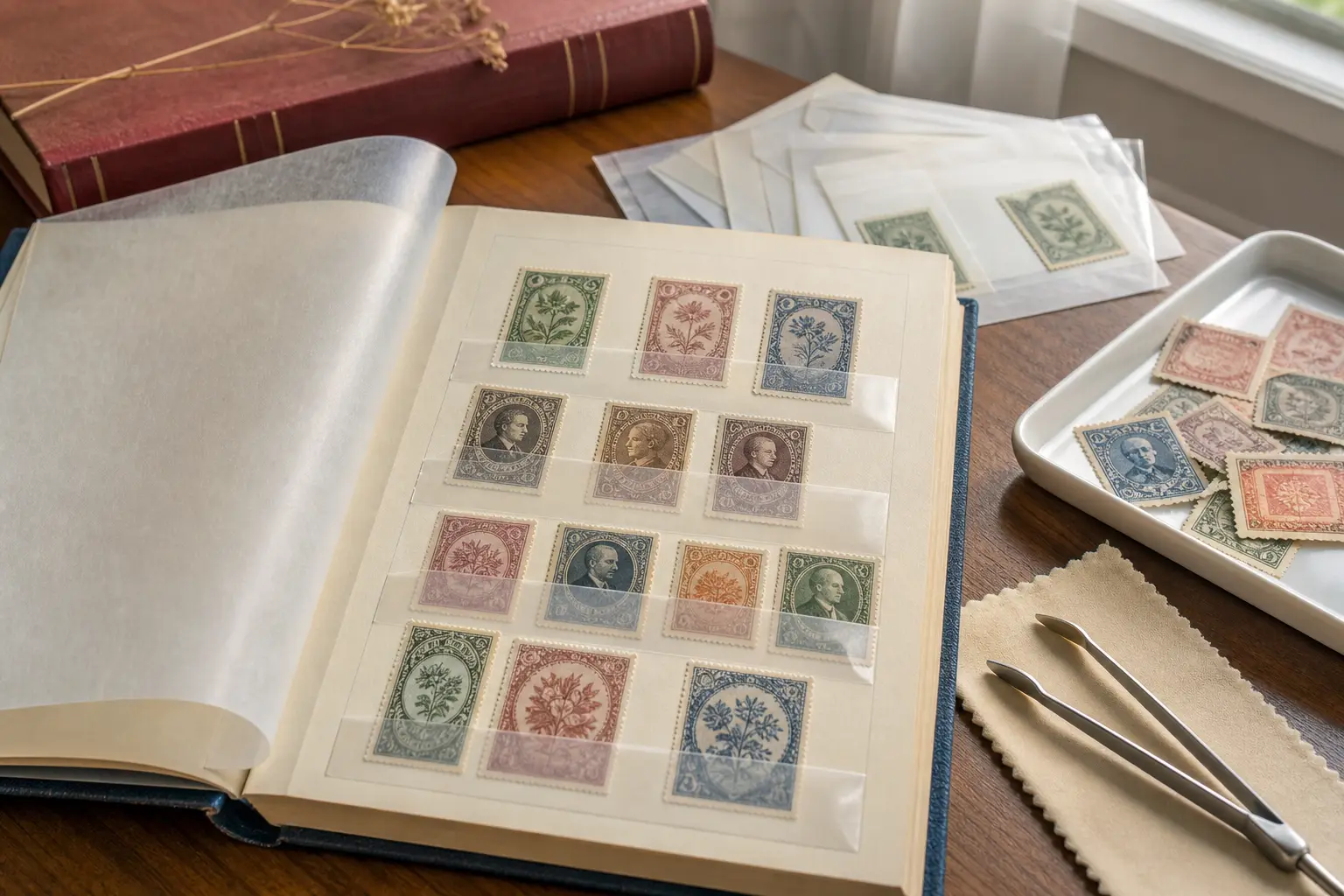
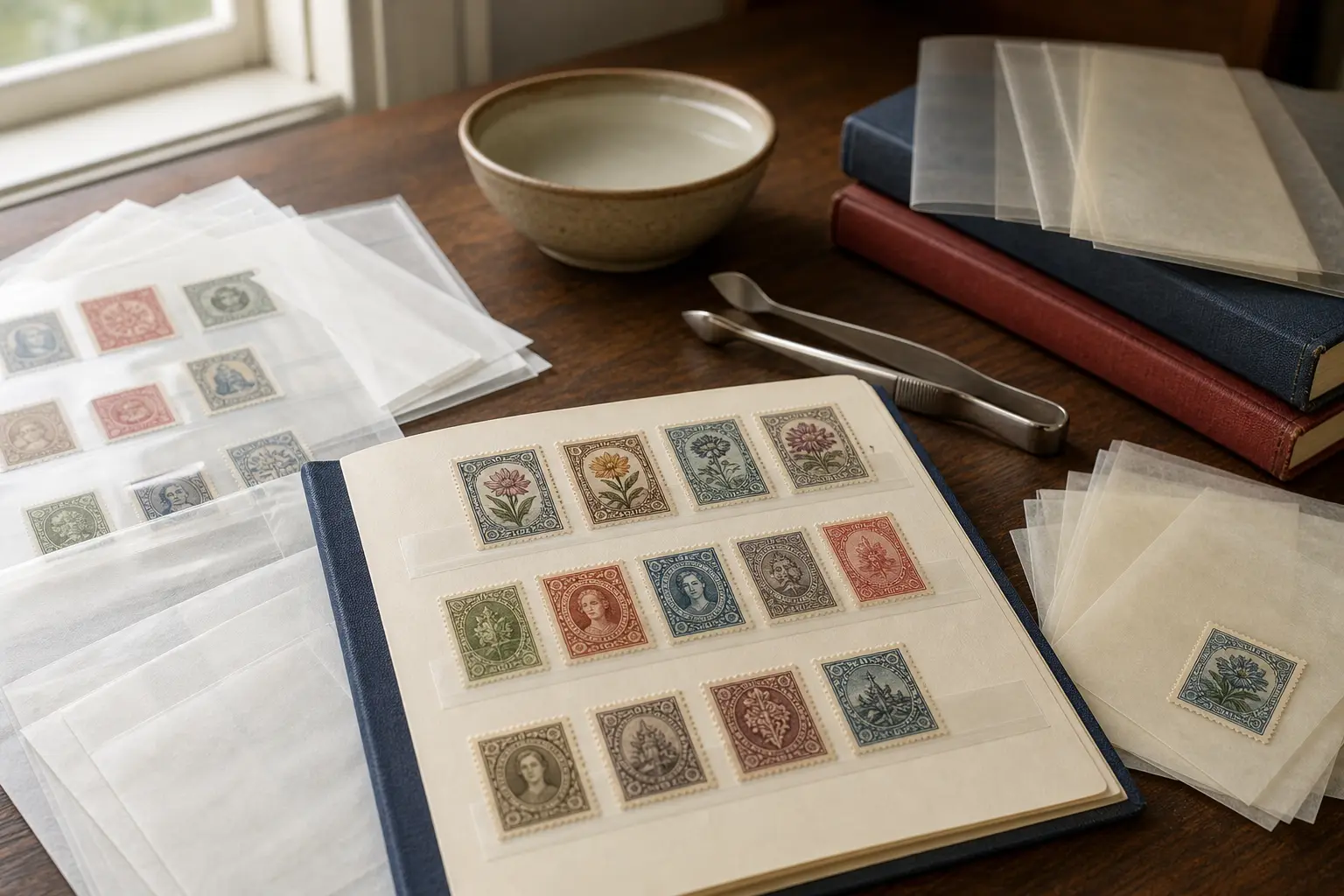
For loose, dry stamps, storage can be simple: place them in a clean temporary holder such as a glassine envelope until you are ready to mount them. If a stamp has just been soaked, do not rush it into an album while it is still damp. Drying may take overnight, and forcing the process can lead to curling, sticking, or accidental tears.
Why moisture causes trouble
Moisture changes the way stamp paper behaves. A softened stamp can stretch, curl, or cling to other surfaces, and the gum or backing may still be active or uneven while the stamp is drying. That is why preservation advice focuses on patience rather than speed: let the stamp return to a flat, dry state before you sort, inspect, or mount it.
The American Philatelic Society also notes that some material behaves differently from ordinary soaked stamps. Many U.S. self-adhesives issued in 2004 or later do not soak off easily, and current U.S. self-adhesives may have oil-based backing that is not removed by water alone. If you are unsure whether a stamp should be soaked at all, keep the envelope or cover intact and use conservative handling until you know what you have.
How to dry stamps without curling or sticking
After soaking, remove each stamp gently only when it has floated free on its own. Do not pull at paper that is still attached, because that can tear the stamp. Rinse the back lightly in fresh water if needed to remove gum residue, then place the stamps between two paper towels and put a book on top to help reduce curling. Leave them to dry overnight, rather than trying to speed the process with heat or direct sunlight.
If you are drying a batch, keep enough space between stamps so they do not overlap or touch. Brightly coloured envelopes should be set aside and soaked separately because the colour may bleed. Lukewarm water is the safer choice for soaking than hot water, which can damage the stamp paper and make later drying less predictable.
Handle dry stamps differently from wet stamps
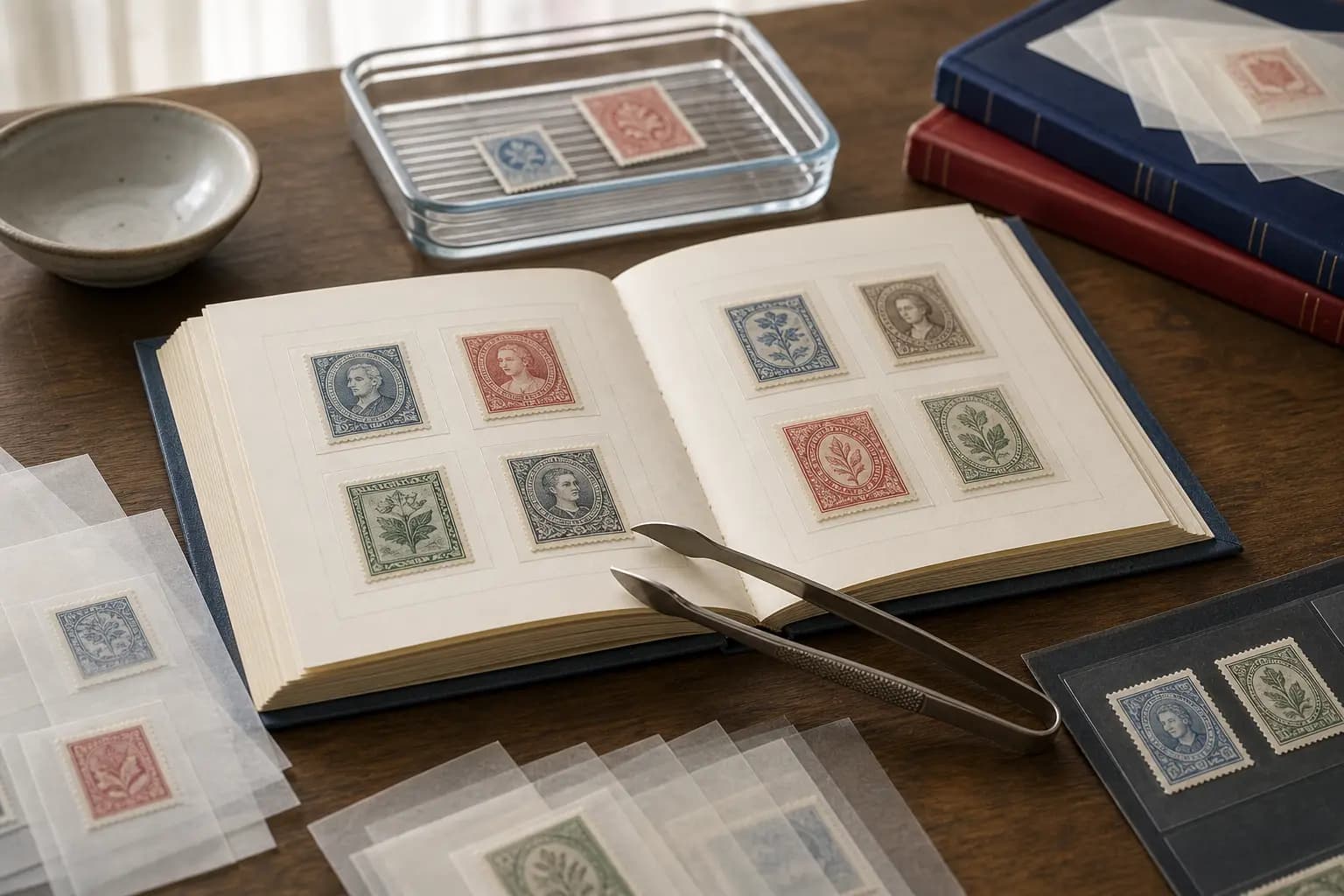
Once a stamp is fully dry, you can handle it with stamp tongs. The American Philatelic Society recommends tongs for dry stamps because skin oils can damage them, even if your hands look clean. Tongs should have a smooth gripping surface and be used lightly, with minimal pressure, so the stamp is supported rather than squeezed.
Never use tongs on a wet stamp. Wet paper is more fragile, and metal tips can leave marks or cause a tear before the stamp is ready to be moved. If a stamp is damp, leave it in place until it is dry enough to lift safely, or use the surrounding support paper if you need to move a batch of material.
Storage choices that protect paper and gum
For temporary storage before mounting, glassine envelopes are a practical choice because they keep stamps separated while you continue sorting. Albums and stock books are also suitable once the stamps are dry, and the APS notes that albums with acid-free paper are preferable. Avoid sticky pages, since those can damage stamps over time.
When you are ready to mount stamps, use hinges or mounts rather than tape or glue. Tape and glue can reduce value and may damage the stamp if it has to be removed later. This is especially important for collectors who are building a record over time, whether on paper or in a digital log such as StampSnap, because a careful storage trail is easier to maintain than a damaged one.
A practical drying-and-storage routine
A simple routine helps prevent mistakes. First, decide whether the stamp should be removed at all; if a cover has an important cancel, image, or postal history value, it may be better to keep the entire envelope. If the stamp is to be removed, soak it gently only if it is suitable for soaking, then dry it flat before sorting by country, topic, or service type.
Next, store the dry stamps in a temporary holder until you are ready to sort them into an album or stock book. If you have duplicates, keep the best copy for the main collection and set the others aside. The safest habit is to slow down at every step: dry fully, inspect under good light, then store with proper support rather than forcing the timetable.
When to stop and check before doing anything else
If a stamp is stuck to paper, has modern self-adhesive backing, or may carry an unusual cancel or attachment, pause before you try to remove it. The wrong method can cause more damage than waiting. The APS guidance makes clear that not every stamp should be treated the same way, and some self-adhesives require different removal methods than ordinary water soaking.
That is why preservation starts with identification and caution, not force. If you are building a collection record, note the condition, the backing type if known, and whether the item was dry when stored. A careful note now may save confusion later when you compare similar stamps or decide whether a piece should remain on cover.
Frequently asked questions
How long should stamps dry before I store them?
The APS guidance says to leave soaked stamps to dry overnight. The safe rule is to wait until they are completely flat and dry before moving them into an album or stock book.
Can I use tongs on a damp stamp?
No. Tongs are recommended for dry stamps, not wet ones. Wet paper is more fragile and can tear or mark easily.
What is the safest temporary storage for dry stamps?
Glassine envelopes are a practical temporary holder until you are ready to sort or mount the stamps. They help keep loose stamps separated and protected.
Should I mount stamps with tape or glue if I am in a hurry?
No. Tape and glue can damage stamps and reduce value. Use hinges or mounts once the stamp is dry and ready for an album page.