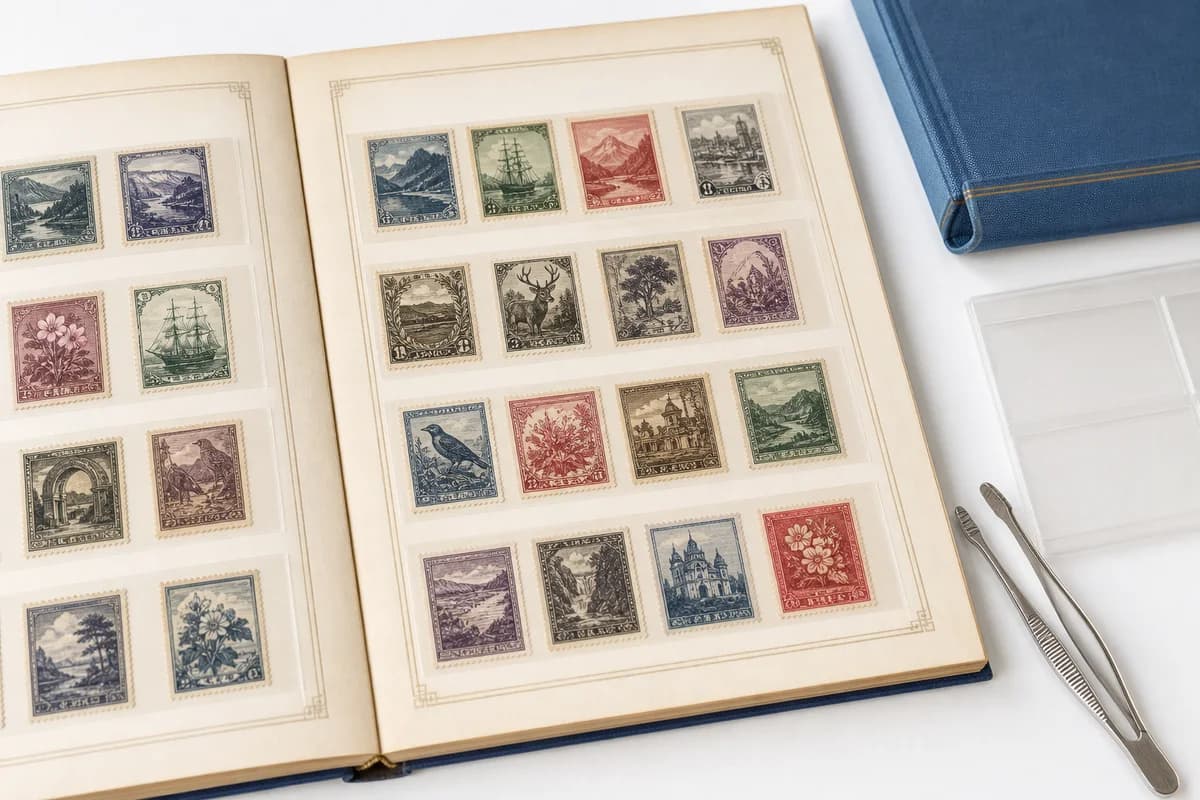
Introduction to Stamp Mounting
Preserving the condition of your postage stamps is one of the most critical responsibilities of a stamp collector. The way you display and secure your stamps in an album directly affects their long-term preservation and market value. Many beginners make the mistake of using household tape or glue to secure their stamps, but these adhesives cause irreversible chemical damage and drastically decrease the stamp's value. When you need to remove a stamp from an album, tape or glue will almost certainly tear the paper.
To avoid these risks, experienced collectors rely on two safe, time-tested methods: stamp hinges and stamp mounts. Both options are designed to keep your stamps secure while allowing you to remove them safely without causing damage. Choosing the right method depends on the type of stamp you are preserving and your personal collecting goals.
Understanding Stamp Hinges
Stamp hinges are small, thin, folded pieces of translucent paper or plastic with a special light gum applied to one side. They have been a staple of the philatelic hobby for generations and are widely available from local stamp dealers. Hinges are highly cost-effective, making them a popular choice for organizing large collections of used stamps.
The primary benefit of a quality stamp hinge is that it is peelable. This means that once the adhesive dries, you can still gently peel the hinge off the stamp or the album page without tearing the paper. This flexibility is essential for collectors who like to reorganize their albums or inspect the backs of their stamps for watermarks and expert marks.
How to Apply a Stamp Hinge Safely
Applying a stamp hinge requires a steady hand and a very conservative amount of moisture. To begin, make sure your stamp is completely dry and placed face down on a clean surface. Moisten the short, folded end of the hinge very lightly—using too much moisture can cause the adhesive to bleed and permanently bond the stamp to the album page. Press the moistened short end to the back of the stamp, positioning the fold about one-eighth of an inch from the top edge.
Once the short end is secured to the stamp, lightly moisten the larger, remaining portion of the hinge. Carefully place the stamp onto your album page and press down gently over the hinged area to secure it. This method creates a flexible paper hinge, allowing you to lift the stamp upward like a leaf to view the reverse side whenever necessary.
Understanding and Using Stamp Mounts
Stamp mounts offer an alternative preservation method that completely avoids applying moisture or adhesive to the stamp itself. Mounts are clear plastic sleeves or pockets designed to hold a single stamp securely. The back of the plastic mount features an adhesive layer that attaches directly to the album page, while the stamp remains safely housed inside the protective sleeve.
Because the stamp never comes into contact with moisture or gum, mounts are the preferred choice for unused or mint stamps. Preserving the original, undisturbed gum on the back of an unused stamp is vital for maintaining its condition and value. Using a hinge on a mint stamp can leave a hinge mark, which collectors generally try to avoid.
Hinges vs. Mounts: How to Choose
When deciding between hinges and mounts, consider the state and value of the stamps in your collection. Hinges are excellent and economical for used stamps that have already lost their original gum. However, for valuable mint stamps, investing in clear plastic mounts is highly recommended to protect the pristine condition of the reverse side.
Before you begin mounting, you can use the StampSnap app to scan and identify your stamps, helping you build a digital inventory of your collection. By using StampSnap to create a clear record of your stamps, you can easily determine which items are common used varieties suitable for hinges, and which are pristine unused specimens that deserve the premium protection of a mount.
Crucial Handling and Preservation Rules
Safe handling is paramount during the mounting process. Always use professional stamp tongs to handle your dry stamps rather than your fingers. Even clean hands carry natural skin oils that can transfer to the paper and cause yellowing or deterioration over time. Stamp tongs look similar to tweezers but feature smooth, flat gripping surfaces that will not crease or puncture the delicate paper.
It is critical to distinguish between dry stamps and wet stamps during this process. If you have recently soaked stamps to remove them from paper envelopes, allow them to dry completely overnight between paper towels under a heavy book. While tongs are perfect for dry stamps, never use tongs on a wet stamp. Wet paper is incredibly fragile, and using metal tongs on damp fibers can easily cause irreversible tears or punctures.
Frequently asked questions
Can I use regular tape or glue to put stamps in an album?
No, you should never use household tape or glue. These adhesives cause permanent chemical damage, stain the paper, and will drastically decrease the stamp's value. They also make it nearly impossible to remove the stamp without tearing it.
What is the main difference between a stamp hinge and a stamp mount?
A stamp hinge is a small, folded piece of gummed paper that attaches directly to the back of the stamp and the album page. A stamp mount is a clear plastic sleeve that adheres to the page, holding the stamp safely inside without any adhesive touching the stamp itself.
Should I use hinges or mounts for mint stamps?
It is highly recommended to use stamp mounts for mint (unused) stamps. Hinges require moisture and attach directly to the stamp, which can damage or mark the original gum on the back. Mounts protect the original gum completely.
Is it safe to use tongs on wet stamps?
No, you should never use tongs on wet stamps. Wet paper is extremely fragile and easily damaged. Allow your soaked stamps to dry completely overnight before handling them with tongs or mounting them.