Safe Mounting Methods: An Introduction
Preserving the condition of your postage stamps is the most critical aspect of building a lasting collection. When displaying your stamps, the methods and materials you choose will directly impact their long-term survival and value. Many beginners make the mistake of using common household items to secure their stamps, causing irreversible damage. To protect your collection, you must learn the safe, methodical process of mounting stamps using proper philatelic tools.
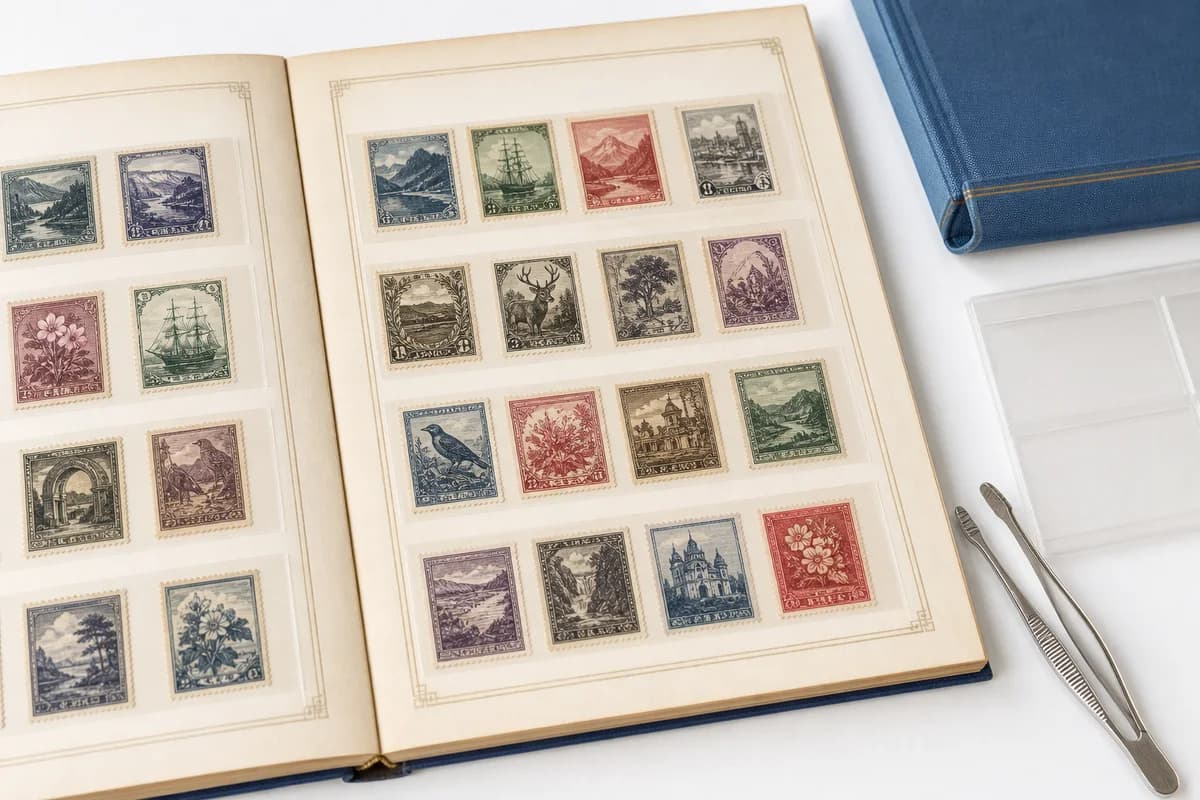
The safest way to mount stamps in an album is to use peelable stamp hinges or clear plastic stamp mounts. You must never use household tape, standard glue, or sticky-page photo albums. These common adhesives contain chemicals that stain stamp paper, destroy original gum, and make it impossible to remove the stamp without tearing it. By adhering to professional preservation standards, you ensure your stamps remain in excellent condition.
The Perils of Household Adhesives and Sticky Pages
It can be tempting to reach for tape or glue when setting up an album, but doing so will instantly decrease the stamp's value. Household glues and tapes are permanent adhesives that bond tightly with paper fibers. If you ever attempt to remove the stamp, the paper will inevitably tear, leaving a thin spot. Even if the stamp remains attached, the acids in household adhesives will turn yellow or brown over time, bleeding through the paper.
Similarly, standard photo albums with sticky, self-adhesive pages are highly destructive. The adhesive used on these pages is highly acidic. Over time, this glue will transfer to the back of your stamps, ruining their original gum and staining the paper. If you choose to use a photo album, ensure it features completely non-sticky, acid-free paper pages.
How to Use Stamp Hinges Safely
For many collectors, stamp hinges are the traditional and most affordable way to mount stamps. Hinges are small, thin, folded pieces of translucent paper or plastic with a special, mild gum on one side. Designed to be peelable, they allow you to remove the stamp from the album page later without causing damage. However, hinges should generally be reserved for used stamps, as the moisture required can disturb the original gum of mint stamps.
To mount a stamp using a hinge, lightly moisten the short, folded end of the hinge. Press this moistened end to the back of the dry stamp, placing the fold about one-eighth of an inch from the top edge. Next, lightly moisten the larger portion of the hinge and gently press it onto your album page. This creates a flexible paper joint that allows you to flip the stamp up to inspect the back while keeping it anchored.
The Advantages of Protective Stamp Mounts
If you are collecting valuable mint stamps with intact original gum, clear plastic stamp mounts are the preferred preservation choice. Mounts are clear plastic sleeves designed to hold the stamp securely without any adhesive touching the stamp itself. The back of the mount has its own adhesive, which you moisten to stick the mount to the album page. The stamp simply slides inside the protective sleeve, remaining completely untouched by moisture.
Using mounts ensures that the stamp remains in its original, pristine state. Because the stamp is never directly stuck to anything, it retains its full value and can be easily slid out of the mount for close inspection. While mounts are more expensive than hinges, they provide an extra layer of physical protection against dust, handling, and environmental wear.
Selecting Safe Albums and Stock Books
Choosing the right storage system is just as important as selecting your mounting style. You can purchase dedicated stamp albums from local stamp dealers, or you can even create your own custom pages using loose-leaf binders and acid-free paper. Many commercial stamp albums feature pre-printed pages with specific categories and pictures of the stamps.
Alternatively, you can store your stamps in a stock book. A stock book is a specialized type of album featuring horizontal plastic or paper pockets on each page. Because stock books do not have pre-printed pictures, they offer complete freedom, allowing you to organize your stamps by country or topic. Stock books are highly safe because they require no hinges or mounts; you simply slide your dry stamps into the pockets.
Safe Handling and the Danger of Wet Tongs
When organizing and mounting your collection, safe handling is paramount. For dry stamps, you should always use professional stamp tongs. Tongs look similar to tweezers but feature smooth, flat gripping surfaces designed to handle delicate paper without leaving marks. Handling dry stamps with your bare hands should be minimized, as skin oils can transfer to the paper and cause gradual discoloration over time.
However, a completely different set of rules applies if you have recently soaked your stamps. Wet paper is incredibly fragile and highly susceptible to tearing. For this reason, you should never use metal tongs on a wet stamp. Instead, allow the soaked stamps to dry completely overnight, sandwiched flat between dry paper towels under the weight of a heavy book. Only when the stamps are entirely dry and flat should you resume handling them with your tongs.
Before you permanently mount any stamp, it is wise to identify it. You can use the StampSnap app to scan your dry stamps, helping you quickly identify the country of origin, issue date, and design variations. This digital record allows you to plan your album layout perfectly before you moisten a single hinge. By combining methodical physical preservation with digital tools like StampSnap, you can build a beautiful, well-organized collection.
Frequently asked questions
Can I use standard household tape or glue to mount stamps in an album?
No, you should never use household tape or glue. These adhesives are permanent and contain acids that will stain the stamp paper, destroy the original gum, and cause irreversible damage when you attempt to remove the stamp.
What is the difference between a stamp hinge and a stamp mount?
Stamp hinges are small, thin, folded pieces of translucent paper with a mild gum on one side, typically used for used stamps. Stamp mounts are clear plastic sleeves that protect the stamp completely without applying moisture directly to the stamp, making them ideal for valuable mint stamps.
Is it safe to use stamp tongs on a wet stamp?
No, you should never use tongs on a wet stamp. Wet paper is extremely fragile and easily torn or punctured. Instead, allow your soaked stamps to dry completely overnight on paper towels under a heavy book before handling them with tongs or mounting them.
Can I use a standard sticky-page photo album to store my stamps?
No. Sticky-page photo albums contain aggressive, acidic adhesives that will transfer to your stamps, ruining their gum and staining the paper. If you use a photo album, ensure it features completely non-sticky, acid-free paper pages, or use a dedicated stamp album or stock book.