The safest short answer
Store loose, dry stamps in an album or stock book, and keep wet or softened stamps out of the album until they are fully dry. Use hinges or mounts rather than tape or glue, because adhesive can damage the stamp and make later removal risky. If you are only looking for the core rule, it is this: dry stamps can be organised and mounted carefully; damp stamps should be set aside first.
A good storage plan starts with restraint. The American Philatelic Society notes that no tools are required to be a stamp collector, but a few useful ones can help with handling, identification, and organisation. For storage, the key is to protect the stamp surface, preserve condition as far as possible, and avoid any method that creates permanent damage.
Separate dry stamps from damp material
Dry stamps can be handled with stamp tongs, which the American Philatelic Society recommends because skin oils can damage stamps. Tongs are designed for dry stamps, not wet ones. That distinction matters: a wet or softened stamp is easier to tear, bend, or disturb while it is still fragile. If a stamp has just been soaked or is still damp from cleaning, leave it aside until it has dried enough to handle safely.
If you have just soaked stamps, the American Philatelic Society advises patience. Remove each stamp only when it floats free, rinse the back gently, and let it dry overnight. Placing stamps between paper towels with a book on top can help reduce curling. Once a stamp is fully dry, you can sort it and decide whether it belongs in an album, stock book, or temporary glassine storage.
Choose an album or stock book that protects the stamps
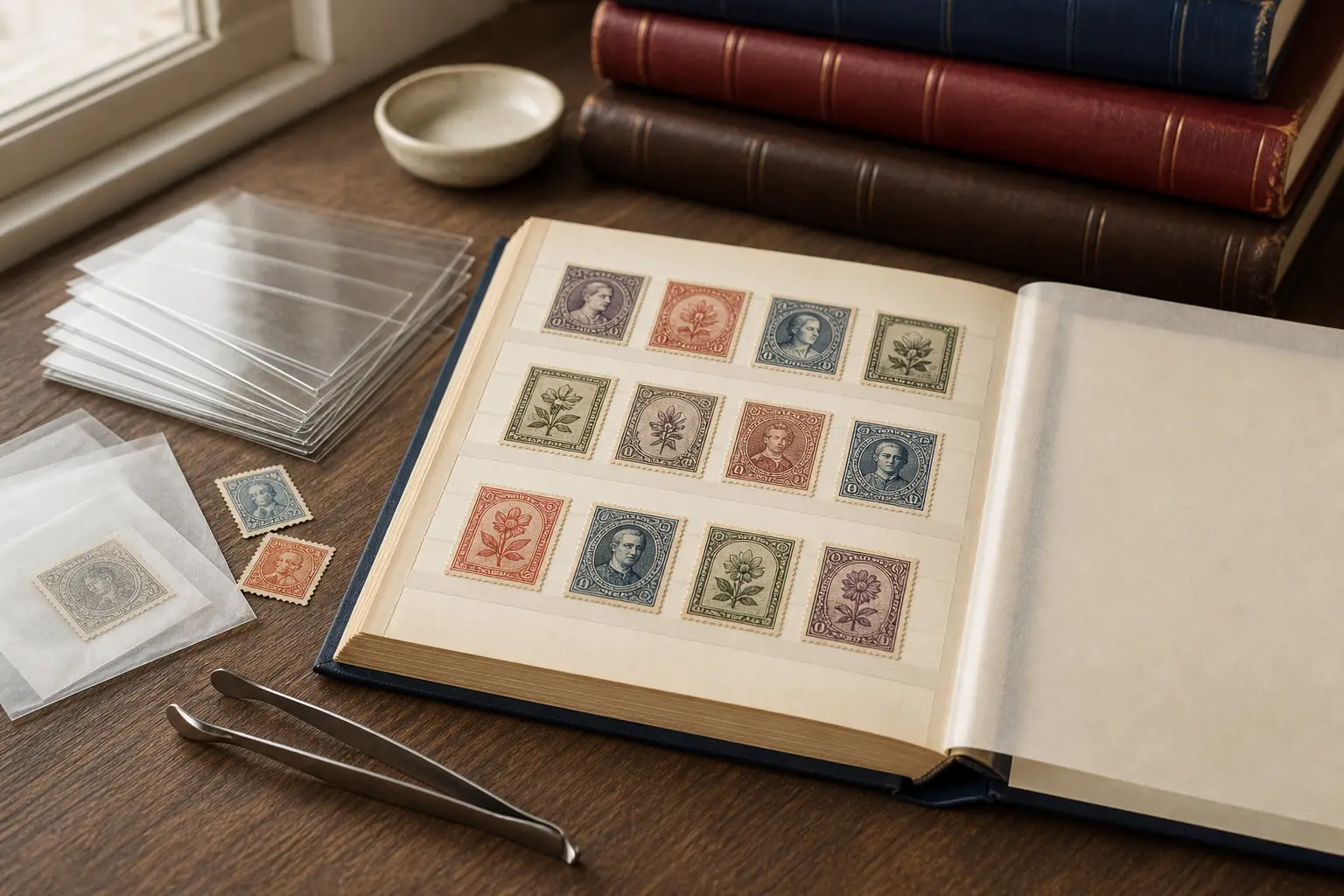
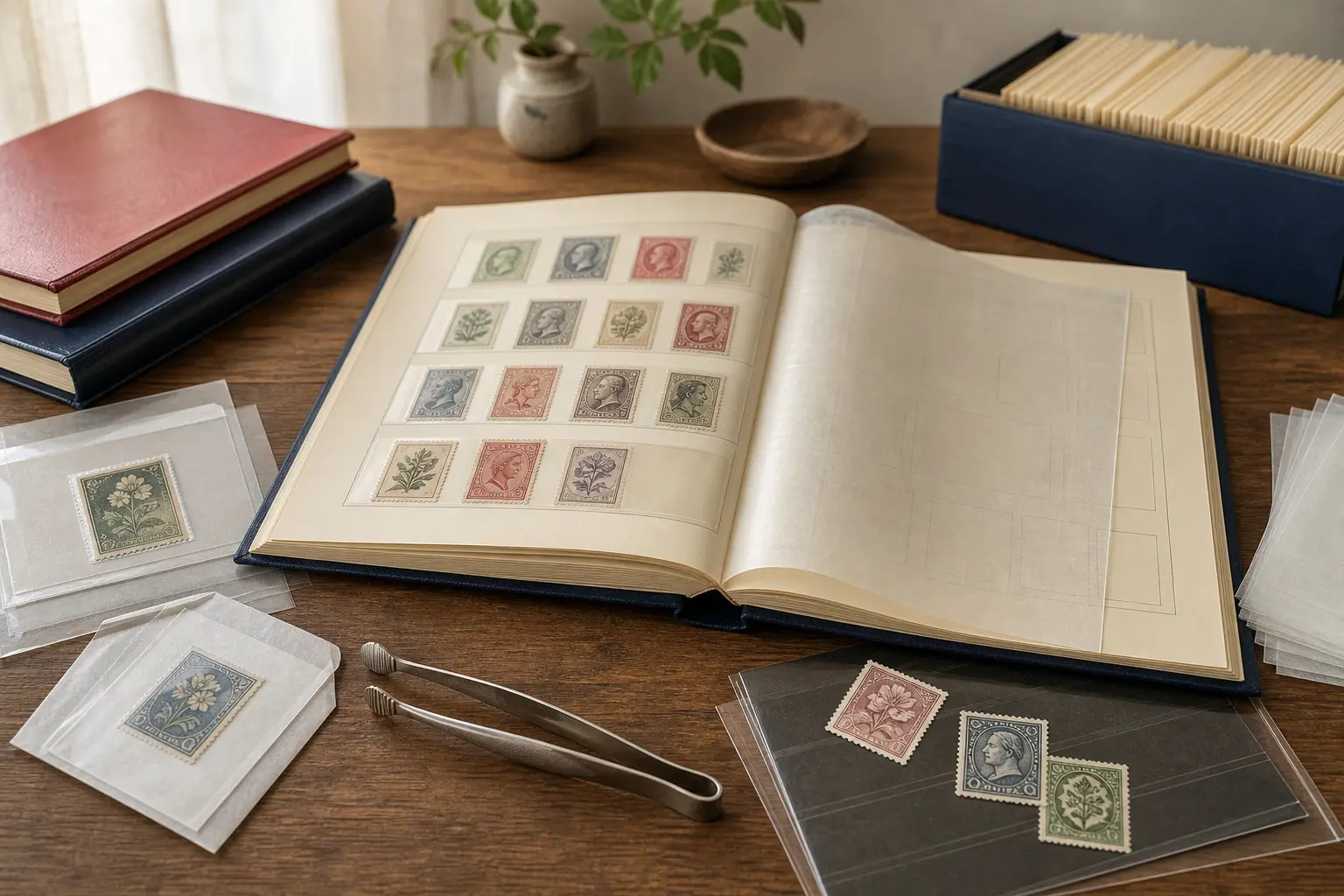
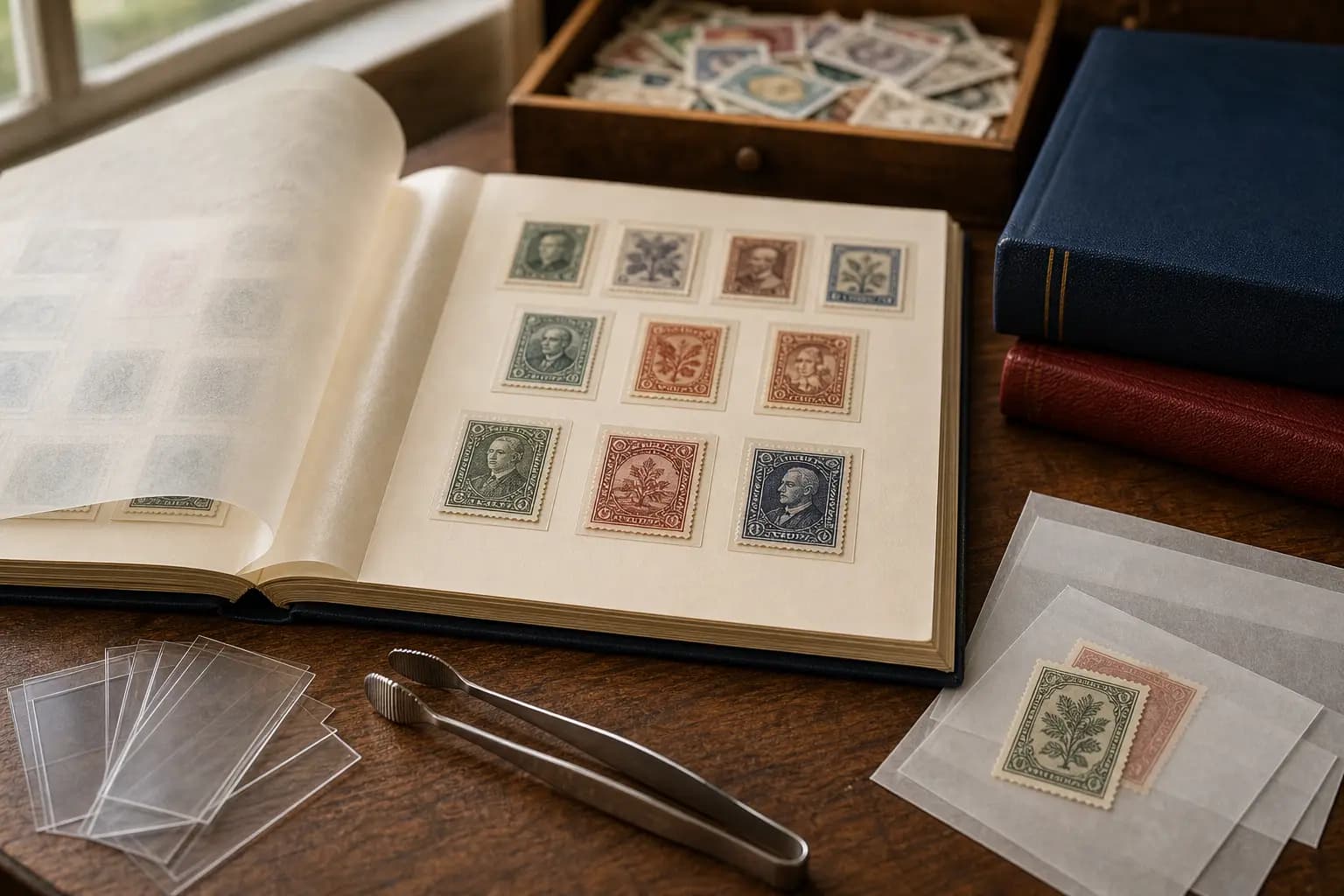
The American Philatelic Society says it is a good idea to store stamps in albums to help protect them. You can buy stamp albums, make your own, or use a photo album with acid-free paper, but avoid sticky pages because they can damage stamps. A stock book is another useful option because it has plastic or paper pockets and allows flexible organising without fixed page illustrations.
For collectors who are still sorting material, a stock book can be especially practical because it lets you change the order without remounting every stamp. That is useful when you are comparing similar issues, arranging by country or topic, or setting aside duplicates. A temporary storage method is often safer than rushing to create a final page layout before the stamps are ready.
Use hinges or mounts, never tape or glue
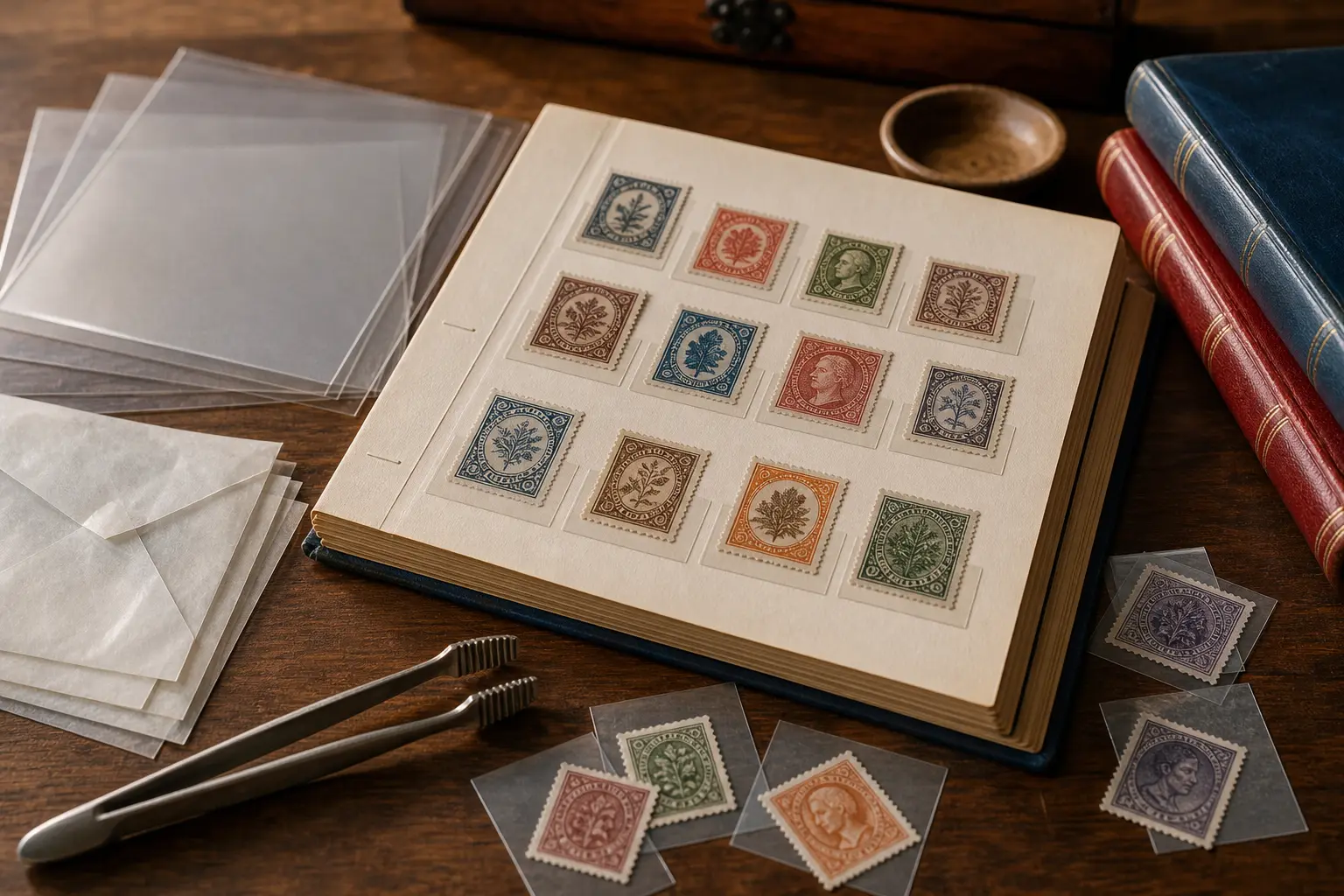
To attach stamps to album pages, use a hinge or a mount. The American Philatelic Society is clear that tape and glue should not be used because they can decrease the stamp’s value and may damage the stamp when you try to remove it later. Hinges are small folded pieces with special gum on one side, and mounts are clear plastic sleeves that help hold the stamp without direct adhesive on the face.
If you want to keep a stamp in a more removable state, mounts are often the more cautious choice because they do not require a gum attachment on the back of the stamp. Hinges can be appropriate for some material, but they should be used carefully and only when the stamp is dry. If you are uncertain about a more delicate item, it is safer to leave it in a stock book until you have a clear plan.
Sort before mounting so you do less handling
The APS recommends sorting stamps before mounting them. You might sort by country, topic, or postal service type such as airmail, special delivery, postage due, parcel post, or revenue. Sorting first reduces unnecessary handling later, which helps protect the condition of the stamps while you decide what belongs together. If you have duplicates, choose the best copy and save the rest for trading or reference.
When two stamps look alike, a magnifying glass can help reveal small differences. The APS recommends a lens of at least 5x to 10x magnification without distortion. That kind of careful inspection is useful before you place a stamp in an album page, because it helps you avoid mounting the wrong variety or overlooking a more suitable copy.
Handle uncertain material conservatively
If a stamp is still soft, stuck to paper, or newly removed from water, keep your handling minimal. Do not use tongs on a wet stamp, because the grip can easily damage it. Let it dry first, then move it only when it is stable. For stamps on envelopes with special cancels or other interesting postal markings, the safest option may be to keep the whole cover rather than remove the stamp at all.
A careful record can also help. If you use StampSnap to create a likely identification or collection record, store the image and notes with the stamp’s final housing so you can track where it is kept. That way you reduce repeated handling and preserve the connection between the stamp, its condition, and its placement in your collection.
A simple preservation workflow you can repeat
Start by separating dry loose stamps from anything wet or softened. Put damp material aside until it is fully dry. Then sort the dry stamps by the system you want to use, compare similar items with a magnifying glass, and place them in a stock book or album. Use mounts or hinges only after the stamps are dry, and never use tape or glue.
This method is simple, but it works because it limits risk at each step. It keeps fragile material from being handled too much, avoids sticky materials that can cause permanent harm, and leaves room for later reorganisation. For most collectors, that is the safest way to build a stored collection that stays useful and orderly over time.
Frequently asked questions
Should I store stamps in an album right after soaking?
No. Let soaked stamps dry fully first, because wet stamps are easier to damage. The APS suggests drying them overnight before storage or mounting.
Can I use tape or glue to mount stamps?
No. The American Philatelic Society says not to use tape or glue because they can damage the stamp and reduce its value.
What is safer for loose stamps, hinges or mounts?
Both are accepted storage methods for dry stamps, but mounts are often the more cautious choice because they hold the stamp in a clear sleeve rather than attaching adhesive to the back.
Should I use stamp tongs on a wet stamp?
No. Tongs are recommended for dry stamps. Wet or softened stamps are fragile and should be left to dry before handling.
If a cover has a special cancel, should I remove the stamp?
Not always. If the envelope itself is important, the APS suggests keeping the entire envelope in your album instead of removing the stamp.