
The short answer
A stamp may use more than one printing process, especially a modern stamp. The safest way to recognize this is to study the design as a whole, then compare line structure, ink character, edge quality, and any screened or raised effects with production information when available.
Do not try to identify the process from a single feature such as dots, blur, or a shiny area. The American Philatelic Society notes that line-engraved intaglio, gravure, letterpress, and lithography are the major families used for postage stamps, and more than one process may appear on one stamp.
Why mixed printing happens
Modern stamp production can combine separate layers or methods to create a final design. That means one part of the stamp may show one kind of print character while another part reflects a different process. A collector who expects one process only can misread the result if they focus on just one visible clue.
This is especially true when a stamp includes fine detail, solid areas, color layers, or special effects. In those cases, the most useful habit is to ask what each clue can support, not what it proves. A careful identification usually comes from several clues agreeing with one another, not from a single eye-catching feature.
What line-engraved intaglio can look like
In line-engraved intaglio, ink is transferred from deliberately incised lines. The design is normally built from lines, hatching, cross-hatching, and stippling. Under non-contact magnification and oblique light, collectors may sometimes see raised ink, and pressure may leave debossing on the reverse.
These are supporting features rather than single tests. A stamp can show some texture without being line-engraved intaglio, and other processes can imitate parts of the effect. When you inspect a stamp, compare the line structure across the whole design, not just one portrait, frame, or inscription.
How gravure differs from line-engraved intaglio
Gravure is also a recess process, but it forms tone from screened cells rather than from the deliberately incised linework used in line-engraved intaglio. That difference matters because a screened surface can suggest gravure, yet screened or raised effects can also appear in other processes.
For that reason, a dot pattern by itself should never be treated as a final answer. If you see screened structure, ask whether the image also shows other clues that fit gravure, line-engraved intaglio, or a combination of processes. Production records are helpful when they are available.
What offset lithography can and cannot tell you
Offset lithography is a planographic process. The image is formed on a smooth surface rather than cut or etched into a plate, and oil-based ink adheres to the image area before a rubber blanket offsets that image to paper. Modern lithography commonly combines separate process-color layers made from very fine dots.
That dot structure can be useful, but it is not decisive on its own. The Smithsonian National Postal Museum warns that modern lithography can be sharp, so soft or blurred edges are not a dependable rule. A dot pattern must be interpreted with other evidence because gravure and other processes can also show screened structures under magnification.
A safe viewing routine for collectors
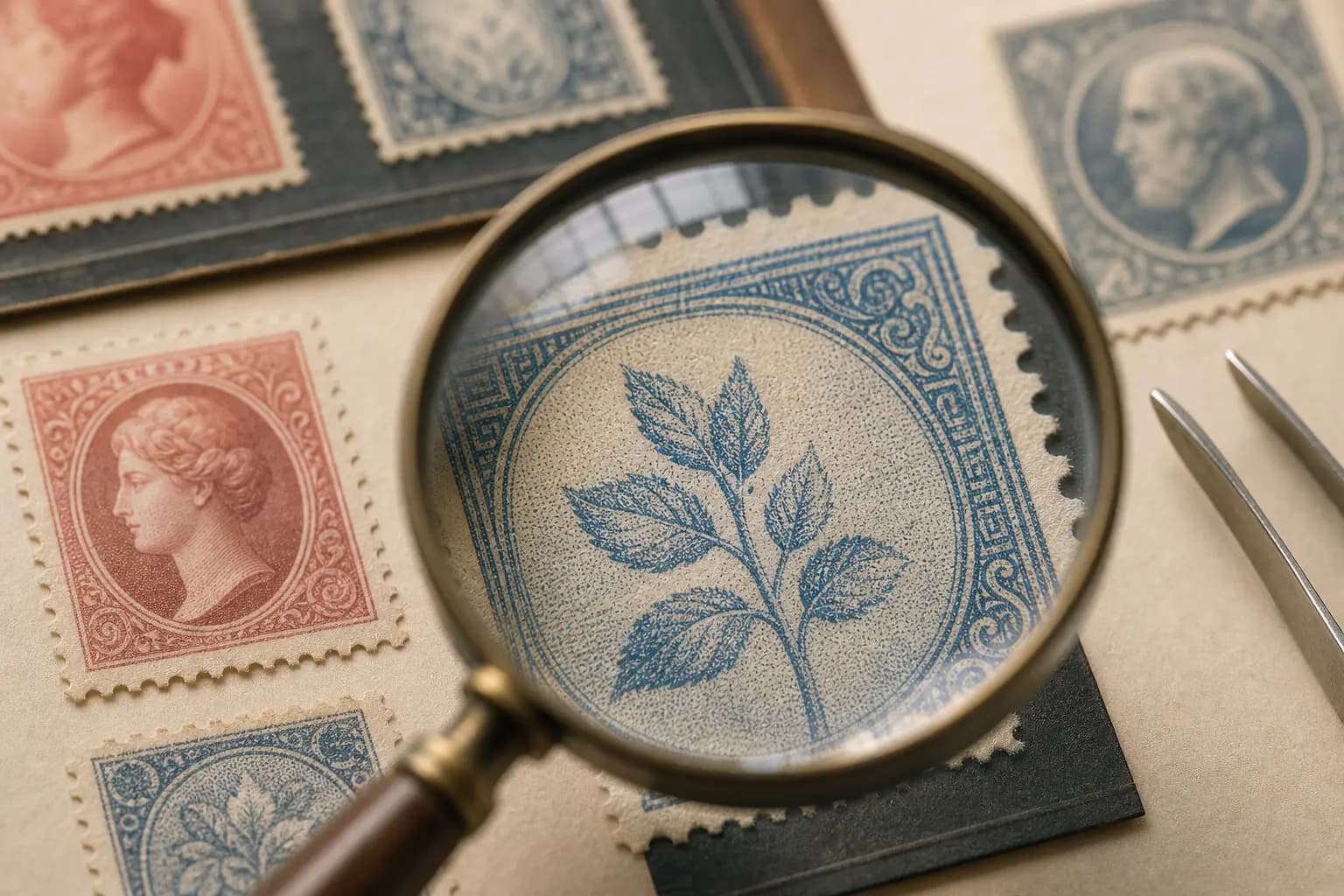
Use only non-contact magnification with diffuse or oblique light. Start by viewing the front of the stamp, then tilt it gently to see how the lines, dots, and ink sheen behave. If needed, compare the front and back without pressing or rubbing the stamp.
Build your conclusion from several observations: the kind of linework, the presence or absence of screening, any raised ink, any reverse debossing, and whether the stamp appears to combine different print characters. If you keep a collection record in StampSnap, note which features you saw rather than trying to force an immediate identification.
How to avoid common mistakes
Do not rely on blur, softness, or dots alone. Do not assume that every raised-looking effect means intaglio, or that every screened area means gravure. Modern stamps may combine processes, and some visible features can overlap across printing families.
It is also wise to separate observation from conclusion. First describe what you can actually see; then decide which printing family or combination is most likely. If the stamp is especially important to you, compare it with reliable production information or specialist references before making a firm record.
A methodical way to build confidence
The most dependable approach is comparative: study one stamp against another example of the same design, then compare the visual evidence against known printing families. If the clues agree, your identification becomes stronger. If they conflict, keep the identification provisional.
This method protects both the stamp and your records. It also helps you recognise when a design may involve more than one process, which is often the real question behind a difficult modern stamp. Careful comparison is better than trying to make one feature do all the work.
Frequently asked questions
Can I identify a stamp’s printing process from dots alone?
No. A dot pattern can be useful, but it is not enough by itself because gravure and other processes can also show screened structures under magnification.
What is the safest way to inspect printing clues?
Use non-contact magnification with diffuse or oblique light, and treat linework, screening, raised ink, and reverse debossing as cumulative clues rather than single tests.
How is line-engraved intaglio different from gravure?
Line-engraved intaglio transfers ink from deliberately incised lines and is normally built from linework, hatching, cross-hatching, and stippling, while gravure forms tone from screened cells.
Can a modern stamp use more than one printing process?
Yes. The American Philatelic Society says more than one process may appear on a modern stamp.
Should I treat a soft-looking image as proof of lithography?
No. The Smithsonian National Postal Museum notes that modern lithography can be sharp, so soft or blurred edges are not a dependable identifying rule.