
The short answer: use several clues, not one
The safest way to tell offset lithography from line-engraved intaglio is to treat the stamp as a set of clues, not a single test. Under non-contact magnification and diffuse or oblique light, intaglio usually shows a design built from lines, hatching, cross-hatching, and stippling, with possible raised ink and even debossing on the reverse. Lithography is different: the image is formed on a smooth surface, and modern offset lithography commonly uses very fine dots from separate colour layers.
That difference sounds simple, but collectors should be cautious. The American Philatelic Society notes that more than one process may appear on a modern stamp, and that gravure can also produce screened structures. The Smithsonian National Postal Museum also warns that modern lithography can be sharp, so soft or blurred edges are not a dependable rule. In practice, you compare several features together and then check production records when you can.
What line-engraved intaglio usually looks like
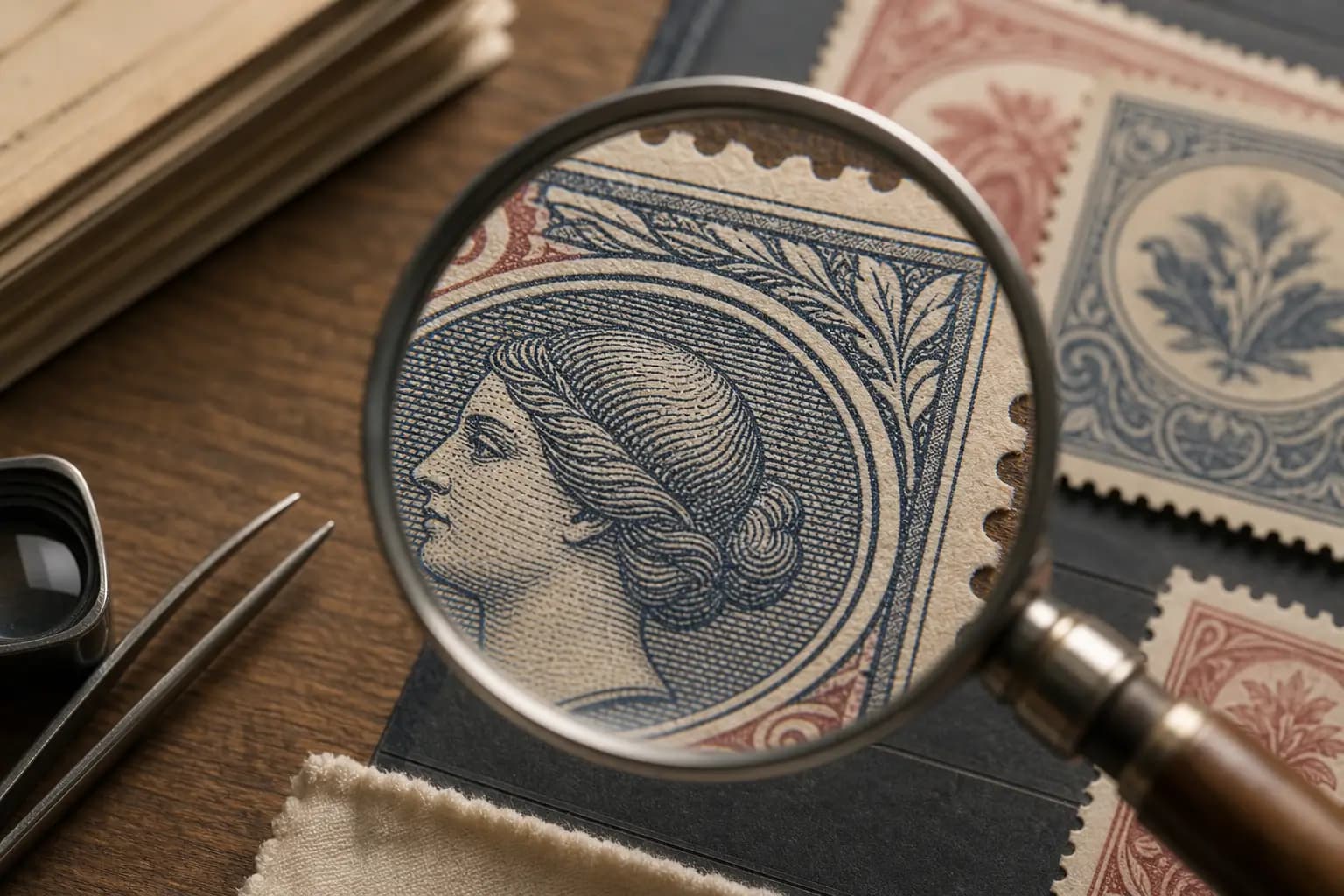
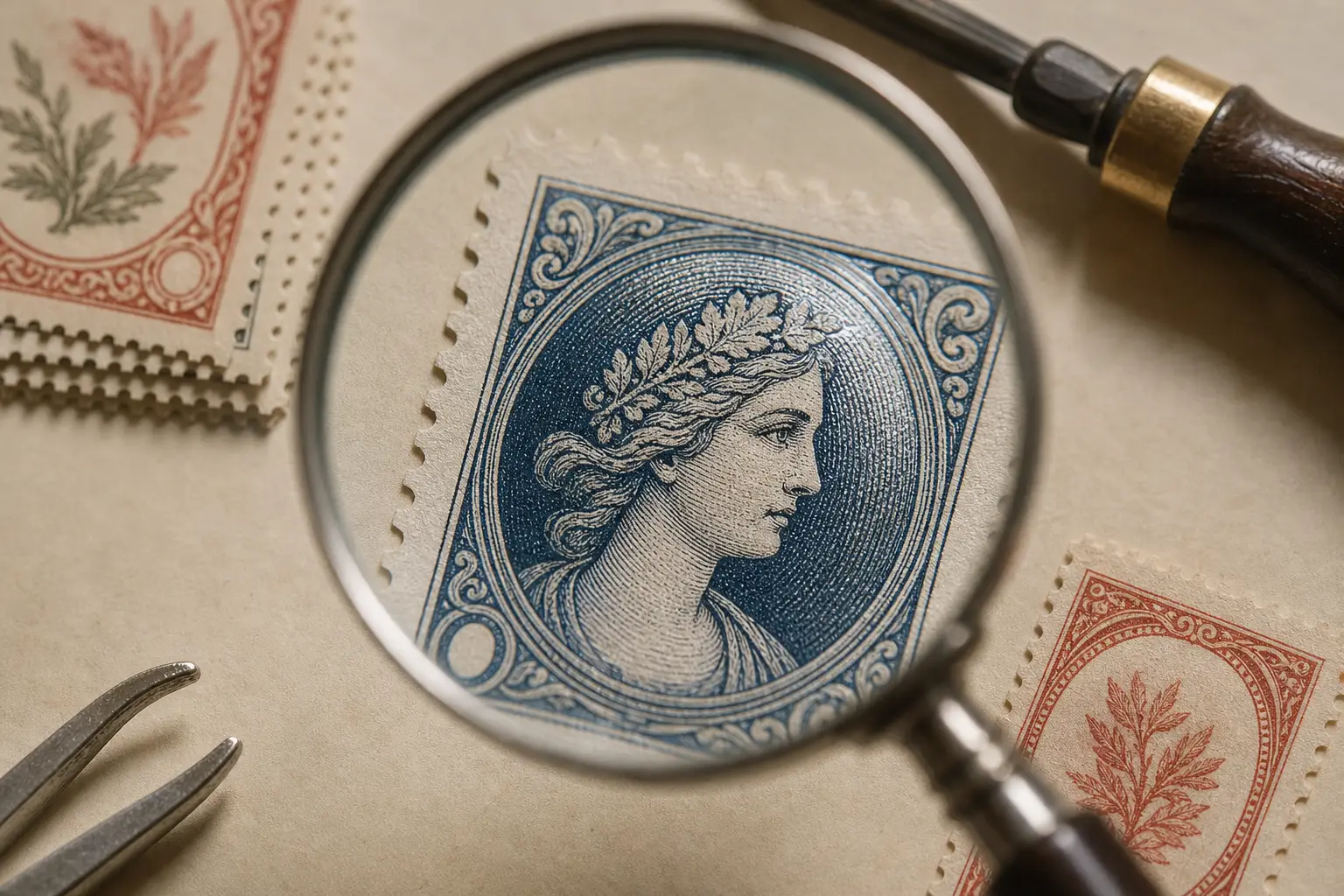
Line-engraved intaglio is a recess process. The design is cut into incised lines, and ink transfers from those recessed areas onto the paper. The APS describes the normal visual structure as lines, hatching, cross-hatching, and stippling, so the image often looks deliberately built from engraved line work rather than from flat tonal fields or dot screens. A strong candidate for intaglio often rewards careful magnification because the line structure is part of the design itself.
You may also see supporting physical clues. Under oblique light, raised ink can sometimes be visible, and on some stamps the pressure of printing may leave debossing on the reverse. These are supporting features rather than single tests, so they matter most when they agree with the line structure. If the stamp is old, thin, damaged, or printed in more than one process, those clues may be partial or uneven, so avoid jumping to a conclusion from one corner or one colour alone.
What offset lithography usually looks like
Offset lithography is a planographic process, which means the image is made on a smooth surface rather than cut or etched into a plate. According to the Smithsonian National Postal Museum, oil-based ink adheres to the image area, and a rubber blanket transfers that image to paper. On many modern stamps, lithography is built from separate process-colour layers made from very fine dots, so a dot pattern may be part of what you see under magnification.
Even so, dots are not a stand-alone answer. The Smithsonian specifically says a dot pattern must be interpreted with other evidence because gravure and other processes can also show screened structures under magnification. Likewise, sharp edges do not prove one process by themselves, because modern lithography can be sharp. The most reliable habit is to compare the line structure, the surface appearance, and any supporting records together.
How gravure fits into the comparison
Collectors often want a simple either-or answer, but the APS makes clear that gravure is another major family and can complicate identification. Gravure is also a recess process, but it forms tone from screened cells rather than the engraved line structure typical of line-engraved intaglio. Because screened or raised-looking effects can appear in other processes too, the visual result can be misleading if you focus on one feature in isolation.
This is why the distinction between line-engraved intaglio and gravure matters. Both may involve recess printing, yet they are not the same family in collector terms, and their surfaces can overlap in appearance on modern material. If you are trying to make a record in StampSnap, note the features you observed rather than forcing a definite label too early. A careful note such as line structure present, dot screening visible, or mixed process suspected is more useful than an overconfident guess.
A safe, methodical inspection routine
Start with good lighting, a clean workspace, and non-contact magnification. Use diffuse light first, then change the angle so oblique light can reveal surface texture or possible ink relief. Do not wet the stamp, do not rub the surface, and do not use household solvents or sticky materials in an attempt to test the printing. The point is to observe, not to alter the stamp.
Work from the largest clues to the smallest. First ask whether the image is clearly built from engraved lines, or whether it appears to rely on smooth surfaces and fine dot layers. Then check whether the same clue appears across several parts of the design, since modern stamps can combine processes. Finally, look for supporting evidence such as raised ink, possible debossing, or a consistent screened pattern. If the stamp is valuable, fragile, or on cover, keep handling to a minimum and use proper tools rather than fingers.
Why records matter as much as visual clues
Visual examination is useful, but the APS recommends combining observations with production records. That advice matters because modern stamps may use more than one printing process, and some surface effects can be shared across families. Records can clarify whether a design was intended to be printed by lithography, intaglio, gravure, or a combination of methods. When the visual evidence is mixed, documentation can keep you from inventing certainty that the stamp itself does not support.
This is also where collection notes become valuable. A photo or record in StampSnap can help you compare one stamp with another later, especially when the result is tentative. The most responsible wording is often conditional: likely lithography, possible mixed process, or engraved line work present. That habit protects you from treating a difficult identification as a final diagnosis before you have enough evidence.
Common mistakes to avoid
The biggest mistake is treating one feature as decisive. Soft edges do not prove anything on their own, because modern lithography can be sharp and other processes can also show screened structure. Likewise, a visible dot pattern is not enough by itself, and a raised look can mislead if it comes from another process or from the printing conditions. Another common error is ignoring the possibility that more than one process was used on the same stamp.
A second mistake is using risky handling methods. Do not soak, scrape, press hard, or use fluid casually just to force a clearer answer. If the stamp is unused, rare, on cover, or seems delicate, leave it intact and rely on observation and documentation. In short, the safest identification method is patient comparison: line structure, dot structure, surface relief, and records considered together.
Frequently asked questions
Can I identify offset lithography from one dot pattern alone?
No. A dot pattern must be interpreted with other evidence because gravure and other processes can also show screened structures under magnification.
Does sharp printing mean a stamp was lithographed?
Not by itself. The Smithsonian notes that modern lithography can be sharp, so sharpness is not a dependable rule on its own.
What is the best visual clue for line-engraved intaglio?
Look for a design built from lines, hatching, cross-hatching, and stippling, with possible raised ink under oblique light and possible debossing on the reverse.
Can modern stamps use more than one printing process?
Yes. The APS says more than one process may appear on a modern stamp, so you should combine clues rather than rely on a single feature.
What is the safest way to inspect printing on a valuable stamp?
Use non-contact magnification, diffuse or oblique light, and careful comparison with records. Avoid soaking, rubbing, scraping, or other altering tests.