The short answer: compare clues, do not hunt for one magic sign
Yes, a modern stamp can use more than one printing process, and the safest way to study it is to compare several clues together. The American Philatelic Society identifies four major families used for postage stamps: line-engraved intaglio, gravure, letterpress, and lithography. That means a single stamp may not belong neatly to only one visual category, especially when modern production combines processes.
The practical rule is simple: treat every visible feature as supporting evidence, not as a stand-alone test. Raised ink, screened dots, sharp edges, or a smooth printed surface can all be helpful, but none of them should be used alone to diagnose the process. If you are recording a likely identification, a tool such as StampSnap can help you keep the clues together for later comparison, but it should be treated as a record, not a final authority.
Know the four major printing families first
Line-engraved intaglio, gravure, letterpress, and lithography are the four major families named by the American Philatelic Society. Knowing those names matters because the clues you see only make sense when you know what each family typically does. If you start with the clue instead of the process, it is easy to mistake one effect for another.
Line-engraved intaglio transfers ink from deliberately incised lines. Its design is normally built from lines, hatching, cross-hatching, and stippling. Gravure is also a recess process, but it forms tone from screened cells rather than from engraved line work. Letterpress and lithography belong to different printing principles again, so the surface look of a stamp should be compared against the process family before you draw a conclusion.
What line-engraved intaglio can look like under careful study
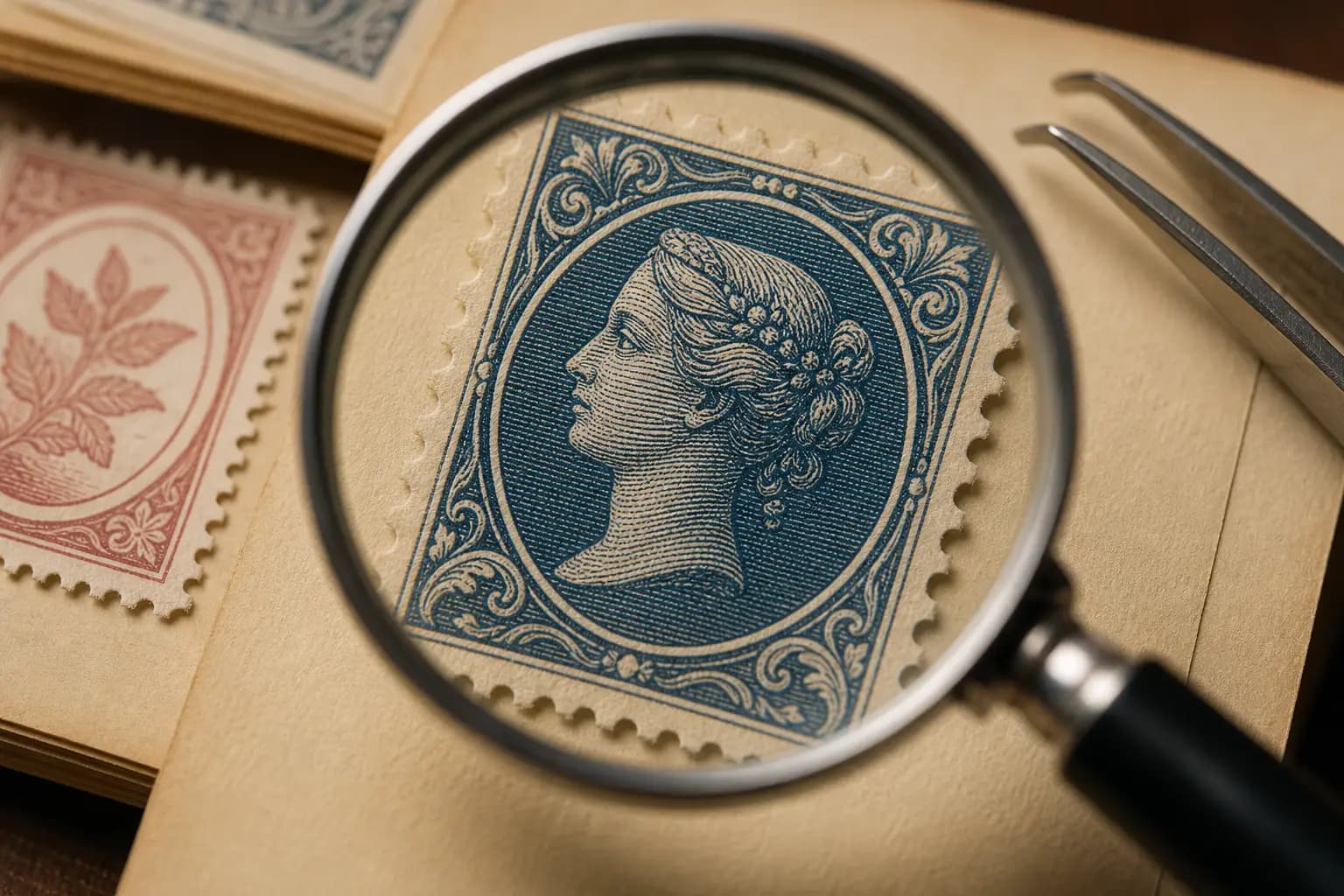
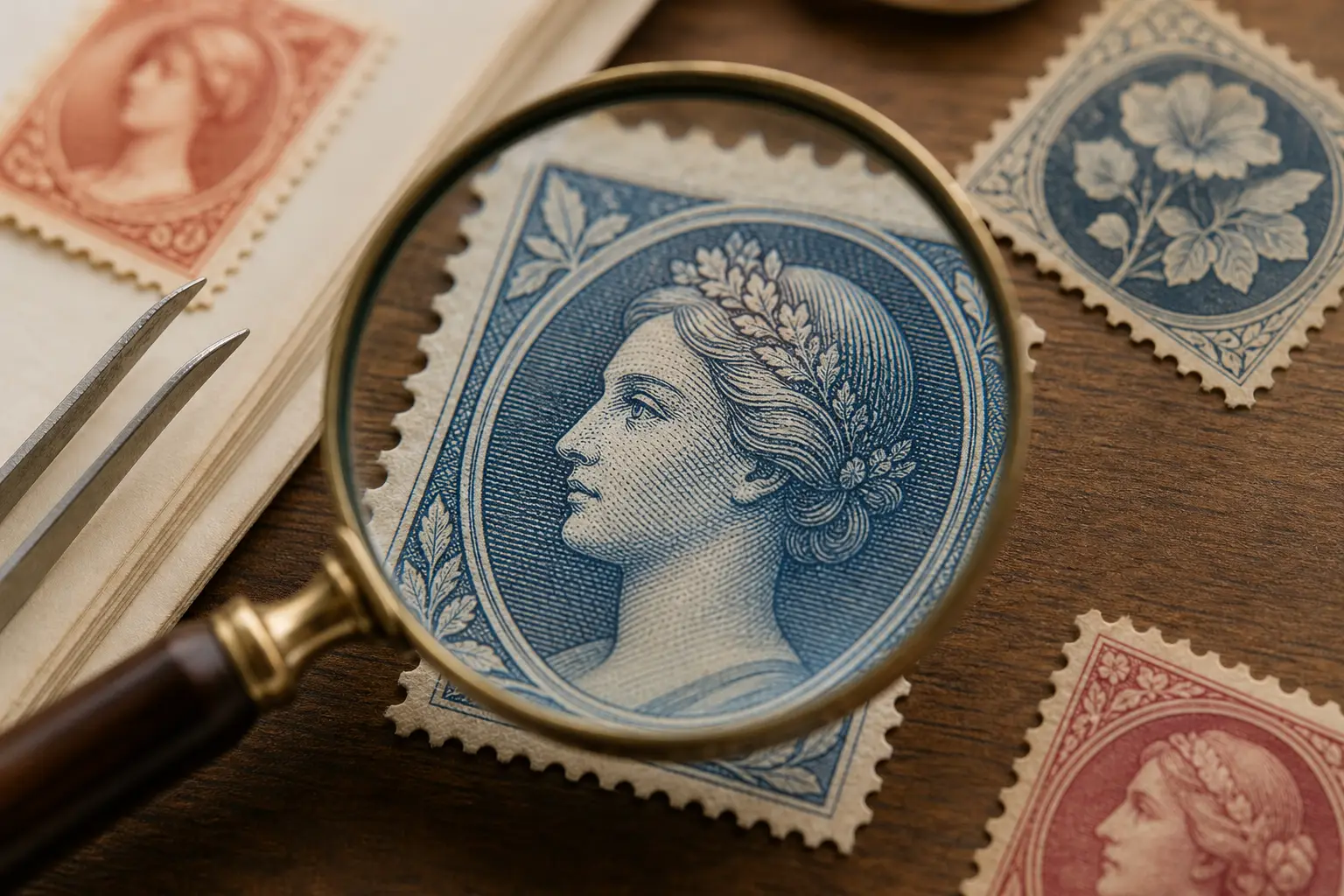
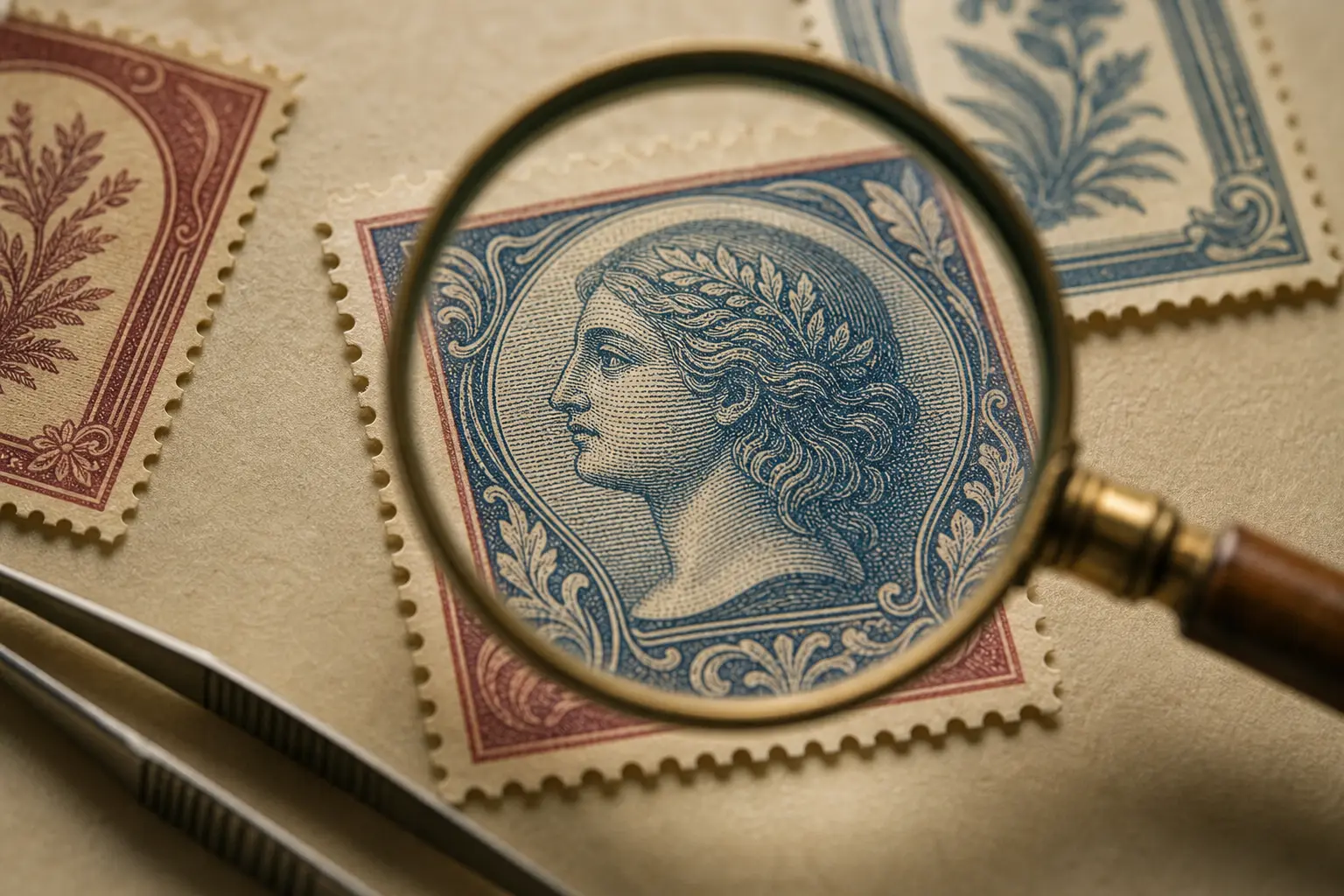
When line-engraved intaglio is present, the most useful clue is the design itself. Look for line structure, hatching, cross-hatching, and stippling rather than expecting a single dramatic effect. Under magnification and oblique light, raised ink can sometimes be seen, and pressure may leave debossing on the reverse. These are supporting features, not a guaranteed test.
This is also where caution matters. A similar feel or appearance can be created by other processes, and a strong-looking detail on one stamp may be weaker on another because of paper, wear, or print quality. Use non-contact magnification and diffuse or oblique light only. Do not press, bend, or scrape the stamp to test for texture, and do not assume a raised look automatically proves line-engraved intaglio.
Why gravure can be easy to mistake for other processes
Gravure creates tone from screened cells, which means it can show a dot or screened structure under magnification. That is useful, but it is not enough on its own. The Smithsonian National Postal Museum explains that modern lithography can also use very fine dots, so a dot pattern alone does not separate gravure from lithography.
The safe habit is to ask what else agrees with the first clue. Does the image sit on the paper in a way that fits other observed features? Are the lines, tones, and edges consistent across the whole stamp? Because screened or raised effects can appear in other processes, collectors should combine observations and consult production records when available.
How offset lithography differs from engraved or screened printing
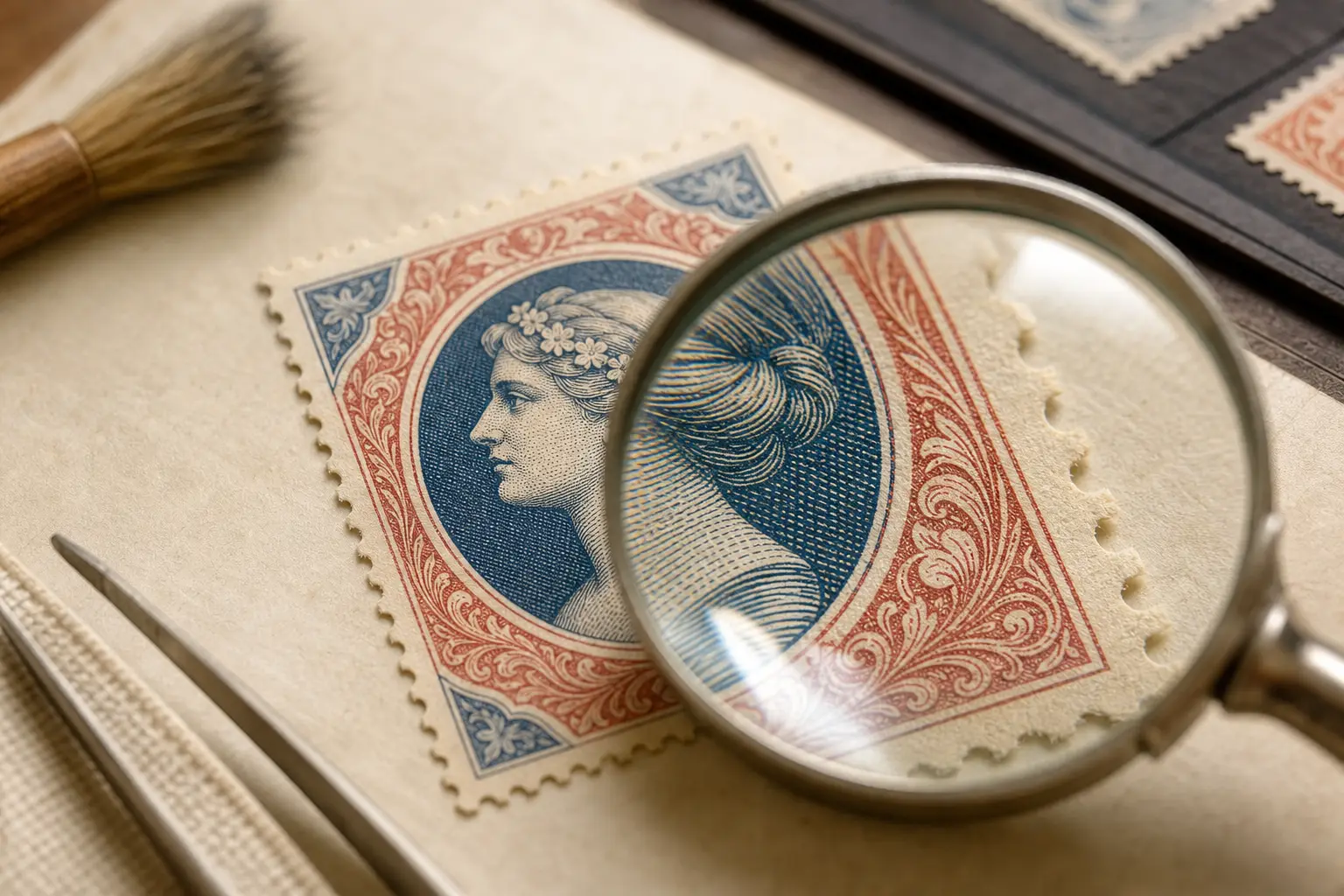
Offset lithography is a planographic process, which means the image is formed on a smooth surface rather than cut or etched into a plate. Oil-based ink adheres to the image area, and a rubber blanket transfers, or offsets, that image to paper. That makes lithography fundamentally different from the incised structure of line-engraved intaglio and the screened-cell structure of gravure.
Modern stamp lithography commonly combines separate process-color layers made from very fine dots. However, the Smithsonian notes that modern lithography can be sharp, so soft or blurred edges are not a dependable identifying rule. In other words, a stamp can look crisp and still be lithographic. Dots may help, but they must be interpreted with other evidence because gravure and other processes can also show screened structures under magnification.
A safe workflow for examining a stamp at home
Start with the least invasive approach. Place the stamp flat on a clean surface and use diffuse light first, then oblique light, and only then non-contact magnification. Compare what you see across the portrait, lettering, frame lines, and background areas. A single detail may mislead you; repeated clues across the design are far more reliable.
Next, separate the process clues into categories. Ask whether the design appears built from lines and hatching, from screened cells or dots, or from a smooth planographic image transferred by offset lithography. If the stamp is modern, remember that more than one process may appear together. Write down what you observed rather than deciding too quickly. That record will make later comparison much easier and safer.
When watermarks and production records matter too
Printing clues do not stand alone, especially when similar designs exist in more than one paper or watermark state. The American Philatelic Society explains that watermarks are a security measure incorporated in stamp paper, and that stamps with the same design may exist on unwatermarked paper or on paper with different watermarks. In some cases, the watermark is the only difference between a very common stamp and a much scarcer one.
Because of that, production records and watermark evidence can help confirm what your eyes suggest. Watermarks may be readable simply by holding paper up to light in some cases, but many stamps require more careful study. If you need to check watermarking, use a safe method such as commercial watermark fluid in a dark tray, and avoid improvised chemicals. If you are building a collection record, note the printing clues and watermark separately so you do not mix two different kinds of evidence.
Frequently asked questions
Can I identify a stamp’s printing process from dots alone?
No. Dots can appear in modern lithography and also in gravure, so dots alone are not enough. Use dots only as one clue among several.
Does a sharp, clean image mean the stamp was printed by lithography?
Not necessarily. The Smithsonian notes that modern lithography can be sharp, so sharpness is not a dependable rule by itself.
What is the main visual clue for line-engraved intaglio?
Look for a design built from lines, hatching, cross-hatching, and stippling. Raised ink under oblique light can support that reading, but it is not a single-test proof.
Should I press on the stamp to feel for printing texture?
No. Use non-contact magnification and diffuse or oblique light only. Do not press, bend, or scrape the stamp to test texture.
Why do watermarks matter when I am studying printing clues?
Because the same design can exist on different papers or watermark states, and that can affect how you identify or record the stamp. Watermarks may also be the only difference between two catalogued issues.