The quickest safe answer
To identify a stamp’s printing family, begin with the four major families named by the American Philatelic Society: line-engraved intaglio, gravure, letterpress, and lithography. The safest approach is not to rely on one clue alone. Look for a cluster of features under non-contact magnification and with diffuse or oblique light, then compare those observations with production records when you can.
If you want a practical short answer, line-engraved intaglio often shows designs built from lines, hatching, cross-hatching, and stippling, while gravure forms tone from screened cells. Lithography, especially offset lithography, is planographic and uses a rubber blanket to transfer the image, and letterpress is one of the other major families collectors may encounter. Because more than one process may appear on a modern stamp, treat every visible clue as part of a larger identification, not as a final verdict.
How to observe without harming the stamp
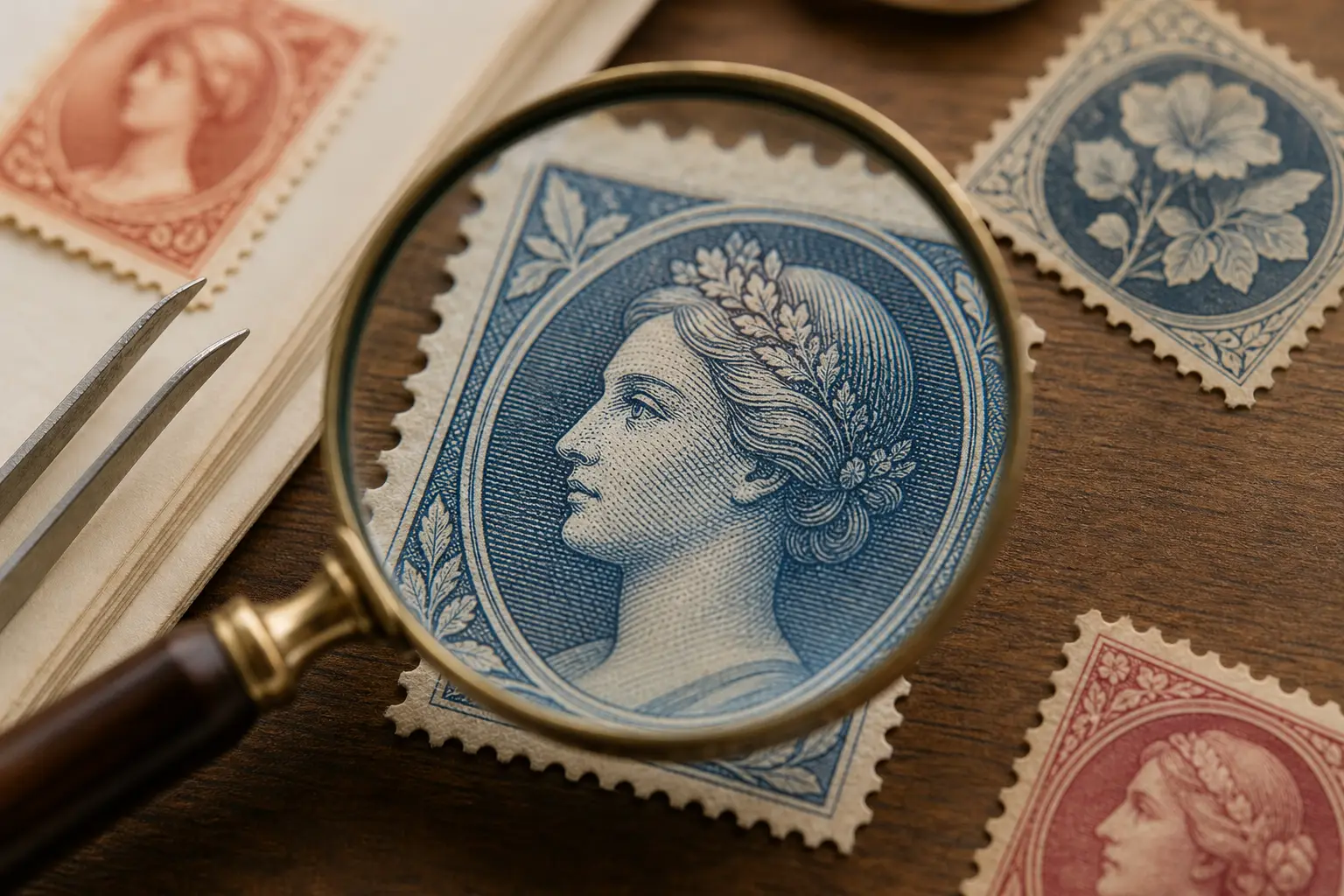
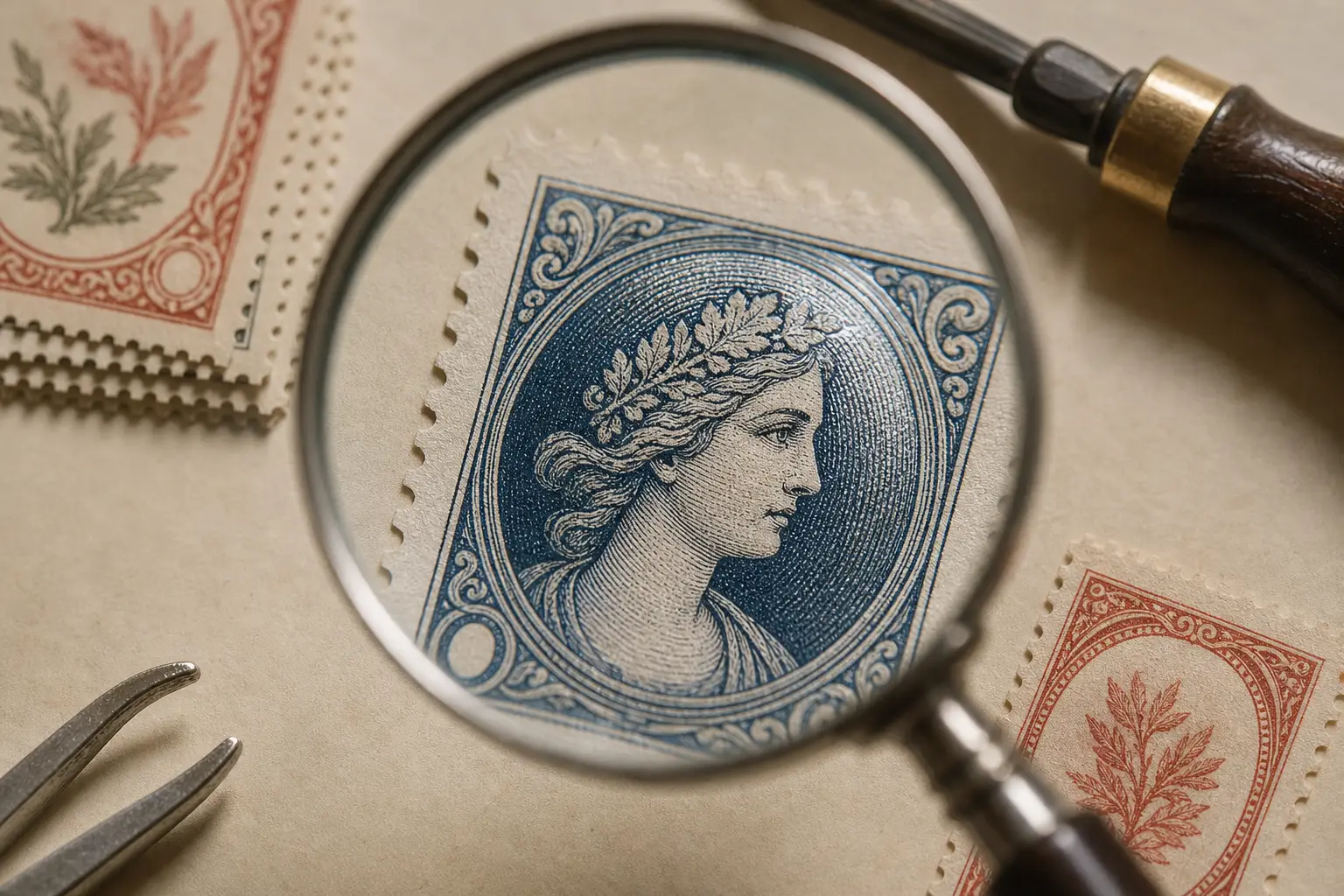
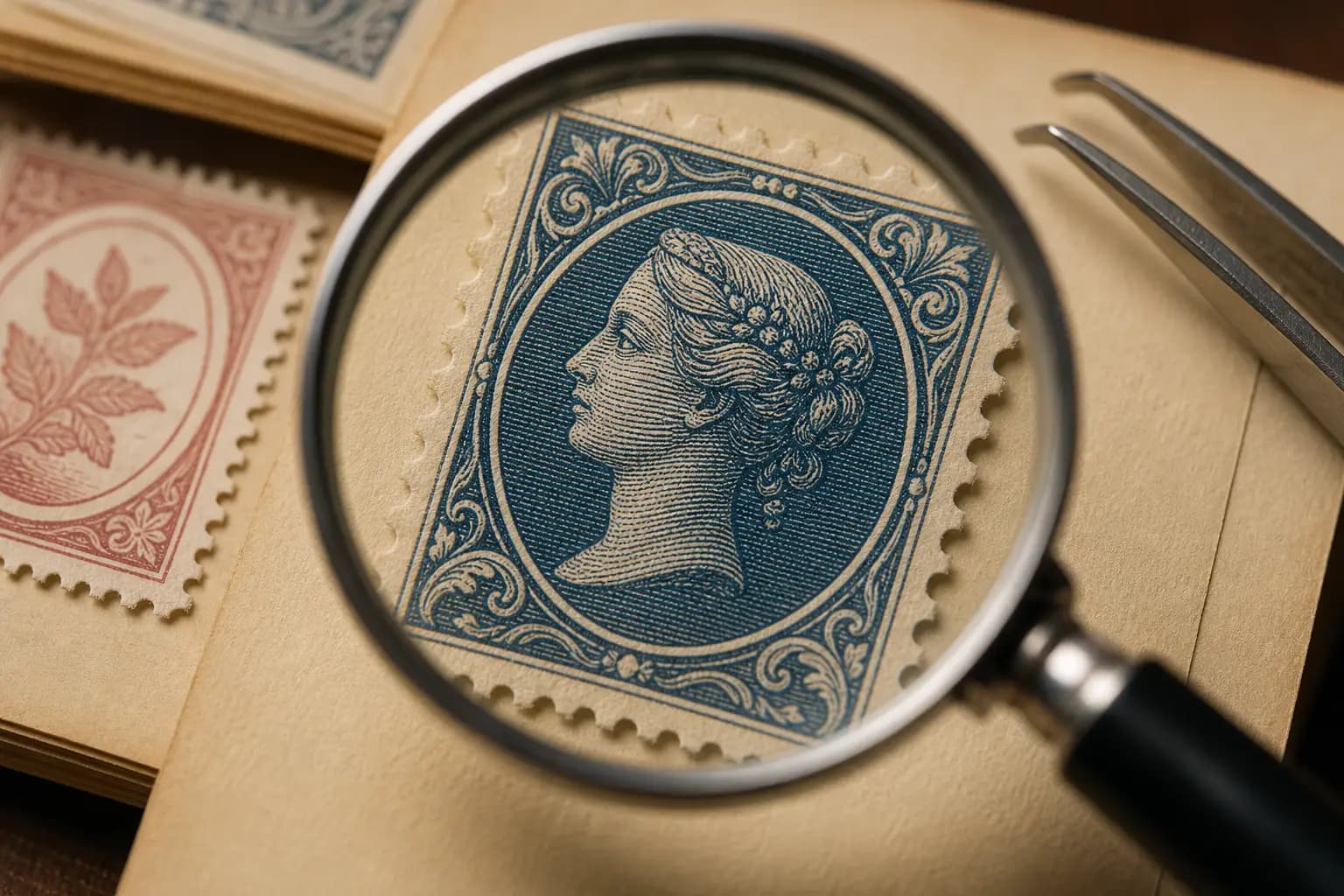
Use only non-contact magnification and good lighting. A loupe or microscope used gently from above is enough for most first-pass study, and oblique light can help reveal surface relief or impression without touching the stamp. Avoid wet or chemical tests unless a proven method is required and the item is appropriate for that kind of study. Valuable, used-on-cover, or fragile material should stay protected while you examine it.
This matters because visual clues can be subtle. A raised look, screened dots, or a smooth surface may each appear in more than one printing family, so the safest workflow is to record what you see before deciding what it means. StampSnap can help you create a likely identification or collection record from those observations, but the record should still be treated as a working note, not a final expert opinion.
What line-engraved intaglio usually looks like
Line-engraved intaglio is a recess process: ink is transferred from deliberately incised lines. According to the APS, the design is normally constructed from lines, hatching, cross-hatching, and stippling. Under magnification and oblique light, collectors may sometimes see raised ink, and pressure may even leave debossing on the reverse.
Those signs are helpful, but they are supporting features rather than a single test. A stamp may show some apparent relief without being purely line-engraved intaglio, and paper condition, ink handling, or wear can weaken the effect. For that reason, compare the line structure, the printed texture, and any reverse impression together instead of choosing intaglio from one bright highlight or one shadow.
How gravure differs from intaglio and lithography
Gravure is also a recess process, but the tone is formed from screened cells rather than the line work typical of line-engraved intaglio. That means a stamp may show a textured or screened appearance under magnification, yet that alone is not enough to call it gravure. The APS specifically warns that screened or raised effects can also appear in other processes.
Offset lithography works differently. The Smithsonian National Postal Museum explains that it is a planographic process, meaning the image is formed on a smooth surface rather than cut or etched into a plate. Oil-based ink adheres to the image area, and a rubber blanket transfers, or offsets, the image to paper. Modern lithography often combines separate process-color layers made from very fine dots, so the presence of dots must be read with other evidence.
Why letterpress and lithography can still confuse collectors
Letterpress belongs in the same four-family framework, even though many collectors focus first on intaglio, gravure, or lithography. The practical lesson is that a neat-looking print, a textured look, or a pattern of dots does not automatically assign the stamp to one family. The APS and Smithsonian sources both caution that visual features can overlap and should be interpreted together.
This is especially true on modern issues, where more than one process may appear on a single stamp. A multicolor design can combine distinct layers, and one area may not behave exactly like another. For that reason, identify the strongest family-level clues first, then ask whether the stamp shows evidence of mixed processes before you write a firm description.
A safe step-by-step method for a first identification
First, view the stamp under diffuse light and note whether the design looks line-built, screened, smooth, or sharply layered. Second, tilt it under oblique light and check for raised ink, surface impression, or a debossed trace on the reverse if the stamp can be examined safely from that side. Third, compare those observations with any known issue information or production records.
If the clues still conflict, keep the identification tentative. That is normal. Many stamps need more than one observation, and the APS recommends combining observations and consulting production records. When you later add the item to a catalogue or personal archive, save both your conclusion and the evidence that led to it so you can revisit it if new information appears.
What not to do while trying to identify the process
Do not diagnose printing from dots alone, from soft or blurred edges alone, or from one shiny area seen at a single angle. The Smithsonian notes that modern lithography can be sharp, so softness is not a dependable identifying rule. Likewise, the APS explains that screened structures can appear in gravure and other processes, so a dot pattern must be interpreted with other evidence.
Do not use contact methods that could damage the stamp just to force a decision. If the item is scarce, stuck to a cover, or already fragile, keep handling minimal and prefer safe observation. A careful, evidence-based note is more useful than a quick guess, especially when a stamp may have multiple processes or paper effects that complicate the picture.
Frequently asked questions
What are the main printing families collectors should look for?
The American Philatelic Society identifies four major families used for postage stamps: line-engraved intaglio, gravure, letterpress, and lithography.
Can I identify a stamp from dots alone?
No. The Smithsonian says dot patterns must be interpreted with other evidence, and the APS notes that screened structures can appear in more than one process.
Is a soft or blurred image a reliable sign of lithography?
No. The Smithsonian notes that modern lithography can be sharp, so softness or blur is not a dependable rule.
How should I check for intaglio safely?
Use non-contact magnification and oblique light to look for line-built designs, raised ink, or possible debossing on the reverse, then compare those clues with production records.
Why do some stamps seem to fit more than one process?
Because more than one process may appear on a modern stamp, and because visual clues such as screened texture or apparent relief can overlap between processes.