Start with the safest answer: no single clue is enough
The safest way to identify a stamp’s printing method is to treat every visible feature as a clue, not a verdict. Under magnification, you are looking for a pattern of evidence from the design lines, the ink surface, the paper, and any watermark, then comparing those observations with the stamp’s known issue details if you have them.
The American Philatelic Society groups the main stamp printing families into line-engraved intaglio, gravure, letterpress, and lithography. Modern stamps may even combine more than one process. That means a collector should avoid quick labels based on one feature such as “it looks sharp,” “it has dots,” or “the ink seems raised.”
Use non-contact magnification and the right light
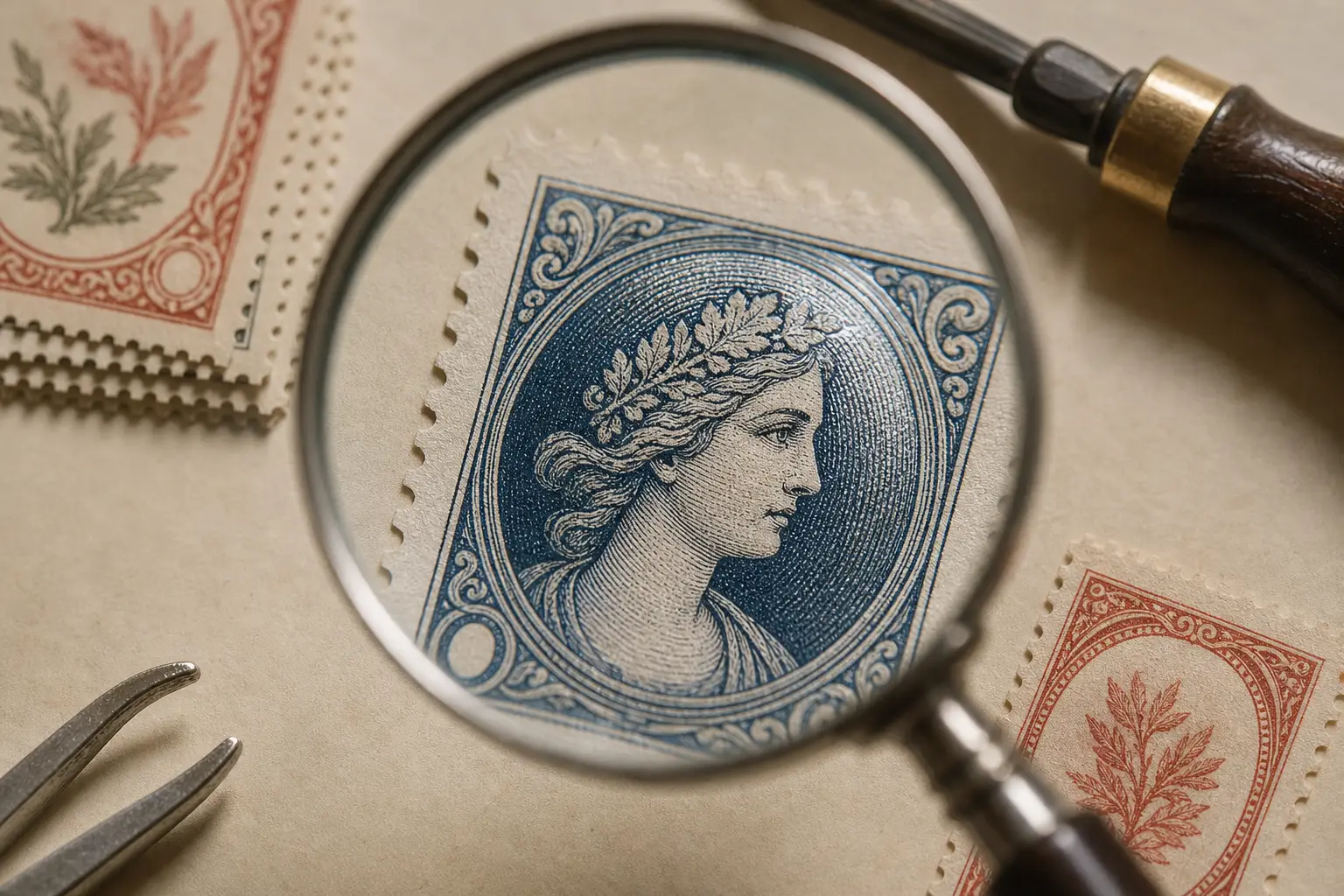
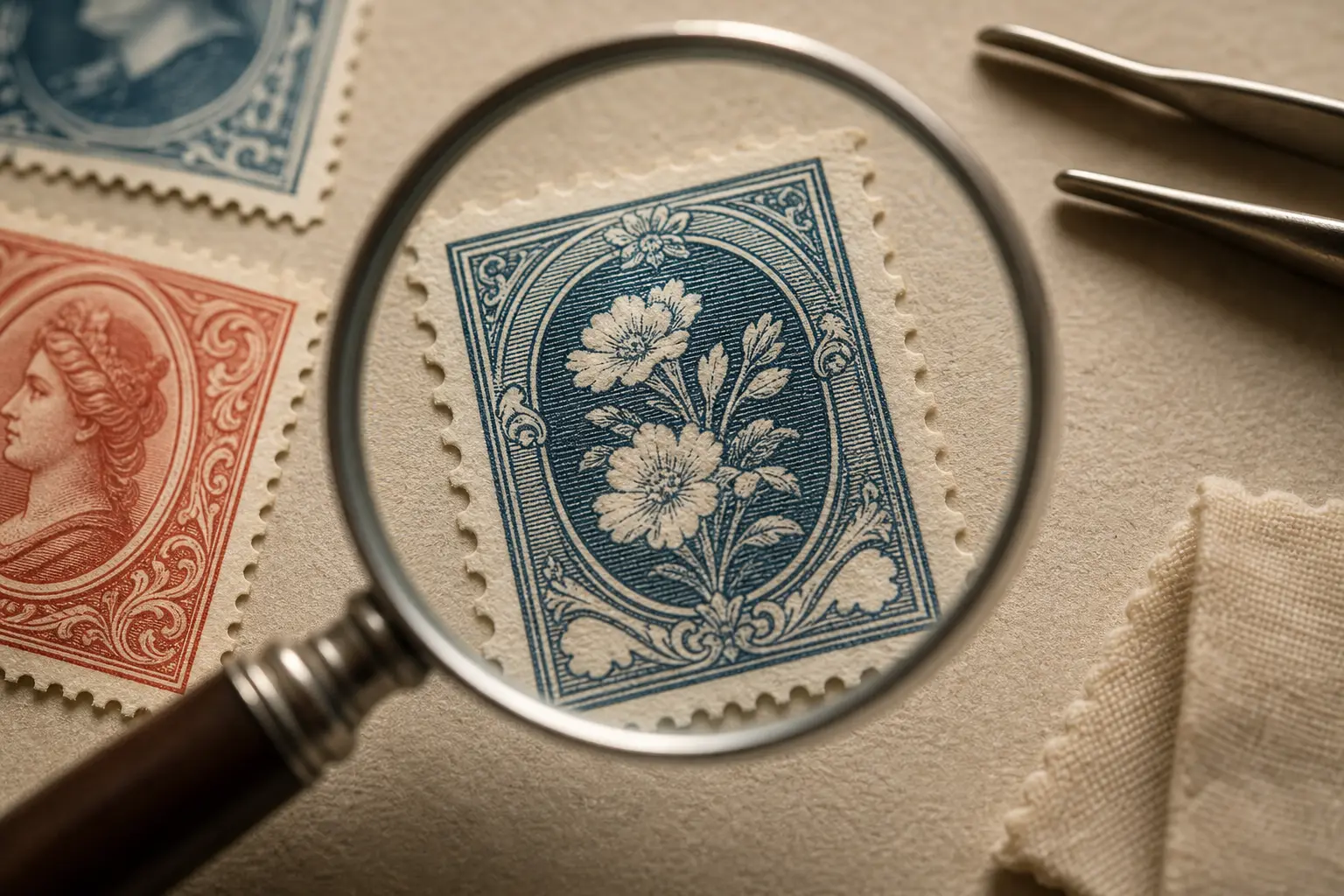
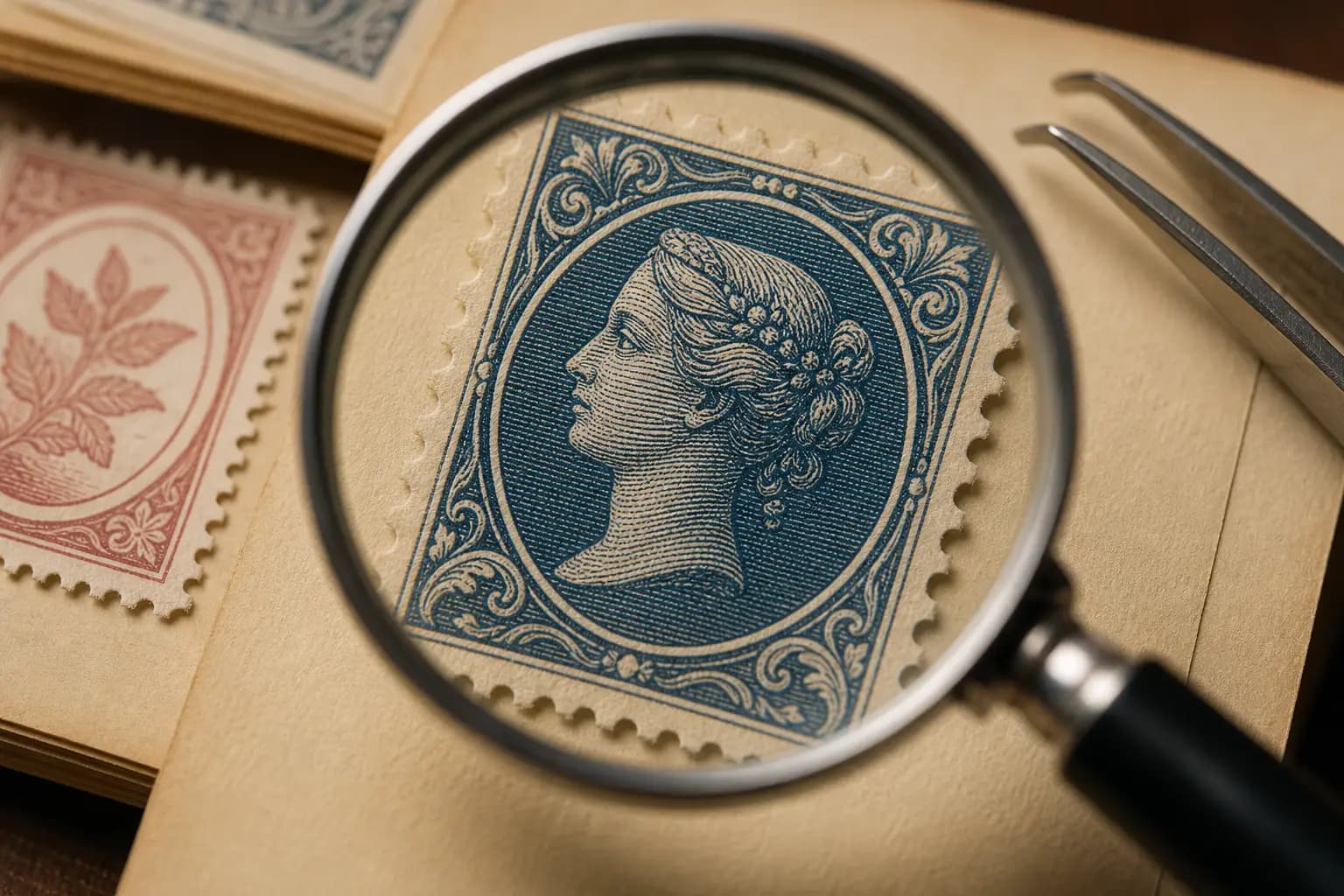
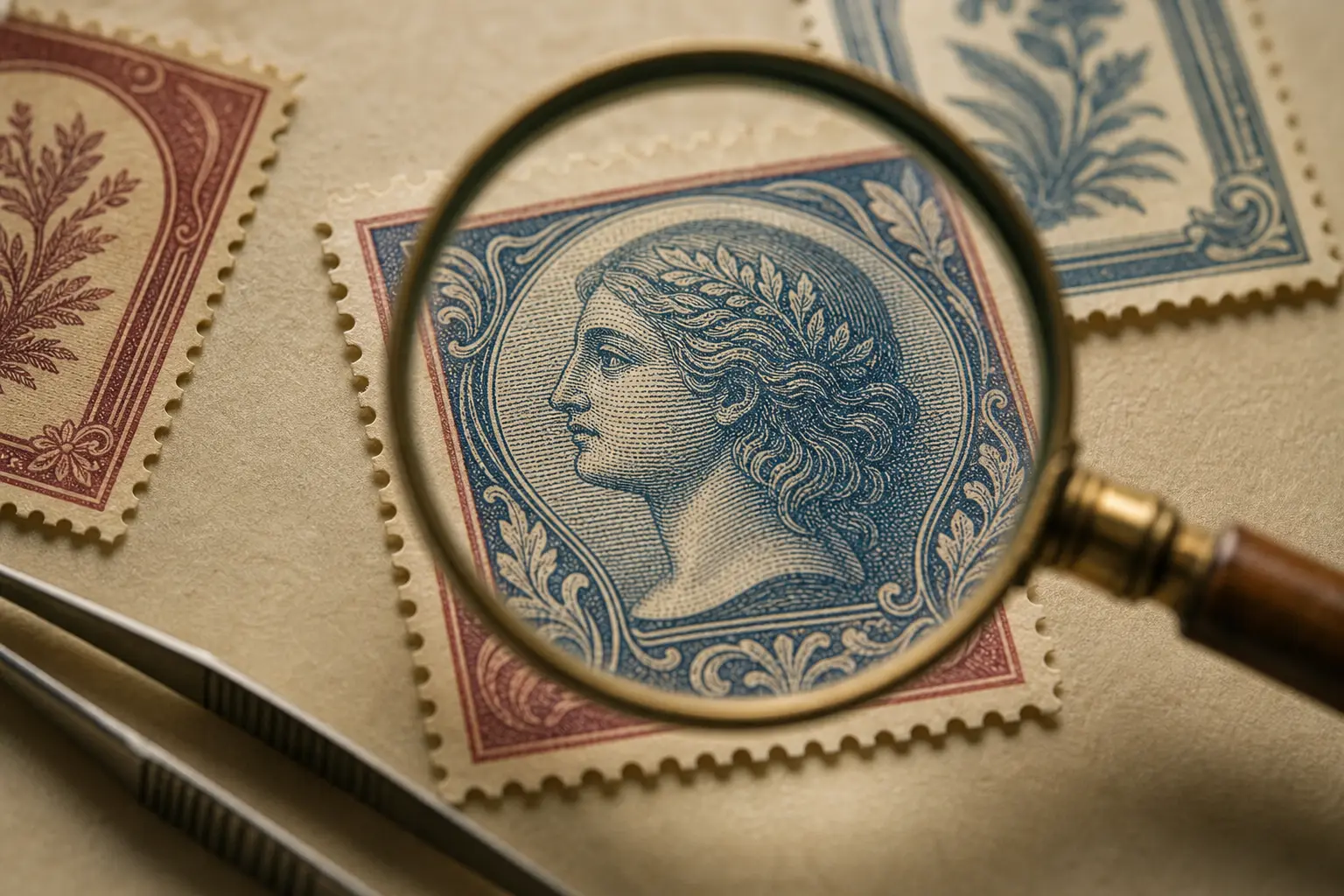
For a safe first look, use a loupe or microscope without touching the stamp, and rely on diffuse light plus oblique light from the side. Diffuse light helps you see the overall printed structure, while oblique light can reveal surface relief such as raised ink or pressure marks without requiring any handling that could damage the stamp.
This is especially important for unused stamps, older material, or anything that appears fragile. Do not use household solvents or any wet test that risks the gum, and do not press hard on the stamp to force a result. If a feature is faint, record it and move on to the next clue rather than trying to “prove” the answer by touch.
What line-engraved intaglio usually shows
Line-engraved intaglio is the process where ink is transferred from deliberately incised lines in the plate. The design is normally built from lines, hatching, cross-hatching, and stippling. When viewed carefully, it often gives a strong line structure rather than the broad smooth tonal look collectors may expect from other methods.
The APS notes that raised ink can sometimes be seen under magnification and oblique light, and pressure may leave debossing on the reverse. Those are helpful supporting features, but they are still only supporting features. A stamp can show some raised effect without being line-engraved intaglio, so the design structure remains the key clue.
How gravure differs from line-engraved intaglio
Gravure is also a recess process, but it forms tone from screened cells rather than from the deliberately incised line structure used in line-engraved intaglio. Under magnification, gravure can show a screened appearance, but screened or raised effects can appear in other processes too, so a dot-like texture is not enough by itself to identify gravure.
The practical approach is to ask whether the stamp’s image reads as a screened tonal image or as a line-built engraved image. If the evidence is mixed, assume the process is still uncertain. Collectors should combine observations and consult production records when possible, because visual clues alone can overlap across different printing families.
How to read lithography and offset lithography clues
Lithography is a separate printing family, and offset lithography is a planographic process in which the image is formed on a smooth surface rather than cut or etched into a plate. Oil-based ink adheres to the image area, and a rubber blanket transfers that image to paper. That means the stamp’s structure is different from both intaglio and gravure at the printing stage.
Modern lithography often combines separate process-color layers made from very fine dots. However, the Smithsonian National Postal Museum warns that modern lithography can be sharp, so soft or blurred edges are not a dependable rule. A dot pattern must also be interpreted with other evidence, because gravure and other processes can show screened structures under magnification.
Use paper and watermark clues as supporting evidence
Paper clues help, but they do not replace printing analysis. Watermarks are formed in the paper itself and may appear as words, letters, or symbols. The APS explains that some stamps exist both with and without watermarks, or with different watermark designs, and that these differences often create separate catalog numbers. In some cases, watermark differences may be the only difference between a very common stamp and one valued much more highly, so the paper itself deserves careful attention.
The best watermark method described in the source material is to lay the stamp face down in a dark tray and moisten it with proper watermark fluid so the design appears in dark lines against a lighter background. Use a commercial watermark fluid rather than improvised alternatives, and keep the method limited to watermark detection. In StampSnap, you can record the watermark view alongside your notes so the identification trail stays organised.
A practical decision path for uncertain stamps
Begin by asking whether the stamp looks line-built, screened, or planographic. Then check the surface with diffuse and oblique light, and note whether any apparent relief is consistent across the design or just present in isolated spots. After that, compare the paper and watermark evidence, since the same design may occur on different paper types or with different watermark states.
If the clues point toward line-engraved intaglio, gravure, or lithography, keep the conclusion provisional unless the evidence lines up well across more than one category. If the stamp appears to combine methods, that is not unusual for modern issues. The conservative answer is often “probably” rather than “definitely,” and that is perfectly acceptable for collector records.
Frequently asked questions
Can I identify a stamp’s printing method from dots alone?
No. A dot pattern can be one clue for lithography or gravure, but the sources warn that screened structures can appear in more than one process, so dots alone are not enough.
Does soft or blurred printing mean offset lithography?
No. The Smithsonian notes that modern lithography can be sharp, so blur is not a dependable rule. Use it only as a minor clue with other evidence.
What features are most useful for line-engraved intaglio?
Look for a design built from lines, hatching, cross-hatching, and stippling, plus possible raised ink seen with magnification and oblique light and possible debossing on the reverse.
Should I use touch to test whether ink is raised?
No. Use non-contact magnification and oblique light only. Do not press, rub, or use any handling that could damage the stamp.
When should I check the watermark?
Check the watermark after the print-structure clues, because watermark differences can matter for identification and cataloguing. Treat it as supporting evidence rather than a substitute for printing analysis.